
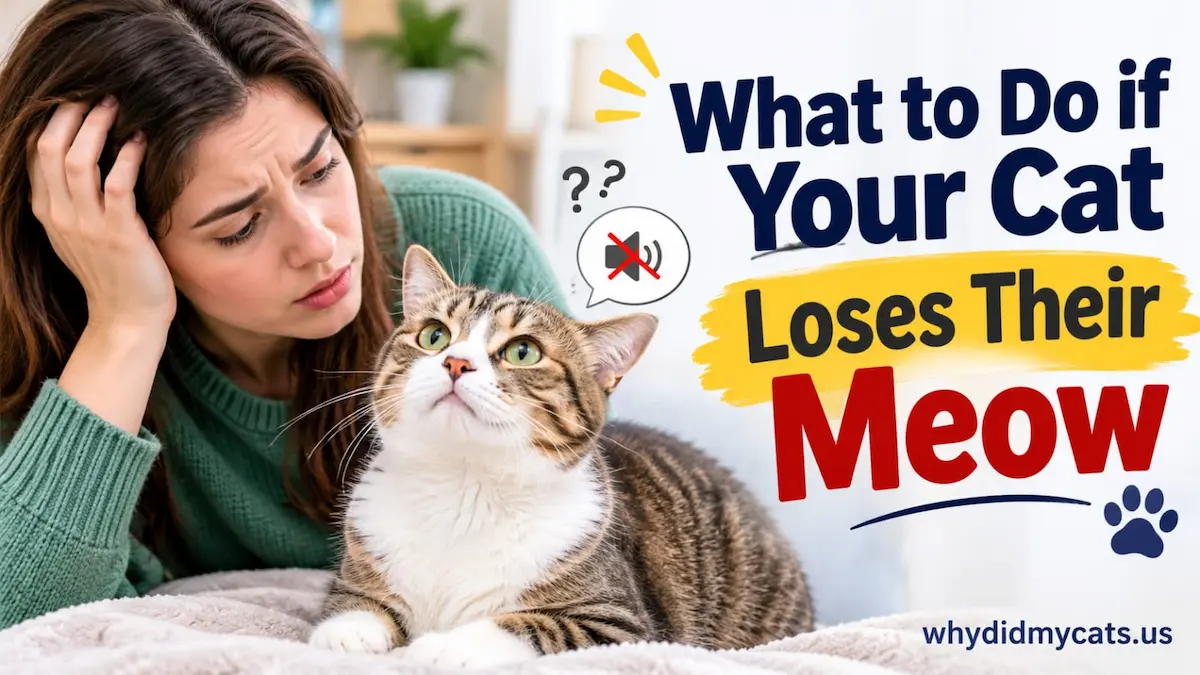
Your cat usually greets you with a familiar meow, but suddenly his voice sounds raspy, weak, or completely silent. You call his name, and he opens his mouth to respond, but barely makes a sound. This change can be surprising, especially when he otherwise seems perfectly normal.
Why did my cat lose his voice? A common reason is inflammation of the larynx, also called the voice box. Upper respiratory infections, throat irritation, excessive vocalization, injuries, and other medical conditions can also affect how your cat meows.
Some causes are temporary, while others need veterinary treatment. Understanding the possible reasons and watching for additional symptoms will help you decide what to do next.
Why Did My Cat Lose His Voice?
Cats produce their meows through the larynx, a structure in the throat that contains the vocal cords. When the larynx becomes irritated, swollen, or damaged, the normal sound of a cat’s voice can change.
Your cat might develop a hoarse meow, produce only a faint squeak, or stop making audible sounds altogether. The medical term for inflammation of the larynx is laryngitis.
However, laryngitis is not the only explanation. Respiratory infections, foreign objects, throat injuries, and problems affecting the nerves or muscles of the voice box can also cause voice changes.
For more information about unusual vocal sounds, read our guide to why your cat’s meow changes.
8 Reasons Your Cat May Have Lost His Voice
The cause of voice loss depends on your cat’s symptoms, medical history, and recent environment. Here are eight possible explanations.
1. Upper Respiratory Infection
An upper respiratory infection is one of the common reasons a cat develops a hoarse or weak meow. Viral infections, particularly feline herpesvirus and feline calicivirus, can affect the nose, throat, and upper respiratory tract.
You might also notice:
- Frequent sneezing
- Watery or irritated eyes
- Nasal discharge
- Coughing
- Reduced appetite
- Low energy
Nasal congestion can also make food less appealing because cats depend heavily on their sense of smell.
These infections spread easily between cats, especially in shelters, multi-cat households, and homes with recently adopted pets.
Read more about why your cat might start sneezing a lot.
2. Laryngitis (Inflammation of the Voice Box)
Laryngitis occurs when the larynx becomes inflamed. Because this structure helps produce sound, swelling can make your cat’s meow sound rough, weak, or disappear temporarily.
Respiratory infections are a common trigger. Smoke, dust, chemical fumes, throat injuries, and other forms of irritation can also contribute.
Some cats develop coughing, difficulty swallowing, or noisy breathing along with the voice change.
Treatment depends on the underlying cause. A veterinarian should examine your cat rather than assuming the problem is a minor sore throat.
3. Excessive Meowing
Cats that vocalize repeatedly for long periods can experience temporary voice changes. This can happen when a cat spends hours meowing for attention, food, or because of stress.
After prolonged vocalization, the meow might sound quieter or raspy.
However, excessive meowing should not automatically be blamed for complete or persistent voice loss. Cats can develop medical problems that look similar, so a continuing change needs veterinary attention.
4. Smoke, Dust, and Household Irritants
Your cat’s respiratory tract is sensitive to airborne irritants. Cigarette smoke, fireplace smoke, dusty litter, aerosol sprays, and strong cleaning products can irritate the throat and airways.
For example, a cat exposed to strong household fumes might develop coughing, throat irritation, or a raspy meow.
Keep your cat away from smoke and strong fragrances. Use cleaning products carefully, ventilate the room, and consider low-dust litter.
If the voice does not return to normal or other symptoms develop, contact your veterinarian.
5. Throat Injury or a Foreign Object
A throat injury, bite wound, abscess, or swallowed object can interfere with normal vocalization.
Cats sometimes chew string, plastic, and other household materials. A foreign object can become lodged in the throat or cause tissue damage and swelling.
Watch for warning signs such as:
- Excessive drooling
- Gagging or repeated swallowing
- Pawing at the mouth
- Refusing food
- Pain when swallowing
A suspected object in the throat requires prompt veterinary attention. Never reach blindly into your cat’s throat or pull on a visible string.
6. Allergic Reactions and Throat Swelling
An allergic reaction can cause swelling around the face, mouth, or throat. When swelling affects the airway or nearby structures, your cat’s voice might change.
Insect stings, certain medications, and exposure to an allergen can trigger an allergic reaction.
Facial swelling, excessive drooling, weakness, or breathing difficulty should be treated as urgent warning signs. Severe throat swelling can block airflow and become life-threatening.
For more information, see our guide to cat allergy symptoms.
Never give your cat human allergy medication unless a veterinarian specifically recommends the product and dose.
7. Laryngeal Paralysis
Laryngeal paralysis is an uncommon condition in which the muscles controlling the larynx do not function properly.
The voice box may not open normally during breathing. This can affect your cat’s meow and restrict airflow.
Possible signs include:
- A raspy or unusual meow
- Noisy breathing
- Coughing
- Difficulty breathing
- Reduced tolerance for activity
Because laryngeal paralysis can obstruct the airway, breathing changes require urgent veterinary assessment.
8. Throat Growths, Polyps, or Tumors
Growths, including benign polyps and cancerous tumors, can develop in the throat or around the larynx. Their location and size can affect your cat’s voice, swallowing, and breathing.
A persistent hoarse meow, difficulty swallowing, unexplained weight loss, or noisy breathing deserves a veterinary examination.
The veterinarian might recommend imaging or an examination of the larynx to identify the problem. Treatment depends on the type, location, and severity of the growth.
Why Did My Cat Suddenly Lose His Voice?
Sudden voice loss can develop when something quickly irritates, inflames, or affects the voice box.
An upper respiratory infection, exposure to smoke or chemical fumes, throat injury, and allergic swelling are possible causes. A foreign object or another airway problem can also produce a sudden change.
Think about what happened before you noticed the change:
- Was your cat exposed to smoke or strong cleaning products?
- Has he been around another cat with respiratory symptoms?
- Did you notice gagging, coughing, or repeated swallowing?
- Has he recently been meowing more than usual?
These details can help your veterinarian identify the cause.
A sudden voice change with normal breathing still deserves attention, particularly when it continues. If your cat struggles to breathe, breathes with an open mouth, or collapses, seek emergency veterinary care immediately.
Why Is My Cat Losing His Voice but Seems Fine?
A cat can have a weak or raspy meow while continuing to eat, drink, play, and behave normally.
Mild throat irritation or an early respiratory problem can cause this pattern. Your cat might still greet you at the door, follow you around the house, and ask for food, but his usual meow sounds different.
Normal behavior is reassuring, but it does not rule out an underlying medical problem.
Monitor his voice and watch for sneezing, coughing, eye discharge, reduced appetite, or changes in breathing. Contact your veterinarian if the voice change persists, worsens, or repeatedly returns.
Why Did My Kitten Lose His Voice?
Kittens can lose their voices for many of the same reasons as adult cats. Upper respiratory infections and inflammation of the larynx are important possibilities.
A kitten with a respiratory infection might also sneeze, have watery eyes, develop nasal discharge, or struggle to smell food.
Young kittens need particular attention because they can become dehydrated and weak more quickly than healthy adult cats.
Contact a veterinarian promptly if your kitten loses his voice, especially when he is eating less, sleeping unusually, or showing other symptoms. Breathing difficulty requires emergency care.
Never give a kitten human cold medicine or leftover medication.
Why Does My Cat Lose His Voice Sometimes?
A voice that disappears and returns can indicate repeated irritation or an underlying condition affecting the throat or larynx.
Possible explanations include recurring respiratory infections, exposure to dust or smoke, and other problems involving the voice box.
Keep track of when the voice changes, how long each episode lasts, and whether it happens after a particular activity or exposure.
Even when your cat seems normal between episodes, recurring voice loss deserves veterinary evaluation. Recording a short video of the unusual meow can also help your veterinarian understand what you are noticing.
What If My Cat Tries to Meow but No Sound Comes Out?
Some cats naturally produce very quiet or silent meows. However, a cat that previously had a clear voice and suddenly makes no audible sound might have a problem affecting the larynx.
Inflammation, throat irritation, respiratory infection, and other vocal-structure problems can make a meow extremely faint.
Pay attention to your cat’s breathing and swallowing. Notice whether he seems uncomfortable, drools, coughs, or repeatedly opens his mouth without producing a sound.
If this is a new change, contact your veterinarian for advice. Do not assume that your cat has simply become quieter.
When Should You Take Your Cat to the Vet?
A mild voice change does not always mean an emergency, but a new or unexplained loss of voice should not be ignored.
Contact your veterinarian promptly when your cat:
- Has a hoarse or missing meow that persists or keeps returning.
- Develops frequent sneezing, coughing, or nasal discharge.
- Eats or drinks less than usual.
- Drools or appears uncomfortable when swallowing.
- Makes unusual breathing sounds.
- Becomes unusually tired or less active.
<text>Seek emergency veterinary care immediately if your cat has open-mouth breathing, gasps for air, struggles to breathe, collapses, or develops blue or very pale gums. Do not wait for the voice to return.</text>
How Do Vets Diagnose and Treat Voice Loss?
Your veterinarian will ask when the voice change started and whether your cat has experienced coughing, sneezing, swallowing problems, injuries, or exposure to irritants.
The examination may include checking the mouth, throat, neck, breathing, and overall health.
Depending on the findings, diagnostic tests might include:
- Blood tests
- X-rays or other imaging
- Examination of the larynx using an endoscope
- Additional testing for suspected infections or abnormal growths
Treatment depends on the diagnosis:
- Respiratory infection: Supportive care and treatment for specific complications.
- Laryngitis: Addressing the underlying infection, irritation, or injury.
- Foreign object: Veterinary removal when necessary.
- Allergic swelling: Appropriate medication and emergency airway support when needed.
- Growths or laryngeal disorders: Specialized treatment, which might include surgery.
Antibiotics do not treat viral infections, and not every cat with voice loss needs the same medication. Your veterinarian will choose treatment based on the actual cause.
How Can You Help Your Cat Recover at Home?
Home care can make your cat more comfortable while the underlying problem is being addressed.
- Keep the environment clean: Remove smoke, strong fragrances, aerosol sprays, and dusty materials.
- Provide fresh water: Make sure your cat has easy access to clean drinking water.
- Offer familiar wet food: Do this only when your cat can swallow comfortably.
- Reduce stress: Give your cat a quiet, comfortable place to rest.
- Maintain clean air: A clean humidifier might help in some situations, but follow your veterinarian’s advice.
- Monitor symptoms: Watch for changes in breathing, swallowing, appetite, and energy.
Never give human cough medicine, pain relievers, or leftover antibiotics. Do not force food or water into a cat that has difficulty swallowing.
Home care is not a substitute for veterinary treatment when symptoms persist or become worse.
FAQs
How to help a cat who lost their voice?
Keep your cat comfortable, remove smoke and strong fragrances, provide fresh water, and offer familiar wet food if swallowing is normal. Contact your veterinarian to identify the cause. Avoid human medicines and never force food or water if your cat has difficulty swallowing.
Why does my cat meow but no sound comes out?
A naturally silent meow is normal for some cats. However, a sudden change from an audible meow can result from laryngitis, throat irritation, respiratory infection, or a problem affecting the larynx. Contact your veterinarian when the change is new or persistent.
Why has my cat suddenly lost his meow?
An upper respiratory infection, inflammation of the voice box, smoke exposure, or a throat injury can cause sudden voice loss. More serious problems, including throat swelling or laryngeal paralysis, are also possible. Breathing difficulty requires emergency veterinary care.
Why does my cat suddenly have no voice?
Your cat’s larynx might be inflamed, irritated, swollen, or unable to function normally. Respiratory infections are a common explanation, but injuries, foreign objects, and other airway conditions can also affect the voice. A veterinary examination can help identify the cause.
Will laryngitis in cats go away on its own?
Some mild cases improve when the underlying irritation or infection resolves. However, laryngitis can also occur alongside more serious conditions. Contact your veterinarian for advice, especially when your cat has difficulty swallowing, noisy breathing, or a voice change that does not improve.
What is the silent killer of cats?
The phrase “silent killer” is commonly used for feline hypertrophic cardiomyopathy (HCM), a heart disease that can develop without obvious warning signs. HCM is not a typical cause of voice loss. Sudden collapse or breathing difficulty requires emergency veterinary care.
Conclusion
A cat can lose his voice because of an upper respiratory infection, laryngitis, excessive vocalization, throat irritation, an injury, or a condition affecting the larynx. Some cases are temporary, but persistent or recurring voice changes deserve veterinary attention.
Watch your cat’s breathing, appetite, swallowing, and energy level. Most importantly, treat open-mouth breathing, gasping, or other signs of respiratory distress as an emergency. Even when your cat seems perfectly fine, a sudden change in his familiar meow is worth investigating.