
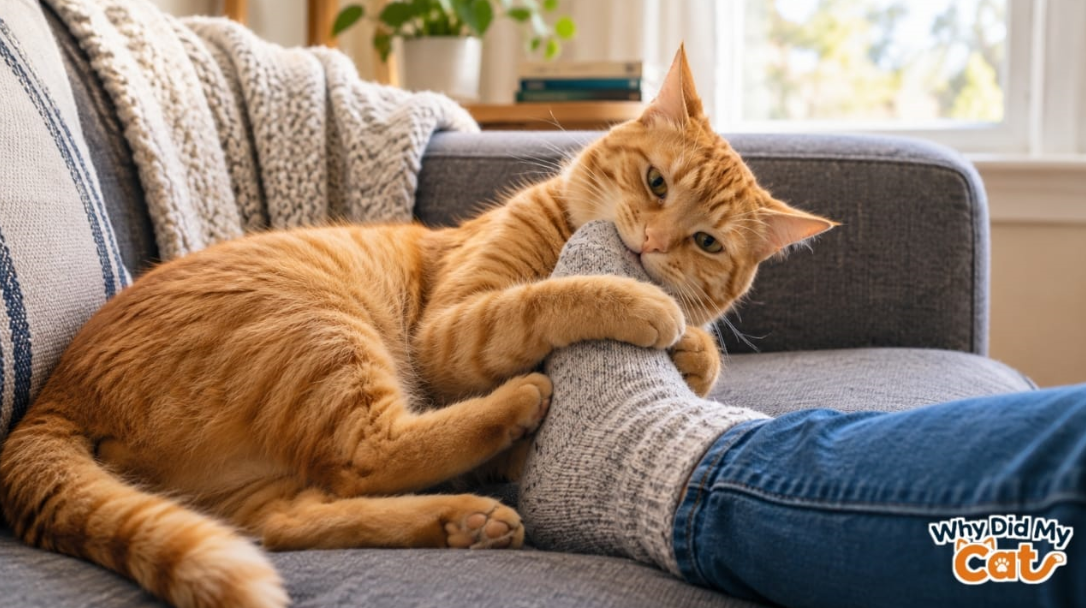
You’re petting your cat, everything seems fine, and then—nip. Maybe she goes right back to sitting beside you as if nothing happened. Or maybe your cat grabs your ankle as you walk past the couch.
A nip can mean a few different things. Some cats do it during play. Others have simply had enough petting, want attention, or are trying to end an interaction. A soft nip from a relaxed cat is also very different from a hard bite with hissing or scratching.
The details around the bite tell you which situation you’re dealing with.
What Does It Mean When a Cat Nips You?
A nip is usually a quick bite with little pressure. It may happen during play, while you’re petting your cat, or when your cat is trying to get a reaction from you.
For example, a cat that lightly grabs your hand during a cuddle is having a very different interaction from one that bites, holds on, and starts kicking with its back legs.
Gentle Nip vs. Hard Bite
A gentle nip is usually brief and controlled. Your cat may bite and then simply walk away or settle back down.
A hard bite deserves more attention, especially when it comes with hissing, growling, flattened ears, scratching, or a tense body. Fear, frustration, redirected aggression, or pain can all contribute to more serious biting behavior. Cornell lists pain-related and several behavioral forms of aggression in cats, so a sudden change shouldn’t be brushed off as bad behavior.
Why Did My Cat Nip Me?
The reason depends a lot on what was happening at the time. A few common situations show up again and again in homes with cats.
Your Cat Was Playing
Your moving ankle can look like a toy to a cat.
You walk past the sofa, your cat crouches down, watches your feet, and suddenly darts out. That quick nip is often part of a chase-and-pounce sequence rather than an attempt to hurt you.
Cats use stalking, chasing, grabbing, and biting during play. Kittens are especially prone to this, although adult cats can keep the habit. VCA recommends giving cats appropriate outlets for this behavior instead of letting hands and feet become their toys.
Wand toys, toy mice, balls, and other toys that keep some distance between your hands and your cat’s teeth are better choices.
Sometimes Your Cat Is Asking for Attention
Not every nip happens because your cat wants you to stop.
Picture this: you’re sitting at your desk, your cat rubs against your leg, you keep working, and a few minutes later she gives your ankle a quick nip. You look down, talk to her, or get up to play.
If that sequence keeps working, she may learn that nipping gets your attention.
It doesn’t mean your cat is being spiteful. She has simply discovered a behavior that gets a response.
When a Nip Means “That’s Enough”
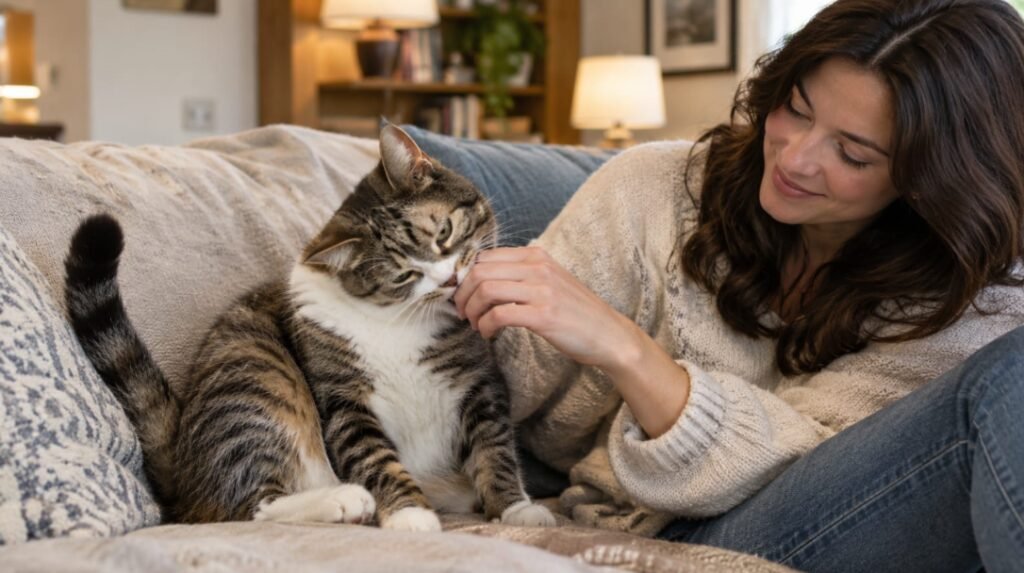
Some cats enjoy being close to you without wanting to be petted for a long time.
Your cat may happily sit beside you while you watch TV, accept a few strokes around the cheeks, and then bite when your hand keeps moving over her back. VCA describes this type of petting-related biting in cats that become uncomfortable with continued touching.
The useful response is simple: stop petting.
You don’t need to wait for the actual bite. A cat that freezes, turns her head toward your hand, moves her ears back, or starts flicking her tail is already giving you information.
A Gentle Nip Can Happen During Friendly Interaction
Some cats use their mouths during cuddling, grooming, or other social interactions. Owners often describe these as “love bites.”
That term is fine as long as it doesn’t make you ignore what your cat is actually doing.
A relaxed cat may give a tiny nip and settle back down. Another cat may purr while becoming uncomfortable with the interaction. The bite itself doesn’t tell the whole story.
Your Cat May Be Trying to End an Interaction
Cats don’t always want to be handled simply because they approached you.
A cat may climb onto your lap because she wants warmth or company, then object when you start rubbing her. Another may enjoy chin scratches but dislike being touched along the sides or lower back.
VCA notes that some cats seek human companionship but don’t necessarily want prolonged petting.
So when a nip follows a particular type of touching, change what you’re doing rather than trying to push through it.
Why Does My Cat Nip Me in These Situations?
Certain everyday situations make the reason easier to spot.
Why Does My Cat Bite Me Gently While Purring?
Purring doesn’t always mean “keep petting me.”
A cat can purr while enjoying contact, but purring by itself isn’t enough to tell you how she feels. Watch for the rest of her behavior.
If her body is loose and she stays comfortably beside you, a tiny nip may simply be part of the interaction. If her tail starts snapping back and forth, her ears move backward, or she becomes stiff while your hand is still moving, stop the petting.
Why Does My Cat Suddenly Bite Me When I Pet Her?
This is one of the more common situations owners describe.
Your cat may seem perfectly happy for the first few minutes and then suddenly turn around and nip your hand. Sometimes she has reached her tolerance for touching.
Try shorter petting sessions and stick with areas your cat consistently enjoys. If she reacts whenever you touch one particular spot, especially when this behavior is new, that’s different.
Pain from dental problems, joints, skin, or another physical issue can make a cat less willing to tolerate handling. Cornell and VCA both recommend considering medical causes when aggression or biting appears unexpectedly.
Why Does My Cat Bite Me When I Walk By?
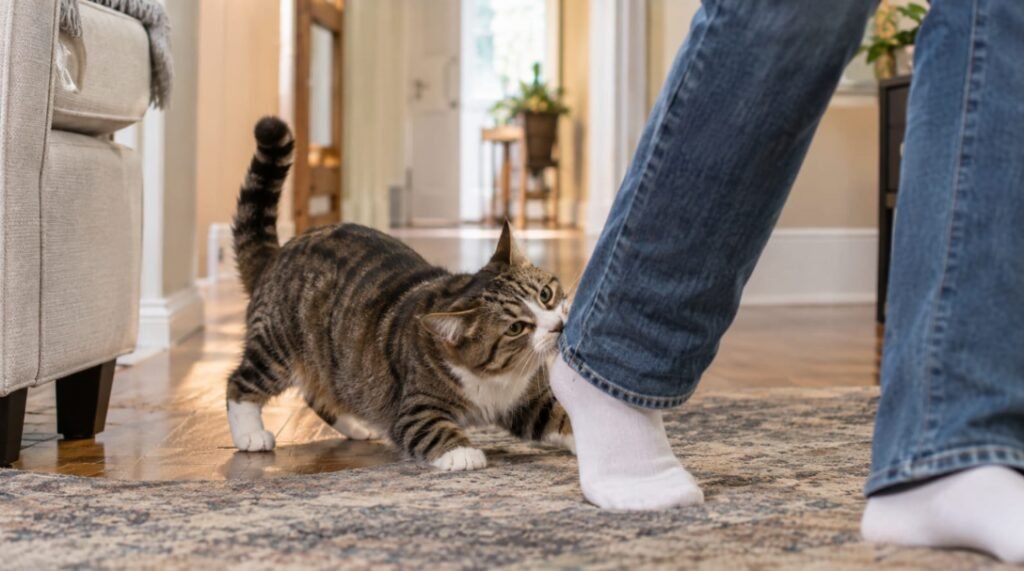
This one can be surprisingly playful.
Your cat may wait behind a chair, watch your legs, then rush out as you pass. If she crouches, stalks, pounces, and quickly runs off, she’s likely treating your movement like something to chase.
Give her something appropriate to chase instead. Regular interactive play can help, particularly for cats that seem to have endless energy.
Why Does My Cat Nip Me Out of Nowhere?
What feels sudden to you may have started with a signal you didn’t notice.
Maybe your cat’s tail moved once before the nip. Maybe she turned her head toward your hand. Perhaps she went completely still for a second.
These small changes are easy to miss because they happen quickly. With repeated incidents, try to notice what your cat does in the few seconds immediately before the bite rather than trying to interpret the nip after it happens.
What Your Cat’s Body Language Can Tell You
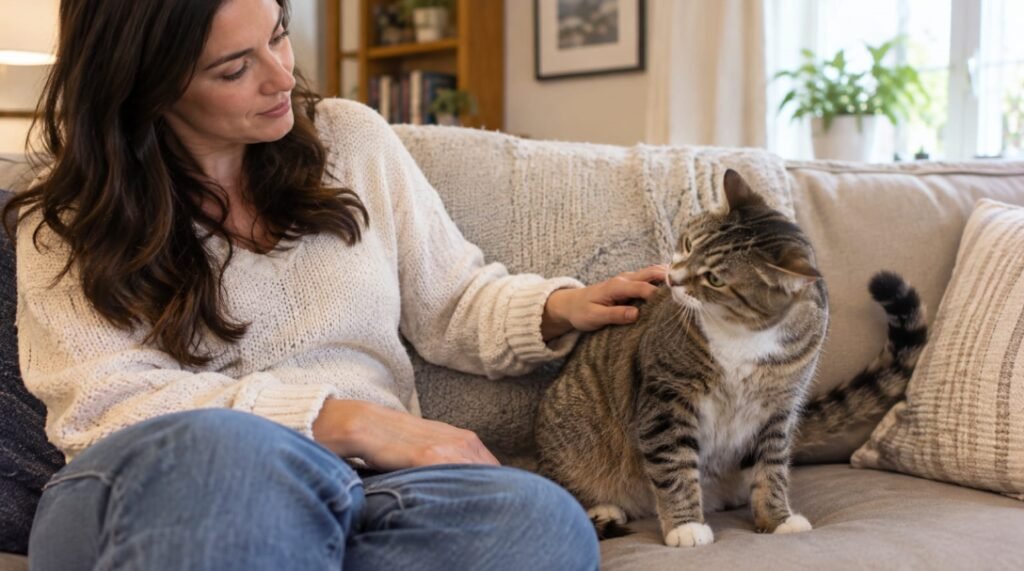
You don’t have to become an expert in every cat signal. A few simple changes are worth noticing.
For example, you’re rubbing your cat’s back while she sits beside you. At first, she’s relaxed. Then her tail starts flicking, her ears move slightly backward, and she turns her head toward your hand.
That’s a good time to stop.
During play, the signs look different. Your cat may crouch low, stare at your moving feet, twitch her tail, and prepare to pounce. Cornell describes stalking, pouncing, dilated pupils, tail movement, and pinned ears among behaviors that can occur with play aggression.
You don’t need to memorize a checklist. Just start noticing what your own cat does before she reaches the point of biting.
What Should You Do When Your Cat Nips You?
Your response can either end the interaction or turn the nip into a bigger game.
If the nip happens during petting, take your hand away and give your cat some space. If it happens during play, don’t wrestle with her using your hands. Wait until she settles and use a toy for the next play session.
Physical punishment is not a good solution. Hitting, yelling, or trying to frighten a cat can increase fear and make aggressive behavior worse. Cornell specifically advises against physical punishment, while VCA recommends changing the setup and providing appropriate play outlets.
For kittens, this is especially important. A tiny kitten biting your fingers may seem harmless now, but those same habits become much less pleasant when the cat is fully grown.
When Is Cat Nipping a Reason to Call a Veterinarian?
A long-standing gentle nip during a familiar situation is different from a cat that has suddenly started biting.
Make a veterinary appointment if your cat becomes unusually aggressive, bites when you touch a particular part of her body, or shows other changes such as hiding, reduced appetite, limping, changes in grooming, or obvious discomfort.
The reason is simple: behavior can change when a cat doesn’t feel well. Cornell lists medical problems including dental disease and osteoarthritis among conditions that can contribute to aggression.
Your veterinarian can check for a physical problem before the behavior is treated as purely behavioral.
What If My Cat Bites Hard Enough to Break the Skin?
Don’t ignore a cat bite just because the wound looks small.
Wash the area with warm, soapy water as soon as possible. Cat bites can introduce bacteria, and the CDC recommends medical attention when the wound is serious or becomes red, painful, warm, or swollen. Medical advice is also important when the cat’s rabies vaccination status is unknown or the cat appears sick.
For a deep puncture, significant bleeding, or a bite from an unfamiliar or stray cat, contact a healthcare professional promptly.
Frequently Asked Questions
Do cats remember when they bite you?
Cats can learn that certain actions lead to certain results. For example, if biting always makes petting stop, your cat may repeat that behavior when she wants the interaction to end.
That doesn’t mean she’s holding a grudge. It’s more useful to figure out what the bite achieves for her and change that interaction when possible.
Is it bad if I let my cat bite me?
Allowing gentle play with your hands may seem harmless when your cat is small, but it can create a habit that’s harder to manage later. Adult cats have stronger jaws and their bites can hurt or break the skin.
Keep chasing, grabbing, and biting games focused on toys rather than fingers, hands, or feet. VCA recommends using appropriate toys for predatory play.
What does it mean when your cat gives you a gentle nip?
A gentle nip can happen during play, petting, attention-seeking, or social interaction. Sometimes it’s simply your cat’s way of saying that she’s finished with the interaction.
The circumstances matter more than the label you give the bite. A soft nip followed by relaxed behavior is very different from a hard bite accompanied by fear, tension, hissing, or repeated attacks.
Conclusion
A gentle nip doesn’t automatically mean your cat is angry. It may be part of play, attention-seeking, social interaction, or a clear “that’s enough” message.
The main thing is to respond to the behavior in front of you. Stop when your cat has had enough, keep rough play directed toward toys, and take sudden or painful biting seriously. If the change seems unusual for your cat, let your veterinarian check for an underlying problem.
[…] can also look at what happens immediately afterward. If your cat bites your hair and then settles beside you, grooming or comfort may be involved. If the bite starts a chase around […]
[…] sometimes use gentle licking or nibbling as part of social interaction. A cat that curls up beside you, purrs, rubs against you, and gives […]
[…] Sudden aggression or other unusual behavior […]
[…] by figuring out when the biting happens. Is it during long cuddling sessions, when you are sleeping, around breakfast, or when your cat […]
[…] you been worried about your cat? Has your routine changed? Are you dealing with grief or another major source of stress? Those […]
[…] your cat also nips your hands during play, our guide on why your cat might nip you explains more about this […]
[…] can also read our guide on why your cat might nip you to learn more about biting and nipping […]
[…] your cat is biting or nipping during interactions, our guide on why cats nip their owners explains common triggers and what those behaviors can […]