
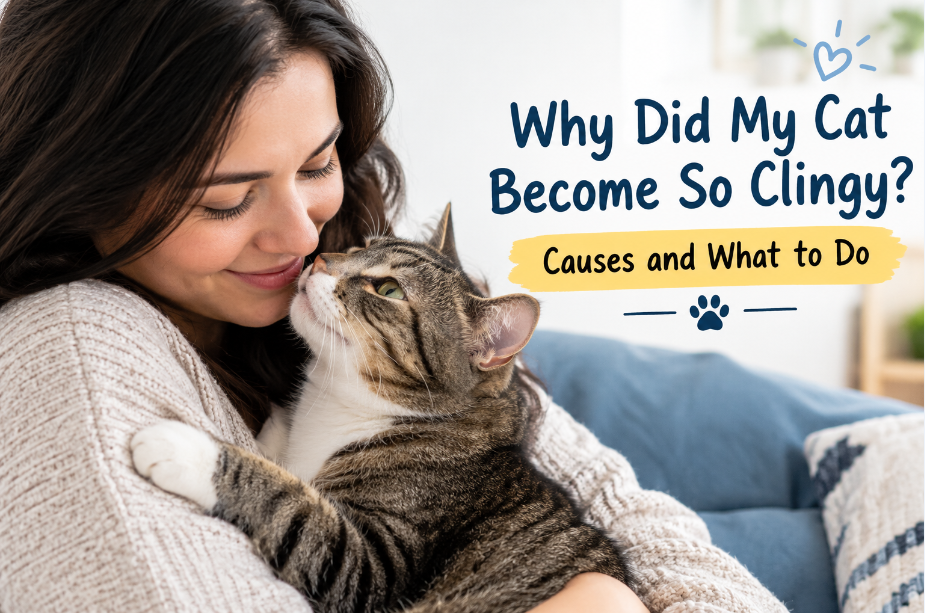
A cat that suddenly starts following you everywhere, sitting on your lap more often, or crying when you leave may simply be seeking more attention. But a noticeable change in clingy behavior can also happen after a change at home, stress, anxiety, aging, or a health problem.
The timing matters. Think about what changed around your cat when the clinginess started, and whether you have noticed any other changes in eating, litter-box habits, grooming, sleep, or activity.
What Does It Mean When a Cat Becomes Clingy?
A clingy cat may follow you from room to room, wait outside the bathroom, sleep beside you, demand more petting, or become more vocal when you move away.
Some cats naturally enjoy being close to their owners. The bigger concern is a new behavior that is noticeably different from your cat’s normal personality.
For example, a cat that was happy to sleep on the couch while you worked may suddenly insist on sitting beside you all day. That change is worth looking at, especially if it started quickly.
Why Did My Cat Suddenly Become So Clingy?
A change in routine
Cats usually do well with predictable routines. A new work schedule, different feeding times, a move, or spending more time away from home can change how secure your cat feels.
Even something that seems minor to you, such as moving the litter box or rearranging a favorite resting area, can change your cat’s daily environment.
Stress or anxiety
Clinginess can be a sign of anxiety. A new pet, visitors, children becoming more active, construction noise, fireworks, or conflict with another cat can make a cat seek extra reassurance from a familiar person.
Veterinary behavior guidance lists clinginess among possible signs of anxiety in cats, along with changes such as hiding, appetite changes, sleep problems, and inappropriate elimination.
Your cat wants more interaction
Sometimes the explanation is much simpler: your cat wants more companionship.
This is especially common when an owner has recently started working longer hours, traveling more, or spending less time at home. An indoor cat with too little play and mental stimulation may also seek out its favorite person more frequently.
Try adding regular interactive play, especially around the times your cat usually becomes demanding.
Your cat is getting older
Older cats can become more dependent on familiar people as their routines and abilities change. Reduced vision or hearing, discomfort, and other age-related changes can also affect how confidently a cat moves around the home.
A new behavior change in a senior cat deserves more attention than assuming it is simply part of getting older. Pain and medical conditions can affect normal behavior in aging cats.
Something frightened your cat
A frightening event can change a cat’s behavior. A loud noise, an unfamiliar person, an aggressive animal outside, or another unpleasant experience can leave a cat looking for a safe person or place.
Fear and anxiety can also develop after a single unpleasant experience, depending on the cat and the situation.
Your cat may be feeling unwell
Sudden clinginess does not automatically mean your cat is sick, but a sudden personality change should not be ignored when other symptoms appear.
Cats can hide pain, and behavioral changes may be one of the first things an owner notices. Changes in appetite, grooming, activity, jumping, sleeping, litter-box habits, or tolerance for handling can all be relevant.
Your cat may simply be becoming more affectionate
Not every newly clingy cat has a problem.
A cat that has become more comfortable with you may start seeking more physical contact. This can happen after adoption, after settling into a new home, or simply as the relationship develops.
If your cat is eating normally, using the litter box normally, playing, grooming, and otherwise acting like herself, increased affection may simply be a change in how she interacts with you.
Why Has My Cat Become So Clingy All of a Sudden?
Start by looking at the days or weeks immediately before the behavior changed.
Ask yourself:
- Did your work or sleep schedule change?
- Did someone move into or leave the home?
- Did you get another pet?
- Have there been more visitors or noise?
- Did you move furniture or change important areas?
- Has your cat been spending more time alone?
- Have you noticed changes in appetite, grooming, litter-box use, or activity?
You do not need to find a single obvious cause. The goal is to compare your cat’s current behavior with her normal routine and look for changes happening at the same time.
Why Has My Cat Become So Clingy at Night?
Some cats become especially demanding at night because the house is quieter and their owners are finally available. Cats also have natural activity patterns that can make nighttime a more active period.
A cat that follows you around at night may want play, food, attention, or reassurance.
A consistent evening routine can help. Try an interactive play session before bedtime, followed by the normal evening meal if that fits your cat’s feeding schedule. Make sure your cat also has comfortable places to rest and safe areas where she can retreat when she wants quiet time.
If nighttime clinginess is new and comes with excessive vocalizing, restlessness, confusion, or other unusual behavior, mention it to your veterinarian.
How Can I Help My Clingy Cat Become More Comfortable?
Start with consistency rather than pushing your cat away.
Keep meals, play, and other daily activities reasonably predictable. Give your cat opportunities for interactive play and mental stimulation, and provide comfortable hiding or resting spaces away from busy areas.
If your cat demands attention constantly, you do not have to respond to every meow. Instead, offer attention during calm moments and give your cat other ways to stay occupied.
Avoid punishment or forcing your cat to stay away from you. Physical punishment can increase fear and anxiety and make behavior problems harder to manage.
When Should You Worry About Sudden Clinginess?
Make a veterinary appointment when the clinginess is persistent, unusual for your cat, or accompanied by other changes.
Watch for:
- Reduced appetite or a noticeable change in drinking
- Vomiting or diarrhea
- Changes in urination or litter-box use
- Hiding or unusual withdrawal
- Excessive vocalization
- Less interest in play
- Trouble jumping or climbing
- Limping, stiffness, or reluctance to move
- Changes in grooming
- Sensitivity when touched
- Sudden aggression or other unusual behavior
Cats often mask pain, so a behavior change can matter even when there is no obvious injury. A veterinarian can examine your cat and decide whether a medical problem, pain, anxiety, or another behavioral issue needs investigation.
If your cat is straining to urinate, repeatedly trying to urinate without producing urine, having difficulty breathing, collapsing, or showing another emergency sign, seek urgent veterinary care rather than waiting to see whether the clinginess improves.
Frequently Asked Questions
What cat breed is the most clingy?
Some breeds are known for being especially social or people-oriented, but breed alone does not determine how affectionate a cat will be. Individual personality, early socialization, environment, and the relationship with the owner all matter. A mixed-breed cat can be just as attached to its person as a purebred cat.
Why has my cat suddenly become obsessed with me?
A sudden increase in attachment can follow a change in routine, stress, more time spent alone, or a frightening event. It can also happen when a cat becomes more comfortable with its owner. If the change is sudden and comes with appetite, litter-box, grooming, or activity changes, contact your veterinarian.
Are male or female cats more clingy?
There is no simple rule that male cats are always more clingy or that female cats are more independent. Individual personality and life experience have a much bigger influence on how a cat interacts with people. Spaying or neutering, age, socialization, and the home environment can also affect behavior.
Do cats get clingy as they age?
Some older cats become more dependent on familiar people, but new clinginess should not automatically be blamed on age. Pain, reduced senses, illness, or changes in confidence can alter behavior. A noticeable change in an older cat is worth discussing with a veterinarian, particularly when other symptoms appear.
Why is my cat suddenly so clingy?
Sudden clinginess can happen after changes in routine, stress, anxiety, increased time alone, environmental changes, or a frightening experience. Some cats also become more affectionate as they grow more comfortable with their owners. When clinginess appears alongside other physical or behavioral changes, a veterinary check is appropriate.
Conclusion
A cat that suddenly becomes clingy is usually responding to something in her environment, routine, emotional state, relationship with you, or physical health.
Start by comparing her current behavior with her normal routine and looking for recent changes. Give her predictable routines, play, attention, and comfortable spaces. If the clinginess is sudden, persistent, or accompanied by other changes in health or behavior, have your veterinarian check her rather than assuming it is simply extra affection.
[…] to a new home, bringing in another pet, having visitors, or changing your work schedule can affect how much a cat vocalizes. For example, a cat left alone for longer […]
[…] For more context, read our guide to why your cat may become suddenly clingy. […]
[…] comparison, a cat who wants extra attention may show the opposite pattern. Read Why Did My Cat Become So Clingy? Causes & Help to learn more about changes in attachment and attention-seeking […]
[…] your cat has also become more attached to you, read our guide on Why Did My Cat Become So Clingy? Causes & Help to understand changes in your cat’s […]
[…] Stress is one possibility, but it should not automatically be blamed for persistent diarrhea. If your cat has also become unusually clingy or is behaving differently, read our guide on why your cat became so clingy. […]
[…] If you already own a cat, changes in the visitor’s behavior do not necessarily mean it wants to live with you. For a related look at feline attachment, read why a cat may become unusually attached to people. […]
[…] A nervous cat may hurry out of the litter box rather than remain there to cover her waste. Give her a quiet place to toilet without interruptions from children or other pets. If she has also become unusually clingy, see our guide on why your cat may become more clingy. […]
[…] cat has also started following you everywhere or demanding constant attention, read our guide on why your cat became so clingy. These additional behaviors can help you understand whether your cat’s need for company has […]
[…] For more signs of attention-seeking behavior, see our article on why your cat may have become so clingy. […]