
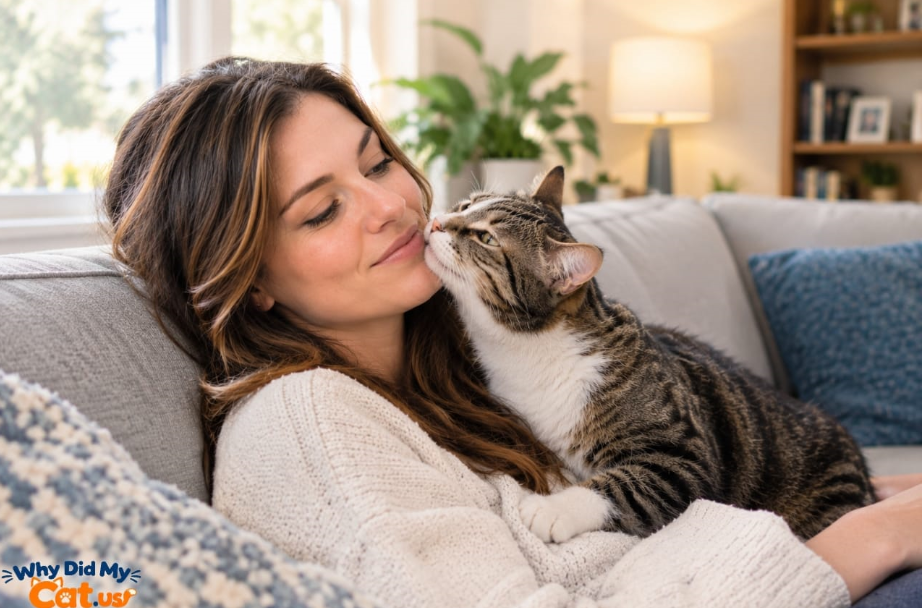
A cat biting your chin can be surprising, especially when it happens during cuddling or while your cat is purring. A gentle nibble may be part of affection, grooming, play, or attention-seeking. A bite can also mean your cat has become overstimulated or wants the interaction to stop.
The bite itself does not tell the whole story. The situation, how hard your cat bites, and the rest of their body language help explain what is happening.
Why Did My Cat Bite My Chin?
Your cat may bite your chin because they are trying to interact with you in a way that feels natural to them. Cats use their mouths for grooming, play, exploration, and communication, so a chin bite does not automatically mean aggression.
Your Cat May Be Showing Affection
Some cats give gentle nibbles during close contact. If your cat is relaxed, rubbing against you, grooming you, or settling comfortably beside you, a soft bite may be part of friendly social interaction.
These bites usually do not break the skin and may happen when your cat is already seeking close contact.
Your Cat May Be Grooming You
Cats use licking and gentle nibbling as part of social grooming. A cat that licks your face and then gives your chin a little bite may simply be including you in that interaction.
It is not exactly the same as how a mother cat grooms her kittens, but the behavior can reflect social bonding and familiarity.
Your Cat May Want Attention
Some cats learn quickly that biting gets a reaction. If your cat bites your chin when you are working from home, watching TV, or lying in bed, they may be trying to get you to interact with them.
The request could be for petting, play, food, or simply your attention.
Your Cat May Be Playing
A moving face can become an interesting target, particularly for a kitten or young cat with lots of energy. Play-related biting tends to come with other active behaviors, such as pouncing, grabbing, chasing, or batting.
Give that energy somewhere appropriate to go. Wand toys and other interactive toys are better targets than your face or hands.
Your Cat May Be Overstimulated
This is especially common when a bite happens during petting or cuddling. Your cat may enjoy the interaction for a while and then reach a point where continued contact becomes irritating.
Watch for a stiffening body, tail flicking, ears moving backward, or a sudden change in posture. Those signs mean it is time to stop before the nibble becomes a harder bite.
Why Does My Cat Bite My Chin While Purring?
Purring and gentle biting can happen together during relaxed social interaction. Your cat may be comfortable with you, enjoying the attention, and giving you a soft nibble at the same time.
But purring alone does not prove that your cat is happy. Cats can also purr when they are stressed or uncomfortable. Look at the whole picture: relaxed muscles, normal ears, comfortable posture, and willingness to stay close are more reassuring than purring by itself.
Why Does My Cat Bite My Chin When Cuddling?
A chin bite during cuddling can mean your cat enjoys being close but has reached their limit for physical contact.
For example, your cat may climb onto your chest, settle against you, and enjoy a few minutes of petting. Then they suddenly turn toward your face and give a quick nip. That does not necessarily mean the cuddling went badly. Your cat may simply be communicating that they want the interaction to change.
Next time, stop petting when you notice early signs of discomfort rather than waiting for the bite.
Why Does My Cat Bite My Chin Gently?
A gentle bite that does not hurt or break the skin is different from a forceful bite accompanied by fear or defensive body language.
A soft nibble may happen during grooming, affection, play, or an interaction your cat wants to end. Some cats also lick before gently nibbling.
Even when the bite is harmless, you do not have to allow it. If you would rather your cat not bite your face, calmly end the interaction and redirect them to a toy or another appropriate activity.
Why Does My Cat Bite My Chin While I’m Sleeping?
A cat that bites your chin while you are asleep may be looking for attention, food, play, or a response from you.
This can become part of a routine. For example, if your cat has learned that biting your face gets you out of bed, the behavior may become especially persistent around breakfast time.
Avoid turning the bite into a game. When you are awake and calm, give your cat appropriate outlets for attention and play. Keeping feeding and play routines consistent may also reduce behavior driven by a predictable morning routine.
If the behavior is new and comes with other changes in appetite, activity, litter-box habits, or temperament, mention it to your veterinarian.
Why Does My Cat Bite My Chin and Nose?
Your cat may focus on your chin and nose simply because your face is close and easy to reach during cuddling.
Cats are also interested in familiar scents, movement, and social contact. A cat that rubs against your face, licks you, and then gives a gentle nibble may be engaging in a close-contact interaction.
A hard bite is different. In that situation, look at your cat’s ears, eyes, posture, and tail rather than assuming the behavior is affectionate.
What Does My Cat’s Body Language Tell Me?
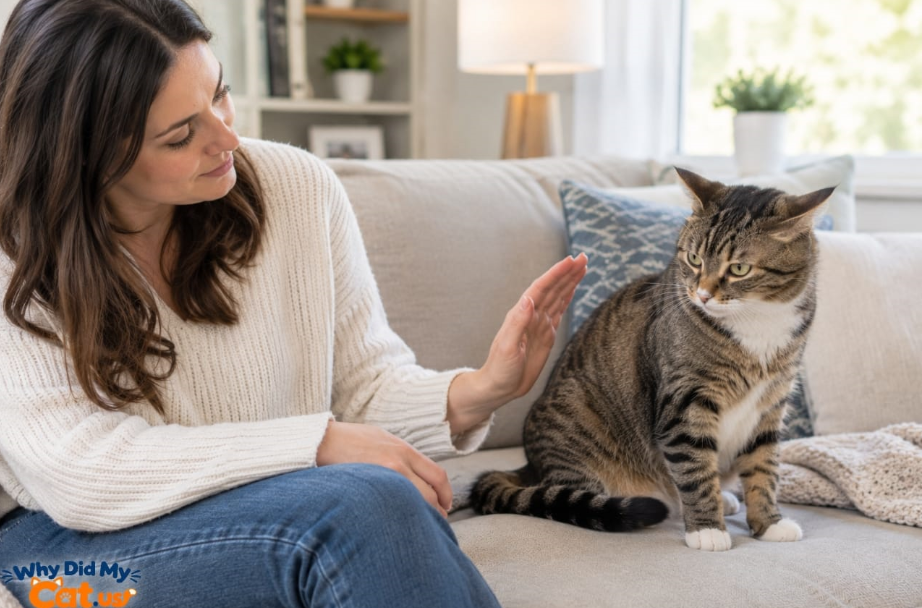
The moments immediately before the bite can tell you more than the bite itself.
Signs Your Cat Is Relaxed
A relaxed cat may have a loose body, normal ear position, and comfortable posture. They may remain close to you, rub against you, groom you, or settle down after the interaction.
A gentle nibble in this setting is more consistent with friendly interaction than a defensive attack.
Signs Your Cat Has Had Enough
A cat may become tense before biting. You might notice tail twitching, ears moving backward, a change in posture, or your cat trying to move away.
When you see these signals, stop petting and give your cat some space. Learning this threshold can prevent many bites before they happen.
Signs the Bite May Be Aggressive or Fear-Based
Flattened ears, dilated pupils, hissing, growling, a tense or defensive posture, and repeated hard biting are more concerning than a relaxed nibble.
Fear, frustration, redirected aggression, and pain can all contribute to biting. Cornell notes that medical problems such as dental disease, arthritis, and other painful conditions can also contribute to aggressive behavior.
What Should I Do If My Cat Bites My Chin?
Stay calm and avoid turning the moment into a struggle.
If the bite is gentle, stop the interaction and give your cat a chance to move away. If your cat wants to play, redirect them to a toy rather than offering your hands or face.
Do not hit, yell at, grab, or punish your cat. Physical punishment can increase fear and make aggressive behavior worse.
If you notice that bites happen after a certain number of pets, end the petting session earlier next time. Your goal is to recognize the signal before your cat feels the need to use their teeth.
What If My Cat Bites My Chin Hard or Breaks the Skin?
A hard bite that punctures the skin should not be treated like a harmless love bite. Cat bites can introduce bacteria deep into tissue, and infections can develop even from relatively small puncture wounds.
Wash the wound immediately with warm, soapy water. Seek medical care for a serious wound, increasing redness, warmth, swelling, or pain. Medical advice is also important when the cat’s rabies vaccination status is unknown or the cat appears sick.
Because the bite is on your face, do not dismiss a deep puncture or worsening wound simply because it initially looks small.
When Should I Be Concerned About My Cat Biting My Chin?
A single gentle nibble from an otherwise relaxed cat is usually very different from a sudden pattern of hard or defensive biting.
Talk with your veterinarian when:
- biting suddenly starts in a cat that did not previously bite
- your cat reacts aggressively when a particular area is touched
- the bites are becoming harder or more frequent
- your cat also seems painful, unusually withdrawn, or irritable
- you notice other changes in appetite, activity, grooming, or litter-box habits
- you cannot identify or safely manage the trigger
Pain is one reason a normally tolerant cat may suddenly react badly to touch, so a new behavior deserves more attention than an established, predictable gentle nibble.
How Can I Stop My Cat From Biting My Chin?
Start by figuring out when the biting happens. Is it during long cuddling sessions, when you are sleeping, around breakfast, or when your cat wants to play?
Once you spot the pattern, change the interaction before the bite occurs.
Learn Your Cat’s Warning Signals
Notice small changes such as tail flicking, body tension, ears shifting backward, or your cat trying to move away. Ending contact at that point is much easier than dealing with a bite.
Stop Interaction Before Overstimulation
Keep petting sessions within the amount your cat comfortably tolerates. Some cats enjoy being near you without wanting continuous petting.
Redirect Biting to a Toy
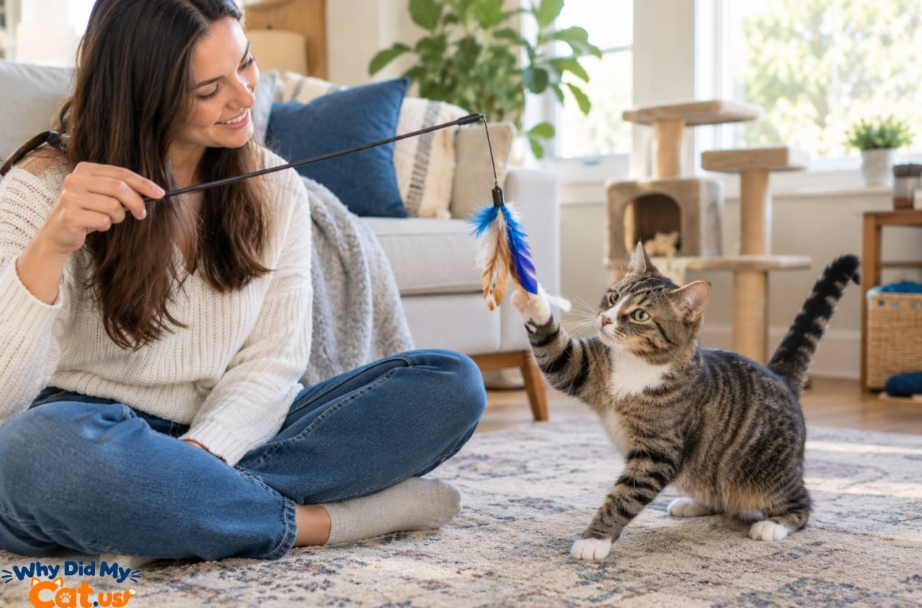
Use interactive toys for play instead of your hands, face, or other body parts. This gives your cat an appropriate target for chasing, grabbing, and biting.
Avoid Punishment
Punishment may make your cat more fearful and can damage trust. A calm interruption, distance, and appropriate redirection are safer ways to handle unwanted biting.
Frequently Asked Questions
Why do cats bite human chins?
Cats may bite human chins during affection, grooming, play, attention-seeking, or after becoming overstimulated. The intensity of the bite and your cat’s body language matter. A relaxed cat giving a gentle nibble is different from a tense cat delivering a hard bite.
Do cats feel guilty after biting you?
Cats do not appear to experience guilt in the same human sense. After a bite, a cat may retreat, avoid you, or return for attention, but these behaviors do not mean the cat feels guilty. The better approach is to identify what triggered the bite and adjust the interaction.
My cat love bites me too hard. What should I do?
Stop the interaction when the bite becomes painful and give your cat some space. Avoid punishment or rough play. Watch for early signs of overstimulation and redirect your cat to a toy. If hard biting is frequent, worsening, or new, talk with your veterinarian.
Why do cats nuzzle you then bite you?
Nuzzling and biting can be part of the same close interaction. Your cat may be seeking attention, grooming you, showing affection, or enjoying contact before becoming overstimulated. Watch what happens immediately before the bite to understand whether your cat wants more interaction or a break.
What is the highest form of affection from a cat?
There is no single “highest” form of affection for every cat. Trust may show up through behaviors such as choosing to stay near you, slow blinking, head rubbing, grooming, sleeping beside you, or seeking contact. A gentle bite is not necessarily a stronger sign of affection than these behaviors.
Conclusion
So, why did my cat bite my chin? The answer depends on what was happening around the bite. A gentle nibble during cuddling may be social interaction, grooming, play, or affection. A bite that follows tail flicking, tension, or an attempt to move away may be your cat’s way of ending the interaction.
Watch the pattern rather than focusing on the bite alone. If the behavior becomes hard, sudden, frequent, or accompanied by signs of pain or illness, a veterinarian can help determine whether a medical or behavioral problem is involved.
[…] puts your face close to your cat, so a cheek bite can become part of the interaction. Your cat may be enjoying the closeness, asking for attention, or […]