
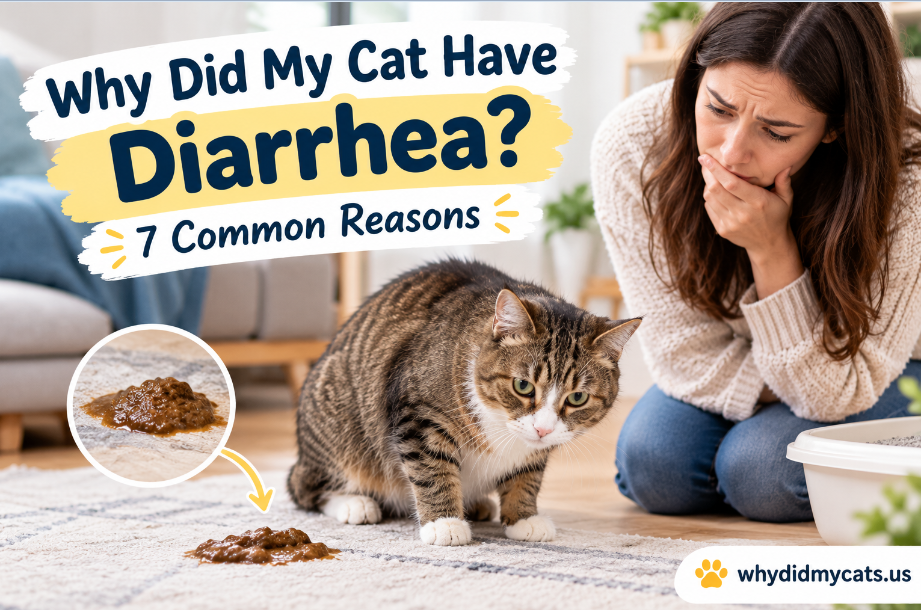
Finding loose or watery stool in your cat’s litter box can be worrying, especially when your cat seems perfectly normal otherwise. Why did my cat have diarrhea? Common causes include sudden food changes, food sensitivities, intestinal parasites, stress, and digestive illnesses.
A single mild episode in an otherwise healthy adult cat may settle quickly. Repeated diarrhea, blood in the stool, vomiting, or changes in appetite deserve closer attention. The duration and your cat’s overall condition help determine what to do next.
Why Did My Cat Have Diarrhea? 7 Common Reasons
1. A Sudden Change in Food
Cats have sensitive digestive systems. Switching from one brand of food to another, introducing a new flavor, or offering rich table scraps can upset the stomach.
For example, a cat that has eaten the same dry food for months may develop loose stool after receiving a new canned food and several unfamiliar treats in one day. Introduce dietary changes gradually and avoid adding several new foods at once.
2. Food Intolerance or Sensitivity
Some cats develop digestive symptoms after eating particular ingredients. A food intolerance or allergy may cause recurring diarrhea, gas, vomiting, or skin irritation.
If the problem repeatedly follows the same food, tell your veterinarian. A controlled diet trial may help identify the trigger. Randomly switching between foods can make the cause harder to identify.
3. Intestinal Parasites
Worms and microscopic parasites, including Giardia, can cause loose stool. Parasites are particularly important to consider in kittens, newly adopted cats, and cats that go outdoors.
Your cat may still eat and play normally despite an intestinal parasite. A veterinarian may recommend a stool test to identify the cause and choose appropriate treatment.
4. Stress or Changes at Home
Cats notice changes in their surroundings. Moving to a new apartment, bringing home another pet, having visitors stay overnight, or changing a familiar routine can upset a cat’s digestive system.
Stress is one possibility, but it should not automatically be blamed for persistent diarrhea. If your cat has also become unusually clingy or is behaving differently, read our guide on why your cat became so clingy.
5. Bacterial or Viral Infections
Some infections irritate the digestive tract and cause frequent, watery stools. Other signs can include vomiting, reduced appetite, fever, and low energy.
Young kittens and cats without complete vaccination protection deserve particular attention because certain infections can become serious quickly. Contact your veterinarian when diarrhea is frequent or accompanied by other symptoms.
6. Medication or an Underlying Health Problem
Antibiotics and other medications sometimes cause digestive upset. Persistent or recurring diarrhea can also occur with inflammatory bowel disease, thyroid problems, and other medical conditions.
Tell your veterinarian about every medication, supplement, and recent treatment your cat has received. Do not stop a prescribed medication or change its dose without veterinary advice.
7. Eating Something That Upsets the Stomach
Cats sometimes chew houseplants, get into the trash, eat unfamiliar foods, or swallow objects they find around the home. Some of these can irritate the digestive tract; others can cause poisoning or an intestinal blockage.
If you suspect your cat swallowed a foreign object or a toxic substance, seek veterinary advice promptly rather than waiting for diarrhea to pass.
Why Does My Cat Have Diarrhea All of a Sudden?
Sudden diarrhea often follows a dietary change, unfamiliar treats, stress, or exposure to something that irritates the digestive tract. Parasites and infections are other possibilities.
Think about what changed during the past day or two. Did you open a new bag of food, give your cat leftovers, introduce a new pet, or notice that your cat got into the garbage?
Write down when the diarrhea started, how many times it happened, and whether the stool contains mucus or blood. These details can help your veterinarian assess the problem.
Why Did My Cat Have Diarrhea but Seems Fine?
A cat with mild diarrhea may continue eating, drinking, grooming, and playing as usual. That is reassuring, but normal behavior does not rule out parasites or an early digestive problem.
For a healthy adult cat with one mild episode, monitor the next bowel movements, keep fresh water available, and continue offering its usual complete cat food. Avoid extra treats and sudden diet changes.
Contact your veterinarian if diarrhea repeats, worsens, or continues into the next day. Seek advice sooner if your cat is young, elderly, has an existing health condition, or develops other symptoms.
Why Did My Cat Have Diarrhea With Blood?
Bright red blood can come from irritation or inflammation in the lower digestive tract. Black, tar-like stool can indicate digested blood and is particularly concerning.
Blood in diarrhea should not be dismissed as a simple food upset. Contact your veterinarian promptly for guidance. Heavy bleeding, weakness, pale gums, repeated vomiting, or collapse require urgent veterinary care.
Why Did My Cat Have Diarrhea and Throw Up?
Diarrhea and vomiting together can occur with infections, dietary problems, parasites, toxin exposure, or an intestinal blockage. Losing fluids through both routes also increases the risk of dehydration.
Contact your veterinarian promptly, especially when vomiting repeats, your cat cannot keep water down, or its energy and appetite decline. If you notice both symptoms, our guide to why cats throw up explains other possible causes of vomiting.
Why Did My Kitten Have Diarrhea?
Kittens can develop diarrhea after a food change, during stress, or because of parasites and infections. Their small bodies are more vulnerable to dehydration than those of healthy adult cats.
Contact your veterinarian promptly for advice, particularly if the kitten has frequent watery stools, blood, vomiting, poor appetite, or low energy. Very young kittens should not be managed by simply waiting to see whether the diarrhea goes away.
Your vet may request a fresh stool sample to check for parasites. Avoid giving a kitten human medication or changing its diet drastically without professional guidance.
What Should You Do if Your Cat Has Diarrhea?
Start with a few practical steps:
- Keep fresh water available. Diarrhea causes fluid loss, so make drinking water easy to reach.
- Feed carefully. Avoid table scraps, new treats, and sudden food changes. Do not deliberately fast your cat unless your veterinarian specifically instructs you to.
- Monitor the stool. Note its frequency, consistency, color, and whether blood or mucus appears.
- Check for other symptoms. Vomiting, reduced appetite, unusual tiredness, and signs of pain affect how urgently your cat needs care.
- Avoid human medicines. Products intended for people can be unsafe for cats. Ask your veterinarian before using anti-diarrhea medication, supplements, or home remedies.
If your cat has diarrhea outside the litter box, the urgency may simply leave it unable to reach the box in time. Our guide on why cats poop outside the litter box covers other reasons for bathroom accidents.
When Should You Call a Vet?
Contact your veterinarian promptly if diarrhea is frequent, watery, recurring, or accompanied by blood, vomiting, appetite loss, or changes in behavior. Black, tar-like stool, severe weakness, collapse, significant pain, or suspected poisoning warrant urgent care.
Do not wait for diarrhea to resolve on its own in a young kitten, a frail senior cat, or a cat with an existing medical condition.
If the diarrhea persists beyond 24 hours, contact your veterinarian for guidance rather than continuing home monitoring. Depending on your cat’s symptoms and history, the vet may examine your cat, test a stool sample for parasites, or recommend bloodwork and other diagnostic tests.
Frequently Asked Questions
What do you do when a cat has diarrhea?
Keep fresh water available, monitor your cat’s stool and behavior, and avoid new foods, treats, and human medications. A single mild episode in a healthy adult cat may settle quickly. Contact your veterinarian if diarrhea repeats, persists, or occurs with blood, vomiting, weakness, or reduced appetite.
Why does my indoor cat keep getting diarrhea?
Indoor cats can develop diarrhea from food sensitivities, sudden diet changes, stress, intestinal parasites, infections, or underlying health conditions. Living indoors does not eliminate every risk. Repeated episodes deserve a veterinary assessment, and a stool test or carefully planned diet trial may help identify the cause.
Why does my cat have diarrhea but seems fine?
Some cats remain active and eat normally during a mild digestive upset. However, parasites and other health problems can initially cause few additional symptoms. Monitor the stool closely and contact your veterinarian if diarrhea continues, returns, or becomes more severe.
How long is it okay for cats to have diarrhea?
A single mild episode may resolve within a day, but diarrhea should not be allowed to continue unchecked. Contact your veterinarian if it lasts beyond 24 hours, returns repeatedly, or worsens. Seek help sooner for kittens, senior cats, or any cat with blood, vomiting, weakness, or poor appetite.
Do cats recover from diarrhea on their own?
Some healthy adult cats recover from a brief, mild episode, particularly when it follows a temporary dietary upset. However, diarrhea caused by parasites, infection, or another illness needs appropriate treatment. Monitor your cat closely and contact your veterinarian if symptoms persist or other warning signs appear.
What is a silent killer for cats?
There is no single condition known as the silent killer of cats. Several serious illnesses can develop with subtle early signs because cats often hide discomfort. Dehydration from severe diarrhea, kidney disease, and urinary blockages are examples of serious problems. Difficulty urinating, collapse, or severe weakness requires urgent veterinary care.
Conclusion
Diarrhea in cats can follow a food change, stress, parasites, or an underlying illness. A mild, isolated episode in a healthy adult cat may settle quickly, but recurring diarrhea and additional symptoms need attention. Keep water available, avoid unapproved medicines, and contact your veterinarian when symptoms persist or warning signs appear.
[…] can also read our article about why your cat may have diarrhea to understand related bowel […]
[…] changes deserve attention, especially when they appear alongside a new behavior. Our article on common reasons cats develop diarrhea explains some causes of loose […]
[…] For more information about related symptoms, read our guide to why cats develop diarrhea. […]