
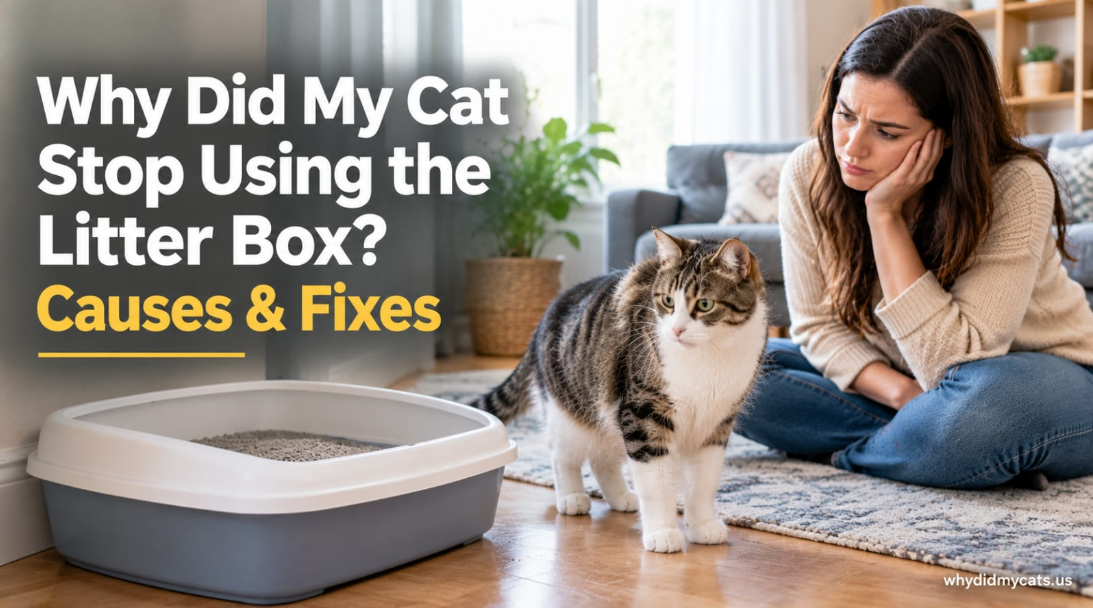
Why did my cat stop using the litter box? This behavior can happen because of a medical problem, a dirty litter box, stress, or a change in your cat’s routine. Understanding the cause can help you find the right solution and get your cat back to using the litter box.
The best solution depends on whether your cat is having trouble urinating, avoiding the box because of its condition, or choosing another place to poop. Finding the cause early can help you correct the problem before it becomes a habit.
Why Did My Cat Suddenly Stop Using the Litter Box?
A sudden change in litter box habits deserves attention, especially when your cat has used the box reliably for years. Common causes include:
- Medical problems: Urinary tract inflammation, bladder stones, constipation, diarrhea, or arthritis can make using the box painful.
- Dirty litter: Some cats avoid a box that contains waste or has a strong cleaning-product smell.
- Litter changes: A new texture, fragrance, or brand may discourage your cat from using the box.
- Poor location: A noisy, busy, or difficult-to-reach area can make the box less appealing.
- Stress: Moving, visitors, new pets, or conflict between cats can affect bathroom habits.
- Negative experiences: If your cat felt pain or was startled while using the box, they may begin avoiding it.
Do not assume your cat is misbehaving. A new bathroom habit can be an early sign that something is wrong.
Why Did My Cat Stop Using the Litter Box to Pee?
When a cat starts urinating outside the box, the first step is to consider a urinary problem. Bladder inflammation, urinary stones, and other conditions can cause discomfort, frequent trips to the box, or urination in unusual places.
Watch for small amounts of urine, straining, blood in the urine, or repeated trips to the box. A cat that suddenly starts peeing around the home may also be reacting to stress or disliking the litter box.
For more specific advice, read our guide on why a cat starts peeing in the house.
Important: If your cat repeatedly strains but produces little or no urine, seek emergency veterinary care immediately. A urinary blockage is life-threatening and is especially common in male cats. Do not wait to see whether the problem resolves on its own.
Why Did My Cat Stop Using the Litter Box to Poop?
If your cat still urinates in the box but poops elsewhere, constipation, diarrhea, pain, or an unpleasant experience with the box may be responsible. Older cats may also struggle to climb into a box with high sides because of joint pain.
Pay attention to whether the stool is hard, loose, bloody, or unusually frequent. These details can help your veterinarian identify a possible digestive problem.
If your cat has stopped pooping in the box, see our guide on why a cat stops pooping in the litter box. If your cat is leaving stool elsewhere around the home, our article about why a cat poops outside the litter box may also help.
How to Get Your Cat to Use the Litter Box Again
Once you have considered possible medical causes, make the litter box comfortable, clean, and easy to reach.
1. Keep the Litter Box Clean
Scoop out waste at least once a day and wash the box regularly with mild, unscented soap. Avoid strong fragrances that may bother your cat.
2. Check the Litter
If you recently changed litter, try returning to the previous type. Many cats prefer unscented, fine-textured litter. Avoid making several changes at once so you can identify what your cat prefers.
3. Choose a Quiet, Accessible Location
Place the box somewhere calm and easy to reach, away from loud appliances and busy walkways. Older cats may need a box with a low entrance.
4. Provide Enough Litter Boxes
A useful guideline is one litter box per cat, plus one extra. In a home with two cats, for example, provide three boxes when possible. Place them in separate, accessible locations rather than lining them all up together.
5. Clean Accidents Thoroughly
Use an enzymatic cleaner designed for pet urine to remove lingering odors. Ordinary cleaners may not eliminate every trace, and remaining smells can encourage your cat to return to the same spot.
If your cat is urinating on hard surfaces, our guide to why a cat pees on the floor covers additional causes and practical steps.
6. Reduce Stress and Avoid Punishment
Keep feeding times and daily routines consistent. Give each cat separate food, water, resting areas, and places to hide. Never yell at your cat or push their face toward an accident; punishment can increase stress without solving the underlying problem.
When Should You Take Your Cat to the Vet?
Contact a veterinarian promptly when your cat suddenly stops using the litter box, particularly if the change is unusual for them. Medical issues can exist even when a cat otherwise seems normal.
Seek emergency care if your cat strains to urinate but produces little or no urine. Arrange prompt veterinary attention for blood in the urine or stool, repeated vomiting, significant pain, severe lethargy, or difficulty passing stool.
Do not wait for home remedies to work when your cat may have a urinary blockage or another serious condition.
FAQs
How long can a cat not use the litter box?
There is no safe waiting period for a cat that cannot urinate. Repeated straining with little or no urine is an emergency. If your cat has not urinated as expected, contact a veterinarian promptly. A cat that is not pooping, especially with straining, vomiting, pain, or reduced appetite, also needs veterinary advice.
Why is my older cat not using the litter box?
Older cats may avoid the box because of arthritis, difficulty climbing over high sides, kidney disease, urinary problems, constipation, or cognitive changes. Choose a low-entry box in an easy-to-reach location, but arrange a veterinary check to identify the underlying cause.
Is it normal for a cat to not use the litter box all day?
A cat may not visit the box for several hours, depending on eating, drinking, and bathroom habits. However, a full day without urination or repeated attempts to urinate should not be ignored. Contact your veterinarian for guidance, and seek emergency care if your cat strains but produces little or no urine.
Why would a cat suddenly stop using his litter box?
A cat may suddenly avoid the box because of urinary discomfort, constipation, dirty litter, a new litter brand, stress, or a location that feels unsafe. Since the change is sudden, consider a medical cause first, particularly if your cat strains, cries, or urinates more frequently.
What to do if your cat does not use the litter box?
Check for signs of illness, keep the box clean, use unscented litter, and make sure the box is quiet and easy to access. Clean accident spots with an enzymatic pet cleaner and avoid punishment. Contact a veterinarian if the behavior is sudden, persistent, or accompanied by other symptoms.
How do I get my cat to use her litter box again?
Start by ruling out medical problems. Then offer a clean box, familiar unscented litter, and a quiet location. Provide enough boxes for all cats in the home and clean accident areas thoroughly. Keep the routine consistent and reward calm behavior without forcing your cat into the box.
Final Thoughts
When a cat stops using the litter box, the cause may be medical, environmental, or stress-related. Start by checking for warning signs, especially difficulty urinating, and arrange veterinary care when needed. A clean, accessible box, familiar litter, and a calm home can help your cat return to normal bathroom habits.