
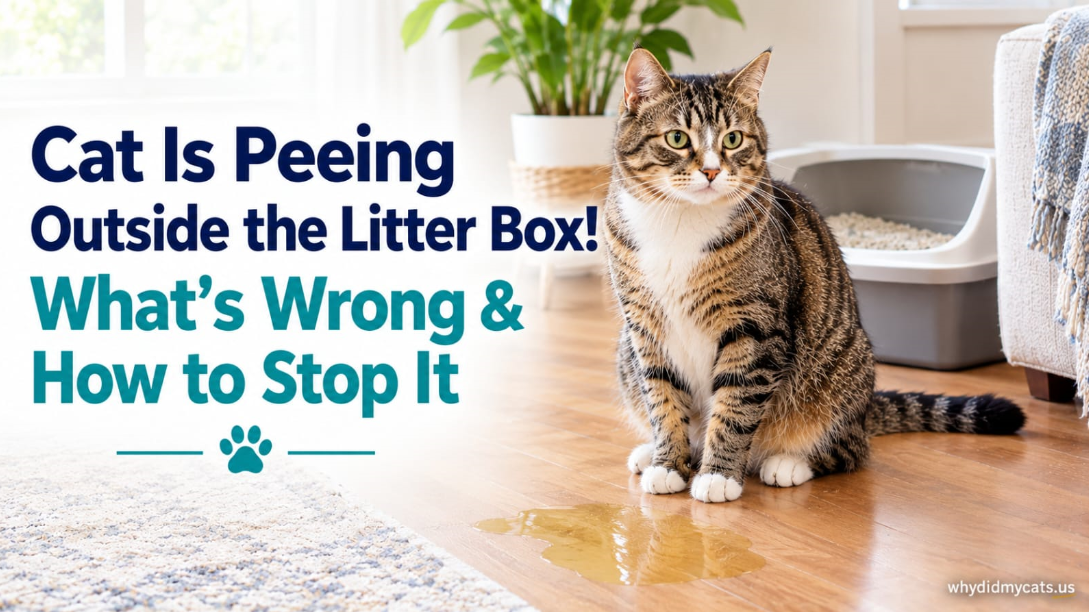
Finding cat pee on your floor when your cat normally uses the litter box can be frustrating, especially when it happens without warning. The most common reasons include urinary discomfort, litter box problems, stress, and changes in your cat’s environment. A sudden change in urination habits deserves attention because it can be a sign of a medical problem, not simply bad behavior.
The best way to respond is to check for urinary symptoms first, then look at the litter box and any recent changes at home.
Why Did My Cat Pee on the Floor? 7 Common Reasons
1. Urinary Problems or Pain
Bladder inflammation, urinary tract infections, and bladder stones can make urination painful or urgent. Your cat may start peeing on the floor because the litter box becomes associated with discomfort.
Watch for frequent trips to the box, straining, crying while urinating, blood in the urine, or unusually small amounts of pee. These signs warrant veterinary attention.
2. The Litter Box Is Dirty
Cats may avoid a box that has accumulated urine, stool, or a strong odor. This is especially likely when several cats share one box or the box is cleaned infrequently.
Scoop it daily and wash it regularly with mild, unscented soap. Avoid strong fragrances that can make the box less appealing.
3. Stress or Changes at Home
Moving to a new house, bringing home a baby or another pet, having visitors, or changing your daily routine can disrupt a cat’s bathroom habits. A nervous cat may choose a quiet corner rather than a busy litter area.
Keep feeding and litter routines consistent, provide a calm retreat, and make sure other pets cannot block access to the box.
4. Your Cat Dislikes the Litter or Box Location
Some cats dislike scented litter, a covered box, a cramped entry, or a location near a noisy washer or dryer. Older cats may struggle to climb into a high-sided box because of joint pain.
Try an accessible, uncovered box in a quiet spot and use unscented litter. Make changes gradually so you can see what your cat prefers.
5. The Box Is Too Small or Hard to Reach
A box that is too small can make turning and squatting uncomfortable. A box hidden behind a closed door or placed on another floor may also be difficult to reach, particularly for kittens and senior cats.
Choose a box that lets your cat turn around comfortably and keep it easy to access.
6. Urine Marking or Territorial Behavior
Cats sometimes spray urine to mark territory, especially when they notice unfamiliar cats outside or feel unsettled by another animal in the home. Spraying usually involves a small amount of urine on a vertical surface while the cat stands with its tail raised.
A puddle on a horizontal floor is more consistent with ordinary urination outside the box, although behavior alone cannot rule out a medical cause.
7. Your Cat Has Learned to Avoid the Box
If urinating in the box has hurt or frightened your cat, the cat may start avoiding it even after the original problem improves. A previous accident can also leave urine odor in flooring or carpet, drawing the cat back to the same spot.
Clean the area thoroughly and address the reason the box is being avoided rather than scolding your cat.
Why Did My Cat Pee on the Floor All of a Sudden?
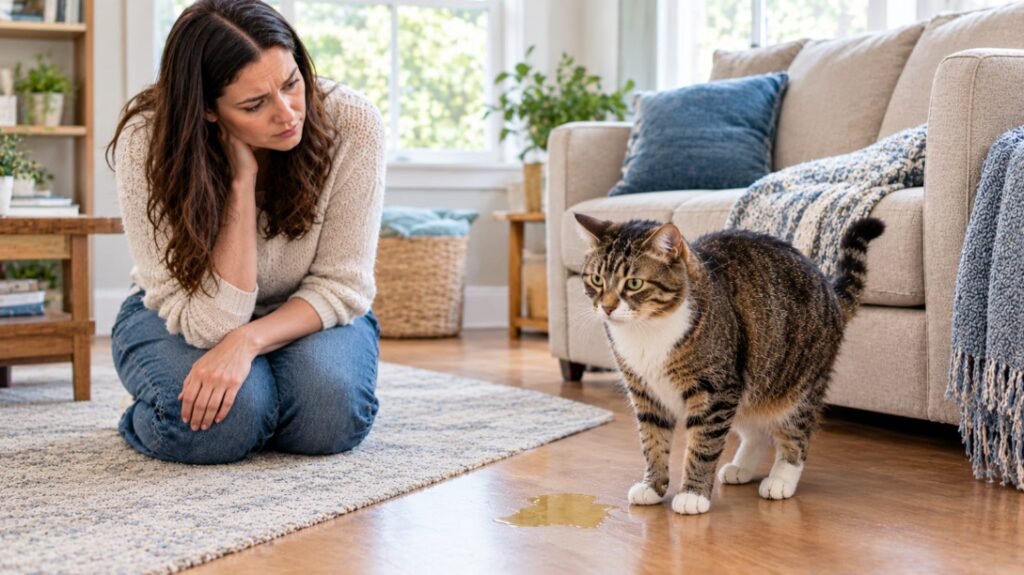
A sudden accident in a previously reliable cat calls for a quick check of health and surroundings. Think about whether the litter brand changed, the box was moved, a new pet arrived, or your cat has started drinking or urinating more than usual.
Medical issues should not be overlooked just because your cat otherwise seems normal. Contact your veterinarian about a new or repeated change in urination, particularly when you notice discomfort, blood, or increased frequency.
Why Did My Cat Pee on the Floor Next to the Litter Box?
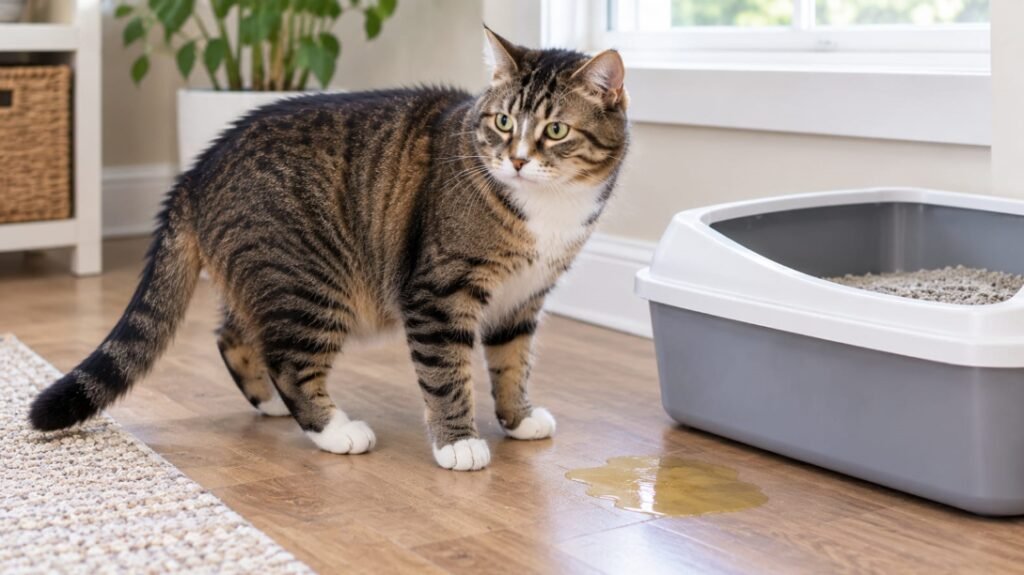
Peeing right beside the litter box often means your cat is near the correct place but is not comfortably using it. The box may be dirty, too small, difficult to enter, or filled with litter your cat dislikes. Pain can also make getting into position uncomfortable.
Clean the box, check that it is easy to enter, and consider trying an uncovered box with unscented litter. If the behavior is new or continues, arrange a veterinary check.
For another example of inappropriate urination around the home, read Why Did My Cat Pee on My Bed?.
Why Did My Cat Pee on the Floor in Front of Me?
Your cat is not necessarily trying to punish you or get revenge. The cat may feel an urgent need to urinate, associate the litter box with pain, or feel uncomfortable using a box in a busy area.
Stay calm and do not yell, hit, or push your cat toward the urine. Punishment can increase fear without solving the underlying problem. Note what happened, check for urinary symptoms, and make the litter box easy to reach.
How to Stop Your Cat From Peeing on the Floor
Start with these practical changes:
- Keep the box clean: Scoop at least daily and replace litter as needed.
- Offer enough boxes: A common guideline is one box per cat, plus one extra, placed in separate accessible locations.
- Try unscented litter: Avoid switching types repeatedly; introduce a new litter gradually.
- Choose an easy-access box: Senior cats and cats with mobility problems may benefit from a low entry.
- Reduce household stress: Provide quiet resting places and separate resources when cats compete.
- Clean previous accidents: Use an enzymatic cleaner made for pet urine, following its label directions.
- Never punish accidents: Focus on identifying the cause and rewarding calm, normal routines.
If your cat keeps peeing on clothing or other soft belongings, this related guide may help: Why Did My Cat Pee on My Clothes?.
How to Clean Cat Pee From the Floor
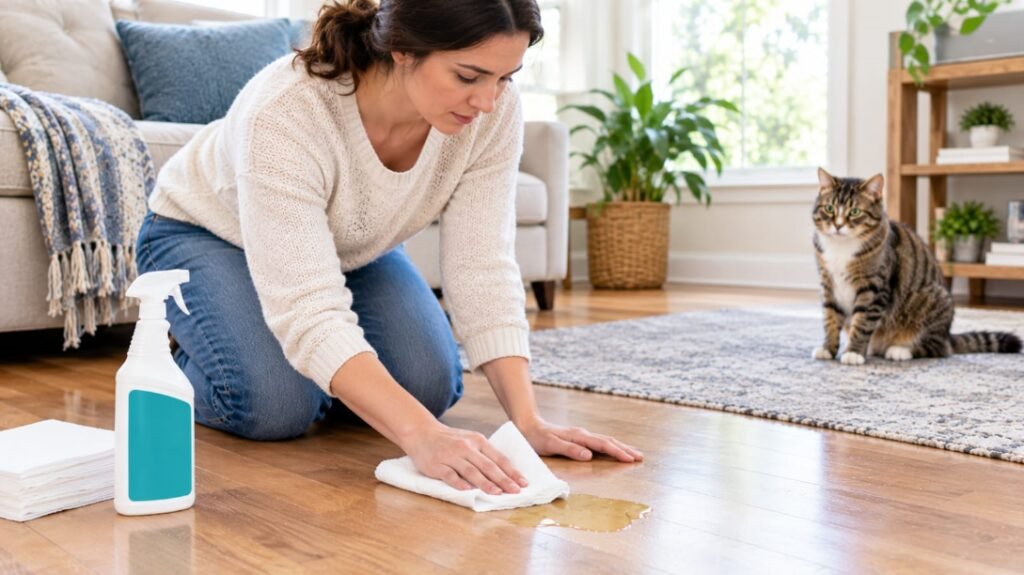
Blot fresh urine with paper towels rather than rubbing it into the surface. Then use an enzymatic cleaner labeled for cat urine and follow the product directions. These cleaners help break down odor-causing residues that ordinary household cleaners can leave behind.
Avoid ammonia-based cleaners because their smell can resemble urine to cats. Keep your cat away from the area until it is safe and completely dry.
When Should You Take Your Cat to the Vet?
Arrange a veterinary appointment when your cat suddenly starts peeing outside the litter box, especially if the behavior repeats. Your veterinarian may examine your cat, test a urine sample, and recommend bloodwork or imaging based on the symptoms.
Seek emergency veterinary care immediately if your cat repeatedly strains to pee but produces no urine or only a few drops. A urinary blockage is life-threatening and is especially common in male cats. Do not wait to see whether it improves.
Frequently Asked Questions
What to do if my cat peed on the floor?
Clean the urine with an enzymatic pet-urine cleaner, check the litter box for obvious problems, and observe your cat’s behavior. If this is a new or repeated habit, contact your veterinarian to rule out urinary disease. If your cat strains but cannot pass urine, seek emergency care immediately.
What is revenge peeing in cats?
“Revenge peeing” is a common misconception. Cats do not urinate outside the litter box to punish their owners. Medical discomfort, stress, territorial marking, or an unpleasant litter box experience are more realistic explanations. Punishing your cat can increase stress and make the problem worse.
What are the first signs of a UTI in cats?
Possible signs include frequent trips to the litter box, passing small amounts of urine, straining, crying while urinating, blood in the urine, and peeing outside the box. These signs can also indicate other urinary conditions, so a veterinarian needs to determine the cause. Straining with little or no urine is an emergency.
How do I stop my cat peeing on the floor?
Start by ruling out medical problems with your veterinarian. Keep litter boxes clean, offer unscented litter, provide easy access to quiet locations, and reduce household stress. Thoroughly clean previous accidents with an enzymatic cleaner. Avoid punishment, which does not address the underlying cause.
Why do cats suddenly pee on the floor?
Sudden accidents can result from bladder inflammation, urinary stones, other medical conditions, stress, or a change in litter box cleanliness or location. Even a cat that appears healthy can have a urinary problem. A new change in urination deserves veterinary attention before assuming it is behavioral.
What smell will stop a cat from peeing?
No smell reliably stops every cat from urinating in a particular place. The most useful approach is to remove urine odor thoroughly with an enzymatic cleaner made for pet urine. Avoid ammonia-based cleaners and strong fragrances. If your cat keeps returning to the same spot, investigate the underlying cause rather than relying on scent deterrents.
Conclusion
When your cat pees on the floor, focus on finding the reason instead of treating it as misbehavior. Check for urinary symptoms, improve the litter box setup, reduce stress, and clean accidents thoroughly. If the behavior starts suddenly or continues, contact your veterinarian. If your cat cannot pass urine, seek emergency care immediately.