

When your cat stops responding to your voice, you might wonder whether she is ignoring you or losing her hearing. A cat who once came running when you opened a can of food but now seems unaware of familiar sounds may have a hearing problem.
Cats also ignore people when they are distracted, sleeping, or simply uninterested. However, a new change in how your cat responds to sounds deserves attention, especially when it happens alongside ear discomfort or unusual behavior.
Why Did My Cat Stop Hearing Me All of a Sudden?
A cat who suddenly stops responding to sounds could have an ear problem, an injury, or damage affecting the hearing system. Ear infections involving the middle or inner ear can sometimes affect hearing and balance.
Other possibilities include exposure to a medication or chemical that damages the ear, or trauma. Gradual hearing loss associated with aging usually develops over time rather than appearing overnight.
Contact a veterinarian promptly if your cat’s hearing seems to disappear suddenly. Seek emergency veterinary care if the change is sudden or comes with a head tilt, trouble walking, severe disorientation, or other serious symptoms.
Signs Your Cat May Be Losing Her Hearing
A cat with reduced hearing may show changes that are easy to mistake for ordinary behavior.

Watch for signs such as:
- Not turning toward you when you call her name.
- Sleeping through familiar household noises.
- Failing to notice when you enter a room.
- Becoming startled when someone approaches from behind.
- Meowing more loudly or vocalizing more frequently.
- Scratching her ears, shaking her head, or showing ear discomfort.
A cat who has lost hearing in only one ear may still respond to sounds, making the problem harder to notice.
If your cat’s voice has also changed, read Why Did My Cat’s Meow Change? for more information about changes in feline vocalization.
What Causes a Cat to Lose Hearing?
Several medical and age-related factors can affect a cat’s hearing.
- Aging: Older cats can gradually lose some hearing as changes develop in the structures responsible for hearing.
- Ear infections: Infections and inflammation, particularly in the middle or inner ear, can interfere with hearing. Deeper infections may also affect balance.
- Earwax, mites, or blockages: Material blocking the ear canal can prevent sound from traveling normally. Some underlying causes are treatable.
- Injury or harmful substances: Trauma and certain medications or chemicals can damage parts of the hearing system.
- Congenital deafness: Some cats are born deaf. This condition is associated with certain genetic traits, particularly in some white cats with blue eyes.
How Can I Tell If My Cat Is Deaf or Just Ignoring Me?
Start by noticing how your cat responds during ordinary activities. Does she react to the sound of her food being prepared, a familiar door opening, or other everyday noises when she is awake and not looking toward the source?
A cat who responds to some sounds but not your voice may be distracted, anxious, or responding differently because of a behavior change. That pattern alone does not prove her hearing is normal, either.
Avoid startling your cat with loud claps or deliberately making frightening noises. Home observations cannot reliably confirm or rule out hearing loss, especially when only one ear is affected.
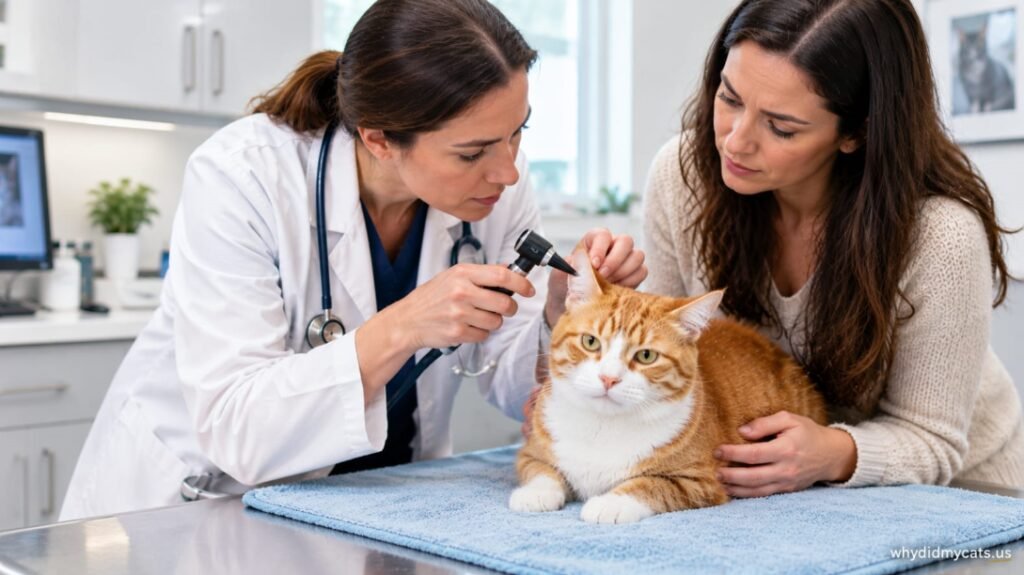
A veterinarian can examine the ear canals and look for infection, inflammation, or blockage. When needed, a brainstem auditory evoked response (BAER) test measures the hearing pathway’s response to sound and can help confirm deafness.
What Should I Do If My Cat Stops Responding to Me?
Arrange a veterinary examination when the change is new, persistent, or accompanied by ear symptoms. Before the appointment, note when you first noticed it, whether it happened suddenly, and whether your cat has started any medication or experienced an injury.
Do not put cotton swabs, household remedies, or unprescribed ear drops into your cat’s ears. Some products can cause harm, particularly when the eardrum is damaged.
Also notice whether your cat is eating normally. If she has stopped eating as well, read Why Did My Cat Stop Eating? for guidance on appetite loss. A cat who is not eating needs prompt veterinary advice, especially when other symptoms are present.
Can a Cat’s Hearing Come Back?
That depends on what caused the hearing loss. Hearing affected by a treatable blockage or certain ear infections may improve after the underlying problem is addressed.
However, hearing loss caused by damage to sensory cells or nerves, certain inherited conditions, or age-related changes is often permanent. Only a veterinary examination can help identify the likely cause and discuss the outlook for your cat.
Do not assume that hearing will return on its own, particularly after a sudden change.
How to Care for a Deaf Cat at Home

Deaf cats can enjoy comfortable, fulfilling lives. The main adjustment is making communication and everyday surroundings safer.
- Use visual signals: Develop consistent hand gestures and reward your cat when she responds.
- Approach where she can see you: Avoid touching her suddenly from behind, especially while she is sleeping.
- Keep routines predictable: Feed her in familiar places and use consistent visual cues before meals or playtime.
- Protect her outdoors: Keep her indoors or use a secure enclosure. A deaf cat may not hear approaching cars, dogs, or other hazards.
- Help children interact gently: Teach children to approach from the front and avoid waking or startling the cat.
If your cat has also become unusually attached to you, see Why Did My Cat Become So Clingy? Causes & Help. Increased closeness alone does not establish that hearing loss is the cause.
FAQs
What sounds do deaf cats make?
Deaf cats make many of the same sounds as hearing cats, including meows, purrs, chirps, and growls. Some vocalize more loudly because they cannot hear their own voices well. Others remain relatively quiet. Vocalization varies by cat, so sounds alone cannot confirm deafness.
What is the quickest way to tell a cat is deaf?
A common warning sign is failing to respond to familiar sounds when the cat is awake and not facing their source. However, this is not a reliable diagnosis, particularly for hearing loss in one ear. A veterinarian can examine your cat and recommend a hearing test when needed.
Do deaf cats meow differently?
They can. Some deaf cats meow louder, more frequently, or with a different pitch because they cannot monitor their own voices through hearing. Others sound much like hearing cats. A change in meowing can also have other causes, so discuss a new or persistent change with your veterinarian.
Do deaf cats know they are deaf?
Cats do not understand deafness in the same way people understand a medical diagnosis. They adapt to the information available through their other senses, including sight, smell, and touch. A deaf cat may rely more on visual cues and vibrations to recognize people, routines, and activity around the home.
At what age do cats usually go deaf?
There is no single age when cats become deaf. Age-related hearing loss tends to develop gradually in older cats, but some cats experience hearing problems earlier because of infections, injury, inherited conditions, or other medical causes. A veterinarian can assess new hearing changes at any age.
How to tell a deaf cat you love them?
Approach where your cat can see you, move calmly, and let her choose when to interact. Gentle petting, play, treats, and predictable routines help build trust. Avoid suddenly waking or grabbing her from behind. Learn which visual cues and types of touch your individual cat finds comfortable.
Conclusion
If your cat has stopped responding to your voice, do not assume she is simply ignoring you. Look for changes in her response to familiar sounds and watch for ear discomfort or balance problems. A sudden loss of hearing needs urgent veterinary attention, while a gradual change also deserves an examination. With the right care and a safe home, deaf cats can continue to live happy lives.