
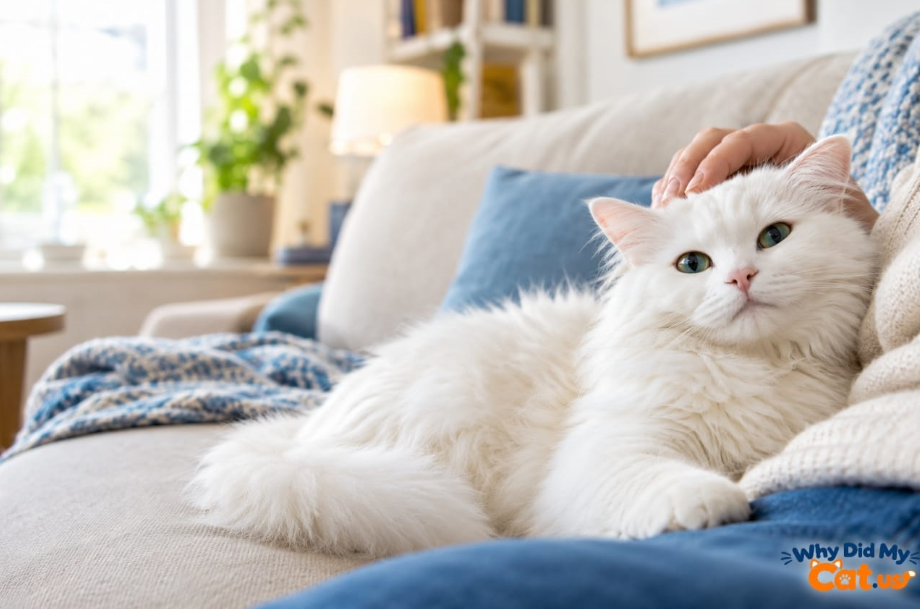
A cat that once preferred sleeping alone may suddenly follow you around, curl up on your lap, or demand attention whenever you sit down. This change can be a sign of growing trust, a shift in routine, or a response to something happening in your cat’s environment.
If your cat has become unusually affectionate, consider what has changed recently. Your work schedule, household activity, feeding routine, age, and health can all influence how much attention your cat seeks.
Why Did My Cat Suddenly Become More Affectionate?
1. Your Cat Feels More Comfortable With You
Cats sometimes become more affectionate as their bond with an owner grows stronger. A newly adopted cat, for example, may need weeks or months to feel secure enough to sleep beside you or ask for petting.
Rubbing against your legs, resting near you, slow blinking, and choosing to sit beside you are common signs of comfort. If your cat has gradually become friendlier while eating, sleeping, and playing normally, growing trust may explain the change.
2. Your Cat Wants More Attention
Cats learn which behaviors get a response. If your cat receives petting whenever it nudges your hand or climbs onto your lap, it may repeat those behaviors more frequently.
A change in your schedule can also affect your cat. After returning from a trip or spending more time away at work, you might notice extra following, meowing, and cuddling. Regular play sessions and calm attention can help meet your cat’s social needs.
3. Something Has Changed at Home
Cats are sensitive to their surroundings. Moving to a new home, welcoming a baby, bringing home another pet, or changing your daily routine can affect their behavior.
Some cats seek their owners for reassurance when their environment feels unfamiliar. Others become more withdrawn. Keep familiar feeding times, provide a quiet resting place, and let your cat approach you rather than forcing interaction.
4. Your Cat Associates You With Food
Does your cat become especially loving before breakfast or dinner? It may have learned that rubbing against your legs, purring, or sitting close to you gets a meal served sooner.
This behavior is usually easy to recognize because it follows a predictable schedule. Keep meals consistent and avoid giving extra food every time your cat demands attention, especially if weight management is a concern.
5. Hormonal Changes Are Affecting Your Cat
An unspayed female cat in heat may become unusually affectionate, rub against people and furniture, roll on the floor, or vocalize more than usual. These behaviors often occur alongside restlessness and attempts to get outside.
If your cat is not spayed and shows these signs, discuss the behavior with your veterinarian. Sudden affection alone does not confirm that a cat is in heat.
6. Your Cat Is Getting Older
Aging can change how cats interact with their owners. Some older cats become less active and spend more time resting beside their favorite person. Others seek additional reassurance as their vision, hearing, or mobility changes.
A senior cat that suddenly becomes clingy or vocal deserves closer attention, particularly when the change comes with altered sleep, appetite, thirst, or activity. Age-related changes and medical conditions can overlap, so a veterinary exam is sensible when the behavior is new.
7. Your Cat May Be Uncomfortable or Unwell
Although extra affection is often harmless, a sudden personality change can occasionally accompany a health problem. Some cats seek more contact when they feel uncomfortable, while others hide or avoid being touched.
Watch for changes in eating, drinking, grooming, movement, energy, or litter-box habits. Conditions such as hyperthyroidism and diabetes can also affect appetite, activity, and vocalization. Affection alone cannot identify a disease, but a noticeable change from your cat’s normal behavior is worth discussing with a veterinarian.
Why Does My Cat Become Affectionate at Night?
Your cat may be more cuddly at night because the house is quieter and you are finally sitting still. A cat that spends the day sleeping or entertaining itself may take the opportunity to seek attention when you relax on the couch or get into bed.
Cats are also naturally active around dawn and dusk. If nighttime affection includes persistent crying, restlessness, or a major change in sleep patterns—especially in an older cat—arrange a veterinary check.
Why Does My Cat Become Affectionate When I Whistle or Sing?
Your cat may respond to whistling or singing because it recognizes your voice, notices the sound, or has learned that you interact with it afterward. Some cats approach, purr, or rub against their owners when they hear familiar sounds; others simply investigate.
If your cat seems relaxed, there is usually no reason to discourage this behavior. Avoid loud whistling or singing close to your cat’s ears, and let it move away whenever it wants.
Why Did My Cat Become Affectionate All of a Sudden?
Start by thinking about when the change began. Did you return from a trip, change your work hours, move furniture, introduce a new pet, or alter your cat’s feeding schedule? A recent change may help explain the extra attention-seeking.
Also consider whether your cat is simply cuddling more or following you constantly and acting unusually restless. If the change persists, worsens, or comes with other symptoms, contact your veterinarian. They may ask about your cat’s age, medical history, appetite, thirst, litter-box habits, and recent behavior before recommending an examination or tests.
For more context, read our guide to why your cat may become suddenly clingy.
Why Did My Cat Become Less Affectionate?
A cat that becomes less affectionate may be stressed, overstimulated, or simply seeking more personal space. Changes at home, unfamiliar visitors, rough handling, or an uncomfortable interaction can make a cat less interested in cuddling.
Give your cat space and allow it to approach you on its own. However, if it also hides, stops jumping, reacts painfully to touch, or changes its eating or bathroom habits, arrange a veterinary examination. Pain and illness can affect social behavior, too.
How to Respond When Your Cat Becomes More Affectionate
- Let your cat choose contact: Allow it to approach, sit beside you, or leave whenever it wants.
- Keep routines predictable: Maintain consistent meal times, play sessions, and quiet resting spaces.
- Offer appropriate attention: Use gentle petting and interactive toys instead of relying on treats every time your cat asks for attention.
- Notice other changes: Keep track of appetite, thirst, sleep, grooming, energy, and litter-box habits.
Avoid assuming that every sudden behavior change is simply a sign of love. If your cat is also eating less or refusing food, read what to do when your cat stops eating and contact your veterinarian for guidance.
7 Ways Cats Show Affection
Cats express love in different ways. Some are very cuddly, while others show affection through small, quiet behaviors.
- Purring Around You: Your cat may purr when sitting beside you or enjoying your attention.
- Slow Blinking: Gentle, slow blinks can signal that your cat feels comfortable and safe around you.
- Following You: Your cat may follow you from room to room because it enjoys your company.
- Rubbing Against You: Rubbing its head or body against you is a way to show familiarity and leave its scent.
- Kneading With Its Paws: Some cats knead soft blankets or their owners when they feel relaxed and content.
- Sleeping Near You: Choosing to sleep beside you can show trust and a sense of security.
- Gently Head-Butting You: Your cat may press its forehead or cheeks against you as a friendly social gesture.
When Should You Worry About Sudden Affection?
A sudden increase in affection by itself is not usually an emergency. However, schedule a veterinary appointment if it comes with persistent vocalization, unusual restlessness, weight changes, increased thirst, vomiting, reduced activity, or changes in litter-box habits.
Seek prompt veterinary care if your cat has difficulty breathing, collapses, appears severely ill, or repeatedly strains to urinate without producing urine. If your cat stops eating, contact your veterinarian promptly rather than waiting for the behavior to pass.
Your veterinarian may review the timeline of the change, examine your cat, and recommend bloodwork or other tests based on the findings. This helps distinguish a routine behavior change from a medical problem.
FAQs
Is it normal for cats to become more affectionate as they age?
Yes. Some cats become more affectionate as they grow older because they are less active or prefer spending more time resting near their owners. However, a sudden change in an older cat’s behavior should not automatically be blamed on age, particularly when appetite, sleep, thirst, or mobility also changes.
What causes a cat to become more affectionate?
Common reasons include a stronger bond with the owner, a desire for attention, changes in household routine, food-related habits, and hormonal changes in unspayed females. Aging can also affect social behavior. When affection increases suddenly, consider whether your cat has developed other unusual behaviors or physical symptoms.
Is it rare for a cat to be affectionate?
No. Many cats enjoy cuddling, sitting on laps, rubbing against people, or following their owners around. The amount of affection varies with personality, early socialization, and individual preferences. A naturally affectionate cat is not unusual, and a more independent cat is not necessarily less bonded to its owner.
At what age are cats most affectionate?
There is no single age when all cats become most affectionate. Kittens may seek warmth and reassurance, while adult cats often develop familiar social routines with their owners. Some senior cats enjoy more companionship as they become less active. Personality, environment, health, and past experiences matter more than a specific age.
Why did my cat suddenly become more cuddly?
Your cat may be responding to a change in routine, seeking attention, feeling more secure with you, or experiencing a hormonal or age-related change. If the behavior is very different from normal, check for changes in eating, drinking, energy, and litter-box habits. Contact your veterinarian if other symptoms appear or the change persists.
Conclusion
A cat that suddenly becomes more affectionate may be showing greater trust, seeking attention, or responding to changes at home. Enjoy the extra cuddles while respecting your cat’s boundaries. If the change is unusual or comes with physical symptoms, a veterinary check can help identify the cause.
[…] Cats develop individual preferences for touch and attention. If your cat has also become unusually affectionate or follows you around the house, read our guide on Why Did My Cat Become Affectionate? 7 Possible Reasons. […]
[…] If your cat has become especially affectionate, learning what that behavior means can help you understand your relationship better. You can also read our guide on Why Did My Cat Become Affectionate?. […]