
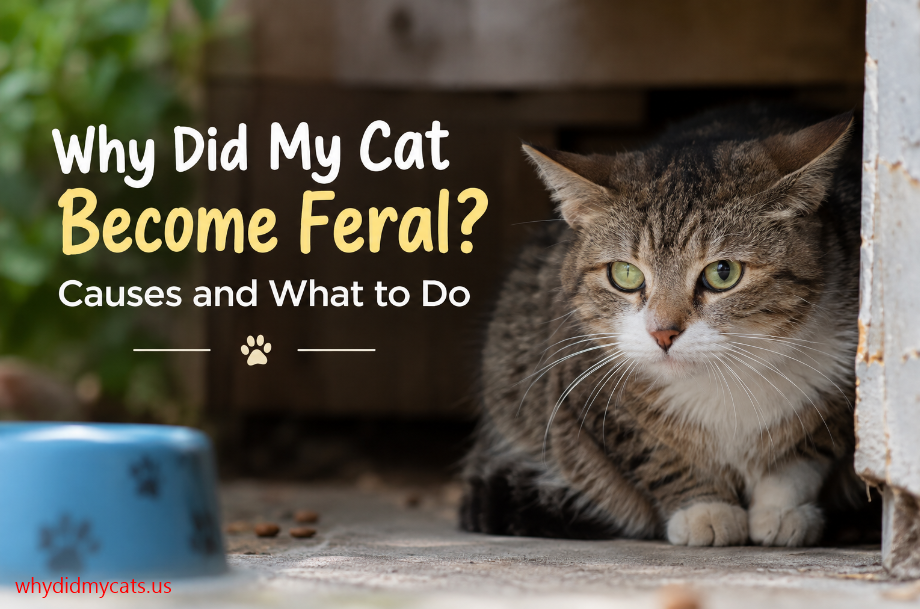
A cat who once followed you around the house but now hides under the bed, hisses when approached, or runs away may seem like a completely different animal. You might even wonder whether your cat has become feral.
A sudden behavior change does not necessarily mean your cat has become feral. Fear, stress, pain, changes at home, or frightening outdoor experiences can make a previously friendly cat avoid people. The right response depends on what caused the change and whether your cat was socialized with humans in the first place.
Why Did My Cat Become Feral All of a Sudden?
A domestic cat does not usually become truly feral overnight. When a familiar pet suddenly avoids you, something may have made her feel unsafe or uncomfortable.
Common explanations include:
- Fear or stress: Loud construction, visitors, children chasing the cat, or a new pet can make her hide or act defensively.
- Changes at home: Moving, rearranging furniture, changing feeding locations, or disrupting a familiar routine can unsettle a sensitive cat.
- Pain or illness: Dental problems, injuries, and other medical conditions can make a cat resist handling or react aggressively.
- Frightening outdoor encounters: An indoor cat that escapes and encounters unfamiliar animals may return frightened and reluctant to approach people.
- Limited human contact: A cat that spends a long time outdoors without positive interaction with people may gradually become less socialized.
Consider what changed before the behavior started. A cat who hides after guests visit may be frightened, while one who suddenly hisses whenever you touch her back could be experiencing pain.
If your cat has become unusually defensive, our guide to why cats suddenly become aggressive explains other possible causes of this behavior.
Can a House Cat Really Become Feral?
Yes, a domestic cat can become less socialized to humans after prolonged periods without positive human contact. However, being shy, aggressive, or afraid does not automatically make a cat feral.
The main difference is the cat’s relationship with people.
- Pet cat: Socialized to humans and generally comfortable living in a home.
- Stray cat: A lost or abandoned cat that previously had some socialization with people.
- Feral cat: A domestic cat that is not socialized to human companionship and usually avoids close contact with people.
A frightened stray may hiss, hide, or run away when approached, making her appear feral. A friendly house cat can also become temporarily defensive because of fear or discomfort.
There is no fixed amount of time in which a domestic cat becomes feral. Her previous experiences, temperament, age, and level of human contact all influence how she responds to people.
What Are the Signs of a Semi-Feral Cat?
A semi-feral cat has limited comfort around humans but may still tolerate familiar caregivers. For example, she might approach someone who brings food every day but retreat when that person reaches toward her.
Common signs include:
- Hiding whenever people enter the room.
- Keeping a wide distance from humans.
- Crouching, flattening the ears, or tucking the tail when approached.
- Hissing or swatting when cornered.
- Accepting food but avoiding physical contact.
These behaviors are not proof that a cat is feral. A frightened pet, a stray in unfamiliar surroundings, and a cat experiencing pain can show similar signs.
What Should You Do When Your Cat Turns Feral?
Start by giving your cat a safe place where she can relax without being disturbed. Trying to force affection usually makes a frightened cat more defensive.
Here is what to do:
- Create a quiet space. Provide food, fresh water, a litter box, bedding, and a hiding spot in a low-traffic room.
- Keep her routine consistent. Feed her at regular times and avoid unnecessary changes to her surroundings.
- Stop forcing interaction. Do not chase, corner, punish, or pull her out of hiding.
- Rebuild trust gradually. Sit quietly nearby, avoid staring directly at her, and offer treats at a distance where she feels comfortable.
- Manage other pets and children. Give your cat room to retreat, and prevent other animals or children from following or crowding her.
Let your cat decide when to approach. She might first stay in the same room, then eat closer to you, and eventually choose to sit nearby. Progress can take days, weeks, or longer, depending on the cause and the cat’s history.
A sudden change in how much attention your cat seeks can also reflect changes in her behavior or environment. Learn more about why cats become clingy.
A sudden change in a previously friendly cat also deserves a veterinary check, especially when she resists being touched or shows other unusual symptoms.
Will a Feral Cat Ever Be Friendly?
Some feral cats learn to trust familiar people, but not every cat becomes comfortable with petting or indoor life. Their response depends on their early experiences, temperament, and previous contact with humans.
Signs that a feral cat is beginning to trust you include staying nearby while you are present, eating while you remain at a comfortable distance, or approaching voluntarily. Relaxed body posture and less frequent attempts to flee can also suggest growing comfort.
Build trust slowly through predictable feeding and calm behavior. Never grab a cat to test whether she is friendly. An adult feral cat may remain uncomfortable with close contact even after developing a trusting relationship with a regular caregiver.
Are Feral Cats Dangerous? Do They Attack Humans?
Feral cats generally try to avoid people rather than seek them out. However, a frightened cat may bite or scratch when cornered, trapped, or handled.
Keep your distance from unfamiliar outdoor cats, and do not attempt to pick one up with your bare hands. If a cat appears injured or needs help, contact a local animal rescue organization for guidance.
Wash any bite or scratch promptly. Cat bites can cause infections, particularly when the teeth puncture the skin, so seek medical advice for a bite wound.
When Should You Contact a Veterinarian?
Arrange a veterinary appointment when a previously friendly cat suddenly becomes fearful, hides persistently, avoids touch, or begins reacting aggressively. Pain and illness can affect behavior even when the cause is not obvious.
Seek prompt veterinary care if the behavior change occurs alongside loss of appetite, repeated vomiting, difficulty walking, or marked weakness. Difficulty breathing, collapse, or repeated straining to urinate with little or no urine requires emergency veterinary care.
Your veterinarian may ask when the change began, whether anything happened at home, and whether your cat’s appetite, movement, or litter-box habits have changed. An examination helps identify medical causes before you assume the problem is simply fear or loss of socialization.
Frequently Asked Questions
Why has my cat suddenly turned feral?
A cat that suddenly hides, hisses, or avoids people may be frightened, stressed, in pain, or reacting to a change in her surroundings. That behavior does not necessarily mean she has become feral. Consider recent changes at home and arrange a veterinary examination if the behavior is sudden or persistent.
Will a feral cat ever be friendly?
Some feral cats learn to trust familiar caregivers, especially when interactions are calm and predictable. However, not every cat becomes comfortable with being touched or living indoors. Let the cat approach voluntarily, and do not force physical contact.
Will feral cats survive on their own?
Some feral cats survive outdoors by finding food and shelter, but outdoor life carries risks from traffic, disease, injuries, extreme weather, and food shortages. Their chances depend on their health and surroundings. Humane community-cat programs can provide important support through feeding, sterilization, and appropriate veterinary care.
Do feral cats disappear and come back?
Yes. Outdoor cats may leave their usual area to search for food, explore, avoid threats, or find shelter. Some return regularly, while others stay away longer. If a familiar cat disappears, check nearby hiding places and contact local animal shelters or rescue groups rather than assuming she will return.
What usually kills feral cats?
Feral cats face several outdoor risks, including vehicle injuries, infectious diseases, untreated wounds, parasites, severe weather, and lack of food. Kittens, older cats, and animals with existing health problems can be especially vulnerable. Access to shelter, reliable food, sterilization programs, and veterinary care can improve their welfare.
Conclusion
A cat acting feral does not necessarily mean she has stopped trusting you or lost her connection with home. Fear, stress, pain, and reduced human contact can all change a cat’s behavior. Give her space, rebuild trust patiently, and consult a veterinarian when the change is sudden or accompanied by other symptoms.
[…] For more detail, read about the difference between a stray cat and a feral cat. […]