
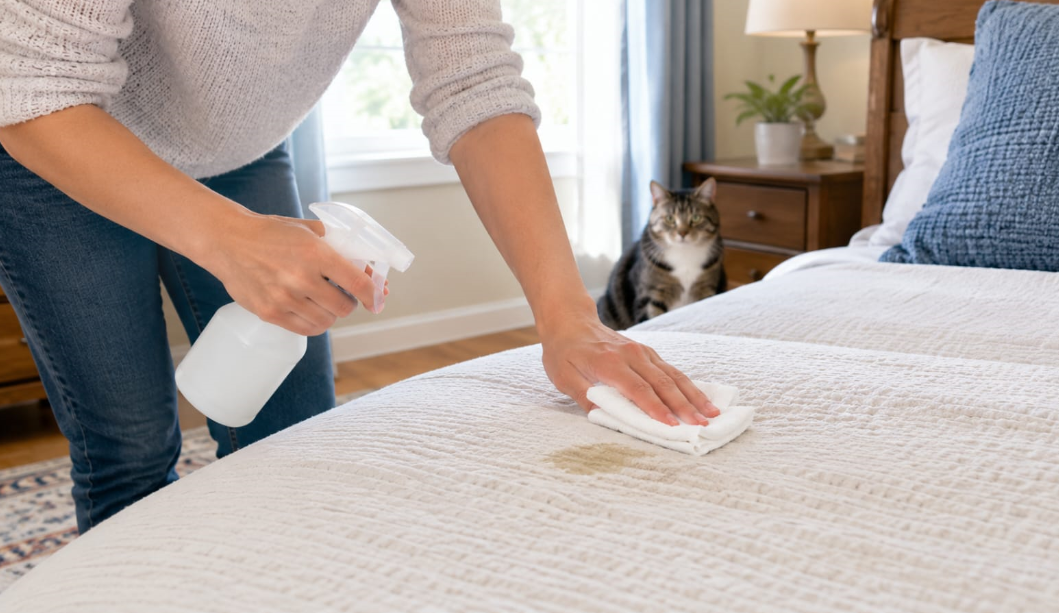
Finding cat pee on your bed is frustrating, especially when your cat normally uses the litter box. But your cat probably did not choose your bed to punish you or get revenge.
A bed is soft, absorbent, quiet, and carries your familiar scent. Those qualities can make it appealing when a cat is avoiding the litter box, feeling stressed, or dealing with urinary discomfort. Medical problems can also cause cats to urinate outside the litter box, so a sudden change deserves some attention.
The details around the accident matter. Think about what changed recently, whether your cat is still using the litter box, and whether you noticed anything unusual about their urine or behavior.
Why Would a Cat Pee on the Bed?
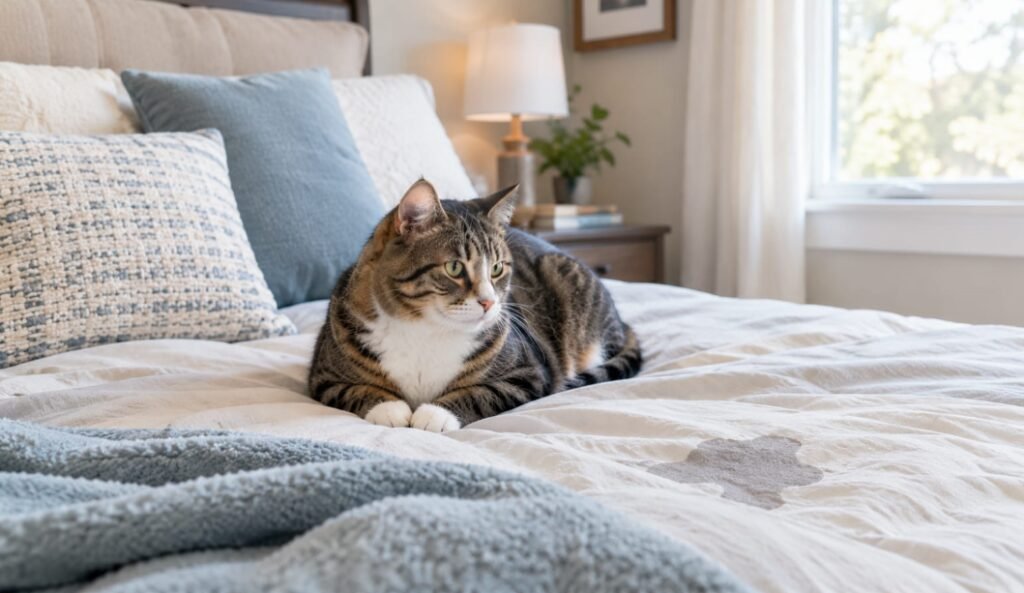
The bed itself may be part of the reason. Some cats develop a preference for soft surfaces such as beds, clothing, and carpets after avoiding their litter box. A previous accident can also create a new preference for that location, particularly when the urine odor remains.
Other times, the bed is simply where the cat happened to be when the need to urinate became urgent.
Common possibilities include:
- urinary discomfort or another medical problem
- a litter box that the cat dislikes or avoids
- stress caused by changes at home
- conflict with another cat or pet
- a preference for soft surfaces
- urine marking
- age-related mobility or cognitive changes
These causes can overlap. A cat with painful urination, for example, may start avoiding the litter box and later continue using another spot even after the original problem has changed.
8 Reasons Your Cat May Be Peeing on Your Bed
1. A urinary or other medical problem
Urination outside the litter box can be one of the first noticeable signs of a urinary problem. Cats with lower urinary tract disease may strain to urinate, go more frequently, cry while urinating, lick their genital area, or produce blood in the urine.
Problems such as bladder inflammation, urinary stones, and other urinary conditions can make the litter box unpleasant because the cat associates it with pain. Kidney disease, diabetes, and other illnesses can also affect normal litter box habits.
A cat does not have to look obviously sick for a medical problem to be present.
2. Your cat doesn’t like something about the litter box
Cats can be surprisingly particular about their bathroom setup.
Maybe the box is not cleaned as frequently as your cat prefers. Maybe you changed the litter, moved the box, placed it somewhere noisy, or switched to a covered box that your cat does not like.
In a busy household, a litter box near a washing machine, furnace, doorway, or area where children and other pets pass through may also become less appealing.
Cornell notes that cats may avoid a box because of the box itself, the litter, or its location.
3. Something at home has changed
Cats notice changes that people may barely think about.
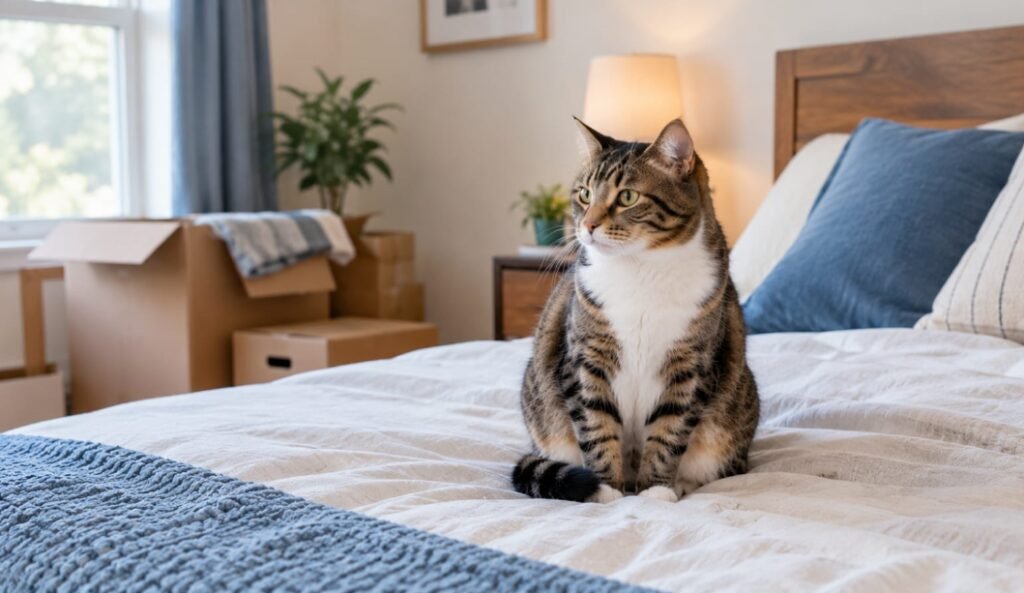
A move to a new apartment, a new baby, visitors staying over, a new pet, rearranged furniture, home repairs, or a change in your work schedule can disrupt a cat’s routine. Changes in feeding times or the number of animals in the home can also contribute to stress.
For some cats, the bed is one of the most familiar places in the house. That can make it an attractive place to settle when the rest of the environment feels different.
4. Your cat is marking territory
Regular urination and urine marking are not quite the same thing.
A cat that is marking usually leaves a smaller amount of urine, often on a vertical surface, with the tail held upright and sometimes quivering. Ordinary house-soiling tends to involve a larger amount of urine on a horizontal surface, such as a bed or carpet.
The distinction is not always obvious, though. If you keep finding small amounts of urine in several places, your veterinarian can help determine whether marking or another problem is involved.
5. Your cat started associating the litter box with discomfort
Imagine that urinating in the litter box hurt once or several times. Your cat may start connecting that box with the unpleasant experience.
Afterward, a soft bed, blanket, or piece of clothing may feel like a better place to go. Cornell describes this type of litter-box avoidance and notes that cats can continue using an alternative surface even after the original problem has changed.
That is one reason simply putting the cat back in the litter box may not solve the problem.
6. Getting to the litter box has become harder
Older cats can develop arthritis or other problems that make climbing into a high-sided box or walking across the house uncomfortable.
Age-related cognitive changes can also affect litter box habits. Cornell notes that cats with cognitive dysfunction may urinate or defecate outside the box, while conditions such as arthritis can make reaching the box more difficult.
For an older cat, look at the physical setup rather than assuming the behavior is just part of getting old.
7. Your cat prefers the bed as a bathroom surface
Some cats develop a preference for particular textures or locations.
A mattress is soft and absorbent, while your bedding smells familiar. If your cat has previously urinated there and the odor was not completely removed, the same spot may become even more attractive.
This does not mean your cat has decided that your bed is permanently their new bathroom. It does mean that thorough cleaning matters.
8. The accident has started becoming a habit
One accident can lead to another.
If urine remains in the mattress or bedding, your cat may continue to detect the odor even after you can no longer smell it. At the same time, repeated use of the same location can strengthen the preference for that spot.
That is why cleaning the area properly and dealing with the reason behind the first accident should happen together.
Why Did My Cat Pee on My Bed All of a Sudden?
A sudden change deserves more attention than an occasional accident with an obvious explanation.
Start by thinking about the last few days. Did you change the litter? Move the box? Have visitors? Bring home another pet? Change your work schedule? Notice your cat drinking or urinating more than usual?
A sudden urinary problem can also show up as bed-peeing. Cats with lower urinary tract problems may urinate outside the litter box along with signs such as frequent attempts, straining, crying, or blood in the urine.
If your cat has never done this before and suddenly starts, don’t assume it is simply a behavioral issue.
Why Did My Cat Pee on My Bed While I Was Sleeping?
Your cat was not necessarily trying to wake you up or get your attention.
While you were sleeping, your bed was simply available, quiet, soft, and strongly associated with your scent. If your cat needed to urinate urgently or was avoiding the litter box, that combination could make the bed an easy choice.
Look at what happens outside your bedroom, too. If your cat is also making frequent litter box trips, straining, producing only small amounts of urine, or showing discomfort, a urinary problem needs to be considered.
Why Did My Cat Pee on My Bed When I Was Gone?
This situation can make owners wonder whether their cat was upset about being left alone.
Stress may play a role, especially when your absence is part of a larger change in routine. For example, you may have recently started working longer hours, changed your schedule, moved, or left the cat alone more frequently.
But don’t automatically blame separation. Check the litter box and your cat’s physical signs as well. Stress and medical problems can occur together, and urinary problems can cause cats to stop using the box normally.
Why Did My Cat Pee on My Bed in Front of Me?
Seeing your cat do it right in front of you does not prove that your cat is angry or trying to punish you.
Your cat could be avoiding the litter box, experiencing urinary discomfort, reacting to stress, or choosing the bed because it has become a preferred surface.
Instead of scolding the cat, look at what happens immediately before and during the accident. Does your cat squat and empty the bladder, or spray a small amount? Is there straining or vocalizing? Is the litter box nearby?
Those details are much more useful than assuming your cat did it deliberately.
Why Did My Cat Pee on My Bed With Me in It?
A cat urinating on the bed while you are still in it can feel especially strange, but it does not automatically mean the cat was targeting you.
The same medical, litter-box, and environmental issues can happen whether you are lying on the bed or not. If your cat suddenly needs to urinate, the bed may simply be the chosen location.
If this happens repeatedly, record when it occurs and what your cat does before and afterward. That information can be useful when discussing the problem with your veterinarian.
What Should You Do If Your Cat Pees on Your Bed?
Start with the practical stuff, then work backward to the cause.
Clean the bedding and mattress thoroughly. An enzymatic pet-urine cleaner can help break down urine residue rather than simply covering the smell. Wash bedding according to the care instructions and deal with the mattress as soon as possible.
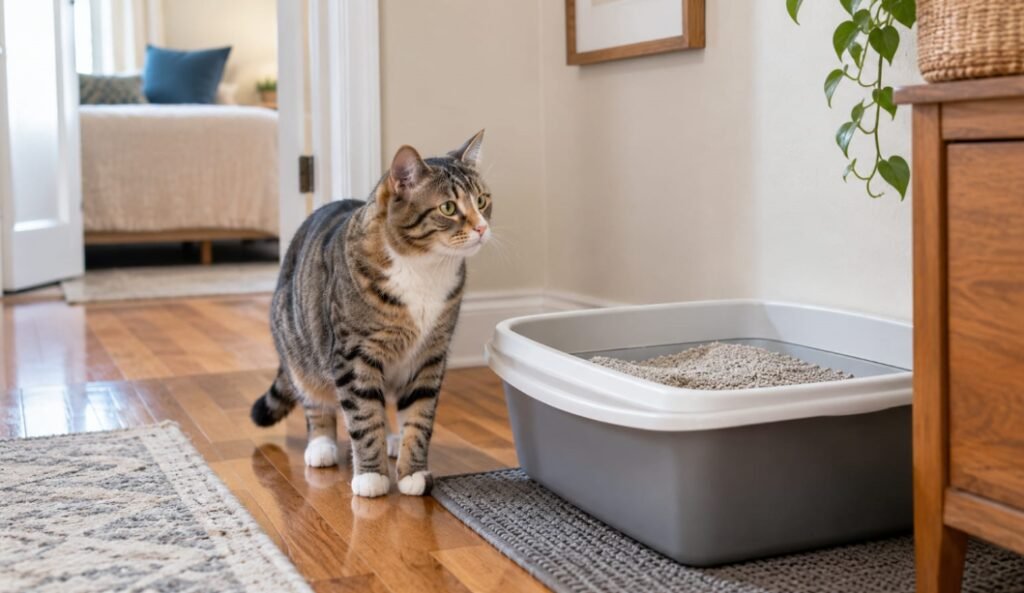
Check the litter box. Keep it clean, make sure your cat can reach it easily, and consider whether anything about the litter or location has recently changed. Cornell recommends clean boxes in quiet, safe areas and notes that households generally need enough boxes for their cats, often one more box than the number of cats.
Think about recent changes. A new pet, visitors, construction, furniture changes, a different feeding schedule, or a new work routine can all matter.
Do not punish your cat. Yelling, hitting, or forcing a cat toward the mess will not address a urinary problem or litter-box aversion. It can also add more stress to the situation.
If your cat keeps returning to the bed, temporarily limiting bedroom access while you work on the underlying problem can protect the mattress and give you a chance to break the pattern.
When Should You Call a Veterinarian?
A cat that suddenly starts urinating outside the litter box should be discussed with a veterinarian, particularly when the behavior continues or comes with other changes. Medical conditions can look like behavior problems, and cats do not always appear obviously ill.
Contact your veterinarian promptly if you notice:
- frequent attempts to urinate
- straining in the litter box
- crying or obvious pain while urinating
- blood in the urine
- repeated accidents
- frequent licking around the urinary area
- noticeable changes in drinking or urination
There is one situation that should not wait: a cat that repeatedly tries to urinate but produces little or no urine needs immediate veterinary attention. Urethral obstruction is an emergency and is more common in male cats.
A veterinarian may start with a physical exam and urinalysis. Depending on the findings, additional tests such as blood work, urine culture, X-rays, or ultrasound may be recommended.
How to Stop Your Cat From Peeing on the Bed Again
There isn’t one fix that works for every cat because the solution depends on why the bed became the preferred spot.
Make the litter box easy to use and keep it clean. If you have multiple cats, make sure one cat cannot block another from reaching a box. Give older cats easy-to-enter boxes and keep them in accessible areas.
At the same time, remove urine odors from the bed and watch for household changes that could be adding stress. Keep routines reasonably consistent, especially around feeding and daily interaction.
Most importantly, don’t treat the mattress as the whole problem. The bed is where you found the urine; it may not be where the problem started.
Frequently Asked Questions
What to do if a cat peed on your bed?
Clean the bedding and mattress thoroughly with an appropriate enzymatic urine cleaner, then check the litter box and look for recent changes in your cat’s routine or environment. If the behavior is sudden, repeated, or accompanied by urinary symptoms, contact your veterinarian.
Should I punish my cat for peeing on my bed?
No. Punishment does not address the medical, litter-box, or stress-related reason behind the accident and can make your cat more fearful. Clean the area, investigate the cause, and make the litter box easier and more comfortable to use.
What smell do cats hate to pee on?
Strong smells are not a reliable way to solve inappropriate urination. Instead of trying to repel your cat with a scent, remove the urine odor thoroughly with an appropriate enzymatic cleaner and address why your cat is avoiding the litter box.
What deters cats from peeing on bed?
Thoroughly removing urine odor, temporarily limiting access to the bedroom, and making the litter box clean, accessible, and comfortable can help. The long-term solution depends on the reason for the behavior, so repeated accidents deserve further investigation.
Why is my cat peeing on my bed all of a sudden?
A sudden change can come from urinary discomfort, litter-box problems, stress, or another change in the home. Because medical problems can cause cats to urinate outside the box, a new or repeated pattern should not automatically be treated as a behavior problem.
Conclusion
A cat that pees on your bed is usually communicating that something about urination, the litter box, the environment, or their physical comfort needs attention.
Look at the timing, what changed at home, how your cat uses the litter box, and whether there are any urinary symptoms. Clean the bed thoroughly, avoid punishment, and involve your veterinarian when the behavior is sudden, repeated, or accompanied by signs of illness.
The goal isn’t simply to keep your cat off the bed. It’s to figure out why the litter box stopped being the better choice.
[…] A cat that normally uses the litter box but suddenly stops is worth paying attention to. Sometimes the reason is obvious, such as a dirty box or a box that has become difficult to reach. Other times, the change starts with constipation, painful bowel movements, stress, or a new preference for another spot. […]
[…] Your cat might have urinated on your pajamas, blanket, or bed while you were asleep. A soft surface, litter box avoidance, stress, or urinary discomfort could explain the accident. For repeated accidents on bedding, see why your cat may be peeing on your bed. […]
[…] For another example of inappropriate urination around the home, read Why Did My Cat Pee on My Bed?. […]
[…] problems can also lead to accidents outside the litter box. Learn why your cat may pee on your bed and how to address this […]
[…] your cat also urinates on other soft furniture, our article about why your cat may also pee on your bed explains another common version of this […]