
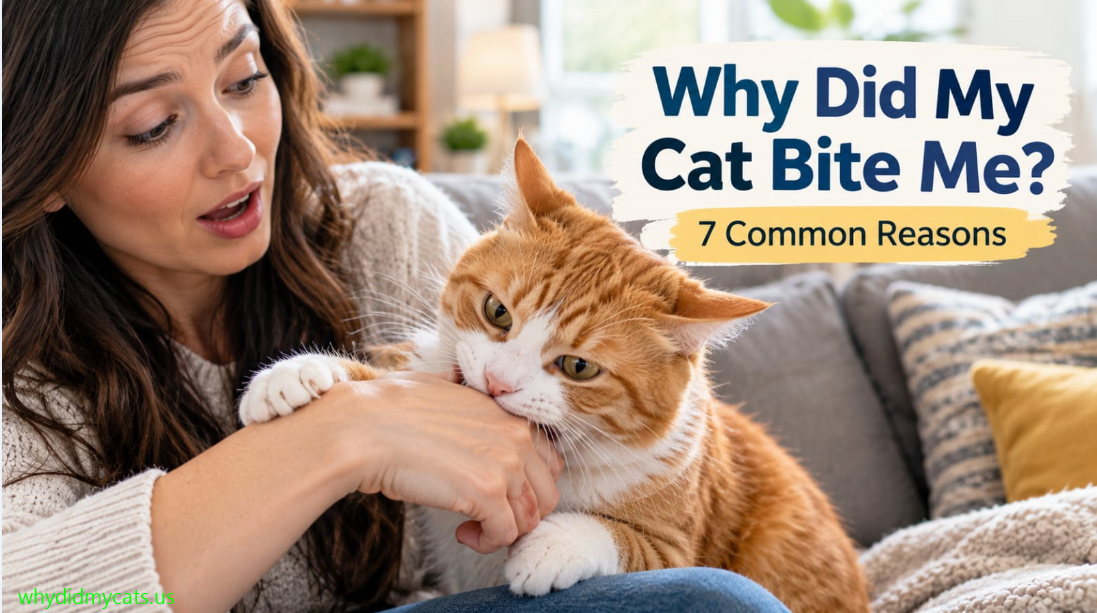
Your cat may sit beside you, purr while you pet them, and suddenly bite your hand. It can happen during a quiet evening on the couch or while you’re working at your desk.
Cats bite for different reasons, including overstimulation, play, fear, frustration, and pain. What happens immediately before the bite often helps explain the behavior. A gentle nip during petting is different from a forceful bite when you try to pick up your cat.
Why Did My Cat Bite Me? 7 Common Reasons
1. Your Cat Became Overstimulated During Petting
Some cats enjoy petting for a while but become irritated when it continues. Repeated strokes along the back, sides, or belly can become uncomfortable, even when your cat initially seemed relaxed.
You might notice the tail flicking, ears turning backward, or muscles becoming tense before the bite. Stop petting when these signs appear, and let your cat decide whether to approach you again.
2. Your Cat Was Playing
Cats naturally stalk, chase, grab, and bite during play. Moving fingers under a blanket or wiggling your toes beneath the covers can trigger those hunting instincts.
Kittens and young cats commonly practice these behaviors, but adult cats do it too. Use wand toys or toy mice instead of your hands. This teaches your cat that toys are appropriate targets, while human skin is not.
3. Your Cat Was Showing Affection or Grooming You
A cat that licks your hand and then gently bites it may be engaging in social grooming or friendly interaction. These little nips are often called love bites.
However, licking followed by biting does not always mean affection. Your cat might be getting overstimulated or shifting from grooming to play. Look at their body language and the strength of the bite rather than assuming every gentle nip is a sign of love.
4. Your Cat Felt Frightened or Trapped
A frightened cat may bite when they feel unable to escape. Reaching under a bed, holding your cat tightly, or picking them up while unfamiliar visitors are present can trigger a defensive response.
A new pet, a move to a different home, or loud household activity can also increase stress. Give your cat a quiet place to retreat, and avoid forcing contact when they are hiding or showing signs of fear.
5. Your Cat Redirected Their Frustration Toward You
Imagine your indoor cat watching an unfamiliar cat through the living room window. Your cat becomes agitated, and when you reach over to pet them, they suddenly bite your hand.
This behavior is called redirected aggression. The original trigger might be another animal, a startling noise, or a stressful encounter that your cat cannot directly respond to.
Avoid touching your cat while they are highly agitated. Give them space to calm down and reduce exposure to recurring triggers when possible.
6. Your Cat Learned That Biting Gets Attention
Some cats learn that biting makes people react immediately. For example, your cat might nip your arm while you work from home, prompting you to stop typing and interact with them.
Avoid rewarding biting with rough play or dramatic reactions. Instead, schedule regular play sessions and reward calm ways of asking for attention, such as approaching you or sitting nearby.
7. Your Cat Was in Pain or Feeling Unwell
A cat that suddenly starts biting during normal handling deserves attention. Dental problems, joint pain, skin irritation, injuries, and other medical conditions can make touch uncomfortable.
You might notice that your cat reacts whenever you touch one particular area, avoids being picked up, hides more than usual, or has difficulty jumping. Arrange a veterinary examination rather than repeatedly touching the area to test the reaction.
Why Did My Cat Bite Me for No Reason?
A bite that seems to happen out of nowhere often has a trigger that was easy to miss. Your cat might have reached their limit during petting, become startled by a noise, or reacted to discomfort.
Think about what happened immediately before the bite. Were you touching your cat, picking them up, moving your hand, or walking past while they were resting? Looking for a pattern can help you avoid another incident.
If your cat’s behavior changes suddenly or the biting becomes more frequent, schedule a veterinary appointment. You can also read our guide on why a cat may become aggressive all of a sudden to learn more about sudden changes in feline behavior.
How Can You Tell If Your Cat Is About to Bite?
Cats often communicate discomfort through body language before using their teeth. Watch for:
- Tail flicking or thumping: Your cat may be becoming irritated.
- Ears turned sideways or backward: Your cat may feel uncomfortable or threatened.
- A tense or frozen body: Your cat may be preparing to retreat or defend themselves.
- Dilated pupils or a fixed stare: Your cat may be highly alert or agitated.
- Turning toward your hand: Your cat may be signaling that they want the interaction to stop.
These signs are most useful when considered together with the situation. Stop touching your cat and give them space when their body language changes.
What Should You Do When Your Cat Bites You?
Stop interacting with your cat and avoid shouting, hitting, or trying to hold them still. Move away calmly when it is safe, and let your cat settle.
If the bite breaks your skin, wash the wound thoroughly with soap and running water. Cat bites can cause serious infections, particularly puncture wounds on the hands or near joints. Contact a healthcare professional promptly for advice, especially for deep bites or bites to the hand or face. Seek urgent care for severe wounds or rapidly worsening redness, swelling, warmth, or pain.
Once everyone is safe, consider what triggered the bite and change how you approach similar situations. For gentle nipping that occurs during interaction, our guide to why cats nip their owners explains more about this behavior.
How Can You Stop Your Cat From Biting?
The right approach depends on why your cat bites. Start with these practical changes:
- Keep petting sessions brief and stop before your cat becomes uncomfortable.
- Use toys rather than fingers or feet during play.
- Let your cat approach you instead of forcing contact.
- Provide hiding places, climbing spaces, and regular interactive play.
- Avoid punishment, spraying water, or deliberately provoking your cat.
If biting becomes difficult to predict or your cat starts reacting aggressively to ordinary handling, ask your veterinarian to rule out medical causes. A qualified feline behavior professional can help with persistent behavior problems.
Frequently Asked Questions
Why does my cat randomly just bite me?
A cat may bite unexpectedly because of overstimulation, play, fear, frustration, or pain. Warning signs can be subtle, especially during petting. Consider what happened immediately before each bite. If the behavior starts suddenly or becomes more intense, arrange a veterinary examination.
Do cats feel guilty after biting?
Cats do not show guilt in the same human sense that people do. A cat that hides, looks away, or approaches you cautiously after biting may be responding to fear, stress, or your reaction. Give your cat space rather than interpreting their behavior as an apology.
What causes a cat to bite its owner?
Common causes include petting-related overstimulation, play, fear, redirected aggression, attention-seeking, and pain. A bite during play differs from one that happens when you touch a sore area. Sudden or unexplained biting deserves a veterinary check, especially when other behavior changes appear.
What does it mean when a cat is biting you?
A bite is not a single message. Your cat might be trying to end petting, engage in play, defend themselves, or respond to discomfort. Consider the bite’s intensity, your cat’s body language, and what happened beforehand to better understand the likely cause.
Should I hiss back at my cat if they hiss at me?
No. Hissing back can frighten or further agitate your cat instead of resolving the situation. Stop approaching, avoid reaching toward them, and give them a clear way to retreat. Once your cat has calmed down, work on identifying the trigger and preventing the same situation from happening again.
Conclusion
Cats bite for different reasons, from playful behavior to fear or physical discomfort. Understanding what happens before a bite helps you respond safely and make changes that suit your cat. Respect warning signs, avoid punishment, and seek veterinary advice when biting begins suddenly, becomes frequent, or appears connected to pain.
[…] Don’t punish her or pull your hand away sharply. Stop the interaction and give her room. For more information, read why your cat might bite you. […]