
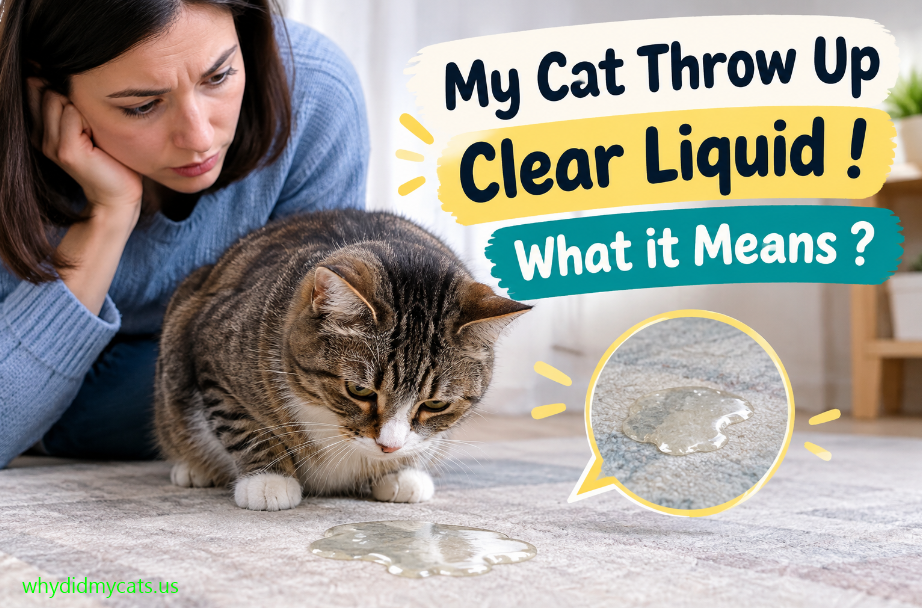
Why did my cat throw up clear liquid? Clear vomit is often made up of stomach fluid, saliva, or water, especially when the stomach is empty. One isolated episode in a cat that is eating, drinking, and behaving normally is less concerning than repeated vomiting. However, clear liquid alone cannot tell you what caused it.
The timing, frequency, and your cat’s other symptoms matter. A cat that throws up once before breakfast is in a different situation from one that vomits after every drink or seems weak afterward.
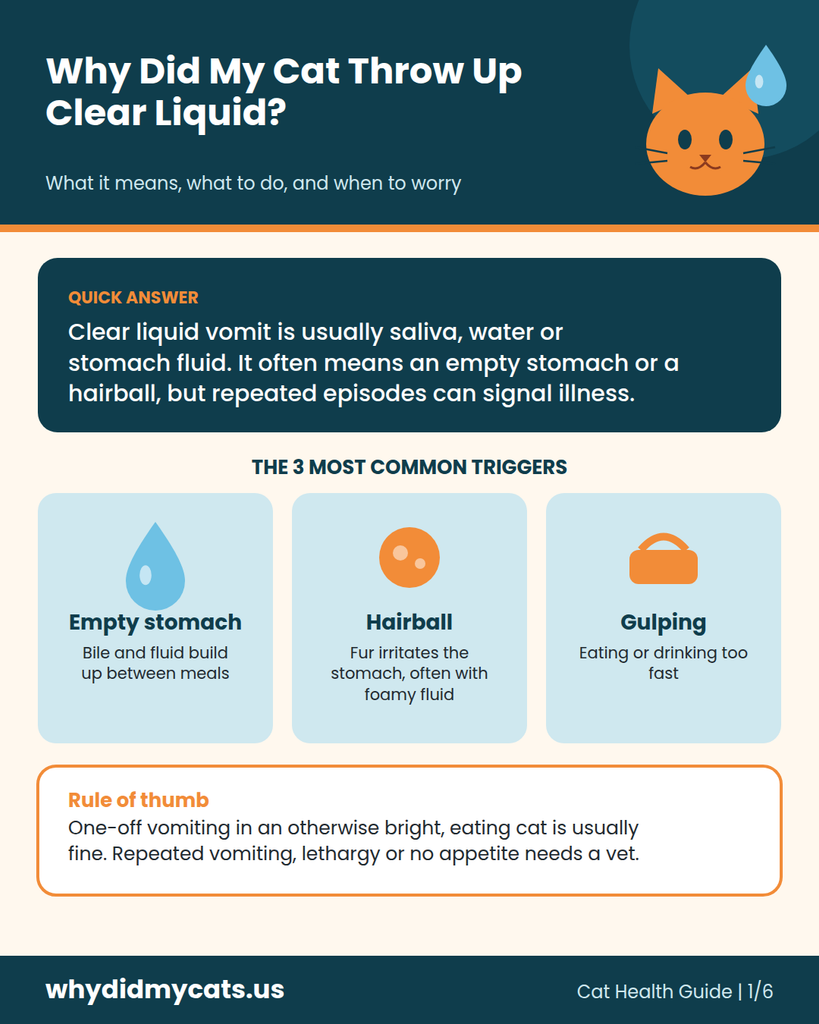
Why Did My Cat Throw Up Clear Liquid? 6 Possible Causes
1. An Empty Stomach
Some cats vomit clear fluid or foam after going a long time without food. You might notice this early in the morning, before breakfast. Stomach fluid and saliva can come up even when there is no food in the stomach.
If it happens repeatedly, do not assume hunger is the only cause. Ask your veterinarian whether changing meal timing or feeding smaller, more frequent portions would be appropriate.
2. Drinking Water Too Quickly
A cat that gulps water after playing or eating dry food may bring some of it back up shortly afterward. Note whether the episode happens immediately after drinking and whether your cat is otherwise comfortable.
Repeated vomiting after drinking is not normal. Contact your veterinarian if your cat cannot keep water down, since dehydration can develop.
3. Stomach Irritation or a Food Change
A sudden change in food, eating spoiled food, or getting into table scraps can upset a cat’s digestive system. Vomiting may occur with reduced appetite, loose stool, or discomfort.
Keep track of any new treats, foods, plants, or household items your cat could have chewed. If you suspect your cat swallowed something toxic or a foreign object, seek veterinary advice promptly rather than waiting for more symptoms.
4. Hairballs or Swallowed Fur
Cats swallow loose fur while grooming. Hairballs usually contain a clump of hair, but a cat may retch and bring up clear fluid before producing one—or without producing a hairball at all.
Repeated gagging or retching without bringing anything up should not automatically be blamed on hairballs. A veterinarian can help distinguish vomiting from coughing or another problem.
5. Digestive or Other Medical Conditions
Gastritis, intestinal parasites, pancreatitis, kidney disease, and other illnesses can cause vomiting. The fluid may look clear, white, yellowish, or contain food, depending on the circumstances.
A veterinarian will consider your cat’s age, medical history, appetite, hydration, and other symptoms. Depending on the examination, testing may include bloodwork, a fecal test, or imaging.
6. Stress or Changes in Routine
Moving to a new home, visitors, a new pet, or a sudden change in feeding routine can affect some cats’ digestive health. Stress should not be assumed to be the cause of vomiting without considering medical problems first.
Why Did My Cat Throw Up Clear Liquid but Act Normal?
A cat that vomits once and then returns to normal behavior may have had a temporary stomach upset. Watch whether your cat eats its next meal, drinks normally, uses the litter box, and behaves as usual.
Do not rely on normal behavior alone to rule out illness. Cats can hide signs of discomfort, and repeated vomiting deserves veterinary attention even when your cat still walks around or asks for food.
Why Does My Cat Throw Up Clear Liquid Every Morning?
Morning vomiting can occur after a long overnight gap between meals, but a recurring pattern needs investigation. Record when your cat eats, when vomiting happens, and whether the fluid is clear, foamy, or yellow.
Your veterinarian may recommend a feeding-schedule adjustment after assessing your cat. If the vomiting happens most mornings, is becoming more frequent, or comes with weight loss or a reduced appetite, arrange a veterinary appointment instead of treating it as a normal habit.
Why Does My Cat Throw Up Clear Liquid Every Day?
Daily vomiting is not something to dismiss as normal, even when your cat seems fine between episodes. Digestive disease, parasites, food-related problems, or conditions affecting other organs may be involved.
Contact your veterinarian promptly to arrange an assessment. Seek urgent care if vomiting is repeated, your cat cannot keep water down, or you notice weakness, abdominal pain, blood, or possible exposure to a toxin.
Why Did My Kitten Throw Up Clear Liquid?
Kittens can become dehydrated more quickly than healthy adult cats, and vomiting can be more serious in a young animal. Possible causes include parasites, dietary problems, infections, or swallowing something they should not have.
Contact a veterinarian promptly, particularly if your kitten vomits again, refuses food, has diarrhea, or seems unusually sleepy. A kitten that is weak, repeatedly vomiting, or unable to keep fluids down needs urgent veterinary assessment.
Clear Liquid vs. White Foam: What Is the Difference?
Clear liquid usually looks watery and may contain saliva or stomach fluid. White foam looks bubbly or frothy and can contain saliva mixed with stomach fluid. Neither appearance identifies a specific illness on its own.
For more detail, read our guide to why a cat throws up white liquid. If the vomit is yellow rather than clear, our article on why a cat throws up yellow liquid explains some possible causes.
What Should You Do After Your Cat Throws Up Clear Liquid?
If your adult cat vomited once and is acting normally, take these practical steps:
- Observe your cat: Check appetite, energy, stool, and whether vomiting happens again.
- Keep fresh water available: Do not force your cat to drink. Contact a veterinarian if water triggers more vomiting.
- Avoid sudden diet changes: Do not introduce new foods or treats while you are monitoring the problem.
- Record the episode: Note the time, appearance of the vomit, recent meals, and any possible exposure to plants, chemicals, or foreign objects.
- Do not give human medication: Some medicines that people use are dangerous for cats.
Do not deliberately fast a cat or try home remedies without veterinary guidance. Kittens, senior cats, and cats with existing medical conditions may need more cautious care.
When Should You Worry About Cat Vomiting?
Contact a veterinarian promptly if your cat vomits repeatedly, vomits more than once in a short period, loses its appetite, develops diarrhea, or seems unusually tired. Blood in the vomit, abdominal pain, suspected toxin exposure, or possible swallowing of string or another object also warrants urgent advice.
Seek emergency veterinary care if your cat is severely weak, collapses, has difficulty breathing, or keeps vomiting and cannot retain water. Do not pull on string hanging from your cat’s mouth or anus.
A veterinarian may ask about meal timing, food changes, medications, possible toxin exposure, and other symptoms. Bring a photo of the vomit or a short video of the episode if you can safely obtain one.
FAQs
What should I do if my cat throws up clear liquid?
If your adult cat vomits once and otherwise acts normally, monitor its appetite, energy, and drinking. Keep fresh water available and avoid giving human medication. Contact your veterinarian if vomiting repeats, your cat cannot keep water down, or other symptoms appear.
What does “watery cat puke” mean?
Watery cat vomit usually contains fluid such as saliva, stomach secretions, or recently consumed water. An empty stomach or temporary irritation can be responsible, but appearance alone cannot confirm the cause. Repeated episodes or other signs of illness need veterinary assessment.
When to worry about cat vomiting?
Worry when vomiting happens repeatedly, your cat refuses food, seems weak, has abdominal pain or diarrhea, or vomits blood. Repeated vomiting with an inability to keep water down needs urgent attention. Collapse, severe weakness, breathing difficulty, or suspected poisoning requires emergency veterinary care.
What is the silent killer of cats?
Chronic kidney disease is sometimes called a silent killer because early signs can be subtle. It is not the only serious disease affecting cats, and clear vomit alone does not mean your cat has kidney disease. Changes in thirst, urination, appetite, or weight deserve a veterinary check.
What sickness is going around in cats right now?
Illnesses circulating among cats vary by location and time, so it is not possible to identify a current outbreak from vomiting alone. Contact your veterinarian or local animal health service for information about local concerns. Keep your cat away from sick cats and seek care if symptoms develop.
Do cats realize we aren’t cats?
Cats can distinguish people from other cats through scent, sound, appearance, and behavior, although we cannot know exactly how they conceptualize the difference. They often treat humans as familiar social companions and may show affection through rubbing, purring, or staying nearby. This behavior does not explain vomiting.
Conclusion
Why did my cat throw up clear liquid? An empty stomach, drinking too quickly, or temporary stomach irritation are possible explanations, but recurring vomiting can signal an underlying health problem. Monitor a single mild episode carefully, and contact your veterinarian when vomiting repeats or other symptoms appear. Seek emergency care for severe symptoms or suspected poisoning.