
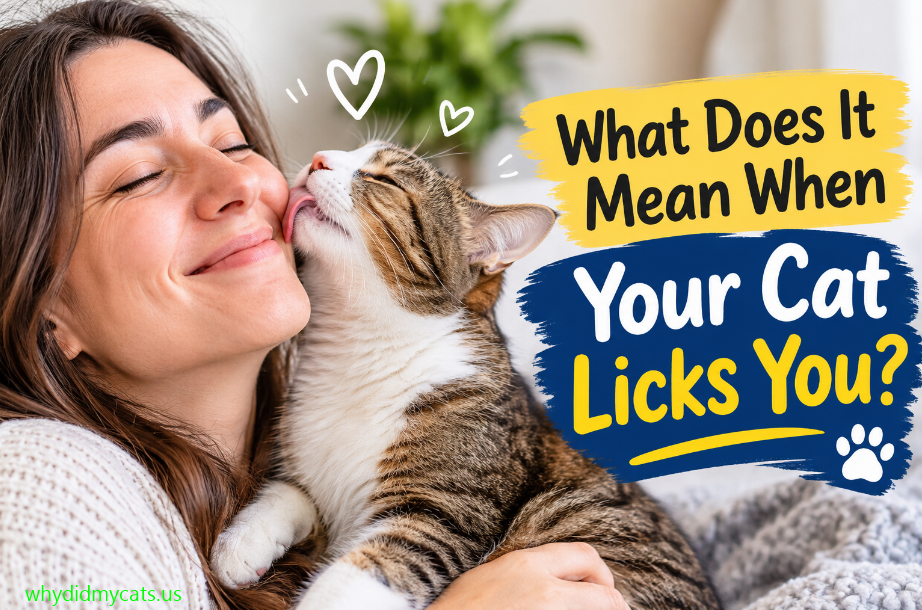
Why did my cat lick me? A cat’s rough little tongue can come as a surprise, especially when she starts licking your hand while you’re watching TV or your face while you’re getting ready for bed. Cats lick people for different reasons, and affection is only one possibility.
Your cat might be grooming you, responding to your scent, asking for attention, or finding comfort in a familiar interaction. The circumstances matter, too. Here are 16 common explanations for this behavior, along with signs that excessive licking may deserve attention.
What Does It Mean When Your Cat Licks You?
Cats use licking as part of their normal social behavior. Mother cats groom their kittens, and bonded cats groom one another. This behavior, known as allogrooming, helps maintain social bonds.
When your cat licks you, she may be treating you like a familiar member of her social group. She may also enjoy your skin’s salty taste or have learned that licking gets your attention.
A few gentle licks during a relaxed moment are usually normal. Repeated licking that starts suddenly or becomes difficult to interrupt deserves a closer look.
16 Reasons Your Cat May Be Licking You
1. She Is Showing You Affection
Licking can be a sign of trust and social bonding. Cats groom those they feel comfortable around, and your cat may include you in that familiar routine.
You might notice this when she curls up beside you, rests on your lap, or gives your hand a few licks before settling down. It is one way she interacts with someone she knows well.
2. She Considers You Part of Her Family
Cats living together sometimes groom one another to strengthen their social relationships. Your cat may treat you as part of her familiar group and use licking as a form of social connection.
This behavior is especially easy to notice in a relaxed household where your cat regularly sleeps near you, follows you from room to room, or seeks your company.
3. She Is Grooming You Like Another Cat
Cats learn grooming behavior early in life. Mother cats lick their kittens to clean them, and kittens gradually develop grooming habits of their own.
Your cat may lick your hand, arm, or hair as part of this instinctive behavior. She isn’t actually trying to give you a bath; she is using a familiar feline interaction.
4. Your Skin Tastes Salty
Human skin naturally collects sweat and salts. After a workout, a hot day, or time spent outdoors, your skin may have a smell or taste that interests your cat.
You might notice her licking your forearm after you’ve been exercising or your hand after a warm afternoon outside. This doesn’t necessarily mean she’s trying to show affection.
5. She Wants Your Attention
Cats quickly learn which behaviors get a response. When licking makes you talk, pet her, or stop working, she may repeat it whenever she wants interaction.
For example, your cat might lick your hand while you’re working from home or using your laptop. She has learned that this behavior gets your attention.
For more signs of attention-seeking behavior, see our article on why your cat may have become so clingy.
6. She Feels Safe and Comfortable Around You
A relaxed cat may lick you while sitting beside you, kneading a blanket, or resting on your lap. The familiar interaction may be part of how she settles down around someone she trusts.
Look at the rest of her body language. A loose posture, relaxed ears, and gentle movements are more reassuring than a stiff body or repeatedly flicking tail.
7. She Is Sharing a Familiar Scent With You
Cats rely heavily on scent when recognizing familiar people and animals. Social grooming helps members of a group develop a shared, familiar smell.
Your cat’s licking may be part of that social scent exchange. It is better understood as a bonding behavior than proof that she is claiming ownership of you.
8. She Has Kept a Kitten-Like Comfort Habit
Some cats carry early-life behaviors into adulthood. Licking, kneading, and purring can appear together during quiet moments.
A cat that was separated from her mother early may retain certain nursing-related comfort behaviors, although licking alone cannot establish that she was weaned too young.
9. She Likes an Interesting Smell on Your Skin
Your cat’s nose can pick up scents you barely notice. Food residue, cooking smells, shampoo, or a scented product may attract her attention.
For example, she may investigate your fingers after you’ve prepared chicken or fish. Don’t let her lick skincare products or hair products, though. Some ingredients are unsafe for cats to swallow.
10. She Is Feeling Stressed or Anxious
Changes in a cat’s environment can affect her behavior. Moving to a new home, introducing another pet, having visitors, or changing a familiar routine can create stress.
Some cats respond with increased grooming or repetitive licking. If your cat has suddenly started licking you much more than before, consider whether something has changed at home.
11. Licking Helps Her Feel Calm
Repetitive grooming can become a self-soothing behavior. A cat might lick herself, a blanket, or even your hand during a stressful or uncertain moment.
A predictable feeding schedule, quiet resting places, daily play, and familiar routines help create a more comfortable environment. Persistent repetitive behavior still deserves veterinary attention.
12. She Is Responding to Your Petting
Some cats lick their owners during petting because the interaction feels social and familiar. Your cat might lick your hand while you gently stroke her head or cheeks.
But licking doesn’t always mean she wants more petting. Watch for flattened ears, a tense body, skin twitching, or a tail that starts swishing. Those signs mean she needs a break.
13. She Is Becoming Overstimulated
A cat can enjoy petting and then suddenly find it uncomfortable. Repeated strokes, especially along the back or near the tail, can overwhelm some cats.
Licking may appear just before a nip or swat. Stop petting when her body becomes tense, her tail starts lashing, or her ears turn backward. Give her space rather than trying to continue the interaction.
14. She Is Expecting Food or a Treat
Cats learn household routines. Your cat might lick your fingers around mealtime because she associates you with food, treats, or feeding.
She may also lick your hand after you handle her food or prepare a meal. Check whether the behavior happens at predictable times, especially before breakfast or dinner.
15. She Has Learned That Licking Gets a Reaction
Even a small reaction can reinforce a behavior. If you laugh, speak to your cat, or immediately pet her whenever she licks you, she may repeat it.
This doesn’t mean she’s deliberately misbehaving. She has simply learned that licking is an effective way to start an interaction.
16. A Health or Behavioral Problem Is Affecting Her Behavior
Licking you is not usually a direct sign of illness. However, a sudden increase in licking, especially alongside other behavior changes, deserves attention.
Nausea, pain, anxiety, and other health concerns can contribute to unusual repetitive licking. Watch for changes in appetite, vomiting, hiding, reduced activity, or excessive self-grooming.
A veterinarian can examine your cat and decide whether a physical problem or a behavioral concern needs investigation.
When Licking Comes With Biting
A cat that licks your hand and then gives you a little nip isn’t necessarily being aggressive. Some cats combine grooming with gentle mouthing, while others bite when they have had enough interaction.
The difference is in the bite and the body language around it.
- Gentle nibbling: A soft, brief nip during a relaxed interaction may be part of social grooming or play.
- Overstimulation: A swishing tail, tense body, flattened ears, or sudden bite can mean your cat wants the petting to stop.
- Pain or discomfort: A cat that reacts aggressively when you touch a particular area needs a veterinary check.
Don’t punish her or pull your hand away sharply. Stop the interaction and give her room. For more information, read why your cat might bite you.
What Different Licking Situations Can Tell You
Licking You While You Pet Her
Your cat may be returning the social interaction or responding to a familiar touch. Keep petting gentle and let her decide when she’s finished.
Licking You and Purring at the Same Time
Purring alongside licking often happens during comfortable social interactions. It can accompany affection and relaxation, but purring alone doesn’t prove that a cat is happy. Consider her posture and behavior, too.
Licking You After You Shower
Freshly washed skin has a different scent and may retain traces of soap, shampoo, or other products. Your cat might be investigating the new smell. Don’t allow her to lick product-covered skin, even when the product smells pleasant.
Licking Your Face, Hands, or Hair
Hands may carry food smells, while hair and faces have their own scents and skincare products. Face licking also brings your cat’s mouth close to your eyes and mouth, so it’s better to redirect her rather than encourage it.
Licking You More Than Usual
A noticeable change matters more than an occasional lick. Think about recent household changes and whether your cat is also grooming herself excessively or showing other symptoms. A sudden or persistent change is a good reason to contact your veterinarian.
Is It Safe to Let Your Cat Lick You?
A few licks on healthy, unbroken skin are generally low risk for most healthy adults. However, cats carry bacteria in their mouths, so avoid letting them lick open cuts, wounds, or your mouth and eyes.
Be especially careful around young children and people with weakened immune systems. Wash any area your cat licks, and seek medical advice if a wound becomes red, swollen, painful, or infected.
Keep your cat away from skin covered with medicated creams, ointments, or other products. Some ingredients can harm cats when swallowed.
How to Stop Your Cat From Licking You Too Much
You don’t need to punish your cat to discourage unwanted licking. Instead, make the behavior less rewarding and offer another way to interact.
- Move away calmly: Stop giving attention when licking becomes uncomfortable.
- Offer a toy: Redirect her toward a wand toy, puzzle feeder, or another activity.
- Reward calm interaction: Give attention when she sits beside you without licking.
- Keep her routine predictable: Regular meals, playtime, and quiet resting areas can reduce stress.
- Avoid harsh reactions: Shouting, pushing, or spraying water can frighten your cat and damage trust.
If the behavior is new, persistent, or difficult to interrupt, arrange a veterinary examination before treating it as a training problem.
When Should You Worry About Your Cat’s Licking?
Contact your veterinarian when licking suddenly increases, becomes repetitive, or appears alongside other changes.
Arrange an examination if you notice:
- Repeated licking that interrupts eating, sleeping, or normal activities.
- Excessive self-grooming, bald patches, redness, or sores.
- Changes in appetite, energy, or social behavior.
- Vomiting, drooling, or other signs of discomfort.
- Unusual licking that continues despite changes in routine.
Your veterinarian may ask when the behavior began, what triggers it, and whether anything else has changed. Depending on the findings, the examination may include checking your cat’s mouth, skin, and general health. Further tests may be recommended when a medical cause is suspected.
Frequently Asked Questions
Are cats happy if they lick you?
Licking can be part of a positive social interaction, especially when your cat is relaxed and comfortable. However, it doesn’t always mean happiness. Cats also lick to groom, seek attention, investigate tastes, or cope with stress. Her body language helps explain the behavior.
Do cat licks mean kisses?
People often call cat licks kisses, but cats aren’t necessarily expressing affection in the same human way. Licking is a natural feline behavior used for grooming and social bonding. When your cat licks you during a relaxed interaction, it can be a sign of familiarity and trust.
Should I let my cat lick me?
A few licks on healthy skin are generally low risk, but don’t let your cat lick open wounds, your mouth, or your eyes. Keep her away from skin with lotions or medicated products, too. Wash the area afterward, especially before eating or touching your face.
Do cats get sad when you leave the house?
Some cats become distressed when their owners leave, particularly when they are strongly attached or have little stimulation at home. Others handle time alone comfortably. Changes such as excessive vocalizing, destructive behavior, or inappropriate elimination deserve attention and a discussion with your veterinarian.
Do cats prefer female owners?
There is no reliable rule that cats prefer women over men. Individual cats respond to a person’s behavior, voice, handling style, and daily interactions. A calm person who respects a cat’s boundaries and provides consistent care can build a strong bond regardless of gender.
Do cats realize we aren’t cats?
Cats can recognize that humans are different from other cats through our appearance, smell, sounds, and behavior. However, they may still use familiar feline social behaviors with us, including rubbing, kneading, grooming, and licking.
How long before a cat forgets a person?
Cats can remember familiar people for a long time, particularly those associated with safety, food, and positive experiences. There isn’t a fixed time after which a cat forgets someone. Recognition depends on the relationship, past experiences, and individual memory.
How far away can cats hear you calling?
Cats have sensitive hearing and can detect many sounds that humans cannot hear. However, there is no single reliable distance at which every cat will recognize its owner’s voice. Noise, surroundings, the cat’s hearing, and familiarity with your voice all affect the response.
Conclusion
Understanding why did my cat lick me starts with paying attention to the situation and your cat’s body language. Licking can be a sign of affection, grooming, bonding, or a way to seek attention and comfort. However, frequent licking combined with biting, stress, or unusual behavior deserves closer attention. Notice when it happens, respond gently, and contact your veterinarian if the behavior becomes excessive or suddenly changes.