
Losing all the kittens in a litter is heartbreaking, especially when they seemed healthy after birth. If you’re asking, “Why did all my cat’s kittens die?” possible explanations include infections, birth complications, poor nursing, low body temperature, and congenital defects.
Newborn kittens are fragile, and their condition can deteriorate quickly. Sometimes they show clear signs of illness; other times, a kitten dies with few noticeable symptoms. The exact cause cannot be confirmed from appearance alone, but understanding the possibilities can help protect any surviving kittens.
Why Did All My Cat’s Kittens Die? 7 Possible Causes
1. Fading Kitten Syndrome
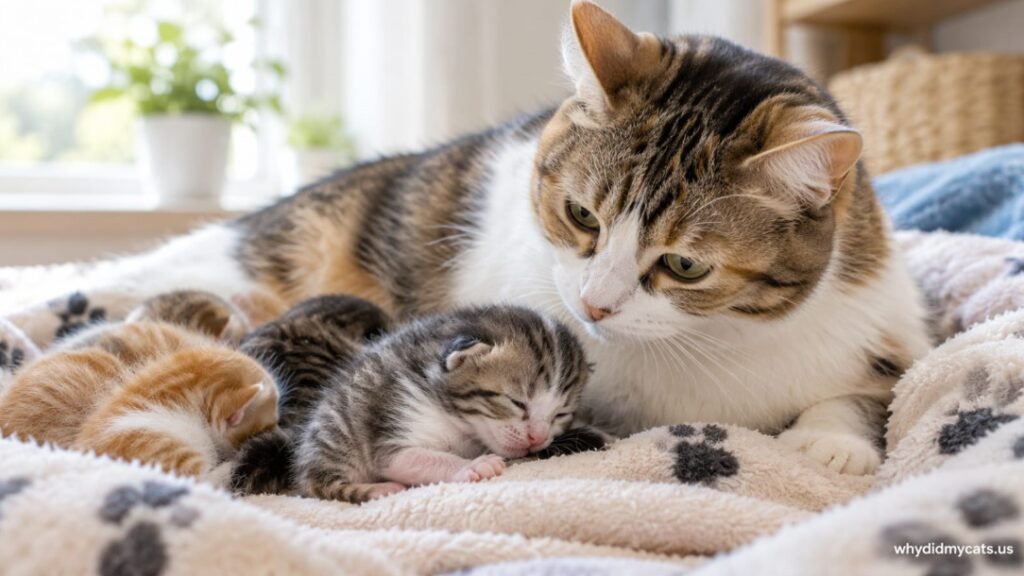
Fading kitten syndrome describes a newborn kitten that fails to thrive. It is not a single disease; several underlying problems can cause a kitten to become progressively weaker.
Warning signs include poor nursing, low body temperature, persistent crying, weakness, and failure to gain weight. Young kittens can deteriorate rapidly, so these signs require prompt veterinary attention.
2. Infections
Bacterial and viral infections can seriously affect newborn kittens. Depending on the infection, a kitten may develop diarrhea, breathing problems, weakness, or difficulty nursing. Some infections progress before obvious symptoms appear.
When several kittens from the same litter die, a shared infection is one possibility. A veterinarian should assess the mother and any surviving kittens rather than assuming the danger has passed.
3. Insufficient Milk or Poor Nursing
Newborn kittens need frequent access to their mother’s milk. A kitten that cannot latch, is weaker than its littermates, or receives too little milk can develop dehydration and low blood sugar.
The mother may also have a health problem that interferes with nursing. Watch whether every kitten feeds and gains weight, not just whether the litter appears quiet and comfortable.
4. Cold Temperatures
Very young kittens cannot regulate their body temperature well. A cold nesting area or separation from the mother and littermates can cause hypothermia.
Cold kittens may become weak and stop nursing, creating a dangerous cycle. Never force-feed a cold or poorly responsive kitten; seek emergency veterinary advice.
5. Birth Complications or Low Birth Weight
A difficult delivery can cause injury or oxygen deprivation. Kittens born prematurely or with low birth weight may struggle to nurse and have fewer reserves to cope with illness.
A kitten may initially appear alive and responsive but become weaker over the following hours. A veterinarian can assess the surviving kittens for related complications.
6. Congenital Defects
Some kittens are born with abnormalities that are not obvious at first. Heart defects, digestive-system abnormalities, and a cleft palate can affect feeding or survival.
These problems are not necessarily caused by anything the owner did. A veterinary examination, and sometimes additional testing, is needed to identify them.
7. Neonatal Isoerythrolysis
This condition occurs when a mother cat’s antibodies attack a kitten’s red blood cells because of a blood-type incompatibility. The resulting anemia can be life-threatening, particularly in susceptible newborn kittens.
It is a less common possibility, but a veterinarian may consider it when the kittens’ ages and symptoms fit the pattern.
Why Are My Kittens Dying One by One?
When kittens die one after another, consider whether they share a problem, such as infection, inadequate feeding, cold conditions, or a complication affecting the litter.
For example, one kitten may consistently fail to latch while another gains weight more slowly than its siblings. Those differences can be important even when the kittens look similar at birth.
Do not assume every kitten died for the same reason without an examination. Contact a veterinarian promptly and explain when each kitten became unwell or died.
Why Did My Newborn Kitten Die Overnight With No Symptoms?
Newborn kittens can deteriorate quickly, and early warning signs may be subtle. A kitten that appeared to be sleeping normally may have had an infection, a congenital abnormality, low blood sugar, or another serious problem.
A sudden death does not automatically mean the owner neglected the kitten or that the mother rejected it. Some conditions are difficult to recognize without veterinary assessment.
Tell your veterinarian the kitten’s age, feeding history, birth circumstances, and any changes you noticed. A postmortem examination, also called a necropsy, may help determine the cause and guide care for the remaining kittens.
Signs of Fading Kitten Syndrome
Look for changes in feeding, movement, and growth, including:
- Refusing to nurse or struggling to latch
- Weakness or unusual sleepiness
- Persistent crying or restlessness
- Failure to gain weight
- Diarrhea or vomiting
- Difficulty breathing
- A body that feels unusually cold
A newborn kitten showing these signs needs urgent veterinary attention. Do not wait until the next day to see whether it improves.
What to Do If Some Kittens Are Still Alive
If one or more kittens have already died, treat the surviving litter as needing prompt veterinary assessment.
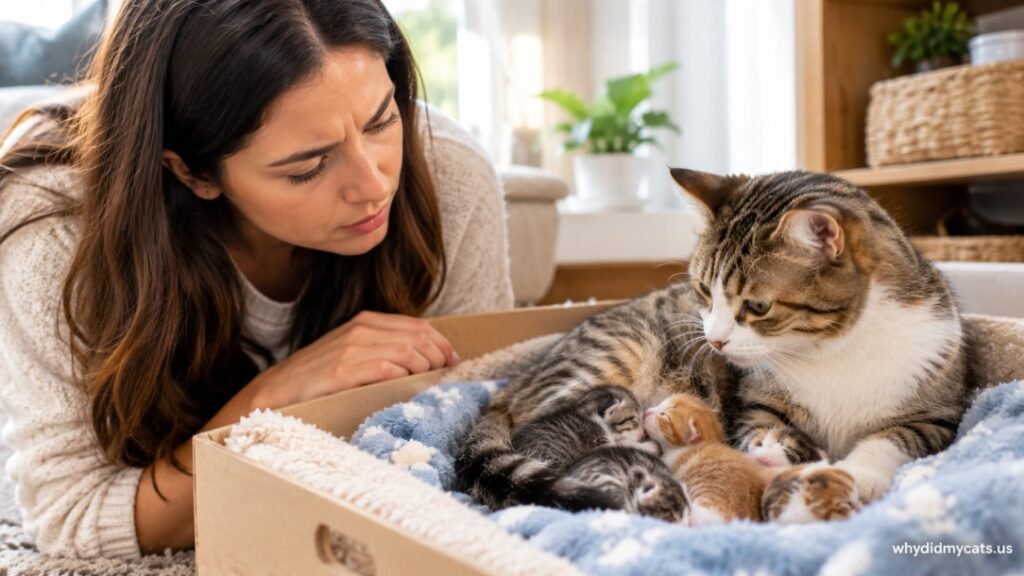
- Call a veterinarian or emergency animal hospital. Explain that kittens from the same litter have died.
- Keep the kittens gently warm and dry. Provide a warm area with space to move away from the heat source. Avoid direct contact with heating pads or hot-water bottles.
- Do not force-feed a cold, weak, or poorly responsive kitten. Ask the veterinarian for safe feeding instructions.
- Have the mother cat examined. Her health and ability to nurse can affect the entire litter.
- Follow veterinary advice about monitoring. Record feeding and weight changes so problems are easier to spot.
Do not give newborn kittens human medication, leftover antibiotics, or home remedies without veterinary guidance.
Can the Mother Cat’s Health Cause Kitten Deaths?
Yes. Insufficient milk, illness, painful or inflamed mammary glands, and difficulty nursing can put kittens at risk. However, the mother is not automatically responsible; infections, birth defects, and other medical problems can occur even when she cares for her litter.
A mother cat that stops eating, becomes weak, or develops abnormal discharge should be checked by a veterinarian. Read our guide on why a cat may stop eating for more information about appetite changes.
If she repeatedly leaves the kittens or refuses to nurse them, see our article about why a cat may abandon her kittens. This behavior alone does not prove that she caused their deaths.
How Can a Vet Find Out Why the Kittens Died?
A veterinarian may examine the mother and surviving kittens, review the birth and feeding history, and check for signs of infection, dehydration, poor growth, or congenital abnormalities. Additional tests or a necropsy may be recommended, depending on the circumstances.
Sometimes the exact cause remains unknown. Even so, examining the mother and remaining kittens may reveal a problem that needs treatment.
How to Protect the Next Litter of Kittens
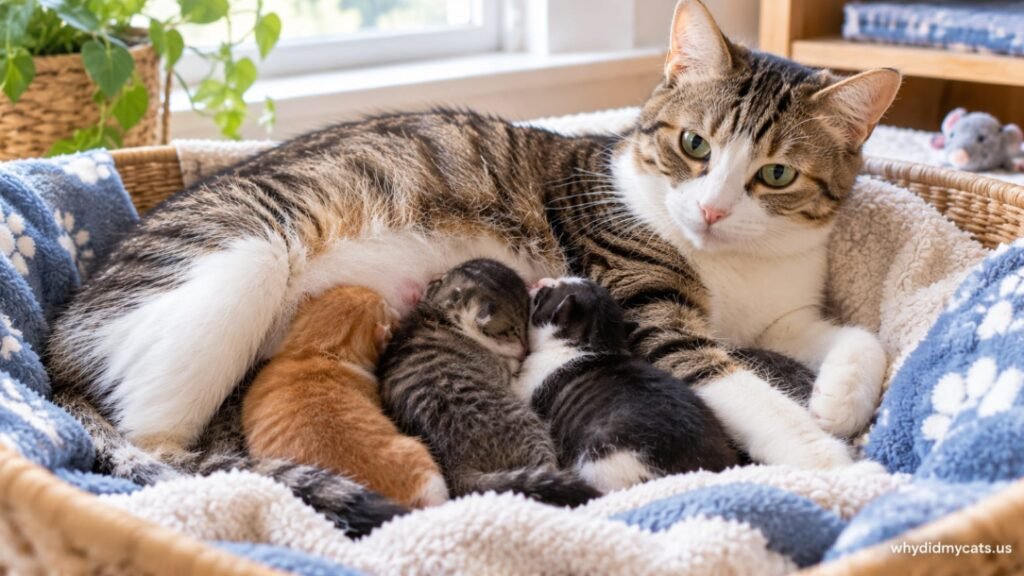
- Arrange veterinary care for the mother during pregnancy and after delivery.
- Keep the nesting area clean, dry, quiet, and appropriately warm.
- Check that each kitten nurses and gains weight daily.
- Ask your veterinarian about suitable nutrition and preventive care.
- Seek help quickly if a kitten becomes weak, stops nursing, or fails to gain weight.
If an entire litter has died, discuss the possible cause with your veterinarian before breeding the mother again.
FAQs
Why would an entire litter of kittens die?
An entire litter may die from infections, birth complications, congenital defects, poor nursing, low body temperature, or other shared problems. The cause cannot be established from the number of deaths alone. A veterinarian may examine the mother and surviving kittens and recommend a necropsy to investigate what happened.
Why do kittens die suddenly?
Kittens may die suddenly from serious infections, birth-related injuries, congenital abnormalities, low blood sugar, hypothermia, or other medical conditions. Some show few obvious signs before deteriorating. If other kittens are still alive, contact a veterinarian immediately instead of waiting for symptoms to appear.
How common is it for kittens to die?
The risk varies with the kittens’ age, birth weight, health, delivery circumstances, and care. Deaths are a particular concern during the first weeks of life, but no single percentage predicts the risk for every litter. Veterinary care and close monitoring help identify problems early.
Do cats know when their kittens die?
Mother cats may sniff, lick, move, or remain near a kitten that has died. Their behavior shows a response to the kitten, but we cannot know exactly how they understand death. When the cause is unknown, ask your veterinarian how to handle the deceased kitten and protect the remaining litter.
How many kittens does a first time mother cat have?
A first-time mother cat may have just a few kittens or a larger litter. There is no fixed number based on whether she has given birth before. Age, health, and individual differences influence litter size, and a veterinarian can check the mother and kittens after delivery.
Do cats say goodbye before death?
There is no reliable evidence that cats deliberately say goodbye in the human sense. A cat may seek attention, hide, become quieter, or change its routine when unwell, but these behaviors do not prove that it knows death is approaching. Sudden health or behavior changes deserve veterinary attention.
Conclusion
When all of a cat’s kittens die, possible causes include infections, birth complications, poor nursing, low body temperature, and congenital defects. The cause is not always obvious at home. A veterinarian can investigate the loss, examine the mother, and help protect any surviving kittens or guide planning for a future litter.