
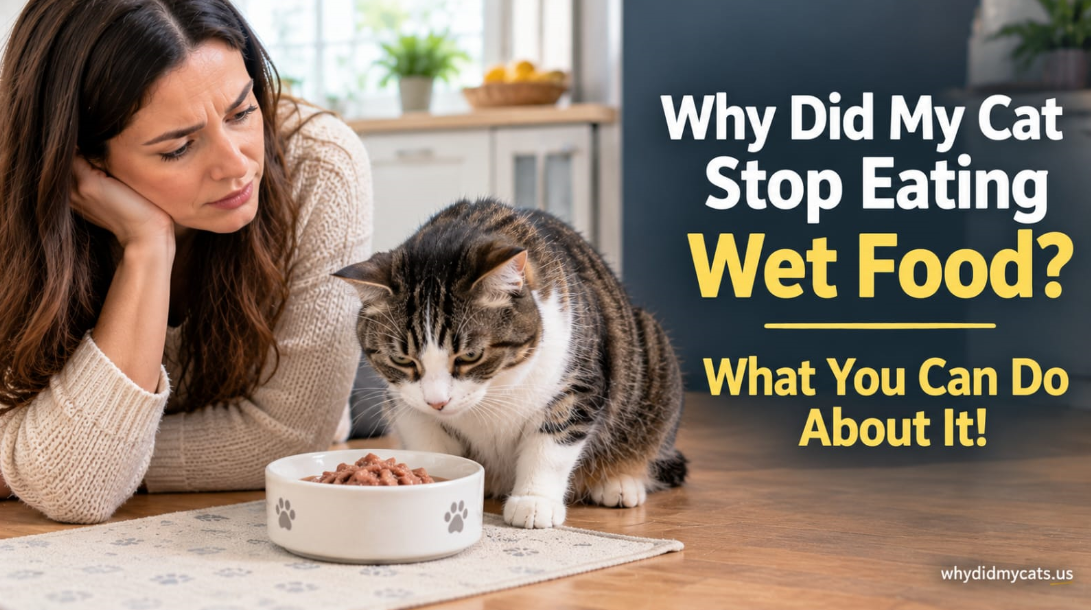
Why did my cat stop eating wet food when it used to enjoy every meal? A sudden change in food preference can happen because of a different flavor, texture, feeding routine, or an underlying health problem. Some cats refuse canned food but continue eating kibble, while others lose interest in all food.
The difference matters. Start by checking what your cat is actually eating and whether anything else has changed.
Why Did My Cat Stop Eating Wet Food? 7 Possible Reasons
1. Your Cat No Longer Likes the Flavor or Texture
Cats can be surprisingly selective about food. A cat that happily ate chicken pâté for months might suddenly prefer shredded meat in gravy. Even within the same brand, different recipes can have different smells and textures.
Think about any recent change in the product, including a new recipe, package, or flavor. Offer a small amount of a familiar, complete and balanced wet food rather than buying several new varieties at once.
2. The Food Is Too Cold or No Longer Fresh
Wet food straight from the refrigerator has less aroma than food served closer to room temperature. Cats rely heavily on smell when deciding whether to eat, so a cold meal may be less appealing.
Discard food that has been left out too long according to the package instructions. For a fresh serving, let refrigerated food warm slightly before offering it. Never serve it hot, and stir it well if you warm it briefly.
3. Your Cat Prefers Dry Food
Why did my cat stop eating wet food but still eat dry food? Your cat may prefer the crunch of kibble or simply find its flavor more appealing. Dry food may also be easier to eat for a cat that dislikes a particular wet-food texture.
However, eating kibble does not rule out a medical problem. A cat with nausea, dental discomfort, or another illness can show selective changes in eating habits. A sudden refusal of a previously favorite food deserves attention, especially when other changes appear.
4. Dental Pain Is Making Eating Uncomfortable
A sore tooth, inflamed gums, or another mouth problem can change how a cat approaches meals. Watch for dropping food, chewing on one side, drooling, bad breath, or backing away after taking a bite.
Food preferences alone cannot confirm dental disease. If your cat seems uncomfortable while eating, arrange a veterinary examination instead of repeatedly switching flavors.
5. Stress Has Changed Your Cat’s Eating Routine
Cats notice changes around their food. Moving to a new home, bringing home another pet, having visitors, or moving the feeding bowl to a noisy area can disrupt a familiar routine.
Try serving meals in a quiet spot away from the litter box and other pets. In a multi-cat household, give each cat enough space to eat without competition. Stress is one possible explanation, but it should not be assumed to be the cause of a sudden appetite change.
6. Too Many Treats Are Reducing Interest in Meals
Frequent treats or table scraps can make a cat less interested in its regular food. Check how much your cat eats between meals, including treats given by other family members.
Keep treats limited and offer regular meals on a consistent schedule. Do not withhold all food to force your cat to accept wet food; cats can become seriously ill when they eat too little.
7. An Illness Is Affecting Your Cat’s Appetite
Nausea, digestive problems, respiratory illness, and other health conditions can affect appetite. A stuffy nose can make food harder to smell, while some medical problems cause a cat to approach food and then walk away.
Notice whether your cat also has vomiting, diarrhea, low energy, weight loss, increased thirst, or changes in urination. These details help your veterinarian decide what to investigate.
If your cat has stopped eating altogether, read our guide on why your cat stopped eating altogether.
How to Get Your Cat to Eat Wet Food Again
Start with simple changes rather than forcing your cat to eat.
- Serve a fresh portion: Open a new serving and check its smell, appearance, and expiration date.
- Adjust the temperature: Offer the food slightly warmed to room temperature, not hot.
- Try a different texture: A small portion of pâté, shredded food, or food with gravy may appeal to your cat more.
- Use a clean, shallow bowl: Some cats prefer a wider dish that does not press against their whiskers.
- Choose a quiet feeding spot: Keep the bowl away from noisy appliances, busy walkways, and the litter box.
- Track what your cat eats: Note the amount eaten, water intake, and any changes in behavior.
Avoid force-feeding or putting food into your cat’s mouth without veterinary instructions. This can increase food aversion and create a risk of food entering the airway.
Is It Okay If My Cat Only Eats Dry Food?
Yes, many cats can meet their nutritional needs on a complete and balanced dry diet appropriate for their life stage. Wet food is not essential for every cat, but it provides additional moisture that can help increase overall water intake.
Keep fresh water available in easy-to-reach places. If your cat has urinary or kidney problems, ask your veterinarian which diet is appropriate.
The bigger concern is a sudden change. A cat that has always preferred kibble is different from one that abruptly rejects a familiar wet food.
When Should You Call a Vet?
Contact your veterinarian promptly if your cat suddenly refuses food, seems painful while eating, loses weight, or develops vomiting, diarrhea, or unusual tiredness.
If your cat has eaten nothing for 24 hours, seek immediate veterinary attention. Do not wait that long for a young kitten, a diabetic cat, or a cat that already seems ill; these situations need earlier advice.
Your vet may examine your cat’s mouth and teeth, review its diet and recent changes, and recommend tests based on the symptoms. If vomiting is part of the problem, our article on why your cat may throw up explains common causes. You can also read about why your cat may have diarrhea if you notice changes in stool.
FAQs
Is it okay if my cat never eats wet food?
Yes, provided your cat eats enough complete and balanced food suitable for its life stage and maintains good health. A dry-food diet can meet nutritional needs, but it supplies less moisture than wet food. Keep fresh water available and discuss diet choices with your veterinarian if your cat has urinary or kidney concerns.
Why is my cat suddenly picky with food?
A cat may reject food because of a new flavor, a change in smell or texture, stress, or a feeding-environment change. Dental pain, nausea, and other illnesses can also affect appetite. When pickiness begins suddenly, especially in a cat that used to eat reliably, do not assume it is simply a behavior problem.
Will a cat starve rather than eat food it doesn’t like?
Some cats will refuse unfamiliar or disliked food rather than accept it, so waiting for hunger to force a change is unsafe. Cats that eat too little can develop serious health complications. Offer a familiar food your cat will eat and contact your veterinarian if intake drops substantially or your cat stops eating.
Why is my cat eating her dry food but not her wet food?
Your cat may prefer kibble’s crunch, smell, or flavor, or dislike the wet food’s temperature or texture. However, selective eating does not rule out dental discomfort or illness. If this change is sudden, monitor how much she eats overall and contact your vet if the refusal continues or other symptoms appear.
Why is my cat suddenly not eating wet food?
A recipe change, stale food, stress, or a new food preference could explain the refusal. A health problem can also change appetite, even when a cat still seems interested in other foods. Try a fresh, familiar serving, but seek veterinary advice for a sudden or persistent change.
Do cats get bored of eating the same food?
Some cats become more selective about the flavors or textures they accept, while others happily eat the same food for years. You can offer suitable variety gradually, but frequent abrupt diet changes may upset digestion. If a cat suddenly rejects a previously favorite meal, consider health and environmental changes rather than assuming boredom.
Conclusion
When a cat stops eating wet food, the cause may be as simple as a flavor preference or serving temperature, but sudden food refusal can also signal discomfort or illness. Offer fresh food in a calm setting, keep track of your cat’s total intake, and contact your veterinarian when the change is sudden, persistent, or accompanied by other symptoms.