
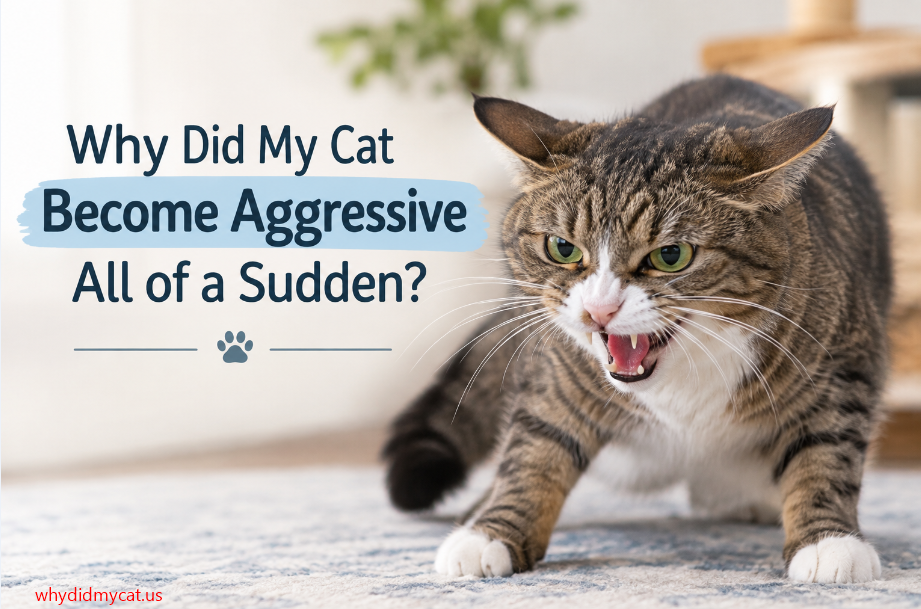
A cat who usually enjoys sitting beside you may suddenly hiss, bite, scratch, or attack when you approach. This change can feel unexpected, especially when your cat has always been gentle.
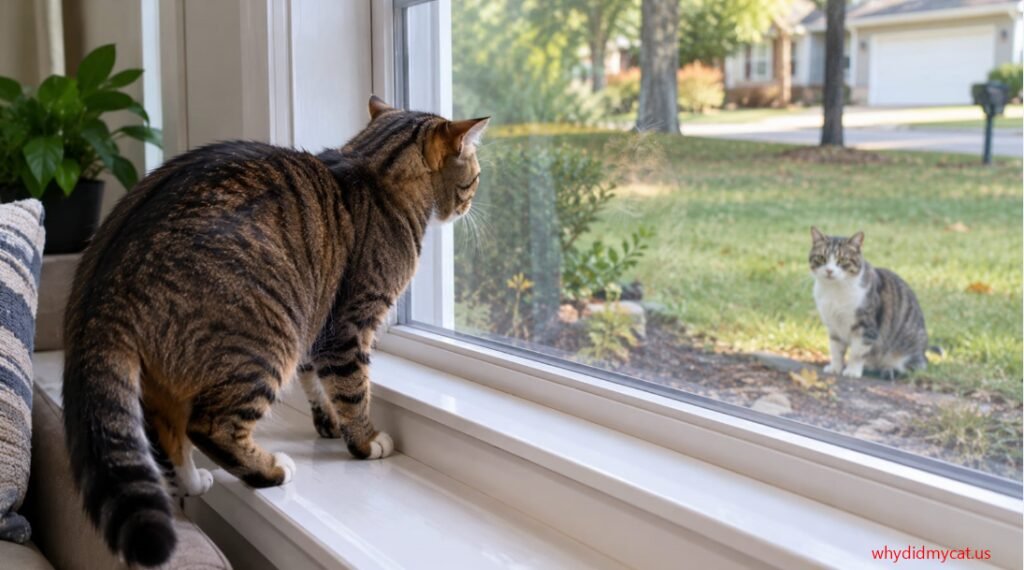
Sudden aggression in cats can be caused by pain, fear, stress, territorial behavior, or overstimulation. Sometimes, a cat reacts to something outside, such as an unfamiliar cat near a window, and redirects that frustration toward a person or another pet.
The first step is to keep everyone safe and look for what happened just before the behavior changed. Because pain and illness can also cause aggression, a sudden unexplained change deserves a veterinary checkup.
Why Did My Cat Suddenly Become Aggressive?
Your cat may be reacting to discomfort, feeling threatened, or trying to create distance from something upsetting. The reason often depends on when the aggression occurs.
For example, a cat who bites when you touch her back may be experiencing pain. A cat who attacks another household pet after staring through a window may be reacting to an unfamiliar animal outside.
The timing, body language, and any recent changes at home can help you identify possible triggers.
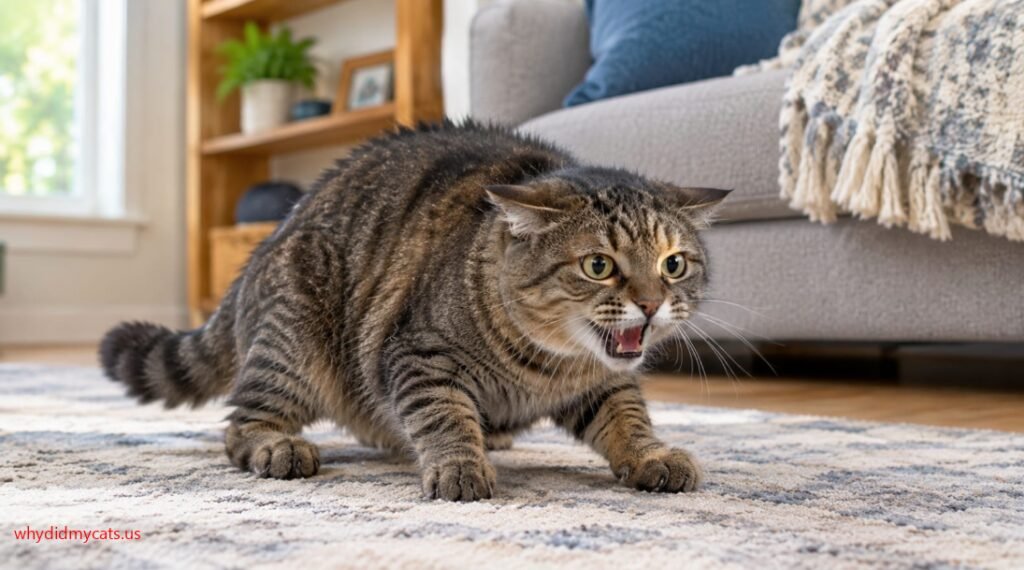
9 Reasons Your Cat May Suddenly Become Aggressive
1. Pain or an Underlying Health Problem
Pain is one of the first things to consider when a normally friendly cat suddenly becomes aggressive. Dental disease, arthritis, an injury, an abscess, or another medical problem can make handling uncomfortable.
You might notice your cat growling when picked up, hiding more than usual, avoiding stairs, or reacting when you touch a particular area. Some cats also eat less or groom themselves differently when they feel unwell.
Arrange a veterinary examination rather than assuming your cat has developed a behavior problem.

2. Fear or Feeling Threatened
A frightened cat may hiss, swat, bite, or scratch when she believes she cannot escape. A visitor reaching toward her, a child following her into a hiding place, or a loud noise can trigger this response.
Give your cat a clear escape route and a quiet place to retreat. Never corner her or force her to interact with someone she fears.
3. Stress or Changes at Home
Cats rely heavily on familiar routines. Moving to a new house, bringing home a baby, introducing a pet, or changing feeding and litter-box locations can make some cats feel insecure.
Even a change that seems minor to you, such as construction noise outside an apartment, can disturb a sensitive cat.
Keep meals, playtime, and other daily routines as consistent as possible. Introduce changes gradually and make sure your cat has safe resting places.
4. Petting-Induced Aggression
Some cats enjoy being petted but become irritated after a short time. A cat may initially purr, then twitch her tail, turn toward your hand, flatten her ears, or suddenly nip.
These reactions are signs that the interaction has become uncomfortable or overstimulating. Stop petting as soon as your cat shows warning signals, and let her choose when to approach again.
If the reaction is new or happens when you touch one specific area, ask your veterinarian to rule out pain.
5. Territorial Behavior
Cats may become aggressive when they feel another animal is threatening their territory. A new cat in the home, a neighborhood cat appearing in the yard, or a recent move can trigger chasing, growling, or fighting.
Territorial aggression may be directed at another cat, a dog, or even a person who approaches while the cat is highly agitated.
Provide separate feeding areas, resting spots, and litter boxes for household cats. Introduce unfamiliar pets gradually instead of expecting them to share space immediately.
6. Redirected Aggression After Seeing or Hearing Something
Redirected aggression occurs when a cat becomes highly aroused by a trigger she cannot reach and lashes out at someone nearby.
For example, your indoor cat may see a stray cat through the living-room window. When you approach to pet her, she suddenly swats or bites you instead.
The reaction may occur even after the original trigger is gone. Do not touch or pick up an agitated cat. Give her space in a quiet, secure area and keep other pets away until she has settled.
7. Aggression Toward Another Cat or Dog
A cat who suddenly attacks a familiar pet may be frightened, stressed, in pain, or reacting to a recent conflict. Sometimes, one pet returns from a veterinary visit carrying unfamiliar smells, and the other reacts as though a stranger has entered the home.
Separate the animals safely and do not let them fight it out. Once both are calm, a gradual reintroduction may be needed. Persistent aggression or injuries warrant veterinary guidance.
8. Hormonal or Reproductive Behavior
Unneutered male cats may fight over mates or territory. Female cats may also behave defensively around their kittens or when they feel threatened.
If your cat is not spayed or neutered, discuss whether reproductive hormones could be contributing to the behavior with your veterinarian. However, do not automatically blame hormones for a sudden personality change; pain, fear, and other causes still need consideration.
9. Frustration, Play, or Excess Energy
Young cats may stalk feet, pounce on moving hands, or bite during play. This behavior is especially likely when they have limited opportunities to chase toys and engage in appropriate hunting-style play.
Play-related attacks often involve chasing or ambushing rather than reacting to touch or appearing frightened. Still, a sudden increase in aggression should not automatically be dismissed as excess energy.
Use wand toys and other suitable toys instead of encouraging your cat to attack hands or feet. Schedule regular play sessions and never punish your cat for rough play.
Why Is My Cat Suddenly Aggressive Toward Me?
Your cat may be reacting to pain, fear, overstimulation, or a trigger she associates with you. For example, she may become defensive when you reach toward a sore area, or she may attack after seeing another cat outside.
Think about what happened immediately before the incident. Were you picking her up, brushing her, moving her from furniture, or approaching while she was staring at something outside?
If your cat is biting or nipping during interactions, our guide on why cats nip their owners explains common triggers and what those behaviors can mean.
Avoid grabbing, scolding, or forcing contact. If this behavior is new, repeated, or associated with signs of discomfort, arrange a veterinary examination.
Why Is My Kitten Suddenly Aggressive?
Kittens often bite, pounce, and chase because they are practicing hunting and play behaviors. They may also become defensive when frightened or handled in ways they dislike.
Offer appropriate toys, short play sessions, and quiet places where your kitten can rest. Avoid using your fingers as toys, even when the biting seems harmless.
A kitten who suddenly becomes unusually aggressive, cries when handled, stops eating, or appears weak needs veterinary attention rather than simply more playtime.
Signs Your Cat May Be About to Attack
Cats often show warning signals before biting or scratching, although some reactions happen quickly. Watch for:
- Ears flattened or turned backward.
- A stiff body, crouching, or raised fur.
- A rapidly lashing or twitching tail.
- Growling, hissing, or a low yowl.
- Dilated pupils or an intense stare.
- Turning suddenly toward your hand during petting.
These signs do not all mean the same thing, but they indicate that your cat needs space. Stop interacting and allow her to move away.
What Should You Do When Your Cat Suddenly Becomes Aggressive?

Give Your Cat Space and Avoid Punishment
Stop touching or approaching your cat. Do not shout, hit, spray water, or try to hold her down. Punishment can increase fear and make future reactions worse.
Let her settle in a quiet area with access to water, a litter box, hiding places, and a comfortable resting spot. Do not attempt to pick her up while she is highly agitated.
Separate Pets Safely if Needed
If your cat is attacking another pet, keep yourself out of reach and avoid putting your hands between them. Use a door or another safe barrier to separate the animals when possible.
Wait until both are calm before attempting any gradual reintroduction. If either animal is injured, contact a veterinarian.
Look for Triggers and Recent Changes
Make a brief note of when the aggression happens, who is nearby, what your cat was doing, and whether eating, grooming, walking, or litter-box habits have changed.
This information can help your veterinarian distinguish between possible medical and behavioral causes.
Arrange a Veterinary Checkup
Book an appointment for new or unexplained aggression, especially when your cat reacts to touch or has become less active, withdrawn, or reluctant to eat.
Your veterinarian may examine your cat’s mouth, joints, skin, and other areas for pain or injury. Depending on the findings, blood tests or other investigations may be recommended. If medical causes are ruled out, a qualified feline behavior professional can help with a behavior plan.
When Should You Take Your Cat to the Vet?
Contact your veterinarian promptly when aggression begins suddenly without an obvious explanation, keeps recurring, or occurs alongside changes in appetite, mobility, grooming, or litter-box habits.
Seek urgent veterinary care for serious injuries, difficulty breathing, collapse, seizures, sudden severe disorientation, or difficulty passing urine. Do not try to examine a painful or highly agitated cat yourself.
If your cat bites or scratches a person and breaks the skin, wash the wound thoroughly with soap and running water and seek medical advice, particularly for deep punctures or bites to the hand. Cat bites can become infected.
How to Prevent Sudden Aggression in Cats
Prevention depends on the underlying cause, but a few habits can make home life safer:
- Keep daily routines predictable.
- Give your cat hiding places, elevated resting spots, and room to move away.
- Introduce new pets and visitors gradually.
- Use toys rather than hands for play.
- Provide separate resources for cats who do not get along.
- Arrange regular veterinary care and report meaningful behavior changes.
If your cat bites during play or when you move her, this related guide may also help: Why Did My Cat Bite My Arm? 7 Reasons and What to Do.
FAQs
Why has my cat suddenly turned aggressive?
Sudden aggression can result from pain, fear, stress, territorial conflict, overstimulation, or redirected aggression. Think about what happened immediately before the behavior and whether your cat has other symptoms. Because medical problems can cause personality changes, arrange a veterinary examination when the aggression is new or unexplained.
What calms down aggressive cats?
Give an aggressive cat distance, a quiet environment, and a safe place to hide. Avoid touching, chasing, or punishing her. Keep other pets away until she settles. If aggression keeps happening or starts suddenly, contact your veterinarian rather than relying on calming products or behavior changes alone.
Why is my cat suddenly becoming aggressive towards one specific person?
Your cat may associate that person with an unpleasant experience, feel frightened by their movements or voice, or react when they approach during an uncomfortable moment. Pain can also make handling less tolerable. The person should avoid forced contact and allow the cat to approach voluntarily while you investigate the cause.
What is mistaken aggression in cats?
The term often refers to redirected aggression. A cat becomes upset by a trigger she cannot reach, such as an unfamiliar cat outside, then attacks a nearby person or pet instead. The target may have done nothing wrong. Give the cat space and avoid approaching her until she has fully settled.
What is a red flag behavior in cats?
A sudden, unexplained personality change is a warning sign, particularly when accompanied by pain, hiding, loss of appetite, difficulty walking, or unusual vocalization. Difficulty breathing, collapse, seizures, or inability to urinate require urgent veterinary attention. Do not assume a major behavior change is simply a training problem.
Conclusion
When a cat becomes aggressive all of a sudden, start by creating a safe distance and considering what changed. Pain, fear, stress, and redirected aggression are all possible explanations, and the right response depends on the cause. A veterinary checkup is the safest next step for new or unexplained aggression, especially when other symptoms appear.
[…] your cat has become unusually defensive, our guide to why cats suddenly become aggressive explains other possible causes of this […]
[…] from real-life animal behavior. If your own cat has suddenly become aggressive, our guide to why cats become aggressive all of a sudden explains some possible real-world […]
[…] Give your cat space instead of picking it up or forcing contact. If this behavior starts suddenly or happens repeatedly without an obvious trigger, discuss it with your veterinarian. Pain and other medical problems can also affect behavior. You can learn more in our guide to sudden aggression in cats. […]
[…] your cat’s behavior has changed dramatically, our guide on why a cat may become aggressive all of a sudden covers additional signs and possible […]
[…] If your cat has also started displaying unusual aggression or defensive behavior, read our guide on Why Did My Cat Become Aggressive All of a Sudden?. […]
[…] the biting becomes more frequent, schedule a veterinary appointment. You can also read our guide on why a cat may become aggressive all of a sudden to learn more about sudden changes in feline […]
[…] has become difficult because your cat also swats, bites, or reacts aggressively, read our guide on why my cat may have become aggressive all of a sudden. A new or worsening reaction still warrants a health […]
[…] Read more about why a cat suddenly becomes aggressive. […]