
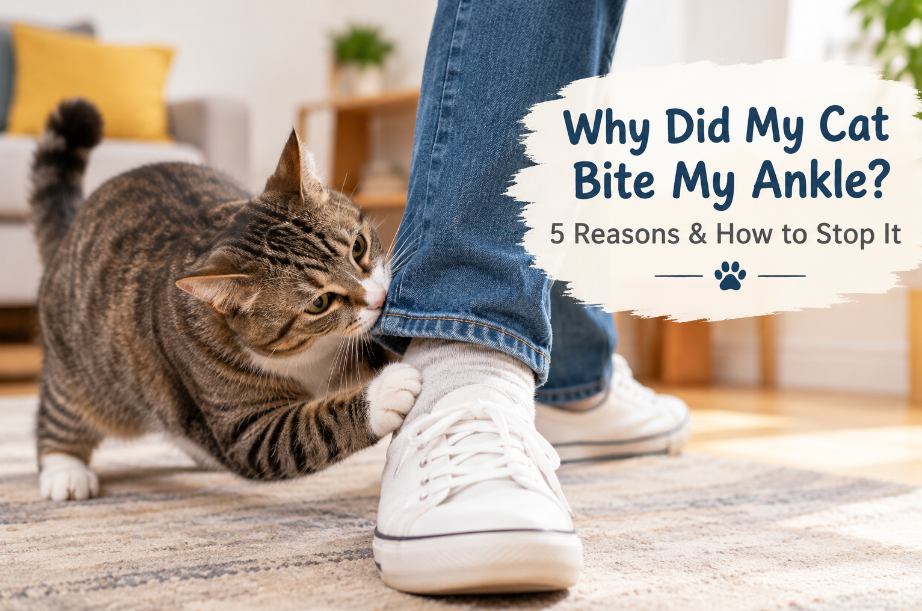
Your cat may seem perfectly relaxed one moment, then suddenly grab your ankle as you walk past. This behavior is common in playful cats and kittens, but it can hurt and become frustrating when it happens every day.
Cats often bite ankles because moving feet trigger their hunting instincts, they have excess energy, or they want attention. Fear, frustration, and pain are other possible causes. The way your cat behaves before and after biting can help you work out what is happening.
Why Did My Cat Bite My Ankle? 5 Possible Reasons

1. Hunting Instinct and Chasing Moving Feet
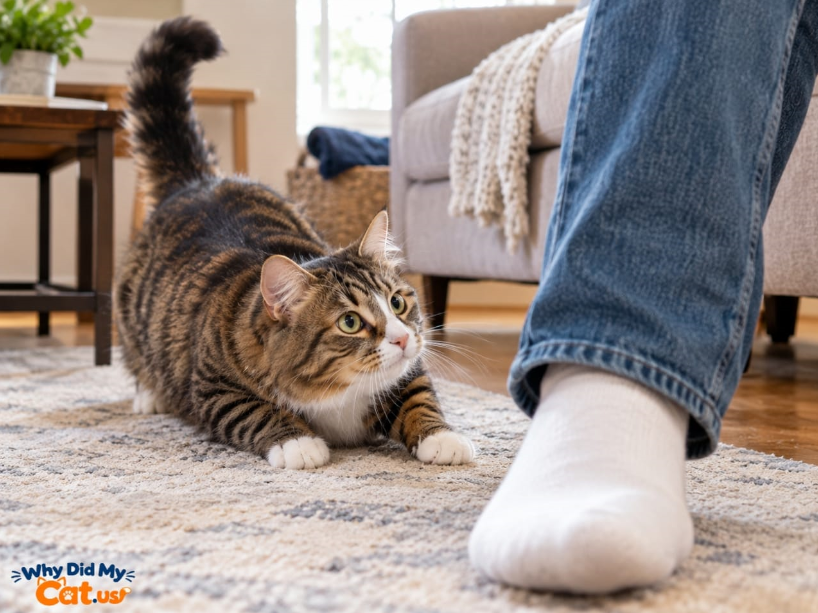
Moving ankles can look like small prey to a cat. Your cat may hide behind a couch, watch your feet approach, then pounce and bite as you walk by.
This behavior resembles the stalking and chasing sequence cats use when hunting. It is especially common in kittens and young cats that are still learning how to control their bites.
2. Boredom and Excess Energy
A cat that spends most of the day sleeping while you’re at work may have plenty of energy left when you return home. Without enough play and activity, your moving legs may become an entertaining target.
Indoor cats need opportunities to chase, jump, climb, and explore. An evening ankle attack might be your cat’s attempt to start an activity rather than a sign of hostility.
3. Attention-Seeking Behavior
Some cats learn that biting ankles gets an immediate response. You stop walking, talk to the cat, pick them up, or offer a treat. Even a negative reaction can become rewarding attention.
If your cat repeatedly bites when you’re busy working from home or preparing dinner, they may have learned that this behavior gets you to interact.
4. Overstimulation or Frustration
A cat that wants something but cannot get it may redirect that frustration toward the nearest moving person. For example, your cat might become excited after watching birds through a window, hearing another cat outside, or waiting for a meal.
Overstimulation can also happen during petting or handling, although ankle biting specifically while walking is more suggestive of a movement-triggered behavior.
5. Fear, Stress, or Pain
Not every ankle bite is playful. A frightened cat may bite when someone approaches too quickly, blocks an escape route, or surprises them.
A sudden change in behavior deserves extra attention. Pain, dental problems, joint discomfort, and other medical issues can contribute to aggression. Arrange a veterinary examination if the biting begins unexpectedly, becomes more intense, or occurs alongside other behavior changes.
Why Does My Cat Bite My Ankle When I Walk?
Your moving feet may trigger your cat’s urge to stalk and pounce. You might notice your cat crouching near a doorway, hiding under a table, or chasing your heels as you move between rooms.
Try changing the routine. Before walking through the area where your cat usually attacks, toss a toy away from your feet or start a short play session. Avoid wiggling your toes or using your feet as toys, because that teaches your cat to target them.
Why Does My Cat Bite My Ankle and Run Away?
A cat that bites your ankle and immediately runs away may be treating the interaction like a chase game. The bite starts the action, and your movement afterward makes the game more exciting.
Look at what happens next. If your cat runs a short distance, turns around, watches you, or returns for another pounce, playful behavior is a reasonable possibility. If the cat hisses, growls, flattens their ears, or seems frightened, give them space instead of pursuing them.
Why Does My Cat Bite My Ankles at Night?
Cats are naturally active during dawn and dusk, and an indoor cat that rests all day may become energetic in the evening or overnight.
Try scheduling interactive play before your usual bedtime. A wand toy that lets your cat chase and catch a toy is a better choice than encouraging attacks on your feet under the covers. Keep a consistent feeding and play routine so your cat has predictable outlets for activity.
Is My Cat Playing or Showing Aggression?
Watch your cat’s whole body rather than judging the bite alone.
- Playful behavior: stalking, pouncing, chasing moving feet, and returning for another round.
- Fearful or defensive behavior: crouching, trying to escape, flattened ears, hissing, or growling.
- Possible pain-related behavior: biting that starts suddenly, happens during handling, or comes with sensitivity, limping, or other physical changes.
These signs are clues, not a definite diagnosis. Cornell University College of Veterinary Medicine explains that feline aggression can have behavioral and medical causes, including pain. If the behavior is new or difficult to manage, speak with your veterinarian.
How to Stop Your Cat From Biting Your Ankles
Stop Moving and Avoid Punishment
When your cat grabs your ankle, stay as calm as possible and avoid kicking, shouting, or chasing them. Once it’s safe, disengage and give your cat a chance to settle.
Never hit your cat or use your feet to push them away as a game. Punishment can increase fear, while physical reactions may make the interaction more exciting.
Redirect Biting to Appropriate Toys
Keep a wand toy or soft cat toy nearby, especially in the spots where your cat usually hides before attacking. Offer the toy before the pounce when you recognize the pattern.
If your cat also nips your hands during play, our guide on why your cat might nip you explains more about this behavior.
Create a Daily Play Routine
Schedule a few short play sessions throughout the day, especially before the times when ankle biting usually happens. Let your cat chase and catch an appropriate toy, and rotate toys to keep the activity interesting.
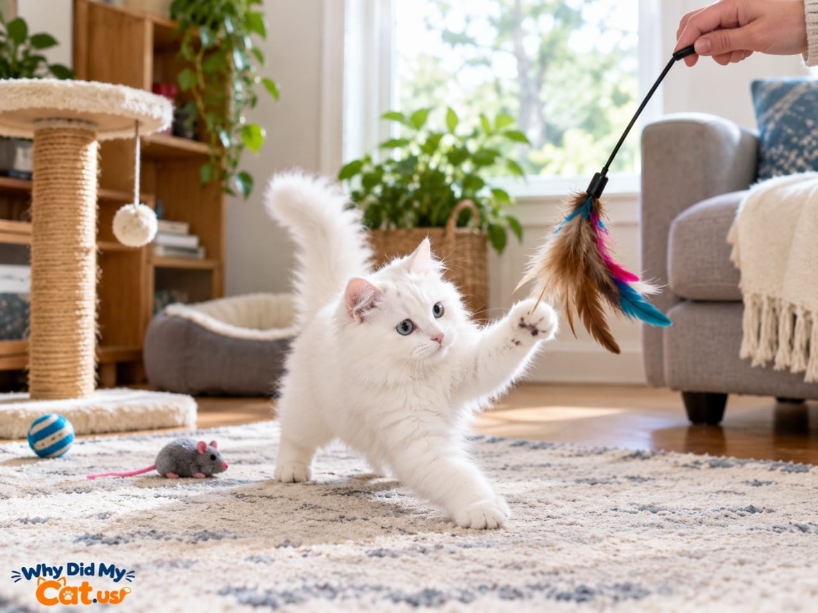
Add climbing spaces, scratching posts, and puzzle feeders to your cat’s environment. If your cat attacks from beneath a bed or behind a doorway, change the setup so that hiding spot no longer provides an easy ambush.
Reward Calm Behavior
Give your cat attention, play, or a small treat when they approach you calmly or choose a toy instead of your ankles. Everyone in the household should follow the same approach, including children who may otherwise encourage foot-chasing games.

When Should You Worry About Ankle Biting?
Contact your veterinarian if ankle biting starts suddenly, becomes more frequent, causes significant injuries, or occurs with hiding, reduced appetite, limping, or sensitivity to touch.
If your cat breaks your skin, take the wound seriously. Wash it promptly with soap and running water. Seek medical advice promptly for a puncture wound, especially if the bite is on your foot or near a joint, or if you develop redness, swelling, increasing pain, or drainage.
FAQs
Do cats feel guilty after biting?
Cats probably don’t experience guilt in the same human way we do. A cat that hides, avoids eye contact, or acts unusually quiet after biting may be responding to fear, stress, or your reaction. Focus on identifying the trigger and teaching safer ways to play rather than treating the behavior as deliberate wrongdoing.
Do cats give love bites to humans?
Some cats give gentle nips during affectionate interactions, but a bite isn’t automatically a sign of love. Ankle biting while you’re walking is more consistent with play, chasing, attention-seeking, or another behavioral trigger. Consider the situation and your cat’s body language before deciding what the bite means.
What illnesses can cats sense in humans?
Cats can notice changes in a person’s scent, movement, routine, and behavior. However, there is no reliable evidence that a cat can diagnose a specific human illness by biting or acting differently. If you have health concerns, consult a healthcare professional rather than relying on your cat’s behavior.
At what age do cats stop biting you?
There is no exact age when cats stop biting. Kitten play-biting often improves with maturity and consistent training, but young adult cats can continue ankle attacks when they lack suitable play opportunities. Teaching appropriate play early and rewarding calm behavior can help reduce the habit.
How do you discipline a cat for biting?
Avoid hitting, yelling, spraying water, or physically forcing your cat away. Calmly end the interaction, give your cat space, and redirect future play toward toys. Reward gentle behavior and provide regular activity. If biting is sudden, severe, or persistent, ask your veterinarian to rule out pain or illness.
Conclusion
Cats usually bite ankles because moving feet trigger their hunting instincts, they have excess energy, or they have learned that biting gets attention. Identify when the behavior happens, provide appropriate daily play, and reward calm interactions. If the biting starts suddenly or comes with signs of pain or illness, arrange a veterinary checkup.