
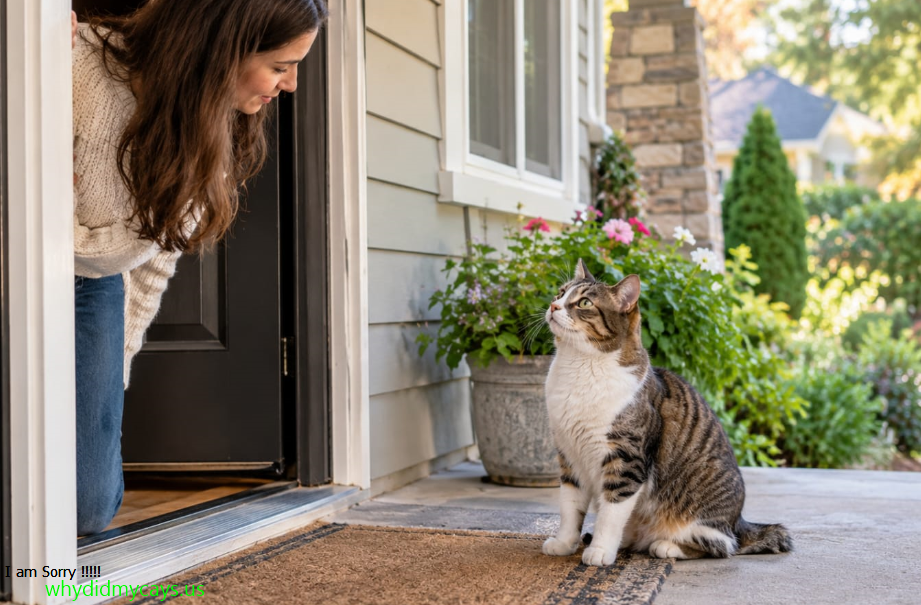
A stray cat showing up on your porch, sitting near your front door, or peeking through your window can leave you wondering why it chose your home. The explanation is often practical: the cat has found food, shelter, a quiet resting place, or a person who seems safe.
Some people also associate a visiting cat with good luck or spiritual meaning. Both perspectives are worth exploring, but the cat’s behavior and needs should come first.
Why Did a Stray Cat Come to My House? 7 Possible Reasons
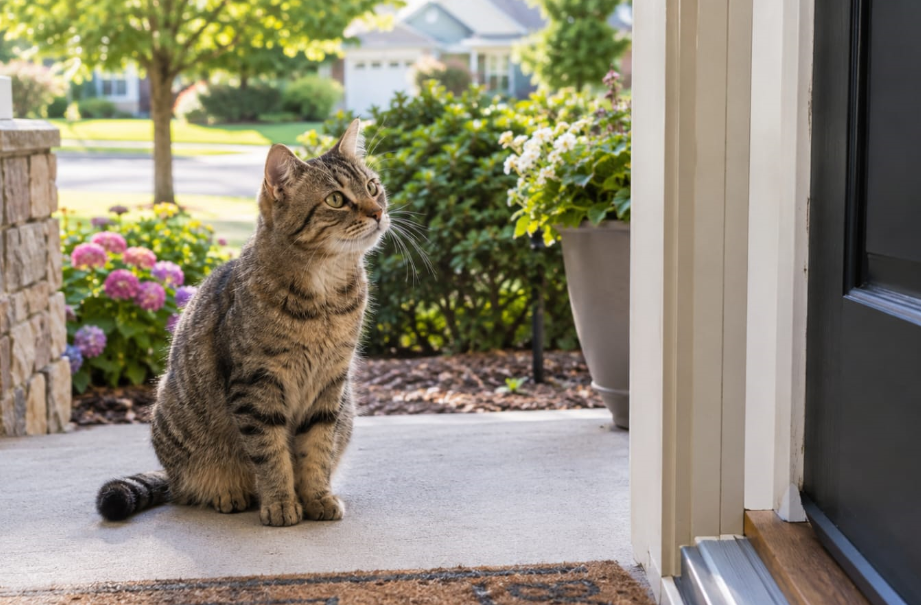
1. Your Home Offers Food or Water
Cats remember places where they find something to eat or drink. Even if you have never intentionally fed the cat, an outdoor pet bowl, accessible trash, or food left on a porch can attract it.
During hot weather, a clean water source can also make your property appealing. Once the cat discovers a reliable resource, it may return to the same spot.
2. The Cat Needs Shelter or Warmth
Your porch, garage, covered patio, or space beneath a deck may offer protection from rain, wind, and cold temperatures. During winter, outdoor cats look for sheltered places to rest, while shade becomes valuable during summer.
A cat lingering near your door does not necessarily want to come inside. It may simply have found a comfortable place to wait or sleep.
3. Your Home Feels Safe
Cats are cautious about unfamiliar people and surroundings. A quiet yard with little foot traffic may feel safer than a busy street or a crowded area.
You might notice the cat resting on your porch while you work from home or watching from a distance when your children play outside. If nobody chases or corners it, the cat may gradually become more comfortable around your property.
4. The Cat May Be Lost or Abandoned
A friendly cat that approaches people, meows at the door, or tries to enter your house could have lived with a family before.
It may have wandered away, become separated from its owner, or been abandoned. A collar is useful evidence, but its absence does not prove the cat has no home.
Take a photo and check local lost-pet listings. A veterinarian or animal shelter can scan the cat for a microchip if you can safely arrange a visit.
5. The Cat Is Attracted to Other Animals
If you have an indoor cat, the visiting cat may notice its scent near windows, doors, or outdoor spaces. Cats also investigate areas where other cats regularly eat or rest.
A visiting cat does not automatically want to become friends with your pet. It may be curious, looking for resources, or reacting to another cat’s territorial scent.
Keep your own cat indoors and avoid introducing unfamiliar cats face-to-face before you know more about the visitor.
6. The Cat Recognizes You
Have you ever spoken gently to the same stray cat several times, only to find it waiting on your porch again?
Cats can learn familiar routines, recognize people they associate with positive experiences, and return to places where they feel comfortable. If you have offered food or given the cat space without frightening it, your home may become part of its regular route.
This is a practical explanation for repeated visits, not proof that the cat has chosen you as its permanent owner.
7. The Cat May Need Help
A cat that appears unusually thin, has an obvious injury, struggles to walk, or seems weak may need assistance. A mother cat with kittens may also be searching for a protected area.
Do not assume every outdoor cat is abandoned or in danger. Observe from a safe distance and contact a local rescue group or veterinarian for advice when the cat appears injured or unwell.
Why Does a Stray Cat Keep Coming Back to My House?
Repeated visits usually mean your home has something the cat finds useful or reassuring. It might be a quiet resting spot, a dependable food source, protection from weather, or a familiar person.
For example, a cat that appears around the same time every afternoon may be following a feeding routine or using your yard as part of its usual route. Another cat may visit only when the neighborhood is quiet.
If you already own a cat, changes in the visitor’s behavior do not necessarily mean it wants to live with you. For a related look at feline attachment, read why a cat may become unusually attached to people.
Why Does a Stray Cat Come to My House at Night?
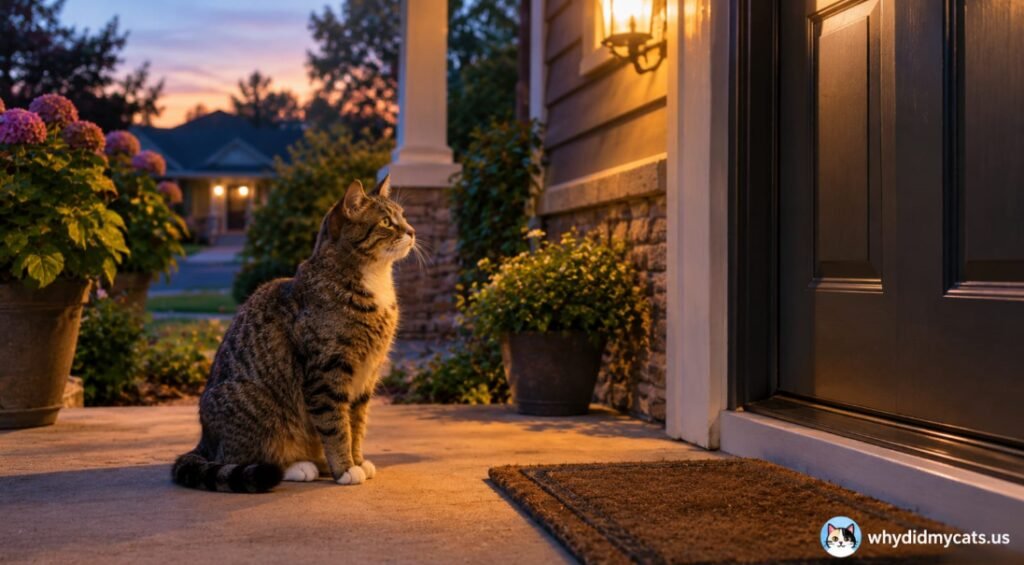
Cats may visit at night because outdoor spaces become quieter, fewer people are around, and familiar food or shelter remains available. Some outdoor cats are especially active around dusk and overnight.
A cat sitting near your door after dark is not necessarily delivering a supernatural message. It may be following its normal activity pattern or looking for a safe place to rest.
If the cat repeatedly cries at your door, check whether it seems injured, frightened, or lost. Avoid letting an unfamiliar cat mix freely with your pets simply because it appears calm at night.
What Does It Mean Spiritually When a Stray Cat Visits Your House?
In some spiritual traditions and personal belief systems, a cat visiting a home is associated with protection, intuition, independence, or positive change. Other people interpret the encounter as a reminder to show compassion toward animals.
These interpretations vary between cultures, and there is no scientific evidence that a stray cat’s arrival predicts good or bad luck.
You can appreciate the experience as personally meaningful while still considering ordinary explanations such as food, shelter, and familiarity. If you are interested in cat symbolism, you can also explore what seeing a cat in a dream may mean.
Does a Stray Cat Coming to Your House Mean Good Luck?
Some people believe that a cat appearing at their doorstep symbolizes good fortune, protection, or a fresh start. Others simply see it as a chance to help an animal in need.
Neither interpretation is guaranteed. The cat’s arrival does not predict future events, but treating it kindly and responsibly can turn an unexpected visit into a positive experience.
Why Would a Stray Cat Stop Coming to My House?
A cat may stop visiting because it has found another food source, changed its usual route, discovered a different shelter, or returned to its owner. Weather, nearby construction, neighborhood activity, and interactions with other animals can also change its routine.
If you had been feeding the cat, it may have started visiting another home where food is available. Its absence alone does not mean something bad has happened.
If the cat appeared injured or unwell before disappearing, contact a local rescue group if you are concerned and have enough information to identify it.
How Can You Tell If a Stray Cat Is Lost or Feral?
A stray cat has previously been socialized to people and may still approach humans, meow, or show interest in entering a house. A feral cat has little or no comfort around people and usually avoids close contact.
However, frightened stray cats can hide or hiss, too, so one encounter is not enough to determine their background.
Look for a collar, ask neighbors, and check local lost-pet notices. A small notch at the tip of one ear can indicate that an outdoor cat has been through a trap-neuter-return program, although other evidence may still be needed.
For more detail, read about the difference between a stray cat and a feral cat.
What Should You Do When a Stray Cat Comes to Your House?
You do not have to adopt every cat that visits, but you can help it safely.
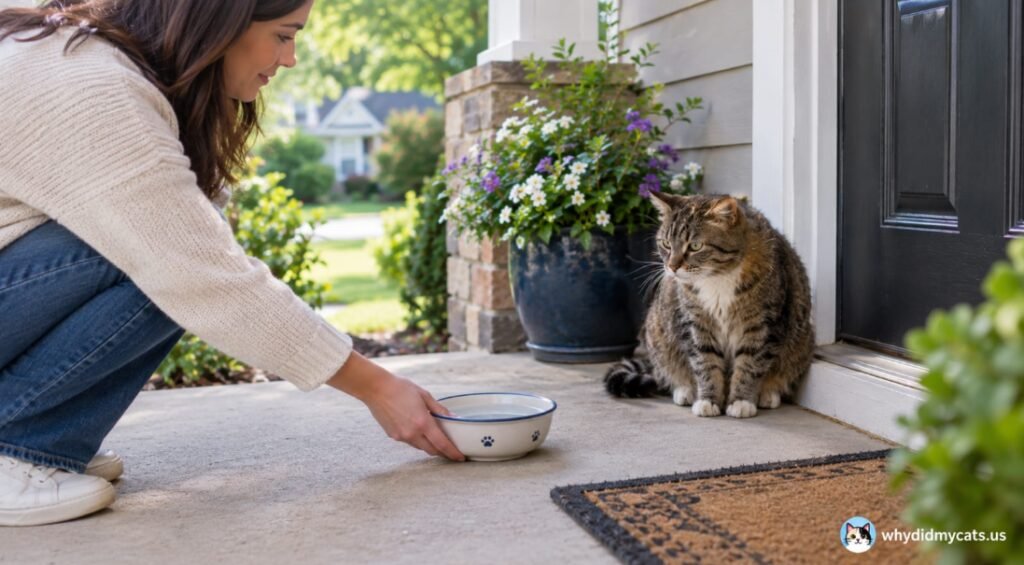
- Observe first: Check whether the cat looks healthy, injured, frightened, or unusually thin.
- Offer water: A shallow bowl of clean water is a simple way to help.
- Be cautious with food: If you decide to feed the cat, use appropriate cat food and clean up leftovers to avoid attracting wildlife.
- Look for an owner: Ask nearby neighbors, check lost-pet listings, and arrange a microchip scan if possible.
- Protect your pets: Keep the visitor separate from your cats until its health and ownership status are better understood.
- Contact a rescue group: Ask for guidance if the cat is injured, pregnant, caring for kittens, or difficult to approach.
Never force a frightened cat indoors or attempt to grab one that is hissing, cornered, or behaving aggressively. Give it space and seek help from an experienced local rescue organization.
Frequently Asked Questions
What is the spiritual meaning of a stray cat coming to your house?
Some spiritual beliefs associate a visiting cat with protection, intuition, independence, or good fortune. Interpretations vary across cultures, and none is scientifically established. You can find personal meaning in the encounter while remembering that food, shelter, safety, and familiar surroundings are common reasons cats visit homes.
Is it good luck if a stray cat comes to your house?
Some traditions consider a cat arriving at your home a positive sign, but there is no reliable evidence that it predicts luck. You can view the visit as a welcome opportunity to show kindness. If the cat appears lost or needs help, checking its condition and looking for an owner are practical first steps.
What does it mean if a stray cat comes into your house?
A stray cat entering your home may be seeking food, warmth, shelter, or human company. It could also be a lost pet that recognizes indoor spaces. Keep your own pets separate, avoid forcing contact, and check whether the visitor belongs to someone before deciding what to do next.
What are the signs that a stray cat has chosen me?
A cat that repeatedly approaches you, waits near your door, meows, or relaxes in your presence may be growing comfortable with you. These behaviors suggest familiarity, but they do not prove the cat is homeless or wants to be adopted. Check for an owner before treating the cat as your own.
Will a stray cat ever trust you?
Yes, many stray cats gradually learn to trust people through calm, predictable interactions. Give the cat room to approach, speak gently, and avoid chasing or grabbing it. Progress depends on its previous experiences and socialization. A truly feral cat may prefer outdoor life and may never feel comfortable being handled.
Where do stray cats go during the day?
Stray cats may rest in yards, under porches, in sheds, beneath parked cars, or in other sheltered spaces. Some visit homes or feeding spots before moving elsewhere. Their daytime habits depend on weather, nearby resources, safety, and how comfortable they feel around people.
Conclusion
A stray cat may come to your house because it has found food, shelter, safety, or a familiar person. Spiritual traditions offer other interpretations, but the visit alone does not prove a supernatural meaning or a desire to be adopted.
Observe the cat, protect your own pets, and look for an owner before deciding how to help. A little patience can make a real difference to an animal that has turned up at your door.