

A cat biting your ear can be surprising, especially when it happens during cuddling or while you’re lying in bed. In many cases, a gentle ear nibble is linked to affection, grooming, play, curiosity, or a desire for attention.
The meaning depends on what happens around the bite. A relaxed cat that purrs and gently nibbles is behaving very differently from a cat that suddenly bites hard while flattening its ears or flicking its tail.
Why Did My Cat Bite My Ear?
Your Cat May Be Showing Affection
Cats sometimes use gentle licking or nibbling as part of social interaction. A cat that curls up beside you, purrs, rubs against you, and gives your ear a soft nibble may simply be interacting with you in a way that feels natural to her.
The bite should remain gentle. A hard or repeated bite is a different situation.
Your Cat Wants Your Attention
Some cats learn that biting gets an immediate response. You may turn toward them, talk to them, pet them, or get out of bed. From your cat’s perspective, the bite worked.
This is especially common when a cat wants food, play, or attention and has learned that other signals do not get the same reaction.
Your Cat Is Trying to Play
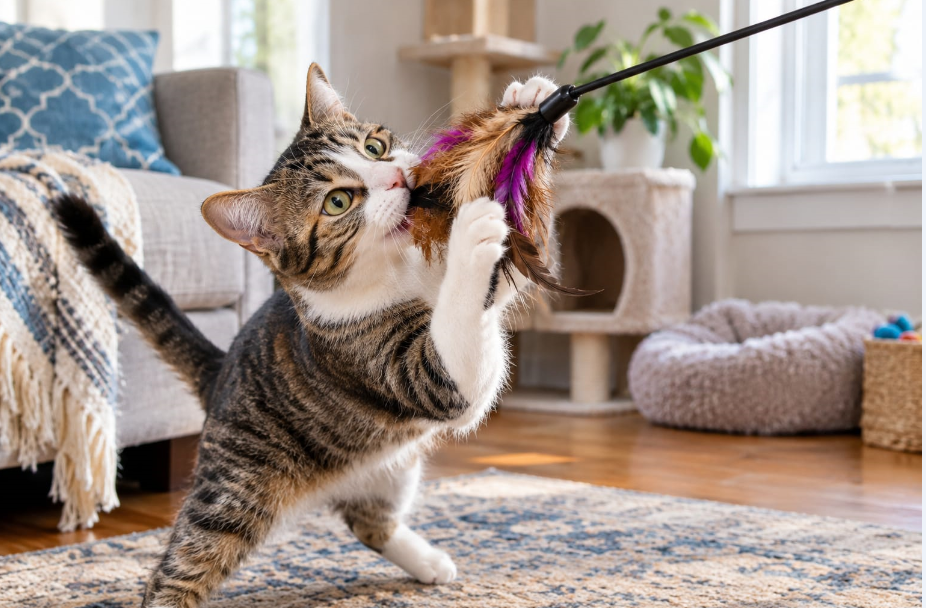
Your ear moves, is close to your cat’s face, and may become an interesting target during play. Younger cats and energetic indoor cats can be especially enthusiastic about stalking, pouncing, grabbing, and biting.
Regular interactive play with appropriate toys gives that hunting energy a safer outlet.
Your Cat Is Grooming You
Cats groom members of their social group, and gentle nibbling can be part of that interaction. If your cat licks your hair or face before giving your ear a soft nibble, grooming or social bonding may be part of the behavior.
Your Cat Is Interested in the Smell of Your Ear
Cats rely heavily on scent. Natural skin oils, earwax, shampoo, hair products, or other scents around your head may attract your cat’s attention.
That doesn’t mean your cat is detecting a health problem in your ear. A preference for the smell or taste of something on your skin is a much simpler explanation.
Your Cat Has Become Overstimulated
A cat may enjoy being close to you and still reach a point where the interaction becomes too much. This can happen during prolonged petting, cuddling, or handling.
Watch for a suddenly tense body, tail flicking, ears moving backward, or rapidly changing pupils. Those signals can appear before a bite.
Your Cat Is Stressed or Frightened
A bite can also be a defensive response. Changes such as a move, a new pet, unfamiliar visitors, loud noises, or conflict with another animal can increase stress.
A stressed cat is more likely to show other warning signs, such as flattened ears, a tense posture, hissing, growling, or trying to get away.
Your Cat Is Responding to an Earring or Movement
Dangling earrings can be particularly tempting to a playful cat. The movement can look like something worth batting, grabbing, or biting.
If your cat focuses on your earrings rather than your ear itself, keeping jewelry out of reach may solve the problem.
Why Does My Cat Bite My Ear While I’m Sleeping?
Nighttime ear biting often has a simple behavioral explanation: your cat is awake and wants something from you.
Cats are naturally active at different times of the day and night, and an indoor cat may decide that your sleeping face or moving ear is an excellent way to get attention.
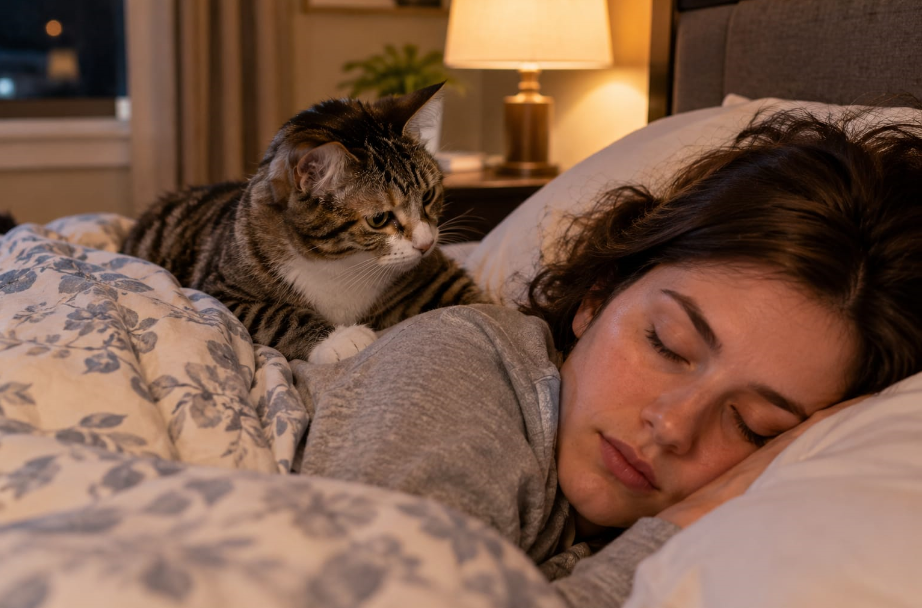
Your cat may also be hungry, ready to play, or accustomed to getting attention from you when you wake up.
Try giving your cat an interactive play session before bedtime and keep feeding and play schedules consistent. If biting has become a reliable way to wake you, avoid turning it into a rewarding game by immediately playing, petting, or feeding your cat after the bite.
Why Does My Cat Gently Nibble My Ear?
A gentle nibble is usually less concerning than a hard bite.
Look at the rest of your cat’s behavior. Purring, relaxed muscles, normal ears, gentle rubbing, and staying close to you fit better with friendly interaction, grooming, or attention-seeking.
A hard bite accompanied by a tense body, flattened ears, hissing, growling, or rapid tail movement deserves a different response. These signs can indicate fear, irritation, overstimulation, or aggression.
Why Does My Cat Bite My Ear Lobe?
Your earlobe is easy for a cat to reach, and its movement can make it interesting to a curious or playful cat. Earrings can make it even more tempting.
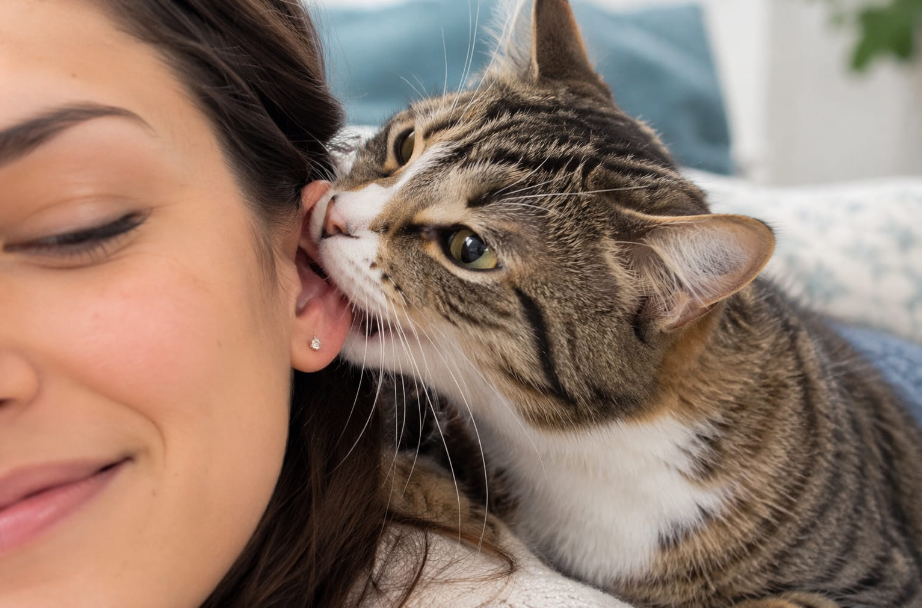
If your cat gives a quick, gentle nibble and then settles down, the behavior may simply be part of play or social interaction. If the bites hurt, redirect your cat toward a toy instead of allowing your ear to become a regular play target.
Why Did My Kitten Bite My Ear?
Kittens explore the world with their mouths, and biting is also part of how they practice play and hunting behaviors.
A kitten that bites your ear during play is better redirected to a wand toy, kicker toy, or another appropriate object. Avoid using your hands, face, or ears as toys. Consistently giving kittens appropriate things to bite helps them learn better play habits as they grow.
How Can I Stop My Cat From Biting My Ear?
Start by figuring out what usually happens right before the bite.
If your cat bites during play, increase interactive play and redirect her to a toy. If she bites while being petted, shorten the interaction and stop when you notice early signs of irritation.
If attention is the reward, calmly move away after the bite instead of immediately giving your cat what she wants. Avoid yelling, hitting, or physically punishing your cat. Punishment can increase fear and make aggressive behavior worse.
Keeping a simple note of when the biting happens can also reveal a pattern. For example, you may notice that it happens only at bedtime, around breakfast, after long petting sessions, or when another cat is outside the window.
When Should You Be Concerned About Ear Biting?
A single gentle nibble from an otherwise relaxed cat usually isn’t a reason to panic. A sudden or increasingly aggressive change deserves more attention.
Talk with your veterinarian if your cat suddenly starts biting when she previously didn’t, especially if the change comes with hiding, reduced appetite, unusual vocalization, reluctance to be touched, or other behavior changes. Pain and other medical problems can contribute to aggression, so a veterinary examination may be appropriate when the behavior is new or unusual.

Also take a bite seriously if it breaks your skin. Cat teeth can create small puncture wounds that become infected. Wash the wound promptly with soap and running water and seek medical advice, particularly if the wound is serious or becomes red, swollen, warm, painful, or shows other signs of infection.
What Does It Mean When My Cat Bites My Ear?
The meaning depends on the situation.
A soft nibble from a relaxed, purring cat can fit with affection, grooming, curiosity, play, or attention-seeking. A hard bite paired with tense body language, flattened ears, hissing, or other defensive behavior points to a different problem.
Instead of focusing on the bite alone, look at what your cat was doing before and after it. That context usually gives you a much better idea of why the behavior happened.
FAQs
Do cats apologize for biting?
Cats don’t apologize in the human sense. After a bite, a cat may return to normal behavior, rub against you, sit nearby, or seek attention. These actions are better understood as normal feline social behavior rather than an apology.
Can a human get ear mites from a cat?
Ear mites are highly adapted to their animal hosts and are not considered a common human problem. If your cat has suspected ear mites, have a veterinarian examine the ears and recommend appropriate treatment rather than using a human ear product.
Why should you not stare a cat in the eyes?
A prolonged direct stare can feel threatening to some cats, particularly when they are already nervous or defensive. A relaxed gaze and slow blinking are generally less confrontational ways to interact with a cat.
What do cats hear when you talk to them?
Cats hear the sound, tone, rhythm, and volume of your voice, although they don’t understand human language in the same way people do. They can learn to associate certain sounds and words with familiar events, such as meals, treats, or their name.
Why do cats raise their butts when you pet them?
Raising the rear is commonly part of normal feline body language. A cat may lift the hindquarters when enjoying interaction, responding to a familiar scent or social greeting, or encouraging more contact around the back or tail base.
Conclusion
A cat biting your ear doesn’t automatically mean something is wrong. A gentle nibble can be part of affection, grooming, play, curiosity, or attention-seeking, while a hard bite may signal overstimulation, fear, frustration, or another problem.
Look at the full situation rather than the bite alone. If the behavior suddenly changes, becomes aggressive, or is accompanied by signs of pain or illness, a veterinarian can help determine what is behind it.