
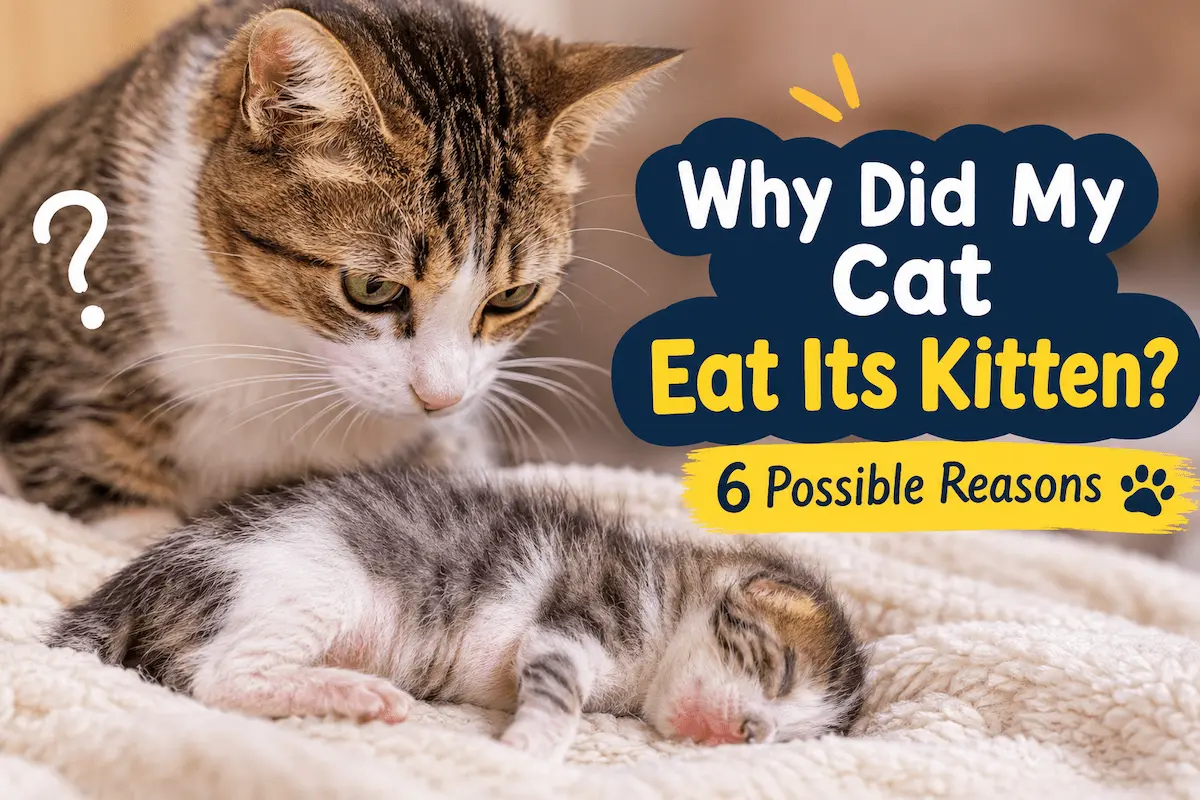
Why did my cat eat its kitten? Although this behavior is rare, mother cats may sometimes eat a newborn kitten for several reasons, including stillbirth, illness, or severe stress.
The reason isn’t always obvious, and eating a kitten does not automatically mean the mother is dangerous to the rest of her litter. However, the remaining kittens and their mother need close attention.
Is It Normal for a Mother Cat to Eat Her Kittens?
Eating kittens is not normal everyday maternal behavior, but it is a documented and relatively rare occurrence. A mother cat may consume a stillborn kitten or one that died shortly after birth.
This behavior is different from eating the placenta, which is a normal part of feline birth. A mother cat usually eats the afterbirth after delivering each kitten.
If you actually saw your cat eating a kitten, contact your veterinarian promptly. Don’t assume the other kittens are automatically safe or that the mother will necessarily harm them.
Why Did My Cat Eat Its Kitten? 6 Possible Reasons
There isn’t one explanation for every case. A kitten’s health, the mother’s condition, and the environment around the nest all matter.
1. The Kitten Was Stillborn
A stillborn kitten is born dead and never begins living outside the womb. Some mother cats consume stillborn kittens as part of their instinctive response after delivery.
The kitten may have had a developmental problem or another condition that prevented it from surviving. The mother cat’s behavior does not necessarily mean she intentionally rejected a healthy baby.
2. The Kitten Died Shortly After Birth
A kitten can be born alive but die soon afterward because of weakness, illness, birth complications, or an inability to nurse.
A mother cat may consume a kitten that has died. This is one reason an owner might find that a newborn has disappeared from the nest.
However, don’t assume a missing kitten has died. Mother cats sometimes move their babies to another hiding place. Read more about why mother cats move their kittens.
3. The Mother Cat Felt Threatened or Stressed
A noisy room, frequent visitors, children handling newborn kittens, or other pets approaching the nesting area can make a new mother feel unsafe.
Stress and repeated disturbances have been associated with abnormal maternal behavior. First-time mothers may be particularly inexperienced with caring for a litter.
Give your cat a quiet, private room with comfortable bedding, food, water, and a litter box nearby. Avoid repeatedly checking or handling the kittens unless their safety requires it.
4. The Mother Cat Was Young or Inexperienced
A young cat having her first litter may struggle with maternal care. She might not respond appropriately to newborns, have difficulty nursing, or become unusually restless around them.
Inexperience alone does not mean a mother cat will eat her kittens. However, unusual behavior after delivery deserves attention, especially when she bites, repeatedly attacks, or refuses to care for a newborn.
5. The Mother Cat Had a Health or Nutritional Problem
Pregnancy, delivery, and nursing place considerable demands on a cat’s body. Poor nutrition, illness, pain, or complications after birth can affect her ability to care for her litter.
A nursing cat needs plenty of calories, protein, and fresh water. A complete kitten food is commonly recommended during nursing because it provides the extra nutrition she needs.
If your cat refuses food, seems weak, or has other unusual symptoms, contact your veterinarian. You can also read about why a cat stops eating.
6. The Kitten Had a Serious Birth Defect or Health Problem
Some newborn kittens have severe developmental abnormalities or medical conditions that make survival difficult.
A mother cat may respond differently to a kitten that is extremely weak or unable to nurse. However, owners cannot reliably determine a kitten’s health from appearance alone.
A veterinarian should examine the mother and remaining litter to check for health problems and identify whether any newborn needs additional care.
Why Did My Cat Eat Her Dead Kitten?
A mother cat consuming a kitten that has already died is different from attacking a healthy, living kitten.
The kitten might have been stillborn, died during delivery, or passed away shortly after birth. The mother may consume the body as part of an instinctive response to the loss.
Even when the kitten was clearly dead, arrange a veterinary examination. The veterinarian can check the mother for delivery complications and assess whether the remaining kittens are healthy.
Why Did My Cat Eat Only One of Her Kittens?
Eating one kitten does not necessarily mean the mother will eat the rest. A single kitten might have been stillborn, seriously ill, or unable to survive after birth.
Check the remaining kittens without disturbing the mother unnecessarily. They should feel warm, nurse regularly, and remain close to the mother.
If she repeatedly bites, attacks, or refuses to care for another kitten, call your veterinarian immediately for instructions about protecting the litter.
Why Did My Cat Eat All Her Kittens?
Losing an entire litter is extremely distressing. A mother cat eating all her kittens is unusual and requires prompt veterinary attention.
Possible contributing factors include severe maternal stress, illness, serious problems affecting the newborns, or abnormal maternal behavior. There is no single explanation that can be confirmed without examining the mother and reviewing what happened during delivery.
Keep the mother in a quiet, secure area and arrange a veterinary examination. If she has ongoing bleeding, severe weakness, fever, or difficulty breathing, seek emergency veterinary care.
Did My Cat Eat Her Kitten or Is It Missing?
A missing kitten isn’t proof that the mother ate it.
Mother cats sometimes carry newborns away from their original nest when they feel uncomfortable or threatened. Check nearby hiding places, including under beds, behind furniture, inside closets, and in quiet corners.
Don’t pull apart furniture or repeatedly disturb the mother. Search carefully and listen for faint kitten cries. If you cannot locate the kitten, contact your veterinarian for advice.
What Should You Do If Your Cat Eats a Kitten?
The priority is protecting the mother and any surviving kittens. Take these steps:
Protect the Remaining Kittens
Check that each kitten is present, warm, breathing normally, and nursing. Newborn kittens cannot regulate their body temperature well, so a cold kitten needs prompt attention.
If the mother continues attacking a living kitten, prevent further contact safely and ask a veterinarian how to provide temporary care. Do not leave newborns without a reliable source of warmth.
Give the Mother Cat a Quiet, Safe Nest
Move the family to a calm room away from children, visitors, dogs, and other cats. Provide clean, dry bedding and avoid unnecessary handling.
If your cat has a history of rejecting or neglecting her babies, learn more about why a mother cat may abandon her kittens.
Provide Proper Food and Water
Offer fresh water and a nutritionally complete kitten food. Nursing mothers need more energy than adult cats that are not pregnant or nursing.
Don’t force-feed the mother or give supplements without veterinary advice.
Contact Your Veterinarian
Call your veterinarian promptly after witnessing a kitten being eaten or finding a dead newborn. The vet may examine the mother, check for retained kittens or birth complications, and assess the surviving litter.
If a kitten needs hand-feeding, use a commercial kitten milk replacer under veterinary guidance. Never give cow’s milk as a substitute.
When Should You Worry About the Mother Cat’s Health?
A mother cat needs prompt veterinary attention when she shows signs of illness after giving birth.
Contact a veterinarian urgently if she has:
- Severe weakness, collapse, or unusual lethargy.
- Fever or a painful, swollen mammary gland.
- Foul-smelling vaginal discharge.
- Heavy or continuing bleeding.
- Refusal to eat or drink.
- Vomiting along with weakness or other concerning symptoms.
- Seizures, muscle tremors, or difficulty walking.
These signs can point to postpartum complications such as uterine infection, mastitis, or low blood calcium. Severe weakness, seizures, collapse, or breathing problems require emergency veterinary care. For more information about vomiting symptoms, visit here .
FAQs
Is it normal for a cat to eat its kittens?
No. Although mother cats occasionally eat stillborn or deceased kittens, this is not normal routine maternal care. Eating a living, healthy kitten is especially concerning. Contact a veterinarian to check the mother and protect the remaining litter.
How common is it for cats to eat their babies?
It is considered a rare behavior, and reliable statistics on how frequently it happens are limited. It is more commonly discussed in connection with stillborn, weak, or deceased newborns. Every case deserves attention because the mother’s health and the remaining kittens’ safety matter.
How do I stop my cat from eating her kittens?
You cannot reliably prevent this behavior without understanding its cause. Provide a quiet nesting area, proper nutrition, and privacy. If the mother attacks a living kitten, separate them safely under veterinary guidance and ask for immediate instructions about warmth and feeding.
Why should you not stare a cat in the eyes?
A prolonged, direct stare can feel threatening to a cat, especially one that is nervous or protective of her newborns. Use a relaxed expression, avoid leaning over her nest, and give her space. A gentle slow blink is less confrontational than an intense stare.
Why can’t you kiss your cat?
You can show affection without putting your face close to your cat’s mouth or nose. Cats carry bacteria and other organisms that can spread through close contact, particularly if they lick your lips or an open wound. During the newborn period, avoid crowding the mother and her litter.
Do cats prefer female owners?
Cats don’t universally prefer women. Their comfort with a person usually depends more on the individual’s behavior, handling, voice, and consistency. A calm person who respects a cat’s boundaries and provides reliable care can build a strong bond regardless of gender.
Conclusion
A mother cat eating her kitten is rare, but it can happen when a newborn is stillborn, dies shortly after birth, or when maternal health and environmental factors affect her behavior. Don’t assume the remaining kittens are in danger, but don’t ignore the incident either. Give the mother privacy, check the litter carefully, and contact your veterinarian to protect everyone who remains.
[…] Why Did My Cat Eat Its Kitten? 6 Possible Reasons […]