
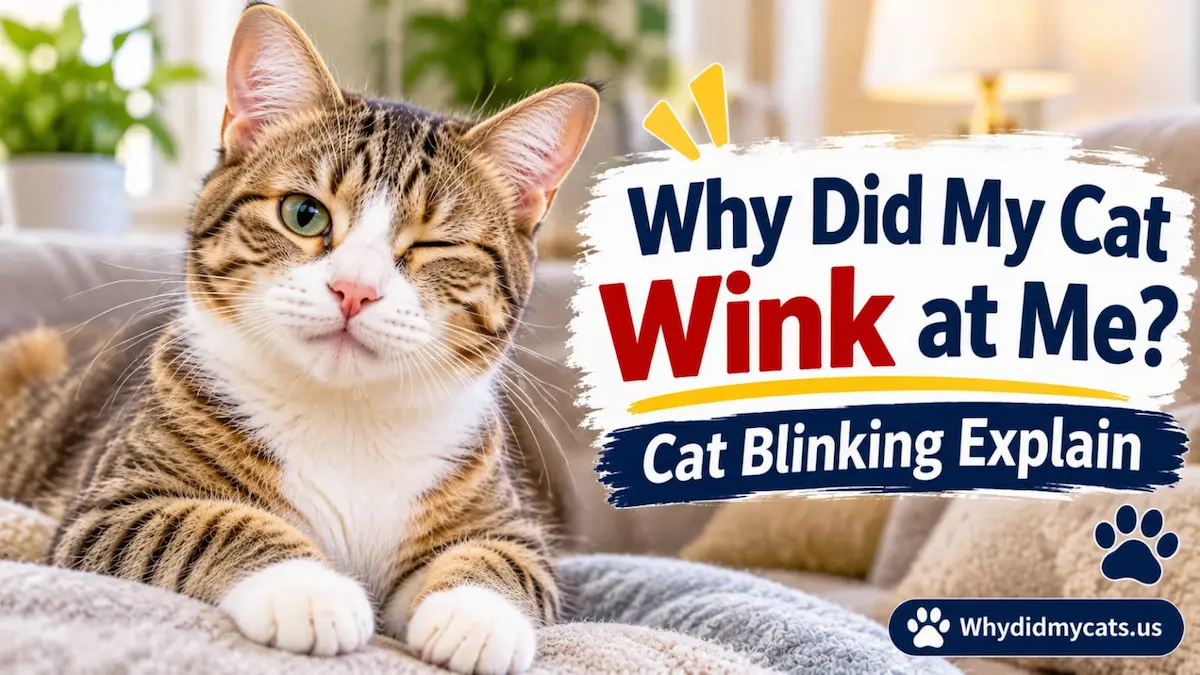
Your cat is sitting across the room, looking at you, when one eye slowly closes and opens. It almost looks like a little wink. Why did my cat wink at me? In many cases, it’s a relaxed social gesture connected to comfort and trust. However, a cat repeatedly closing one eye can also be a sign of irritation or pain.
The difference depends on how your cat behaves before and after the wink, whether the eye looks healthy, and whether the movement happens naturally or repeatedly.
Is It Normal for Cats to Wink at Their Owners?
Yes. A cat may briefly close one eye while relaxed, sleepy, or making friendly eye contact with someone she trusts. Cats also use blinking as part of their body language, so a gentle wink doesn’t automatically mean something is wrong.
A single, relaxed wink with no redness, discharge, or other unusual behavior is usually less concerning than an eye that stays partly closed or keeps blinking.
Why Did My Cat Wink at Me? 7 Possible Reasons
1. Your Cat Is Showing Affection
Cats don’t express affection exactly like people do. A gentle wink or relaxed blink during a quiet moment can be part of friendly communication.
For example, your cat might sit beside you while you work, look up at you, and briefly close one eye. If her body is relaxed and her ears are in a natural position, the gesture may simply be part of a comfortable interaction.
2. Your Cat Trusts You
Cats are careful about their surroundings. Relaxed eye contact and slow blinking can occur when a cat feels safe around someone.
A cat that settles beside you, rests her paws, and gives you a gentle blink is showing relaxed social behavior. This is one small part of the bond you build through consistent care and a predictable routine.
3. Your Cat Is Trying to Communicate
Cats communicate through their eyes, ears, tails, posture, and sounds. A brief wink can happen during an interaction without having one fixed meaning.
Look at the rest of her body language. A relaxed posture and neutral ears suggest a calm interaction. Flattened ears, a tense body, or a rapidly moving tail tell a different story.
You can learn more about feline signals in our guide to why cats hiss at their owners.
4. Your Cat Is Feeling Sleepy or Relaxed
A cat getting comfortable on the couch or curled up in a sunny window may blink unevenly as she becomes drowsy. One eyelid might close before the other, creating the appearance of a wink.
This is more reassuring when your cat soon opens both eyes normally and continues resting without rubbing or squinting.
5. Your Cat Is Responding to Your Eye Contact
Your cat may react to the way you look at her. Cats sometimes respond to calm eye contact with a slow blink of their own.
Try looking toward your cat without staring. Slowly close your eyes for a moment, then open them and look slightly away. Give her room to respond rather than holding her gaze.
6. Something Is Irritating Your Cat’s Eye
Dust, loose fur, or another small irritant can make a cat blink or close one eye. You might notice this after cleaning, grooming, or opening a window on a windy day.
An irritated eye is more concerning when your cat repeatedly blinks, rubs her face, or produces more tears than usual. Don’t try to remove anything stuck to the eye yourself.
7. Your Cat Has an Eye Problem
Repeated winking or keeping one eye partly closed can be a sign of an eye condition rather than affectionate behavior.
Possible causes include conjunctivitis, a scratch on the cornea, an injury, or inflammation. Redness, swelling, cloudiness, discharge, and sensitivity to light are additional warning signs.
Contact your veterinarian promptly when these symptoms appear. Eye problems can worsen quickly, and an examination is needed to identify the cause.
Why Did My Cat Wink at Me With One Eye?
A single wink can be a harmless social gesture, especially when your cat looks comfortable and opens the eye normally afterward.
However, repeatedly closing the same eye deserves more attention. Cats with eye discomfort often squint or hold the affected eye partly shut. You might also notice watery discharge, redness, or pawing at the face.
Don’t assume that a one-eye wink is a sign of affection just because your cat is looking at you. Check whether both eyes appear equally open and clear.
What’s the Difference Between a Cat Wink and a Slow Blink?
A wink involves closing one eye briefly while the other remains open. A slow blink usually involves both eyes gently narrowing or closing before opening again.
| Cat behavior | What it may mean |
| One quick wink | Relaxed behavior or a brief eye movement |
| Slow blink with both eyes | Calm social communication |
| Repeated one-eye squinting | Possible irritation or discomfort |
| Holding one eye shut | Possible pain or injury |
A slow blink is commonly associated with relaxed social interaction. Repeated squinting, especially in one eye, should not be treated as a cute gesture.
Why Does My Cat Keep Winking at Me?
If your cat winks occasionally while resting or interacting with you, it may simply be part of her normal behavior.
Frequent winking is different. Notice whether she closes the same eye every time, rubs her face against furniture, avoids bright light, or has watery eyes. Also consider recent changes, such as exposure to dust, household cleaning products, or rough play with another pet.
Take a short video of the behavior to show your veterinarian. It can help explain what happens between examinations.
How Can You Tell If Your Cat’s Wink Is Affection or an Eye Problem?
Start by looking at the eye itself and your cat’s overall behavior.
An affectionate wink is usually brief. Your cat opens the eye normally, remains comfortable, and carries on with her usual activities.
An eye problem is more likely when the wink becomes repeated squinting or comes with redness, swelling, discharge, cloudiness, or face rubbing. Changes in appetite or energy can add to the concern.
When you’re unsure, arrange a veterinary examination rather than waiting for the eye to become worse.
Should You Wink Back at Your Cat?
You can try a gentle slow blink. Sit comfortably, soften your gaze, slowly close both eyes for a moment, and then open them without staring.
Your cat may respond with another slow blink, look away, or simply carry on resting. All are normal responses. Never force eye contact or move close to her face to get a reaction.
Affection also shows up in other ways, such as following you around, sitting nearby, or seeking attention. Our article about why cats become more affectionate explains some of these behaviors.
When Should You Worry About Your Cat Winking?
Contact your veterinarian promptly if your cat repeatedly squints, keeps one eye partly closed, or develops redness, swelling, unusual discharge, or cloudiness.
Seek urgent veterinary care for an obvious eye injury, bleeding, a bulging eye, sudden vision problems, or severe pain. Don’t use human eye drops or leftover pet medication unless your veterinarian specifically recommends them.
Your veterinarian may examine the eye, check the cornea for scratches or ulcers, and look for signs of infection or inflammation. The treatment depends on the cause.
If your cat’s behavior has changed in other ways too, such as becoming unusually clingy or withdrawing from the family, mention those changes during the appointment. You can also read about why cats become clingy.
FAQs
Do cats prefer female owners?
There is no reliable rule that cats prefer female owners. A cat’s bond usually depends more on the individual person’s behavior, consistency, and interactions than gender. Feeding, gentle handling, playtime, and respecting a cat’s boundaries all help build trust.
Should you smile at cats?
A relaxed facial expression is fine, but avoid staring directly at a cat with wide-open eyes. A hard stare can feel threatening. A gentle gaze followed by a slow blink is a better way to communicate calmly with a comfortable cat.
Do cats realize we aren’t cats?
Cats can recognize that humans are different from other cats, even though they use some of the same social behaviors with us. They communicate through scent, body language, vocalizations, and touch, adapting their behavior to living with people.
How do you tell if a cat really loves you?
A cat may show affection by approaching you voluntarily, rubbing against your legs, resting beside you, purring, grooming you, or greeting you with a relaxed tail. Some cats are cuddly, while others prefer staying close without being touched.
How far away can cats hear you calling?
Cats have a highly developed sense of hearing and can detect sounds at frequencies people cannot hear. However, there is no single reliable distance at which every cat will hear its owner’s voice. Walls, background noise, and the cat’s attention all affect what she hears.
How do you say “I love you” in a cat?
Try a slow blink while keeping your body relaxed. You can also speak softly, offer gentle petting when your cat welcomes it, and spend time playing together. Let your cat choose whether to approach; respecting her space helps build trust.
Conclusion
A brief wink is usually nothing to worry about when your cat looks relaxed and opens both eyes normally. It can be part of friendly communication, but repeated winking or closing one eye can signal discomfort. Watch for redness, discharge, squinting, or face rubbing, and contact your veterinarian when these signs appear.
[…] Why Did My Cat Wink at Me? Understanding Cat Behaviour […]