
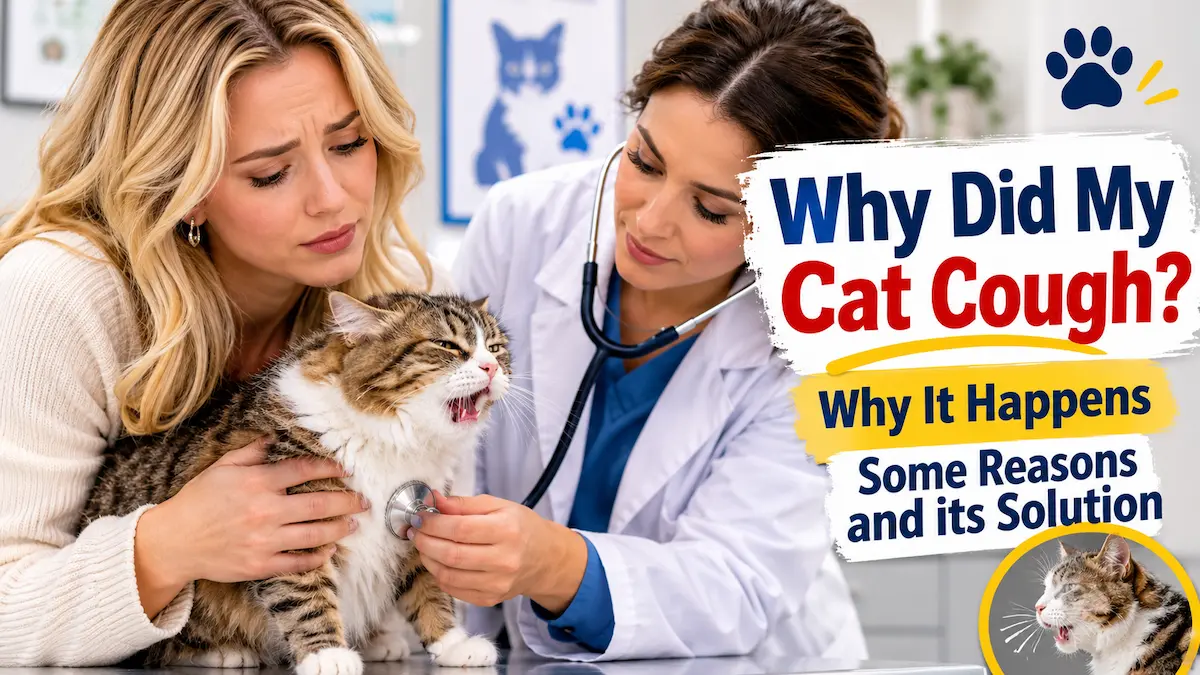
If you noticed your cat crouching low, stretching his neck, and making a harsh hacking sound, you may be asking, why did my cat cough? A cat cough usually points to irritation or inflammation somewhere in the airways. Common causes include asthma, respiratory infections, allergies, and inhaled irritants. It can also look surprisingly similar to a cat trying to bring up a hairball.
One brief episode does not automatically mean something serious, but repeated coughing deserves attention. The sound, frequency, and other symptoms help determine what to do next.
What Does a Cough Look and Sound Like in Cats?
A coughing cat often lowers his body close to the floor, stretches his neck forward, and makes a dry, hacking, or wheezing sound. He may gag at the end of the episode, but a hairball usually does not appear.
Coughing comes from the respiratory tract. Vomiting, on the other hand, involves the stomach and usually includes more noticeable abdominal contractions. A short video of the episode can help your veterinarian tell the difference.
Why Did My Cat Cough? 7 Possible Causes
1. Feline Asthma or Chronic Bronchitis
Asthma and chronic bronchitis cause inflammation in the lower airways. Affected cats may develop repeated dry coughing, wheezing, or episodes that look like gagging.
Dusty litter, cigarette smoke, pollen, scented sprays, and other airborne irritants can trigger symptoms in sensitive cats. A cat struggling to breathe needs emergency veterinary care.
2. Respiratory Infections
Viral or bacterial respiratory infections can irritate a cat’s airways. You might also notice sneezing, nasal discharge, watery eyes, reduced appetite, or low energy.
If coughing occurs alongside these symptoms, arrange a veterinary examination. You can also read about why cats start sneezing frequently.
3. Allergies and Household Irritants
Smoke, perfume, aerosol cleaners, scented candles, dusty litter, and strong household chemicals can irritate a cat’s respiratory tract.
Remove obvious irritants and improve ventilation, but do not assume that environmental changes alone will solve a recurring cough. Your veterinarian should investigate persistent symptoms.
4. Hairballs and Throat Irritation
Cats sometimes cough or gag while trying to clear their throat, which makes a hairball seem like the obvious explanation. However, a true cough does not produce a hairball from the stomach.
If your cat repeatedly makes hacking movements without bringing up hair, consider a respiratory cause rather than treating every episode as a hairball.
5. Parasites, Including Lungworms
Certain parasites can affect a cat’s respiratory system and cause coughing, wheezing, or breathing changes. Outdoor cats and cats that hunt may have different exposure risks from indoor-only cats.
A veterinarian can recommend appropriate parasite testing based on your cat’s history and symptoms.
6. Inhaled Food, Liquid, or a Foreign Object
Food, liquid, grass, or another small object entering the airway can trigger sudden coughing. A cat might cough after eating or drinking if material irritates the airway.
Repeated coughing after drinking water should not be dismissed. Contact your veterinarian, especially if it happens regularly or comes with noisy or difficult breathing.
7. Other Medical Conditions
Less common causes include growths in the respiratory tract and other diseases affecting the lungs or airways. The right explanation depends on your cat’s age, medical history, examination, and test results.
A persistent cough should not be treated as a harmless habit without finding its cause.
Why Did My Cat Cough Once?
A single brief cough can happen after a temporary airway irritation. If your cat immediately returns to normal, breathes comfortably, eats normally, and remains active, observe him closely.
However, note when it happened and whether anything seemed to trigger it. Contact your veterinarian if the cough returns, becomes intense, or is accompanied by wheezing, unusual tiredness, appetite changes, or discharge.
Is My Cat Coughing or Trying to Throw Up a Hairball?
Watch your cat’s body movements:
- Coughing: Your cat usually crouches low, stretches his neck, and makes forceful hacking sounds. Little or nothing may come out.
- Vomiting: You are more likely to see repeated abdominal contractions and stomach contents coming out.
- Hairball: Your cat may retch and eventually bring up a compact clump of swallowed hair.
These actions can look alike, so recording an episode is useful. If you are unsure, compare the signs with our guide to cat vomiting.
What Does It Mean When a Cat Coughs Up Mucus, Foam, or Blood?
What comes out after a coughing episode can provide useful information, but appearance alone cannot identify the cause.
- Mucus: Respiratory inflammation or infection can produce secretions. A recurring cough with mucus needs veterinary assessment.
- White foam or spit: Foam or saliva can appear with gagging or retching, but it does not prove that your cat has a hairball. If you see white liquid, review possible reasons cats throw up white liquid.
- Blood: Blood in material your cat coughs up needs immediate veterinary attention. Do not wait to see whether it happens again.
Why Does My Cat Cough After Drinking Water?
A cough immediately after drinking could mean that liquid irritated the throat or airway. Repeated episodes deserve a veterinary check because swallowing difficulties or airway problems need to be considered.
Notice whether your cat coughs after every drink, drinks unusually fast, or also struggles to swallow. Do not force water into his mouth or try to make him drink more during an episode.
When Should You Worry About Cat Coughing?
Arrange a veterinary appointment if your cat’s cough keeps returning, lasts more than a few days, becomes more severe, or comes with mucus, poor appetite, weight loss, or low energy.
Go to an emergency veterinarian immediately if your cat:
- Breathes with his mouth open.
- Struggles to breathe or uses his belly heavily to breathe.
- Has blue, gray, or very pale gums.
- Collapses or becomes severely weak.
- Coughs up blood.
Breathing difficulty is an emergency. Keep your cat calm and avoid delaying care to try home remedies.
How Do Veterinarians Find the Cause of a Cat’s Cough?
Your veterinarian will ask when the cough started, how frequently it happens, and whether your cat has been exposed to smoke, dust, new litter, or other irritants. A physical examination helps assess breathing and listen to the lungs.
Depending on the findings, testing may include chest X-rays, blood tests, parasite testing, or examination of airway samples. Treatment depends on the underlying cause, so do not give human cough medicine or leftover pet medication without veterinary instructions.
How Can You Help Your Cat at Home?
While arranging veterinary advice, take these practical steps:
- Record a coughing episode if you can do so without delaying urgent care.
- Keep your cat away from cigarette smoke, aerosols, perfume, and strong cleaning fumes.
- Reduce dust and consider whether a new litter or household product coincided with the cough.
- Keep a note of how often the cough happens and whether it follows eating, drinking, or activity.
- Do not give human cough medicine, essential oils, or unapproved remedies.
Home care can reduce exposure to irritants, but it cannot replace an examination when coughing persists or returns.
FAQs
What is the silent killer of cats?
High blood pressure is sometimes called a silent threat because cats can show few obvious signs before it damages the eyes, kidneys, brain, or heart. Chronic kidney disease can also remain unnoticed in its early stages. Regular veterinary checkups and appropriate blood and urine tests help detect these problems.
What to do if your cat is coughing but no hairball?
Do not assume your cat is trying to pass a hairball. Record the episode, note how often it happens, and contact your veterinarian if the cough returns or continues. If your cat has difficulty breathing, open-mouth breathing, or blue or gray gums, seek emergency care immediately.
How can I help my cat with a cough?
Keep your cat away from smoke, perfume, aerosol sprays, and dusty environments. Record the coughing episode and note possible triggers. Do not give human cough medicine or home remedies. A recurring cough needs veterinary assessment to identify and treat the underlying cause.
Why does my cat cough like something is stuck in his throat?
Airway irritation, asthma, bronchitis, respiratory infections, or an inhaled object can cause hacking sounds that resemble something stuck in the throat. Coughing can also be mistaken for gagging or hairball retching. A video can help your veterinarian identify the movement.
When to worry about cat coughing?
Worry when coughing repeatedly returns, lasts more than a few days, becomes severe, or comes with appetite loss, weakness, or mucus. Blood in coughed-up material needs immediate veterinary attention. Open-mouth breathing, blue or gray gums, or obvious breathing difficulty require emergency care.
What are the first signs of organ failure in cats?
There is no single early sign for every organ problem. Kidney disease, for example, can cause increased thirst and urination, weight loss, reduced appetite, vomiting, and low energy. Some cats show no clear signs early on, so routine examinations and blood and urine testing are important.
Conclusion
A cat cough can come from asthma, infection, allergies, parasites, or airway irritation. One brief episode in an otherwise comfortable cat is different from repeated coughing or breathing trouble. Watch for changes, record what happens, and arrange veterinary care when the cough returns. If breathing becomes difficult or your cat coughs up blood, seek immediate help.
[…] Why Did My Cat Cough? 7 Possible Causes and What to Do […]
[…] Why Did My Cat Cough? 7 Possible Causes and What to Do […]
[…] Why Did My Cat Cough? 7 Possible Causes and What to Do […]