
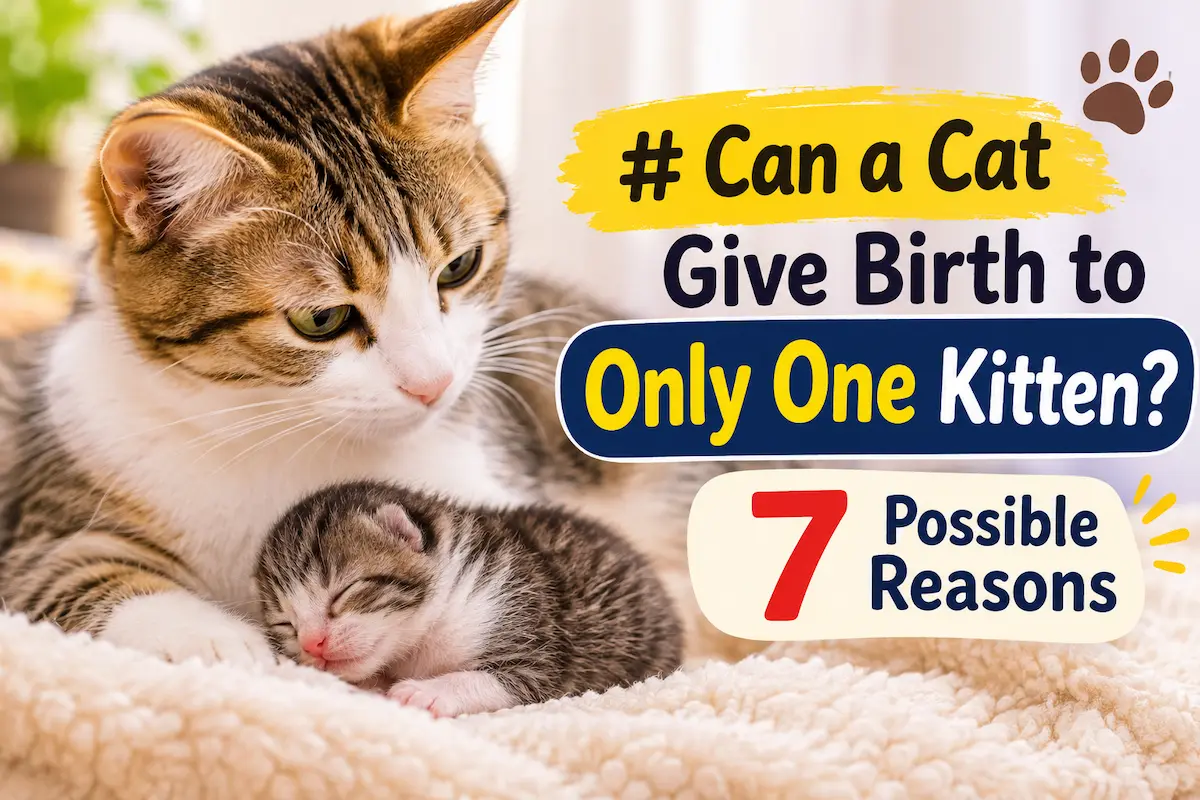
Why did my cat only have one kitten? Most often because that’s simply how this litter turned out: first litters tend to be small, some breeds and individual cats run small, and sometimes the other embryos never developed. Before assuming she’s finished, rule out a rest pause between births or a kitten that was missed. Have mom and baby checked by a vet within a day, and call right away if she’s straining, distressed, or has heavy or foul-smelling discharge.
Is It Normal for a Cat to Have Only One Kitten?
It’s uncommon, but it happens, and a small litter isn’t a problem on its own. Most litters have several kittens, which is why one tiny newborn can feel like a surprise. A cat who births only one kitten and then settles down calmly, eating, nursing, and cleaning her baby, is usually fine.
The questions that matter are different: is she truly done, and are both she and the kitten healthy? The rest of this article walks through both.
7 Reasons Your Cat Only Had One Kitten
1. She’s a First-Time Mom
First litters are often smaller. Nobody knows exactly why, and the effect isn’t a rule, but a young queen’s first pregnancy is the most common setting for a single kitten. Her next litter may be larger.
2. Her Breed Tends to Have Small Litters
Persians, Himalayans, Birmans, and Abyssinians typically have smaller litters than many mixed-breed domestic cats, who can have large ones. If she’s a purebred or part of one of these lines, a small litter fits the pattern.
3. Natural Variation and Genetics
Some queens just have small litters. If her mother or her earlier litters were small, expect it again. There’s nothing she or you did wrong.
4. Some Embryos Didn’t Develop
Early in pregnancy, embryos can stop developing and get reabsorbed by the uterus. This usually happens quietly in the first half of pregnancy, and the remaining kittens develop normally. Causes include illness, infection, injury, or genetic problems in the embryo. If she seemed unwell during pregnancy, mention it to your vet.
5. She’s an Older Mother
Older queens may have somewhat smaller litters, but the evidence is thin, and age alone rarely explains a single kitten. Treat it as a possible factor, not a certain one.
6. She Isn’t Done Yet
This is the one to rule out first. Cats can pause labor after one or two kittens, sometimes for hours and occasionally a day or more. During the pause she’ll nurse, eat, and use the litter box, which makes it look like she’s finished. A stressful or unfamiliar setting can trigger it.
7. A Kitten Was Missed
If you weren’t watching the whole birth, a kitten may have been stillborn and removed by mom, hidden in a corner of the nest, or moved. Mother cats sometimes eat a stillborn kitten, which can make the count look smaller than it was. Look quietly around the nest, and don’t dig through bedding.
Is She Really Done? How Long to Wait for More Kittens
Advice online varies on timing, so here is how to read what you see:
| What you see | What it usually means | What to do |
| Calm, nursing, eating, drinking, no straining | Likely finished, or in a rest pause | Keep watching. Get a vet check within 24 hours |
| Quiet for hours, then contractions restart | Interrupted labor finishing normally | Keep the room calm and let it happen |
| Resting more than about 24 hours, and an earlier ultrasound or X-ray showed more kittens | Pause is too long | Call your vet the same day |
| Hard straining for 20 to 30 minutes with no kitten | A kitten may be stuck | Call your vet or emergency clinic now |
| A kitten partly out for about 10 minutes | Stuck kitten | Emergency |
| Panting, crying, restlessness, fever, collapse | Distress | Emergency |
| Dark green or foul discharge, or bleeding for more than 10 minutes | Possible complication | Emergency |
An ultrasound or X-ray at the vet is the only way to be sure no kittens remain.
Her Belly Still Feels Hard: Is That Normal?
Often, yes. The uterus stays swollen for a while after birth, and a full bladder can make the belly feel firm too, especially since many new moms skip the litter box for the first day because they won’t leave their kitten. A small amount of bloody discharge for a few days is common.
Don’t press hard on her belly to search for kittens. A belly that stays very hard, heavy bleeding, green or foul-smelling discharge, or a mom who seems tired, feverish, or in pain deserves a call to your vet.
What If Your Cat Had One Kitten and It Died?
Losing the only kitten is heartbreaking, and the answer is often not clear. Stillbirth, a kitten born too weak to nurse (sometimes called a “fading kitten”), birth defects, a chill, or infection can all be behind it. Even vets often can’t say which.
Wear gloves, and ask your vet how to handle the body. Many clinics will take care of it for you. Have the vet check mom for a retained placenta or kitten and for infection, since she can still be at risk after a loss. She may call out or search the nest for several days. Keep her space quiet, and watch her glands, since her milk will come in. Hot, hard, or discolored glands or a fever need a vet. If you want to understand what else can go wrong, our article on why a cat’s kittens die covers causes in more detail.
Caring for Mom and Her Single Kitten
A single kitten means a lot of attention, and a few extra tasks.
Warmth. Newborns can’t hold their body heat for the first few weeks. Use a quiet, draft-free box or nest with soft bedding. If you add a heating pad on low, put it under only part of the bedding so mom and kitten can move off it, and never let it touch the kitten directly.
Daily weigh-in. Weigh the kitten at the same time every day on a small kitchen or gram scale, handling him briefly with mom nearby. A healthy kitten gains roughly 10 to 15 grams a day. No gain or a loss for a day means calling your vet.
Kitten milk replacer on hand. One kitten sometimes isn’t enough to hold mom’s attention, and she may wander off or nurse less. Keep a bottle and kitten milk replacer in the house, and never use cow’s milk. If she loses interest, see why a mother cat may abandon her kittens.
Her glands. Milk glands the kitten doesn’t use can fill up and get sore. Feel gently for heat, hardness, or color changes, and call your vet if you find them.
Space and mood. It’s normal for a new mom to want a short break from the nest. Constant meowing, digging, or pacing with attention to the kitten between breaks is common. She may hiss or swat if you reach in, which is protective, not personal. Our guide on why cats hiss explains the signals.
Handling. Keep it brief for the first week or two, then increase it gradually once his eyes open.
Social skills. A kitten raised alone doesn’t learn bite control or play manners from littermates. Use wand toys instead of hands for play, and plan on a gentle companion cat later, once he’s vaccinated and your vet agrees.
When to Call the Vet or an Emergency Clinic
Have mom and kitten examined within about 24 hours of birth, even if everything looks fine.
Call the same day for:
- A mom who isn’t eating or drinking for a day (see why a cat stops eating)
- A fever, lethargy, or hot, hard, or discolored mammary glands
- A mom who refuses to nurse or keeps leaving the kitten
- A kitten who isn’t gaining weight, feels cold, or cries constantly
Go to an emergency clinic for:
- Straining without a kitten, or a stuck kitten
- Heavy bleeding, or green, dark, or foul-smelling discharge
- Collapse, trouble breathing, or severe distress in mom
- A limp or unresponsive kitten
Will She Get Pregnant Again?
Possibly, and sooner than most people expect. A queen can come back into heat within a few weeks of giving birth, sometimes while still nursing. If she goes outdoors, keep her in. Ask your vet when to schedule spaying, often after the kitten is weaned. Spaying prevents more litters and cuts the risk of uterine infections and mammary tumors. If cost is a concern, many US communities offer low-cost spay clinics through shelters and rescues.
FAQs
How to know if a cat still has kittens inside?
Look for continued straining or contractions, panting, restlessness, crying, or a mother who can’t settle or nurse. A kitten partly visible or green discharge needs a vet now. A calm cat who eats and nurses is probably done, but only an ultrasound or X-ray at the vet confirms it.
Are cats happier with a second cat?
Many are, especially kittens, who learn play and bite control from another cat. Adult cats vary: some bond closely, while others prefer living alone. Match age and energy, introduce them slowly with separate spaces, and get your vet’s okay first. A poor match can add stress.
How long will a mother cat miss her kittens?
There’s no set timeline. When kittens leave at a proper age, many mothers call or search for a few days and then settle. Keep her routine steady and add play. Call your vet if she stops eating or her mammary glands become hot, hard, or painful.
What is single kitten syndrome?
It’s an informal term, not a medical diagnosis, for behavior problems seen in kittens raised without littermates, such as rough biting, clinginess, or poor cat manners. Gentle handling, wand-toy play instead of hands, and later a friendly companion cat usually help.
Is it rare for a cat to only have one kitten?
It’s uncommon, but it happens, and it usually isn’t a sign of trouble. First-time moms, certain breeds, and some individual queens have small litters. Make sure she has finished delivering, and have both mom and kitten checked by a vet within a day.
Do mother cats actually love their kittens?
They bond strongly, nursing, grooming, moving, and guarding their kittens. Scientists can’t say whether it feels like human love, but the devotion is real. A mother who neglects a kitten may be sick or stressed, which is a reason to call your vet.
Conclusion
One kitten is usually a quirk of the litter, not a problem. Confirm she’s finished, keep mom and baby warm and calm, weigh the kitten daily, and get both checked by a vet within a day. Straining, a stuck kitten, heavy or foul discharge, or a weak kitten who won’t nurse means calling your vet right away.
[…] Why Did My Cat Only Have One Kitten? What’s Normal and When to Worry […]
[…] Why Did My Cat Only Have One Kitten? What’s Normal and When to Worry […]