
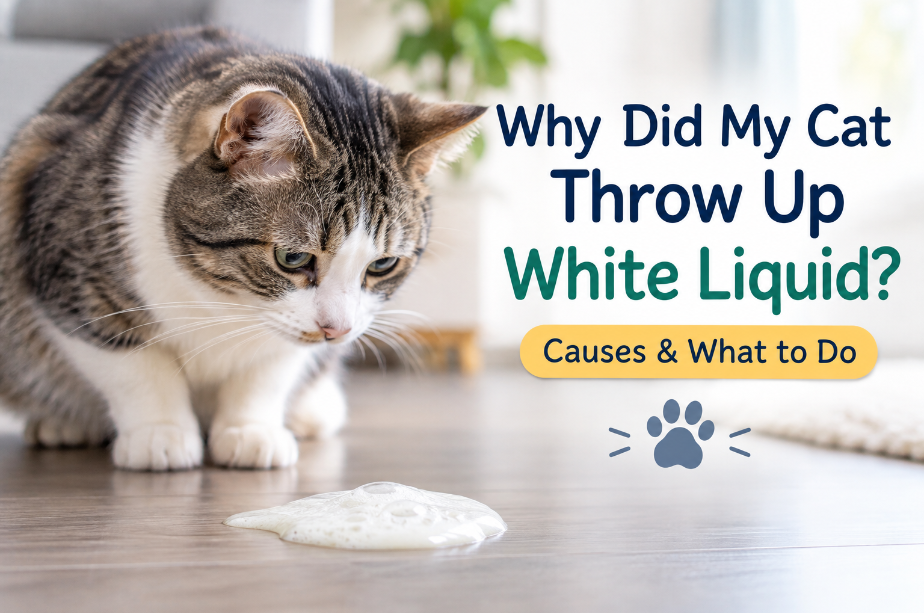
Seeing white foam or liquid on the floor after your cat vomits can be concerning. White vomit often contains saliva, mucus, and digestive fluids, especially when the stomach is relatively empty. An empty stomach or mild digestive irritation may explain a single episode, but the appearance alone cannot tell you exactly what is wrong.
Your cat’s behavior, appetite, and the frequency of vomiting are just as important as the color.
What Does White Liquid in Cat Vomit Mean?
White liquid may look watery, frothy, or like a small patch of foam. It often contains saliva and stomach fluid rather than recognizable food.
Cats sometimes bring up white foam when their stomachs are empty. However, hunger is not the only possible explanation. Hairballs, digestive irritation, dietary problems, and certain illnesses can also cause vomiting.
Look at whether the vomit contains hair, undigested food, or unusual discoloration. Note when it happened and whether your cat vomited again. These details can help your veterinarian assess the situation.
Why Did My Cat Throw Up White Liquid? 6 Possible Causes
1. An Empty Stomach
Some cats vomit white foam after going several hours without food, particularly early in the morning before breakfast. With little food in the stomach, the vomit may consist mostly of saliva and digestive fluids.
If this happens occasionally and your cat otherwise eats and behaves normally, ask your veterinarian whether adjusting meal timing could help. Smaller, more frequent meals may be appropriate for some cats, but recurring vomiting should not automatically be blamed on hunger.
2. Hairballs and Excessive Grooming
Cats swallow loose hair while grooming themselves. When hair accumulates in the stomach, it can trigger gagging and vomiting. A cat may bring up foam before producing a hairball, or no hairball may appear.
Regular brushing can help remove loose fur, especially in long-haired cats. However, frequent retching or repeated vomiting deserves veterinary attention rather than being dismissed as a normal hairball problem.
3. Stomach Irritation or Indigestion
Eating something unusual, getting into table scraps, or experiencing digestive irritation can trigger vomiting. White foam may appear when little food remains in the stomach.
Think about what your cat ate recently. A new treat, a sudden change in food, or access to something on the kitchen counter could be relevant. Avoid making several dietary changes at once, since doing so can make it harder to identify the cause.
4. Food Changes or Food Intolerance
A sudden switch to a different cat food or a reaction to an ingredient may contribute to digestive upset. Vomiting can occur alongside diarrhea, reduced appetite, or changes in stool.
If the problem started after changing your cat’s food, note the timing and the products involved. Speak with your veterinarian before repeatedly switching foods, especially when vomiting continues.
5. Intestinal Parasites or Infection
Parasites and gastrointestinal infections can cause vomiting. Other signs may include diarrhea, weight loss, reduced appetite, or low energy.
Kittens and cats that spend time outdoors may face different exposure risks, although indoor cats can also develop parasitic or infectious illnesses. Your veterinarian may recommend a stool test or other diagnostic tests based on your cat’s symptoms.
6. An Underlying Health Problem
Recurring vomiting can be associated with conditions affecting the digestive tract or other organs, including pancreatitis and kidney disease. White foam does not identify a specific illness, so a veterinary examination may be needed to determine the cause.
Your veterinarian will consider your cat’s age, medical history, eating habits, water intake, and other symptoms before recommending further tests.
Why Did My Cat Throw Up White Liquid but Act Normal?
A cat that vomits once and then returns to normal eating, drinking, playing, and litter-box habits may have experienced a temporary digestive upset. Still, normal behavior immediately afterward does not completely rule out an underlying problem.
For example, your cat might vomit a small amount of foam before breakfast and then behave normally for the rest of the morning. Monitor whether vomiting returns and whether appetite and energy remain normal.
Contact your veterinarian if the episodes repeat, even when your cat seems fine between them. Repeated vomiting should not be ignored simply because your cat still wants attention or playtime.
Why Is My Cat Throwing Up White Stuff and Not Eating?
Vomiting combined with a loss of appetite is more concerning than one isolated episode in a cat that otherwise seems healthy. Nausea, digestive illness, pain, or another medical problem may be making your cat reluctant to eat.
Contact your veterinarian promptly if your cat refuses food, vomits again, hides, seems weak, or drinks less than usual. Cats can develop serious complications when they stop eating, so do not wait several days for the appetite to return.
If your cat’s appetite has changed, read our guide on why your cat stopped eating for more information about possible causes and next steps.
Why Did My Kitten Throw Up White Liquid?
Kittens may vomit because of digestive upset, parasites, infections, or swallowing something they should not. Because young cats are more vulnerable to dehydration, vomiting deserves extra caution.
Contact a veterinarian promptly if your kitten vomits, particularly if it happens more than once or the kitten refuses food, develops diarrhea, or seems unusually sleepy. Repeated vomiting, weakness, or difficulty keeping water down requires urgent veterinary care.
Do not deliberately withhold food from a kitten or give medication without veterinary guidance.
What Is the Difference Between White Foam and Clear Liquid?
White foam looks bubbly or frothy and usually contains saliva and digestive fluids. Clear vomit is more watery and may consist largely of fluid or saliva. Neither appearance provides a definite diagnosis.
It is also helpful to distinguish vomiting from coughing or regurgitation. Vomiting usually involves abdominal contractions and heaving. Regurgitation often happens with little effort, while coughing may produce frothy material.
If you are unsure what happened, recording a short video of an episode can help your veterinarian understand the symptoms.
What Should You Do if Your Cat Throws Up White Liquid?
If your adult cat vomits once but remains alert and otherwise behaves normally, take these practical steps:
- Provide fresh water. Let your cat drink voluntarily, but do not force water into its mouth.
- Check the surroundings. Remove access to houseplants, human food, chemicals, string, and small objects that could be swallowed.
- Monitor eating and behavior. Note whether your cat eats, drinks, uses the litter box, and returns to its usual activity.
- Record the episode. Write down when the vomiting occurred, what it looked like, and whether it happened again.
- Ask about feeding. Once vomiting has stopped, consult your veterinarian about offering a small portion of your cat’s usual food.
Do not give human medications, milk, or home remedies unless your veterinarian specifically recommends them. Avoid fasting kittens, diabetic cats, or cats with existing medical conditions without professional guidance.
If vomiting continues or your cat cannot keep water down, seek veterinary care rather than relying on home monitoring.
When Should You Contact a Vet?
Arrange prompt veterinary care if vomiting happens repeatedly, returns over several days, or occurs with appetite loss, diarrhea, weight loss, increased thirst, or unusual tiredness.
Seek emergency veterinary care if your cat collapses, has severe weakness or obvious pain, repeatedly retches without producing anything, vomits significant amounts of blood, or may have swallowed a toxin or foreign object. If string is visible from your cat’s mouth or rear end, do not pull it.
Blood in vomit can signal a serious problem. Read our guide on why your cat might throw up blood to learn more about possible causes and the importance of veterinary care.
How Can You Help Prevent White Foam Vomiting?
Keep your cat’s feeding routine consistent and introduce new foods gradually. Brush regularly to manage loose fur, store household chemicals safely, and keep string, ribbon, hair ties, and other small objects out of reach.
If vomiting keeps happening, do not rely on feeding changes alone. Your veterinarian can investigate the underlying cause and recommend appropriate treatment.
FAQs
Should I be concerned if my cat throws up liquid?
One episode in an otherwise healthy cat that continues eating and behaving normally may not be an emergency. Repeated vomiting, appetite loss, weakness, blood, or difficulty keeping water down needs veterinary attention. Contact your veterinarian if you are unsure or the symptoms return.
Should I feed my cat after vomiting white foam?
Do not force your cat to eat immediately after vomiting. Offer fresh water and ask your veterinarian when to offer a small portion of food, particularly if vomiting repeats or your cat has a medical condition. Kittens should not be fasted without veterinary guidance.
What does milky white vomit mean?
Milky white vomit may contain saliva, mucus, and digestive fluids, but its appearance alone cannot reveal the cause. If vomiting happens repeatedly or comes with appetite loss, diarrhea, or unusual behavior, contact your veterinarian.
What color vomit is bad for cats?
Red blood or dark, coffee-ground-like material is concerning. Yellow or green vomit can also require assessment, depending on the symptoms and frequency. No color alone provides a definite diagnosis, and repeated vomiting or signs of illness warrant veterinary advice.
What soothes a cat’s stomach after vomiting?
Provide a calm environment and access to fresh water without forcing your cat to drink. Ask your veterinarian when to restart food and whether an examination is needed. Avoid human medications and unapproved home remedies.
Conclusion
White liquid vomit often consists of saliva and digestive fluids, especially when a cat’s stomach is empty. A single episode in a cat that quickly returns to normal may be less concerning than repeated vomiting. Monitor your cat’s appetite, energy, and behavior, and contact your veterinarian if vomiting continues or other symptoms appear.
[…] White liquid or foam: White foam can appear with stomach irritation or other digestive problems. It is not enough to identify the cause by itself. See Why Did My Cat Throw Up White Liquid? 6 Causes & What to Do. […]
[…] more detail, read our guide to Why Did My Cat Throw Up White Liquid? 6 Causes & What to Do and our article on Why Did My Cat Throw Up Yellow Liquid? Causes & […]
[…] more detail, read our guide to why a cat throws up white liquid. If the vomit is yellow rather than clear, our article on why a cat throws up yellow liquid […]