
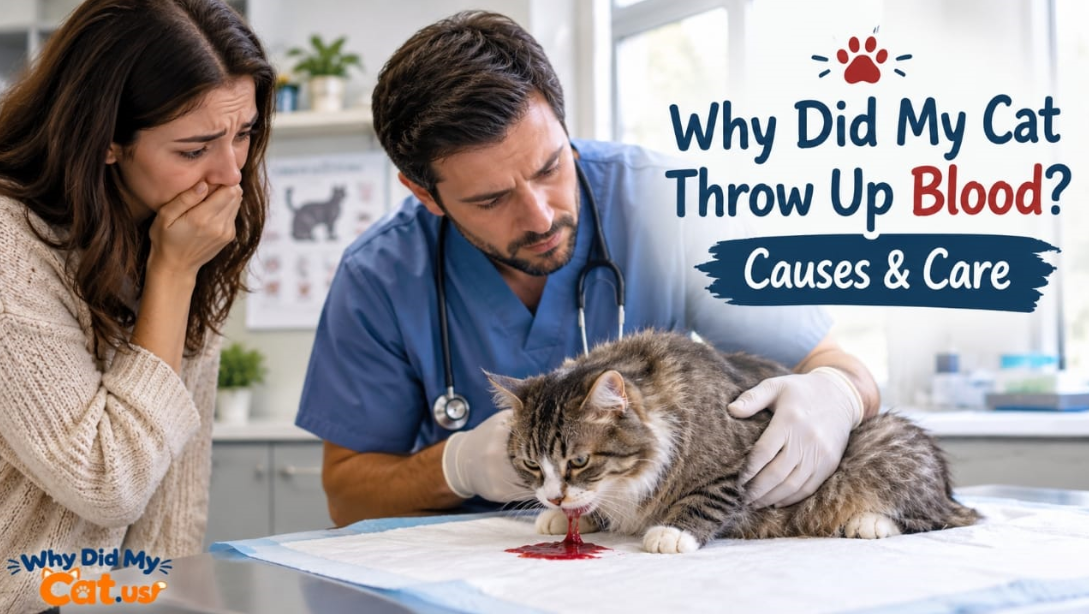
Finding blood in your cat’s vomit is alarming, even when your cat seems normal afterward. Blood can come from irritation caused by repeated vomiting, stomach ulcers, swallowed objects, toxins, or an underlying illness.
Contact a veterinarian immediately when you notice blood in your cat’s vomit. Don’t wait for more symptoms to appear. The amount and appearance of the blood can offer clues, but only a veterinary examination can determine the cause.
What Does Blood in Cat Vomit Look Like?
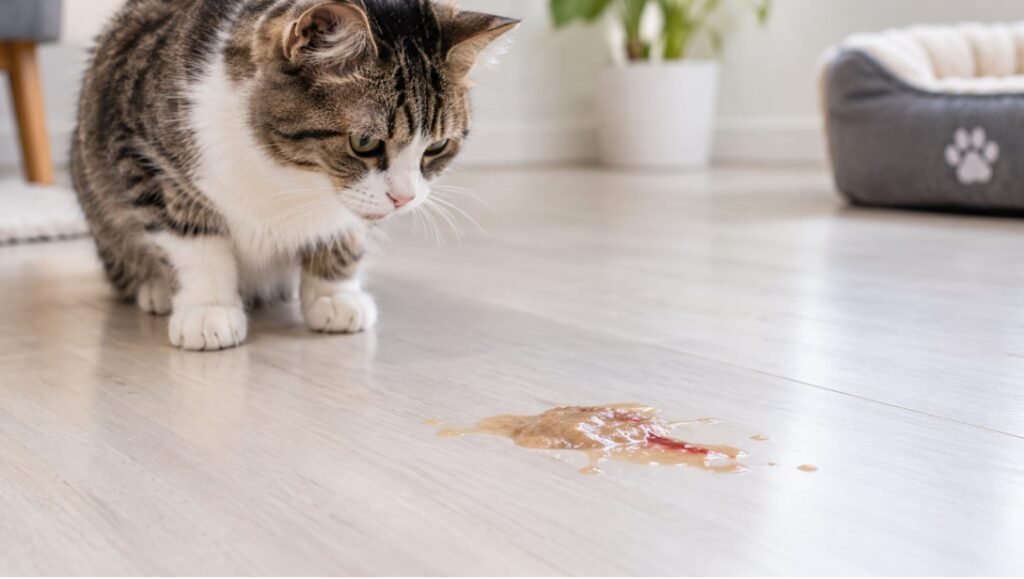
Blood doesn’t always appear as bright-red liquid. You might notice:
- Bright-red streaks or drops: Fresh blood mixed with food or liquid.
- Pinkish vomit: Blood mixed with fluid.
- Dark-red clots: Blood collected in the vomit.
- Brown material resembling coffee grounds: Blood that has been partially digested.
Take a photo of the vomit for your veterinarian. Its appearance can provide useful information, but color alone cannot confirm the cause or severity.
Why Did My Cat Throw Up Blood? 5 Possible Causes
1. Repeated Vomiting or Stomach Irritation
Repeated retching can irritate or damage the lining of the esophagus, stomach, or upper digestive tract. This sometimes causes small amounts of blood to appear.
However, vomiting and bleeding can also come from the same underlying problem. Don’t assume the blood is simply from retching.
2. Stomach Ulcers or Digestive Disease
Stomach ulcers are sores in the stomach lining that can bleed. Inflammation and other digestive conditions can also damage the gastrointestinal tract.
Your cat might have a reduced appetite, abdominal discomfort, weight loss, or dark, tarry stools. These signs help a veterinarian assess the problem but do not identify the cause on their own.
3. Swallowing a Foreign Object
Cats sometimes swallow string, ribbon, plastic, small toys, or other household items. These objects can injure the digestive tract or cause a blockage, which can lead to vomiting and bleeding.
If you see string hanging from your cat’s mouth or anus, do not pull it. It could be caught internally and cause further injury.
4. Toxins or Medication Exposure
Certain poisons, cleaning products, and medications can cause digestive injury or interfere with blood clotting. Some human pain relievers are especially dangerous for cats.
If your cat might have swallowed medication, rat poison, or a chemical, contact an emergency veterinarian immediately. Bring the product packaging when possible, and never induce vomiting unless a veterinary professional specifically instructs you to.
5. Infection or Another Underlying Illness
Infections, intestinal parasites, liver or kidney disease, blood-clotting disorders, and certain cancers can cause blood to appear in vomit. An injury to the mouth or nose can also lead to swallowed blood that is later vomited.
These conditions require different treatments, so a veterinary examination is needed to identify the actual cause.
Why Did My Cat Throw Up Blood but Act Normal?
A cat that eats, walks around, or asks for attention after vomiting blood can still have a serious medical problem. Cats often hide signs of illness, especially early on.
Even if you see only a few pink specks and your cat seems comfortable, call your veterinarian promptly for guidance. Don’t wait for your cat to become weak or stop eating before seeking help.
If your cat also refuses food after vomiting, read our guide on why your cat stopped eating to learn what this change in appetite may mean.

What If My Cat Throws Up Blood After Eating Grass?
Eating grass might seem like an obvious explanation when blood appears after your cat has been grazing outdoors. However, the timing alone doesn’t prove that grass caused the bleeding.
Repeated retching, a swallowed object, digestive irritation, or another condition could be responsible. Tell your veterinarian about the grass and anything else your cat might have eaten. Blood in the vomit still needs prompt veterinary assessment.
Why Did My Kitten Throw Up Blood?
Blood in a kitten’s vomit needs urgent veterinary attention. Young cats can deteriorate quickly, particularly when vomiting is accompanied by dehydration, infection, or an intestinal blockage.
Keep your kitten calm while arranging veterinary care. Tell the clinic your kitten’s age, vaccination history, how many times vomiting occurred, and whether there is diarrhea, weakness, or loss of appetite.
What Should You Do if Your Cat Throws Up Blood?
Take these steps while arranging veterinary care:
- Call your veterinarian immediately. Describe the amount and color of the blood and any other symptoms.
- Take a photo of the vomit. Note when it happened and whether your cat has vomited more than once.
- Check for possible exposure. Tell the vet about medications, chemicals, plants, string, or other objects your cat might have swallowed.
- Avoid home remedies. Don’t give human medicine, leftover prescriptions, or supplements, and don’t induce vomiting unless a veterinarian directs you to.
Don’t delay care while trying to determine the cause at home.

When Is Bloody Vomit an Emergency?
Blood in cat vomit warrants immediate veterinary contact. Go to an emergency veterinary clinic right away if your cat has any of these signs:
- A large amount of blood or repeated bloody vomiting
- Pale or white gums, marked weakness, or collapse
- Difficulty breathing
- Severe abdominal pain
- Black, tarry stools along with bloody vomit
- Suspected poisoning or a swallowed object
These signs can point to significant blood loss, obstruction, poisoning, or another serious condition. Call ahead when possible, but don’t delay transport to seek an appointment.
How Will a Vet Diagnose and Treat It?
Your veterinarian will ask when the vomiting began, how often it has happened, what the blood looks like, and whether your cat has been exposed to medications or unusual objects.
The examination may include bloodwork, stool testing, X-rays, or an ultrasound. Further testing depends on your cat’s symptoms and the veterinarian’s findings.
Treatment addresses the underlying cause. Depending on your cat’s condition, care might include fluids, medication, hospitalization, or surgery. Severe bleeding can require more intensive treatment.
FAQs
Is cat vomiting blood an emergency?
Blood in a cat’s vomit requires immediate veterinary contact, even when the cat appears well. Large amounts of blood, repeated vomiting, pale gums, weakness, collapse, breathing difficulty, or suspected poisoning warrant emergency veterinary care. Don’t wait for additional symptoms before seeking advice.
Can a cat survive throwing up blood?
Yes, many cats can recover, but the outcome depends on the cause, the amount of bleeding, and how quickly treatment begins. Some causes are treatable, while others are life-threatening. Prompt veterinary assessment gives your cat the best chance of receiving appropriate care.
What does bloody vomit look like in cats?
Bloody vomit can contain bright-red streaks, pink fluid, dark-red clots, or brown material resembling coffee grounds. The appearance depends partly on how long the blood has been in the digestive tract. Take a photo for your veterinarian, but don’t use color alone to judge severity.
What can I give my cat for throwing up blood?
Don’t give your cat human medications, leftover prescriptions, supplements, or home remedies unless your veterinarian specifically directs you to. Some common human medicines are toxic to cats. Contact a veterinarian immediately and follow their instructions while arranging care.
What causes a cat to puke up blood?
Possible causes include repeated vomiting, stomach ulcers, digestive inflammation, swallowed objects, toxins, infections, parasites, organ disease, and blood-clotting disorders. Blood swallowed from an injury to the mouth or nose can also be vomited. A veterinary examination is needed to identify the actual cause.
Conclusion
Blood in your cat’s vomit can result from digestive irritation, an injury, poisoning, or an underlying illness. Its appearance alone cannot tell you how serious the problem is. Contact a veterinarian immediately, and seek emergency care for severe symptoms or suspected poisoning.
[…] in vomit can have several causes and needs veterinary assessment. Read our guide on why your cat might throw up blood to learn more about possible causes and warning […]
[…] in vomit can signal a serious problem. Read our guide on why your cat might throw up blood to learn more about possible causes and the importance of veterinary […]
[…] Blood or dark, coffee-ground-like material: Blood in vomit needs prompt veterinary attention. Contact a veterinarian immediately for guidance and read Why Did My Cat Throw Up Blood? Causes & Care. […]
[…] in vomit is a different concern and needs prompt veterinary attention. Our guide to Why Did My Cat Throw Up Blood? Causes & Care explains this symptom in more […]