
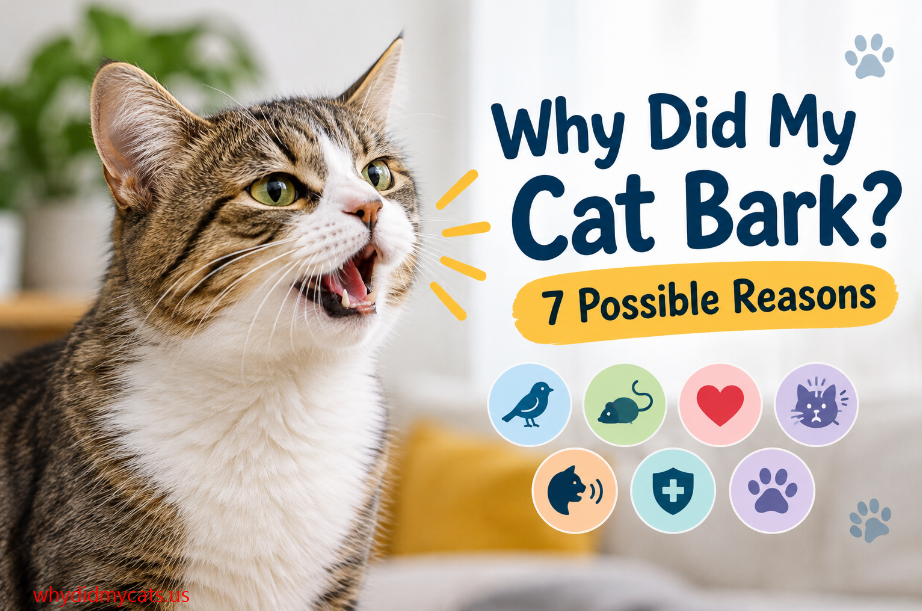
Cats don’t usually bark like dogs, but they can make sounds that resemble a short bark, a squeaky yelp, or a rough cough. You might hear it while your cat watches birds through a window, plays with a toy, or walks over to get your attention.
The reason depends on the sound itself and what your cat is doing at the time. A quick chattering noise during bird-watching is different from repeated hacking or a sudden, hoarse voice. Knowing the difference helps you decide whether the sound is normal cat communication or something that needs veterinary attention.
Why Did My Cat Bark? 7 Possible Reasons
1. Your Cat Is Chirping or Chattering at Birds
A cat watching birds or squirrels outside may produce a series of quick, clicking, squeaky, or stuttering sounds. This is called chirping or chattering, and it is associated with hunting-related excitement.
For example, your indoor cat might sit on a windowsill and chatter at a bird on the fence. The sound can resemble a tiny bark, especially when several noises happen in quick succession.
This behavior is usually harmless when your cat otherwise acts normally.
2. Your Cat Is Excited During Play
Some cats make short, sharp vocalizations when chasing a feather wand, pouncing on a toy, or racing through the house. Excitement and intense concentration can produce unusual sounds.
Notice what happens when the play stops. If your cat settles down and returns to normal, the noise may simply be part of its play behavior. Repeated coughing, wheezing, or struggling to breathe is different and shouldn’t be dismissed as excitement.
3. Your Cat Wants Your Attention
A cat that makes a bark-like sound when you enter a room, approach its food bowl, or sit down at your desk may be trying to communicate.
Some cats use unusual meows, short trills, or raspy little calls instead of a familiar meow. Your cat might also repeat the sound near a closed door or when expecting dinner.
Look at the situation rather than assuming every short noise has the same meaning. The sound may be a request for attention, food, or interaction.
4. Your Cat Feels Frightened or Defensive
A startled cat may growl, hiss, spit, or make a harsh vocalization when it feels threatened. A visitor entering the house, a new pet, or a sudden noise in the hallway can trigger this response.
Defensive sounds usually come with body-language changes, such as flattened ears, a tense posture, a tucked tail, or attempts to hide.
Give your cat space instead of picking it up or forcing contact. If this behavior starts suddenly or happens repeatedly without an obvious trigger, discuss it with your veterinarian. Pain and other medical problems can also affect behavior. You can learn more in our guide to sudden aggression in cats.
5. Your Cat Is Making an Unusual Vocalization
Cats have a wider range of sounds than many owners expect. A trill, chirp, raspy meow, or low growl can sound surprisingly similar to a bark.
The setting offers a useful clue. A short chirp while greeting you or watching wildlife is different from a harsh noise that happens repeatedly while your cat is resting.
Record the sound when you can do so safely. A short video showing your cat’s face, posture, and breathing can help your veterinarian distinguish a vocalization from coughing or gagging.
6. Your Cat’s Throat or Airway May Be Irritated
A barking sound that is actually a cough deserves more attention. Cats with airway irritation may crouch low, stretch their neck forward, and produce a dry, hacking noise. Owners sometimes mistake this for an attempt to bring up a hairball, even when nothing comes out.
Dust, smoke, strong fragrances, respiratory infections, and airway conditions such as asthma are among the possible causes of coughing. A veterinarian can determine what’s responsible.
Avoid spraying fragrances near your cat or using human cough medicine. Arrange a veterinary appointment for repeated, persistent, or worsening coughing.
7. An Underlying Health Problem May Be Affecting Its Voice
A new, unusually rough, weak, or strained sound isn’t always a behavioral issue. Inflammation of the voice box, an upper respiratory infection, or another throat or airway problem can change how a cat sounds.
You might also notice sneezing, nasal discharge, reduced appetite, low energy, or difficulty swallowing. These additional signs make a medical explanation more concerning.
If your cat’s voice changes suddenly or the barking-like sound keeps returning, contact your veterinarian. Seek emergency veterinary care for difficulty breathing, open-mouth breathing at rest, or blue or gray gums.
Why Does My Cat Bark Like a Dog?
Cats don’t usually produce a true dog-like bark. What sounds like barking is more likely to be a chirp, chatter, growl, raspy meow, cough, or gagging noise.
A short series of clicks while watching a squirrel is usually very different from a deep, repeated hacking sound. Listen for whether the noise seems to come from your cat’s normal vocal communication or from an effort to cough.
If the sound is new, frequent, or accompanied by breathing changes, have your cat examined rather than assuming it is just an unusual habit.
Why Did My Cat Bark at Me?
Your cat may have been greeting you, asking for food, seeking attention, or reacting to something that made it uncomfortable. A brief chirp when you walk into the room is different from a growl accompanied by flattened ears or a tense body.
Think about what happened immediately before the sound. Did you touch a sensitive area, pick up your cat, interrupt its rest, or introduce a new person into the room?
Don’t punish the noise. Give your cat space if it seems frightened, and watch for other changes in behavior. A sudden change in how your cat reacts to you deserves attention, particularly when it comes with signs of pain or illness.
Why Does My Cat Bark at Birds or When Playing?
Bird-watching and active play are common situations in which owners notice unusual cat sounds. A cat perched at an apartment window might chatter at a sparrow, while a cat chasing a toy may make quick squeaks or chirps.
These noises often occur during intense excitement. Your cat’s body language and the timing of the sound help distinguish them from coughing.
If the noise continues after the activity ends, sounds harsh or labored, or occurs alongside weakness or breathing difficulty, don’t assume it is related to play or hunting.
Why Does My Cat Bark Instead of Meow?
Some cats naturally use chirps, trills, squeaks, and raspy vocalizations instead of the familiar meow. A cat’s usual voice also varies from one individual to another.
However, a cat that has always meowed normally and suddenly begins making a hoarse, weak, or bark-like sound should be checked for a possible throat or respiratory problem. A change in pitch, volume, or sound pattern is more significant than a familiar noise your cat has made for years.
Read our guide to changes in your cat’s voice for more information.
When Should You Worry About a Cat Making Barking Sounds?
A brief chirp or chatter during bird-watching is usually not a reason for concern when your cat is eating, moving, and breathing normally.
Contact your veterinarian if the sound is new and persistent, coughing keeps returning, your cat becomes hoarse, or you notice sneezing, nasal discharge, reduced appetite, or unusual tiredness.
Get emergency veterinary care immediately if your cat struggles to breathe, breathes with its mouth open while resting, has blue or gray gums, or appears to be choking. Don’t put your fingers blindly into your cat’s throat or give human medication.
What Should You Do When Your Cat Makes a Barking Sound?
Start by observing your cat without interrupting it unnecessarily.
- Notice the setting: Was your cat watching birds, playing, greeting you, or resting?
- Listen to the sound: Is it a short chirp, a growl, a dry cough, or repeated gagging?
- Check for other changes: Look for appetite loss, unusual tiredness, sneezing, or breathing problems.
- Record an episode: A video can help your veterinarian assess the sound and your cat’s movements.
- Keep the environment comfortable: Avoid smoke, dusty litter, and strong sprays or fragrances around your cat.
Don’t punish your cat for making an unusual noise or assume every bark-like sound is harmless. When coughing or a voice change is involved, a veterinary examination is the safest way to identify the cause.
Frequently Asked Questions
Why did it sound like my cat barked?
Your cat may have made a chirp, chatter, growl, or raspy meow that resembled a bark. Cats sometimes chatter while watching birds or make short vocalizations during play. A harsh, repeated sound that looks like coughing or gagging needs closer attention, especially if your cat also has breathing problems.
Why does my cat make a brrrr sound?
A soft “brrrr” or rolling sound is often called a trill. Cats commonly use trills when greeting people, approaching family members, or inviting interaction. It is usually a friendly communication sound. If the noise sounds more like wheezing, rattling, or labored breathing, contact your veterinarian instead of treating it as a normal trill.
What is the 3 bark rule?
The “3 bark rule” is not a recognized veterinary rule for interpreting cat sounds. Counting three noises doesn’t tell you whether your cat is healthy or sick. The type of sound, what your cat is doing, how frequently it happens, and whether other symptoms appear are much more useful clues.
Do cats ever feel sorry?
Cats don’t show remorse in the same way humans understand it. A cat that hides, avoids eye contact, or approaches you after knocking something over is not necessarily apologizing. These behaviors can reflect fear, stress, or a response to your reactions. Calm, consistent handling helps your cat feel secure.
What’s a cat’s worst fear?
There isn’t one fear shared by every cat. Many cats are frightened by unfamiliar people or animals, sudden loud noises, forced handling, and situations where they cannot escape. A safe hiding place, predictable routines, and gradual introductions to changes can help reduce stress.
Conclusion
When you ask, “Why did my cat bark?” the answer usually starts with identifying the sound. Chirping at birds or making a short trill can be normal cat communication, while repeated coughing, gagging, or a sudden voice change deserves veterinary attention. Watch the context, note any other symptoms, and seek urgent care if your cat has trouble breathing.