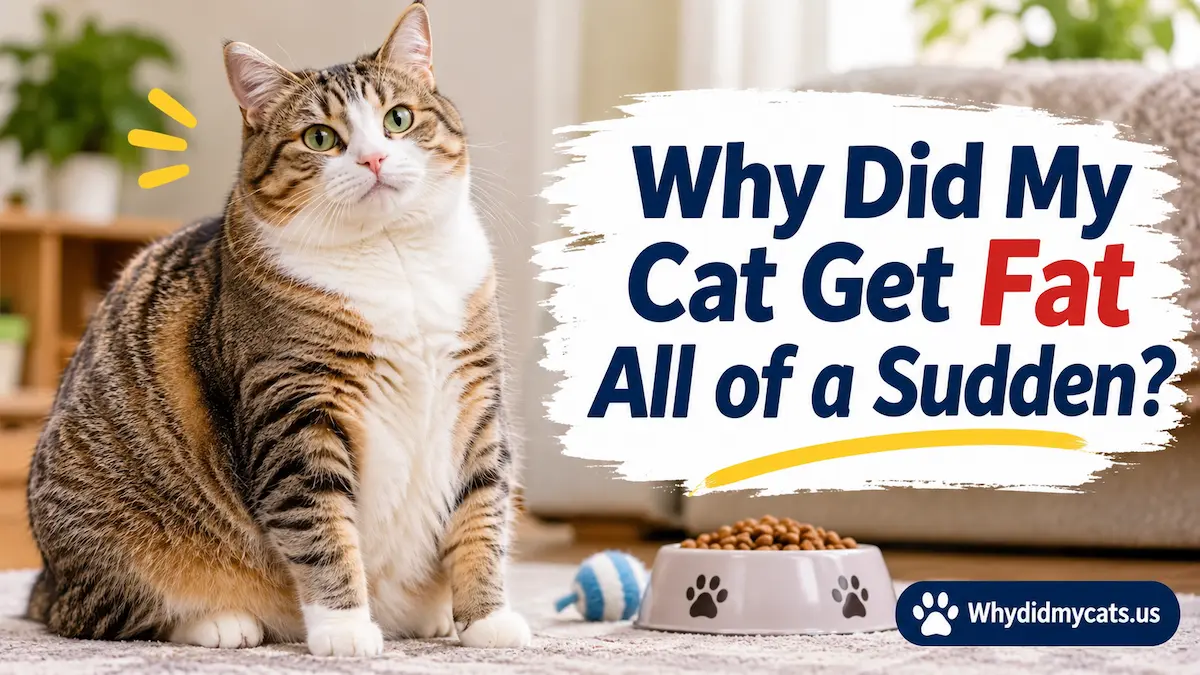
Why did my cat get fat all of a sudden? A noticeable change in your cat’s size can happen because of extra calories, reduced activity, aging, or changes after neutering. However, a suddenly round belly does not always mean your cat has gained body fat. Pregnancy, parasites, fluid buildup, and other medical problems can also make a cat’s abdomen look bigger.
The first step is to figure out whether your cat is gaining weight throughout the body or developing an unusually swollen belly. These changes have different causes and may need different responses.
Is It Normal for a Cat to Gain Weight Suddenly?
Gradual weight gain is fairly common in cats, especially when their food intake exceeds the calories they burn. A cat that spends most of the day sleeping indoors and has unlimited access to dry food can slowly put on extra weight.
A sudden change over a few days is different. Body fat usually does not appear overnight. If your cat’s stomach has become noticeably larger in a short time, do not assume the problem is obesity. Abdominal swelling deserves a veterinary examination, particularly when it comes with discomfort, vomiting, weakness, or changes in breathing.
Why Did My Cat Get Fat All of a Sudden? 7 Possible Reasons
1. Overfeeding and Extra Treats
Food portions can creep up without anyone noticing. A measuring cup that is larger than the recommended serving, treats between meals, table scraps, or several family members feeding the same cat can add more calories than your cat needs.
Free-feeding dry food is another common problem. When a full bowl is always available, it becomes difficult to know how much your cat actually eats.
Check the feeding instructions on the food package, measure daily portions, and count treats as part of your cat’s total daily calories.
2. Reduced Activity and an Indoor Lifestyle
Indoor cats have fewer opportunities to chase, climb, and explore than cats with access to larger outdoor spaces. A change in household routine can make this worse.
For example, a cat that once played regularly may become less active after a move, a new work schedule, or the arrival of another pet. Joint pain can also make jumping and climbing uncomfortable, reducing daily activity.
3. Age and Metabolism Changes
Cats’ energy needs change throughout life. A young, playful cat usually burns more energy than a less active adult. As cats mature, their food portions may need adjustment to match their activity and body condition.
However, aging does not automatically make every cat overweight. Older cats can also lose muscle or weight because of health problems, so a noticeable change deserves attention rather than an automatic diet change.
4. Spaying or Neutering
Cats can become more prone to weight gain after being spayed or neutered. Their appetite and energy needs may change, while their previous feeding portions remain the same.
Neutered male cats are particularly at risk of gaining excess weight. If your male cat has become rounder since surgery, ask your veterinarian whether his daily calorie intake and food portions need adjustment.
5. Pregnancy
An unspayed female cat that has access to male cats may gain weight because she is pregnant. Her abdomen gradually becomes larger, and her nipples may become more noticeable as pregnancy progresses.
Do not try to confirm pregnancy by pressing or squeezing her belly. A veterinarian can examine her and recommend appropriate testing. If pregnancy is possible, arrange an appointment rather than treating the change as ordinary weight gain.
6. Intestinal Parasites
Worms can cause a rounded or potbellied appearance, particularly in kittens. Other signs include diarrhea, vomiting, poor coat condition, or slow growth. Some cats show very few obvious symptoms.
A swollen belly does not prove that your cat has worms. A veterinarian can check a stool sample and recommend suitable parasite treatment. Read more about diarrhea in cats and why digestive changes deserve attention.
7. Underlying Medical Conditions
Some health problems change a cat’s body shape or cause abdominal enlargement. Fluid accumulation, organ enlargement, constipation, and certain abdominal conditions can make the stomach look bigger without ordinary fat gain.
Hormonal conditions are another possibility, although some are rare in cats. Cushing’s disease, for example, is uncommon in cats and can cause abdominal enlargement along with signs such as increased thirst and urination, muscle weakness, and fragile skin.
A veterinarian needs to identify the actual cause. Do not put your cat on a weight-loss diet when the abdomen has suddenly become swollen.
Why Does My Cat Look Fat All of a Sudden? Fat vs. Swollen Belly
A cat carrying extra body fat usually becomes rounder over time. You may notice a wider waist, a less visible waistline when viewed from above, and ribs that are harder to feel beneath the fat.
A swollen abdomen is different. The belly may look unusually round or enlarged while the rest of the body remains relatively slim. The change may happen quickly, and your cat may also seem uncomfortable or less active.
A normal loose flap of skin under a cat’s belly, called the primordial pouch, is not the same as sudden abdominal swelling. It is a natural feature in many healthy cats.
Do not rely on appearance alone to decide what is happening. A veterinary examination can help distinguish excess fat from abdominal enlargement.
Why Is My Neutered Male Cat Gaining Weight?
Neutering can increase a male cat’s risk of weight gain because appetite and calorie requirements can change after surgery. If you continue feeding the same amount without monitoring his body condition, extra weight can gradually accumulate.
Use measured meals instead of leaving food available all day. Add short play sessions with a wand toy or other activity your cat enjoys. Ask your veterinarian to recommend an appropriate daily calorie target based on his age, weight, and body condition.
Why Is My Kitten Fat All of a Sudden?
Kittens grow quickly, so a fuller body can be part of normal development. However, a noticeably round belly, especially when the rest of the kitten looks thin, deserves a closer look.
Intestinal worms are one possible cause of a potbelly in kittens. Poor growth, diarrhea, vomiting, or a dull coat are additional reasons to arrange a veterinary check. Kittens need enough nutrition for healthy development, so never restrict their food to make them look slimmer without veterinary advice.
Signs Your Cat Is Actually Overweight
A few simple checks can help you notice excess body fat:
- Ribs: You should be able to feel your cat’s ribs under a thin layer of fat without pressing hard.
- Waist: Viewed from above, your cat should have a slight waist behind the ribs.
- Side profile: The abdomen should usually slope upward toward the hind legs rather than hang heavily.
- Movement: An overweight cat may struggle to jump, groom hard-to-reach areas, or stay active during play.
These checks are useful, but a veterinarian can give a more reliable body condition score. Weight alone does not tell the whole story because healthy body size varies between cats.
Other Symptoms That May Accompany Sudden Weight Gain
Watch for changes beyond your cat’s size. Increased thirst or urination, reduced appetite, vomiting, diarrhea, constipation, weakness, hair loss, and difficulty moving can help your veterinarian understand what is happening.
A cat that suddenly stops eating needs attention, too. See our guide on why a cat stops eating. Repeated vomiting alongside abdominal swelling is another reason to contact a veterinarian promptly; learn more about vomiting in cats.
How Do Vets Diagnose Sudden Weight Gain in Cats?
Your veterinarian will ask when the change started, how quickly it happened, what your cat eats, and whether appetite, thirst, urination, stool, or activity have changed.
The examination may include:
- Checking body weight and body condition.
- Feeling the abdomen for enlargement, discomfort, or unusual masses.
- Reviewing food portions, treats, medications, and recent lifestyle changes.
- Blood and urine tests when a medical condition is suspected.
- Stool testing for intestinal parasites.
- X-rays or ultrasound when abdominal swelling needs further investigation.
Not every cat needs every test. The veterinarian chooses based on the examination and your cat’s symptoms.
What Should You Do If Your Cat Gets Fat Suddenly?
Start by checking whether the change affects the whole body or mainly the belly. Look at recent photographs to compare your cat’s shape, and record their weight if you have a suitable pet scale.
Review the daily food routine. Check how much food everyone in the household gives your cat, including treats and snacks. Make a note of any recent changes in activity, medication, appetite, thirst, or litter-box habits.
Arrange a veterinary appointment for unexplained weight gain, especially when the change is rapid. A suddenly swollen or painful belly needs prompt veterinary attention. Difficulty breathing, collapse, or severe weakness requires emergency care.
How to Help Your Cat Maintain a Healthy Weight
Once your veterinarian confirms that excess body fat is the problem, make changes gradually.
- Feed measured portions rather than constantly refilling the bowl.
- Choose a complete and balanced cat food that suits your cat’s life stage.
- Keep treats limited and include them in the daily calorie allowance.
- Use short, regular play sessions to encourage movement.
- Try food puzzles or interactive toys to make mealtimes more active.
- Weigh your cat regularly and keep a record of progress.
Never suddenly stop feeding your cat or put them on a crash diet. Rapid food restriction can cause a dangerous liver condition called hepatic lipidosis. Your veterinarian can set a safe weight-loss target and adjust the feeding plan as needed.
When Should You Take Your Cat to the Vet?
Book a veterinary visit when your cat gains unexplained weight, develops a larger belly, or has a noticeable change in appetite or activity.
Seek prompt veterinary care if the abdomen becomes enlarged quickly, feels painful, or comes with repeated vomiting, weakness, or difficulty passing stool or urine. If your cat struggles to breathe, collapses, or appears severely distressed, go to an emergency veterinary hospital immediately.
FAQs
Why is my cat suddenly gaining weight even though they are eating?
Your cat may be getting more calories than you realize through larger portions, treats, or food from other household members. Reduced activity after an injury or lifestyle change can also contribute. If the change is rapid or mainly affects the belly, have your cat examined to rule out a medical cause.
What are the first signs of Cushing’s disease in cats?
Cushing’s disease is rare in cats. Possible signs include increased thirst and urination, increased appetite, a larger abdomen, muscle weakness, fragile skin, and hair loss or poor hair regrowth. These symptoms can occur with other conditions, so a veterinarian must perform appropriate tests before making a diagnosis.
How do I slim down my fat cat?
Ask your veterinarian to calculate a safe daily calorie target and recommend suitable food portions. Measure meals, limit treats, and encourage regular play. Avoid crash diets or suddenly withholding food, as rapid weight loss can cause serious liver problems in cats.
Is it normal for cats to get fat as they age?
Weight gain is common in less active adult and middle-aged cats, but it is not an unavoidable part of aging. Food portions that once suited an active cat may become excessive as activity changes. Older cats can also lose weight or muscle because of illness, so monitor body condition rather than assuming every change is normal.
Why is my indoor cat so fat?
Indoor cats often have fewer opportunities for exercise and may eat more calories than they use. Free-feeding, frequent treats, boredom, and limited play can contribute. Measured meals, interactive toys, climbing spaces, and daily play can help your cat stay active and maintain a healthier weight.
What age is considered old for a cat?
Cats are commonly considered senior at around 10 years of age, although individual aging varies. Mature adult cats are often around 7–10 years old. As your cat gets older, regular veterinary checkups and adjustments to diet and activity help address changing health and nutritional needs.
Conclusion
When a cat suddenly looks fat, the cause is not always ordinary weight gain. Overfeeding, reduced activity, aging, and neutering can contribute to excess body fat, while pregnancy, parasites, fluid buildup, and other medical problems can enlarge the abdomen. Notice how quickly the change happened and whether other symptoms are present. A veterinary examination is the safest way to identify the cause and decide what your cat needs.