
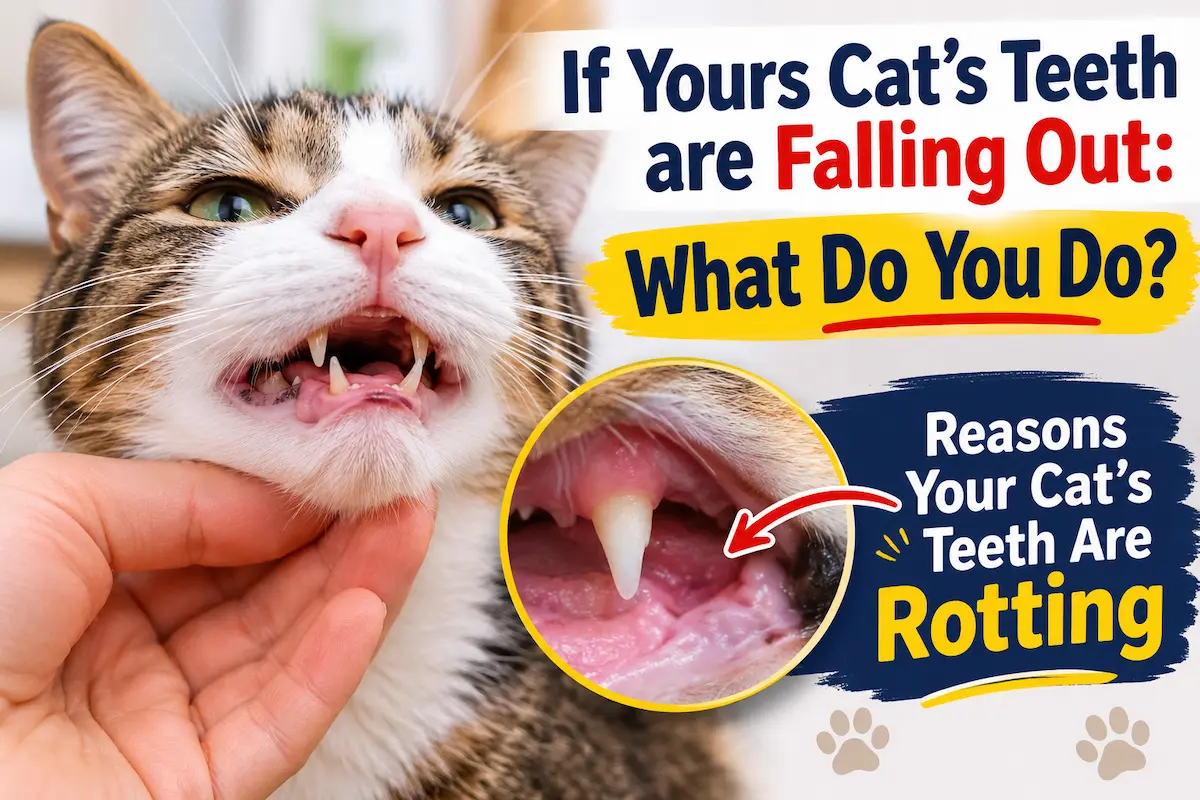
Why did my cat’s teeth fall out? The answer depends largely on your cat’s age. Kittens naturally lose their baby teeth as permanent teeth grow in, but an adult cat losing a permanent tooth is usually a sign of dental disease, injury, or another oral health problem.
A missing tooth deserves attention, especially when your cat has bad breath, drooling, bleeding gums, or difficulty eating. Here’s how to tell what’s normal, what causes tooth loss, and what to do next.
Is It Normal for Cats to Lose Their Teeth?
Yes, but mainly during kittenhood. Cats develop two sets of teeth: 26 baby teeth and 30 permanent adult teeth.
Kittens usually begin losing their baby teeth around 3 to 4 months of age. Their adult teeth gradually replace them, and most have a complete set by approximately 6 to 7 months.
Finding a tiny tooth on the floor or in your kitten’s bedding is usually nothing to worry about. Kittens also swallow some loose baby teeth while eating, which is generally harmless.
Adult cats are different. Their permanent teeth should not fall out simply because they are getting older. A missing or loose adult tooth needs a veterinary dental examination.
Why Did My Cat’s Teeth Fall Out? 5 Possible Causes
When an adult cat loses a tooth, dental disease is one of the first things a veterinarian will investigate. These are common explanations.
1. Periodontal Disease
Periodontal disease develops when plaque and bacteria build up around the teeth and gums. The gums become inflamed, and the supporting tissues and bone can gradually weaken.
As the disease progresses, teeth become loose and may eventually fall out or require extraction.
You might notice yellow or brown tartar, red gums, persistent bad breath, or bleeding around the teeth. Regular dental examinations help identify the problem before significant damage occurs.
2. Tooth Resorption
Tooth resorption is a painful condition in which a cat’s tooth structure gradually breaks down. It is one of the most important causes of tooth loss in cats.
The damage often begins near the gumline. Affected teeth can become fragile, break, or lose their visible crowns while parts of the roots remain beneath the gums.
Cats with tooth resorption may drool, chew on one side, avoid hard food, or suddenly prefer softer meals. Some show very few obvious signs despite having significant dental pain.
3. Injury or a Broken Tooth
A fall, collision, bite, or other accident can fracture a tooth or damage the tissues holding it in place.
For example, a cat that falls from furniture or gets into a fight outdoors could injure a canine tooth. A broken tooth is not always completely lost; sometimes the crown breaks while the root remains inside the gum.
A fractured tooth needs veterinary attention because exposed inner tissue can be painful and vulnerable to infection.
4. Severe Gum Inflammation or Oral Disease
Some cats develop severe inflammation involving the gums and other tissues inside the mouth. Conditions such as gingivostomatitis can make eating and grooming painful.
You may notice red, swollen gums, drooling, bleeding, bad breath, or a strong reaction when your cat tries to chew.
Severe inflammation can damage the tissues supporting the teeth. A veterinarian needs to identify the underlying problem and recommend appropriate treatment.
5. Other Problems Affecting the Teeth and Jaw
Less commonly, oral tumors, jaw injuries, or abnormal tooth development can affect the structures supporting a cat’s teeth.
A tooth that looks missing might also have broken below the gumline, leaving a root behind. A visual check at home cannot reliably distinguish these problems.
Why Are My Cat’s Teeth Falling Out All of a Sudden?
Sudden tooth loss in an adult cat deserves a prompt veterinary appointment. An injury may explain a tooth that disappears after a fall or fight, while severe dental disease or tooth resorption can cause teeth to loosen or break.
Look for changes that happened around the same time:
- Your cat suddenly avoids dry food.
- She drops food while chewing.
- You notice blood on a toy or near the food bowl.
- Her breath smells unusually unpleasant.
- She paws at her mouth or resists having her head touched.
Do not assume the tooth simply fell out because your cat is older. Adult tooth loss is not a normal part of aging.
Why Did My Cat’s Canine or Front Tooth Fall Out?
The type of missing tooth can help your veterinarian understand what happened, but it cannot confirm the cause on its own.
Canine teeth: These are the long, pointed teeth commonly called fangs. A missing canine can result from periodontal disease, tooth resorption, or trauma.
Front teeth: The tiny teeth between the canines are called incisors. They can also be affected by periodontal disease, resorption, or injury.
If your cat has a missing canine or several missing front teeth, arrange a dental examination. A tooth that appears to have fallen out might actually have broken at the gumline.
Signs Your Cat May Have Dental Problems
Cats are good at hiding mouth pain. Some continue eating even when their teeth or gums hurt.
Watch for these changes:
- Bad breath that does not go away.
- Red, swollen, or bleeding gums.
- Excessive drooling.
- Chewing on one side of the mouth.
- Dropping food or walking away from the bowl.
- Eating less or refusing meals.
- Pawing at the mouth or avoiding head touches.
- Weight loss or reduced grooming.
A cat that suddenly stops eating needs veterinary attention. Cats should not go without food while an owner waits to see whether the problem improves.
What Should You Do If Your Cat Loses a Tooth?
First, look for the missing tooth if it is easy to find. Keep it in a clean container and take it to the veterinary appointment. The tooth’s appearance may help the veterinarian determine whether it broke or came out whole.
Next, arrange an examination, even when your cat seems comfortable. A missing crown does not mean the root has disappeared, and dental disease can continue below the gumline.
Until your appointment:
- Offer soft food if chewing seems uncomfortable, provided your cat can swallow normally.
- Keep fresh water available.
- Avoid hard treats and chew toys.
- Do not pull loose teeth or remaining fragments yourself.
- Never apply human painkillers or dental products to your cat’s mouth.
If your cat has facial swelling, significant mouth bleeding, severe pain, or refuses food and water, seek urgent veterinary care.
How Do Vets Diagnose and Treat Tooth Loss in Cats?
A veterinarian will examine your cat’s mouth, gums, jaw, and remaining teeth. Because cats rarely tolerate a complete dental examination while awake, a more detailed assessment may require anesthesia.
Dental X-rays are particularly useful. They can reveal damaged roots, hidden tooth resorption, bone loss, and problems that cannot be seen by looking at the crown.
Treatment depends on the diagnosis. It may include professional dental cleaning, extraction of painful or damaged teeth, or treatment for an underlying oral condition.
If a tooth has broken and its root remains, the veterinarian will decide whether it needs surgical removal. The aim is to remove the source of pain and protect your cat’s remaining oral health.
Can Cats Eat Normally Without Teeth?
Yes. Cats can usually adapt surprisingly well after dental extractions, including when several or all teeth have been removed.
Many toothless cats eat wet food comfortably. Some also learn to eat appropriately prepared dry food, depending on their individual condition and veterinary advice.
A cat without teeth is not necessarily unable to enjoy meals or have a good quality of life. Removing painful teeth can actually make eating more comfortable.
If your cat has started eating less wet food, do not assume it is simply a preference change. Mouth pain is one possible reason for a sudden change in eating habits.
How to Prevent Dental Problems in Cats ?
You cannot prevent every dental condition, especially tooth resorption, but regular dental care can help protect your cat’s remaining teeth.
- Brush your cat’s teeth with a cat-safe toothbrush and toothpaste when tolerated.
- Schedule regular veterinary dental examinations.
- Ask your veterinarian whether professional dental cleaning is appropriate.
- Introduce dental care gradually rather than forcing your cat’s mouth open.
- Report bad breath, loose teeth, drooling, or changes in eating early.
Never use human toothpaste. Some ingredients in human dental products are unsuitable for cats.
When Should You Take Your Cat to the Vet?
Book a veterinary appointment when an adult cat has a loose, broken, or missing tooth, even when she is still eating and behaving normally.
Seek prompt or urgent care for:
- Significant bleeding from the mouth.
- Facial or jaw swelling.
- Severe pain or difficulty closing the mouth.
- Refusal to eat or drink.
- A broken tooth following an accident.
- Difficulty swallowing or breathing.
Breathing difficulty is an emergency. Do not wait for a routine dental appointment.
Frequently Asked Questions
What should I do if my cat’s teeth are falling out?
Arrange a veterinary dental examination, particularly when your cat is an adult. Avoid pulling loose teeth or giving human pain medication. Offer soft food if chewing is uncomfortable and your cat can swallow normally. Significant bleeding, swelling, or refusal to eat requires urgent attention.
What do I do if my kitten’s tooth fell out?
A kitten losing a small baby tooth between approximately 3 and 7 months of age is usually going through normal teething. You may find the tooth on the floor, although kittens often swallow them. Contact your vet if your kitten seems painful or has a retained baby tooth.
Does it hurt cats when they lose their teeth?
Normal baby tooth loss usually causes little discomfort, although kittens may experience mild gum sensitivity. Losing a permanent adult tooth is different. Dental disease, tooth resorption, and fractures can be painful, even when a cat continues eating and behaving normally.
How long can cats survive without teeth?
Cats can live long, comfortable lives without teeth. Many adapt to eating wet food, and some manage appropriately prepared dry food as well. Their quality of life often improves after painful teeth are removed. Your veterinarian can recommend a suitable diet after dental treatment.
How old are cats when their teeth fall out?
Kittens usually begin losing baby teeth around 3 to 4 months old. Their permanent teeth replace them, and most cats have all 30 adult teeth by around 6 to 7 months. Adult cats should not routinely lose permanent teeth as they age.
What is the silent killer of cats?
Hypertrophic cardiomyopathy (HCM) is commonly described as a silent killer because some cats show few or no obvious symptoms until the disease becomes advanced. It causes thickening of the heart muscle. HCM is unrelated to tooth loss, but regular veterinary checkups can help identify hidden health problems.
Conclusion
Why did my cat’s teeth fall out? For kittens, losing baby teeth is a normal part of growing up. For adult cats, a missing permanent tooth usually points to dental disease, tooth resorption, or injury.
Do not ignore loose or missing teeth just because your cat still eats. A veterinary dental examination can identify hidden damage, relieve pain, and help protect the teeth that remain.
[…] Why Did My Cat’s Teeth Fall Out? Causes & What to Do […]