
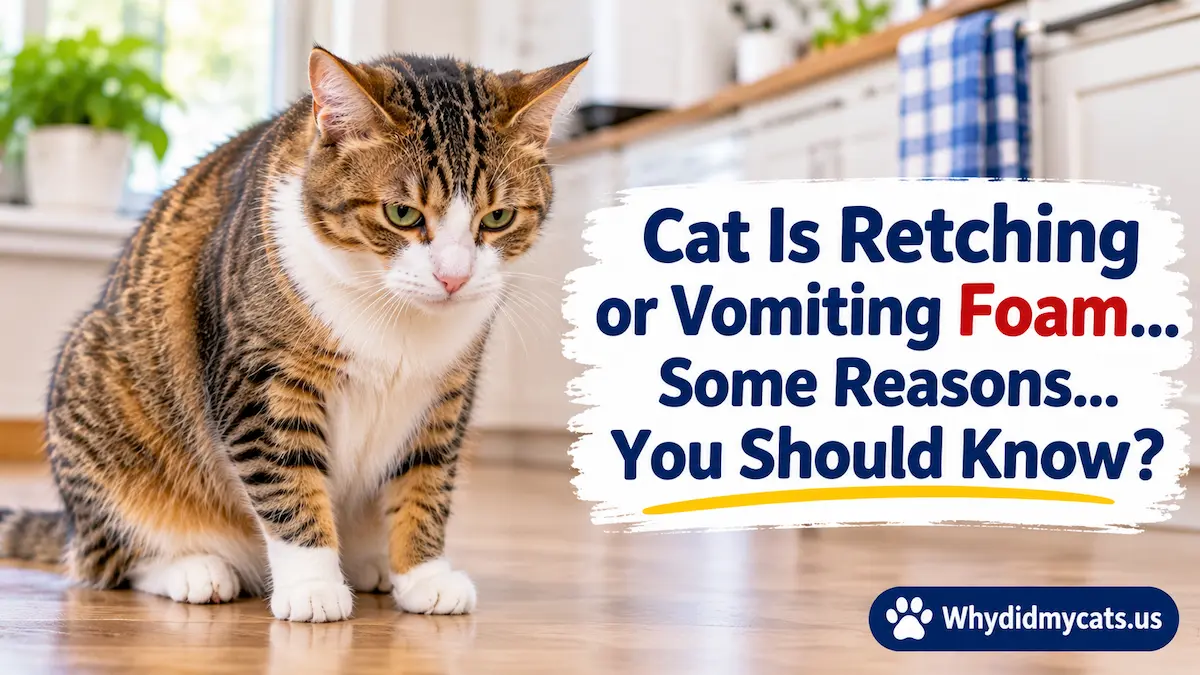
Why did my cat throw up foam? Most often her stomach was empty or irritated, and all that came up was stomach fluid, mucus, and saliva whipped into froth. A hairball starting to form, eating too fast, or a new food can do it too. One episode in a cat who is eating and acting like herself is usually minor. Repeated foam, blood, or a cat who seems off needs a vet.
What Is the Foam in Cat Vomit?
Foam is what’s left when there’s nothing solid to bring up. Stomach fluid, mucus, and saliva get churned with air as she retches, and the result looks like bubbly froth. That’s why it so often shows up in the early morning, before breakfast, or after a long gap between meals.
The foam itself is rarely the problem. What matters is its color, how often it happens, and how your cat acts afterward.
What the Color of the Foam Tells You
| What you see | What it often means | Where to go next |
| White foam | Empty stomach, a hairball on the way, mild irritation | See why cats throw up white liquid |
| Yellow or green foam | Bile mixed in, common after a long gap between meals or repeated vomiting. If she’s vomiting yellow liquid with foam and not eating, call the vet | See why cats throw up yellow liquid |
| Clear, watery foam | Stomach fluid, saliva, or water she gulped down | See why cats throw up clear liquid |
| Pink, red streaks, or dark brown like coffee grounds | Blood, fresh or partly digested. Needs a vet the same day | See why cats throw up blood |
| Foam with food or fur | Eating too fast or a hairball | Slow her meals, brush more |
Snap a quick photo before you clean up. It helps your vet more than a description does.
8 Reasons Your Cat Threw Up Foam
1. An Empty Stomach
Cats make stomach acid all day. If dinner is at 6 p.m. and breakfast at 8 a.m., that acid has nothing to work on, and a foamy puddle by 5 a.m. is a classic result. A small bedtime snack or a timed feeder often solves it.
2. Hairballs
Retching, then foam, sometimes then a hairball. Long-haired cats and heavy groomers are the usual culprits. Regular brushing helps, and a few hairballs a year is normal. One every week or two is worth a vet’s opinion.
3. Eating or Drinking Too Fast
Gulping food or water pulls in air and can send it right back up as foam, especially in multi-cat homes where she feels she has to finish before the other cat arrives. A slow-feed bowl or separate feeding spots help.
4. A New Food or a Rich Treat
A sudden brand switch, table scraps, or a fatty treat can upset her stomach for a day. Change food gradually, mixing the new into the old over a week.
5. Something She Swallowed
String, hair ties, plant leaves, or cleaning products can irritate her stomach or block her gut. Lilies are a special emergency for cats: even a little pollen, a leaf, or vase water can cause kidney failure. If lilies are in your house and she’s vomiting, call your vet or an animal poison hotline right away.
6. Stomach or Bowel Inflammation
Gastritis and inflammatory bowel disease cause on-and-off vomiting, sometimes with weight loss or loose stool. It can look like a hairball problem for months before anyone checks.
7. Parasites or Infection
Intestinal worms and some viral infections upset the digestive tract. Kittens and outdoor cats are most at risk. A fecal test is routine and quick.
8. Kidney, Pancreas, Thyroid, or Diabetes
Several illnesses first show up as vomiting. In middle-aged and older cats, foam alongside weight loss, extra thirst, a big appetite, or a flat, tired attitude points to a medical workup rather than a hairball.
Why Did My Cat Throw Up Foam but Is Acting Normal?
That’s the most common version, and it’s usually fine once in a while. A cheerful cat who vomits foam once and then eats, plays, and uses the litter box as usual can be watched for 24 hours.
The pattern is what counts. Foam at the same hour every morning points to meal timing. Foam every week or two points to hairballs. Foam that has become a habit deserves an exam even when she seems fine between episodes, because cats hide illness well and “acting normal” can mean it just hasn’t caught up with her yet.
Is It Vomiting, Coughing, or a Hairball?
They look alike, and it matters.
- Vomiting: drooling, licking her lips, and an obvious heaving belly before the foam appears.
- Coughing: crouched low with her neck stretched forward, hacking, sometimes producing a little foamy fluid or nothing at all. Repeated coughing episodes can signal asthma or bronchitis and need a vet.
- Regurgitation: food or fluid comes back up effortlessly, soon after eating, without heaving.
- Hairball: usually a damp, tube-shaped clump of fur, often after retching.
If you can’t tell which it is, film it on your phone. Your vet can tell in seconds.
Why Did My Kitten Throw Up Foam?
Kittens have small reserves, so vomiting hits them harder. They also pick up worms easily, and unvaccinated kittens can catch serious viral infections. A kitten who vomits foam more than once, or who is also lethargic, not eating, or has diarrhea, should be seen the same day.
What to Do Right Now
- Keep fresh water out, and offer it in small amounts.
- Give her stomach a couple of hours to settle, then offer a small portion of her usual food, or a bland diet if your vet has recommended one.
- Don’t let her go a full day without eating. Cats who stop eating for long stretches can develop serious liver problems.
- Never give human nausea or stomach medicine. Some are toxic to cats. Skip milk and oily home remedies, too.
- Check the house for loose string, chewed plants, and open cleaners.
When to Call the Vet
Book an appointment if foam has become a habit, she’s losing weight, drinking more, or a senior cat is suddenly vomiting.
Call the same day if she vomits more than once in 24 hours, refuses food for a full day, has diarrhea, seems tired or hides, or keeps retching without producing anything.
Go to an emergency clinic for blood or coffee-ground vomit, a swollen or painful belly, breathing trouble, collapse, repeated vomiting with no water staying down, or any possible exposure to lilies, string, or toxins.
What the Vet Will Check
Expect questions about timing, diet, and what’s changed at home. The exam usually covers hydration, weight, and feeling her belly. Depending on her age and symptoms, your vet may suggest bloodwork (kidneys, thyroid, pancreas, blood sugar), a fecal test, a urine test, and X-rays or an ultrasound if a blockage is possible. Treatment follows the cause, from fluids and anti-nausea care to diet changes or long-term management.
How to Cut Down on Repeat Episodes
Split her daily food into three or four small meals, and add a light bedtime snack if early-morning foam is the issue. Use a slow-feed bowl for gulpers. Brush long coats several times a week. Keep strings, hair ties, and toxic plants out of reach, and introduce new foods slowly. A yearly checkup with bloodwork, especially as she gets older, catches the quiet problems early.
FAQs
Is white foamy vomit bad?
Not by itself. A single episode on an empty stomach, in a cat who’s eating and acting normal, is usually minor. It becomes a concern when it keeps happening, comes with tiredness, hiding, or a poor appetite, or contains blood. The pattern and her behavior matter more than the foam.
How can I treat my cat who is vomiting white foam at home?
Keep fresh water available and offer small, frequent meals instead of one big one. Brush her to cut down on loose fur, and slow fast eaters with a slow-feed bowl. Don’t give human anti-nausea medicine. If it repeats or she seems unwell, skip home care and call your vet.
Should I feed my cat after vomiting white foam?
Yes, after a short break of a couple of hours. Offer a small portion of her usual food or a bland diet your vet recommends, then increase gradually if it stays down. Don’t let her go a full day without eating, and call your vet if she refuses food or vomits again.
What is the silent killer of cats?
Chronic kidney disease earns that name because cats hide it well, and signs like weight loss, extra thirst, or occasional vomiting show up late. Hyperthyroidism, diabetes, and dental disease can also creep in quietly. Yearly checkups with bloodwork, especially in middle age and beyond, catch them early.
Do cats care if you cry?
Cats notice changes in your voice, posture, and routine, and many come closer or sit with you when you’re upset. Whether they understand sadness the way people do isn’t proven, but they clearly respond to you. Your calm presence matters to her.
Do cats cuddle when they are sick?
It varies. Some seek warmth and closeness, while many hide or pull away. What matters is a change from her normal: a cuddly cat who suddenly hides, or an independent cat who becomes unusually clingy, may be unwell. Combined with vomiting, a vet call is wise.
Conclusion
Foam is usually stomach fluid from an empty or irritated stomach, and one episode in a cat who’s otherwise herself is rarely a worry. Look at the color, how often it happens, and how she’s acting. Blood, repeated vomiting, a skipped day of food, or any chance she swallowed a lily or string means calling your vet, not waiting it out.
[…] Why Did My Cat Throw Up Foam? What the Foam Means and When to Worry […]
[…] Why Did My Cat Throw Up Foam? What the Foam Means and When to Worry […]
[…] Why Did My Cat Throw Up Foam? What the Foam Means and When to Worry […]