
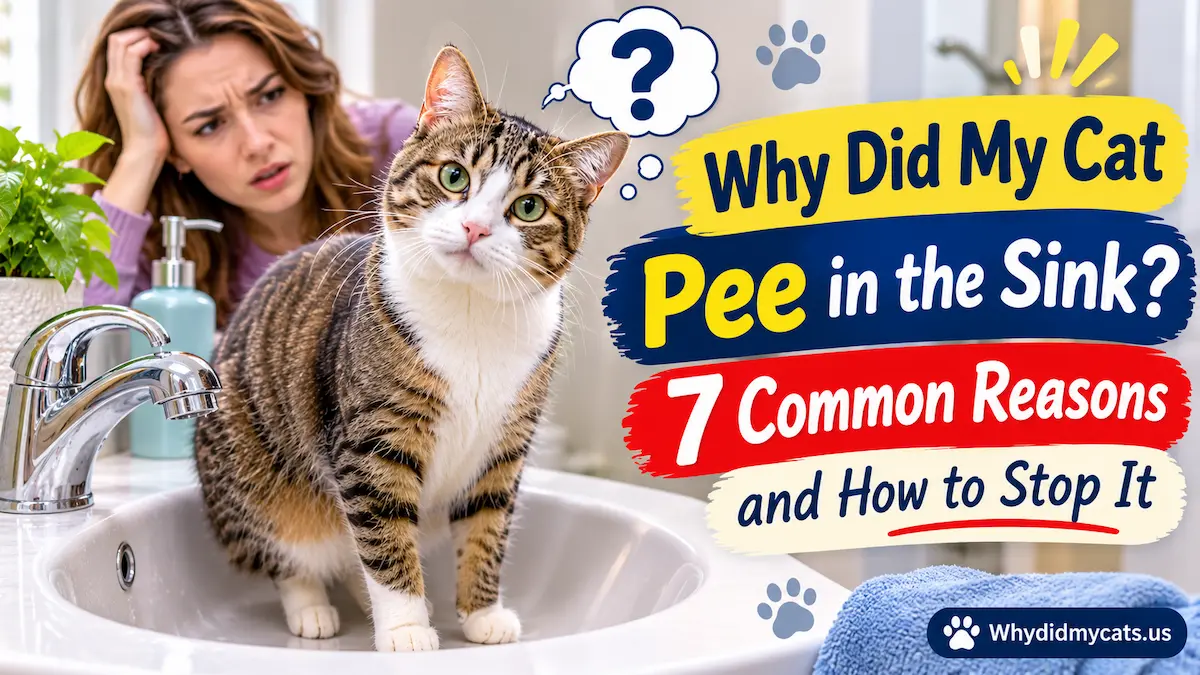
Why did my cat pee in the sink when there is a perfectly good litter box nearby? Cats sometimes choose sinks because they are cool, smooth, easy to access, or more appealing than their litter box. However, a sudden change in urination habits can also point to stress or a urinary health problem. The reason matters: improving the litter-box setup may solve a preference issue, but urinary symptoms need veterinary attention.
Why Did My Cat Pee in the Sink?
A bathroom sink offers a very different surface from a litter box. Its smooth basin is easy to step into, stays relatively cool, and has a drain that carries liquid away. A cat that dislikes its litter, box location, or cleanliness may begin choosing the sink instead.
That preference does not rule out a medical problem. Cats with bladder discomfort sometimes urinate in unusual places because they feel an urgent need to go or associate their litter box with pain. A new sink accident deserves attention, especially when it happens more than once.
7 Reasons Your Cat Is Peeing in the Sink
1. Your Cat Doesn’t Like the Litter Box
A litter box that smells strongly, feels uncomfortable, or sits in a noisy area may discourage your cat from using it. Some cats dislike scented litter, covered boxes, liners, or boxes that are too small.
In a busy home, a box beside a washing machine or in a hallway may also feel unsafe. Try a quiet location with easy access and keep the litter clean.
2. Your Cat Has a Urinary or Bladder Problem
Bladder inflammation, urinary stones, crystals, and other lower urinary tract conditions can cause painful or frequent urination. Your cat may start using the sink because the urge to urinate becomes difficult to control.
Watch for repeated trips to the litter box, small amounts of urine, straining, crying, blood in the urine, or excessive licking around the genital area. These signs call for veterinary advice rather than a litter change alone. A veterinarian may recommend a physical examination and urinalysis to identify the cause.
3. Stress or Changes at Home Are Affecting Your Cat
Cats notice changes that people may barely think about. Moving to a new apartment, bringing home a baby, adding another pet, hosting visitors, or changing your work schedule can unsettle a cat.
Stress is also associated with feline idiopathic cystitis, a painful bladder condition. A predictable routine, safe resting places, playtime, and separate food, water, and litter resources can help reduce household tension.
4. Your Cat Is Marking Its Territory
Urine marking is different from emptying the bladder. A cat usually sprays a small amount onto a vertical surface while standing, often with its tail raised. A normal urination accident is more likely to leave a puddle on a horizontal surface, such as the bottom of a sink.
Other cats outside a window or conflict between pets may contribute to marking. Still, do not assume that an unusual urine spot is behavioral until a medical cause has been considered.
5. Your Cat Prefers the Sink’s Cool, Smooth Surface
Some cats show a preference for smooth, cool surfaces such as sinks, bathtubs, and tile floors. The basin may feel comfortable under their paws, and its drain makes the area easy to investigate.
This preference alone does not explain every accident. A cat that consistently chooses the sink over a clean litter box still needs a review of its litter setup and health.
6. Your Cat Has Developed a Repeated Habit
After urinating in the sink once, a cat may return to the same spot. Residual urine odor, even when people cannot smell it, can encourage repeat visits. The bathroom may also become a familiar, convenient place to go.
Clean the basin and drain area thoroughly, and prevent access temporarily while you improve the litter-box setup. Avoid scolding; punishment does not teach a cat where to urinate.
7. Your Kitten Is Still Learning Litter-Box Habits
Kittens need a litter box they can reach easily. A high-sided box, a distant location, or a box that is difficult to find can lead to accidents around the home.
Choose a low-sided, easy-to-enter box and place it somewhere your kitten can reach without navigating stairs or busy areas. Gently guide your kitten toward the box after meals and naps, without forcing or frightening it.
Why Is My Cat Peeing in the Sink All of a Sudden?
A sudden change deserves more attention than a long-standing preference. Think about what changed recently: a new litter brand, a moved box, a noisy appliance, a new pet, or a different household routine. These changes can affect how comfortable your cat feels using its usual bathroom.
Medical problems also cause sudden house-soiling. A cat that previously used the litter box reliably but now urinates in the sink should have a veterinary check, particularly when the behavior repeats.
For other locations around the home, see here
Why Does My Cat Pee in the Sink and Tub?
Sinks and bathtubs share several features: both have smooth, cool surfaces, are usually located in the bathroom, and are easy for many cats to enter. A cat that avoids its litter box may choose either one.
Check whether the litter box is clean, easy to reach, and away from loud appliances or busy foot traffic. If your cat urinates in several unusual places, arrange a veterinary examination instead of treating each location as a separate behavior problem.
Why Does My Cat Pee in the Sink Sometimes?
An occasional accident can follow a change in routine, a dirty litter box, or a temporary period of stress. It can also be an early sign of urinary discomfort, especially when your cat makes frequent attempts to urinate.
Keep a simple record of when it happens, how much urine you find, and whether your cat uses the litter box normally at other times. That information can help your veterinarian spot a pattern.
Why Did My Cat Pee in the Sink in Front of Me?
Your cat is not necessarily trying to get your attention or punish you. Cats do not use urination as revenge. The behavior may reflect urgency, discomfort, a litter-box preference, or a learned habit.
Stay calm and avoid shouting, pushing your cat into the litter box, or using punishment. Watch how your cat urinates and arrange a veterinary check if the behavior is new or recurring.
How to Stop Your Cat From Peeing in the Sink
Start by making the litter box more appealing and removing the reasons your cat keeps returning to the sink.
- Scoop the litter box daily. Remove waste regularly and wash the box as needed with mild, unscented soap.
- Review the litter. Many cats prefer unscented, fine-textured litter. Avoid making several changes at once.
- Choose a quiet location. Keep the box away from loud appliances, food bowls, and busy walkways.
- Provide enough boxes. A common guideline is one litter box per cat, plus one extra, placed in separate accessible locations.
- Clean the sink thoroughly. Remove urine residue from the basin, drain, and nearby surfaces.
- Manage bathroom access temporarily. Keep the bathroom door closed or cover the sink when it is not in use, while ensuring your cat always has access to a suitable litter box.
- Never punish your cat. Punishment can increase stress without addressing the reason for the behavior.
If your cat has stopped using its usual box, read why cats stop using the litter box. Repeated accidents deserve a veterinary check, even when these home changes seem to help.
How to Clean Cat Pee From a Sink
Remove any visible urine and wash the basin with a cleaner suitable for its material. Clean around the drain and faucet base too, since urine residue can remain in small spaces. Follow the product label and rinse as directed.
Do not mix cleaning products, especially bleach with ammonia-based products. Keep your cat away from the sink until the area is clean and dry. If urine has reached nearby grout, cabinets, or other porous surfaces, those areas need attention as well.
When Should You Take Your Cat to the Vet?
Book a veterinary appointment when your cat repeatedly urinates in the sink, starts having accidents around the house, or shows signs of discomfort. Blood in the urine, frequent small urinations, crying while urinating, and excessive genital licking all need prompt assessment.
Your veterinarian may ask about your cat’s water intake, appetite, litter habits, and recent household changes. Testing may include a urinalysis, urine culture, bloodwork, X-rays, or ultrasound, depending on the symptoms.
Seek emergency veterinary care immediately if your cat repeatedly strains to urinate but produces little or no urine. A urinary blockage is life-threatening and occurs more often in male cats. Do not wait to see whether it improves on its own.
If you notice blood, read our related guide: Why Did My Cat Pee Blood?.
FAQs
How do I stop my cat from peeing in the sink?
Clean the sink thoroughly, keep it dry, and temporarily limit access while making the litter box more appealing. Scoop daily, try unscented litter, and place the box somewhere quiet and easy to reach. If the behavior is new or repeats, arrange a veterinary examination to rule out urinary problems.
What is revenge peeing in cats?
“Revenge peeing” is a common misconception. Cats do not urinate outside the litter box to get even with their owners. Accidents are more likely related to medical discomfort, stress, urine marking, or dissatisfaction with the litter-box setup. Punishing a cat can increase stress and make the problem harder to resolve.
Where do cats usually pee in the house?
Most house-trained cats use their litter boxes. When they urinate elsewhere, common spots include floors, rugs, beds, clothing, furniture, bathtubs, and sinks. The location alone does not identify the cause. Medical issues, stress, marking, and litter-box problems all need consideration.
Is it okay to dump urine down the kitchen sink?
A small amount of ordinary cat urine can generally be rinsed down a household drain with plenty of water, but clean and disinfect the sink afterward using a product suitable for the surface. Never mix cleaning chemicals. If the urine contains medication, chemicals, or another hazardous substance, follow appropriate disposal guidance instead.
What is the 21 second pee rule?
The “21-second pee rule” is an informal observation, not a reliable veterinary test for cats. Normal urination time varies with urine volume and individual behavior. Do not use a stopwatch to decide whether your cat is healthy. Straining, repeated attempts, or producing little or no urine requires veterinary attention.
Can peeing in the sink cause problems?
The act of urinating in a sink does not usually harm a cat by itself. The bigger concern is the reason behind the behavior. Repeated accidents can signal urinary disease or litter-box trouble, while urine left in the basin creates a hygiene issue. Clean the sink and investigate recurring behavior.
Conclusion
A cat that pees in the sink may dislike its litter box, prefer the cool basin, feel stressed, or have a urinary problem. Improve the litter-box setup, clean the sink, and avoid punishment. Most importantly, do not dismiss repeated accidents or signs of painful urination. Straining with little or no urine is an emergency.