
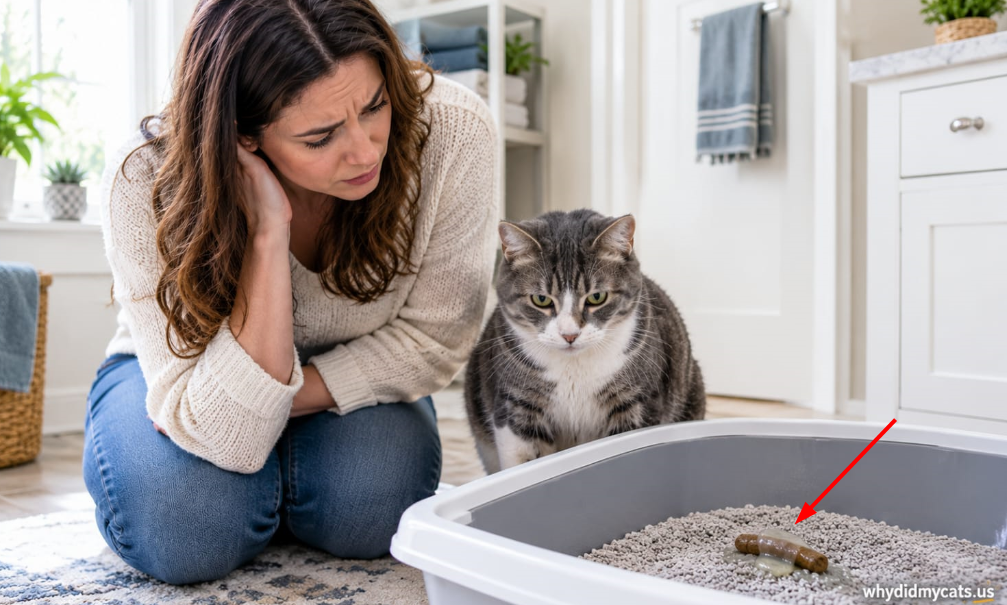
Finding a slimy, jelly-like substance on your cat’s poop can be concerning. A small amount of clear mucus may appear on an otherwise normal stool, but repeated mucus, diarrhea, or blood deserves closer attention.
The answer to why did my cat poop mucus often involves irritation in the digestive tract. Food changes, intestinal parasites, constipation, and inflammation are among the possible causes. Your cat’s stool consistency, appetite, energy level, and other symptoms help determine how quickly veterinary care is needed.
What Does Mucus in Cat Poop Look Like?
Mucus usually looks like a slippery coating, clear jelly, or a stringy substance attached to the stool. It may also appear as a puddle of mucus when your cat passes very little feces.
A small amount of clear or slightly yellow mucus on otherwise normal poop is not always a reason to panic. However, large amounts, repeated episodes, watery diarrhea, or mucus mixed with blood warrant veterinary advice.
Why Did My Cat Poop Mucus? 7 Common Causes
1. Intestinal Inflammation
Inflammation of the colon, known as colitis, is a common explanation for mucus-covered stool. Your cat might pass small amounts of poop more frequently, strain in the litter box, or have loose stools with fresh red blood.
Colitis describes inflammation rather than one specific disease. A veterinarian can investigate what is causing it.
2. Intestinal Parasites
Parasites such as Giardia, worms, and coccidia can irritate a cat’s digestive tract. Affected cats may develop mucus-filled diarrhea, poor appetite, or weight loss.
Parasites deserve particular attention in kittens, cats adopted from shelters, and cats living in multi-cat households. A stool test helps identify many intestinal parasites.
3. Sudden Food Changes
Switching cat food abruptly, introducing new treats, or allowing your cat to eat unfamiliar food can upset digestion. Mucus may appear alongside soft stools or diarrhea.
When changing food, transition gradually unless your veterinarian recommends a different approach. Avoid introducing several new foods at once, because that makes it harder to identify a possible trigger.
4. Food Sensitivity
Some cats develop digestive symptoms after eating an ingredient that does not agree with them. Along with mucus or loose stools, you might notice vomiting, skin irritation, or changes in appetite.
Food sensitivity cannot be confirmed from stool appearance alone. Your veterinarian may recommend a carefully controlled diet trial.
5. Diarrhea and Digestive Upset
When stool moves through the intestines too quickly, the digestive tract may become irritated and produce more visible mucus. The underlying trigger could be a dietary change, infection, parasites, or another digestive problem.
For more information about related symptoms, read our guide to why cats develop diarrhea.
6. Constipation
Hard, dry stool can irritate the lower digestive tract. Your cat may strain, pass small amounts of feces, or leave mucus with little stool.
Repeated straining should not automatically be blamed on constipation. Cats that repeatedly visit the litter box without producing urine may have a urinary blockage, which requires emergency veterinary care.
7. Chronic Digestive Conditions
Recurring mucus can accompany conditions such as inflammatory bowel disease (IBD) and other intestinal disorders. Symptoms may come and go, with changes in stool consistency, appetite, or body weight.
When the problem keeps returning, a veterinarian may recommend stool testing, blood work, imaging, or other tests to identify the underlying cause.
What Does the Color of Mucus in Cat Poop Mean?
Mucus color offers clues, but it cannot confirm a diagnosis.
- Clear or white mucus: May be intestinal mucus associated with irritation, especially when the amount is noticeably increased.
- Yellowish mucus: Can occur with digestive upset, but color alone does not identify the cause.
- Red or bloody mucus: May indicate bleeding or inflammation in the lower digestive tract. Contact your veterinarian promptly.
- Black, tarry stool: May indicate digested blood and requires urgent veterinary assessment.
Look at the entire stool rather than color alone. Consistency, frequency, straining, and your cat’s general condition also matter.
Why Is My Cat Pooping Mucus and Blood?
Mucus mixed with fresh red blood can occur with colitis, intestinal parasites, constipation, infections, or other digestive problems. The stool may look like red jelly, contain bloody streaks, or appear slimy with loose feces.
Contact your veterinarian promptly when you notice blood. Seek urgent care if there is substantial bleeding, repeated vomiting, severe diarrhea, weakness, significant pain, or unusual lethargy.
Do not assume that a small amount of blood is harmless simply because your cat is still acting normally.
Why Is My Kitten Pooping Mucus?
Kittens can develop mucus in their stool from parasites, infections, dietary changes, and intestinal irritation. Coccidia is one possible cause and can produce mucousy diarrhea, particularly in young kittens.
Kittens can become dehydrated quickly, so contact a veterinarian promptly if your kitten has diarrhea or repeated mucus-filled stools. Blood, vomiting, poor appetite, or low energy make veterinary assessment especially important.
What Should You Do If Your Cat Poops Mucus?
Start by checking whether your cat is passing formed stool or diarrhea and whether the mucus contains blood. Note how often the problem occurs and whether your cat is eating, drinking, and behaving normally.
Here are practical steps to take:
- Take a clear photo of the stool to show your veterinarian.
- Note any recent food changes, new treats, medications, or changes in routine.
- Ask your veterinarian whether to bring a fresh stool sample for testing.
- Keep fresh water available and maintain a clean litter box.
- Avoid human anti-diarrhea medicines, leftover prescriptions, and home enemas unless your veterinarian specifically directs their use.
If your cat is also avoiding the litter box, our guide to why cats poop outside the litter box explains other possible litter box problems.
When Should You Contact a Veterinarian?
A single small amount of clear mucus on otherwise normal stool in a cat that feels well may be monitored briefly. Contact your veterinarian if the mucus returns, the stool becomes abnormal, or your cat develops other symptoms.
Seek prompt veterinary care for:
- Blood mixed with mucus or repeated bloody stools.
- Persistent or severe diarrhea.
- Vomiting, poor appetite, or unusual tiredness.
- Painful or repeated straining to pass stool.
Heavy bleeding, severe weakness, or repeated straining without producing urine requires emergency care. Kittens and cats with existing health problems also need a lower threshold for veterinary attention.
How Do Vets Find the Cause of Mucus in Cat Poop?
Your veterinarian will ask about your cat’s diet, symptoms, medications, and recent environment before performing an examination. A fecal test can help detect parasites, including organisms that are not visible to the naked eye.
Depending on the findings, the veterinarian may recommend blood work, imaging, or additional digestive testing. Treatment depends on the cause, so avoid giving dewormers or other medication without appropriate veterinary guidance.
For another litter box concern, see our article on why your cat stopped pooping in the litter box.
FAQs
What does slimy mucus poop mean?
Slimy mucus on cat poop usually means intestinal mucus is visible on the stool. A small amount can occur without a serious problem, but repeated mucus may accompany intestinal irritation, colitis, parasites, constipation, or diarrhea. Blood, vomiting, poor appetite, or persistent changes in stool warrant veterinary advice.
What does coccidia poop look like in cats?
Coccidia does not produce one distinctive stool appearance. Infected cats, especially kittens, may have soft or watery diarrhea containing mucus; some also develop blood, vomiting, or reduced appetite. Stool appearance alone cannot confirm coccidia. A veterinarian can diagnose the infection through appropriate fecal testing.
How can I help my cat expel mucus?
You do not need to make your cat expel mucus. The goal is to identify and treat the reason it is appearing. Keep fresh water available, avoid sudden food changes, and contact your veterinarian if mucus continues or other symptoms develop. Never give laxatives, enemas, or human medicines without veterinary direction.
My cat is pooping jelly-like substance with blood. What should I do?
Contact your veterinarian promptly for guidance, even if your cat seems comfortable. Jelly-like mucus mixed with blood can occur with inflammation or other intestinal problems. Seek emergency care if there is heavy bleeding, repeated vomiting, severe weakness, significant pain, or repeated straining without producing urine.
Why is my cat pooping mucus only?
Passing mucus with little or no visible stool can happen when the lower intestine is irritated and your cat repeatedly strains to defecate. Constipation, colitis, and other digestive problems are possible explanations. If this continues, or your cat appears uncomfortable, contact your veterinarian rather than assuming the problem will resolve on its own.
What causes bloody jelly like stool?
Bloody, jelly-like stool can result from inflammation of the colon, intestinal parasites, constipation, infections, or other gastrointestinal conditions. The appearance does not identify the cause on its own. Contact a veterinarian promptly, particularly when blood keeps appearing or your cat also has diarrhea, vomiting, pain, or reduced energy.
Conclusion
Mucus in cat poop can result from mild digestive irritation, but recurring mucus, diarrhea, or blood deserves veterinary attention. Monitor your cat’s stool and overall behavior, record any recent changes, and seek professional advice when symptoms persist or worsen. Bloody mucus, severe symptoms, or difficulty passing urine should never be ignored.