
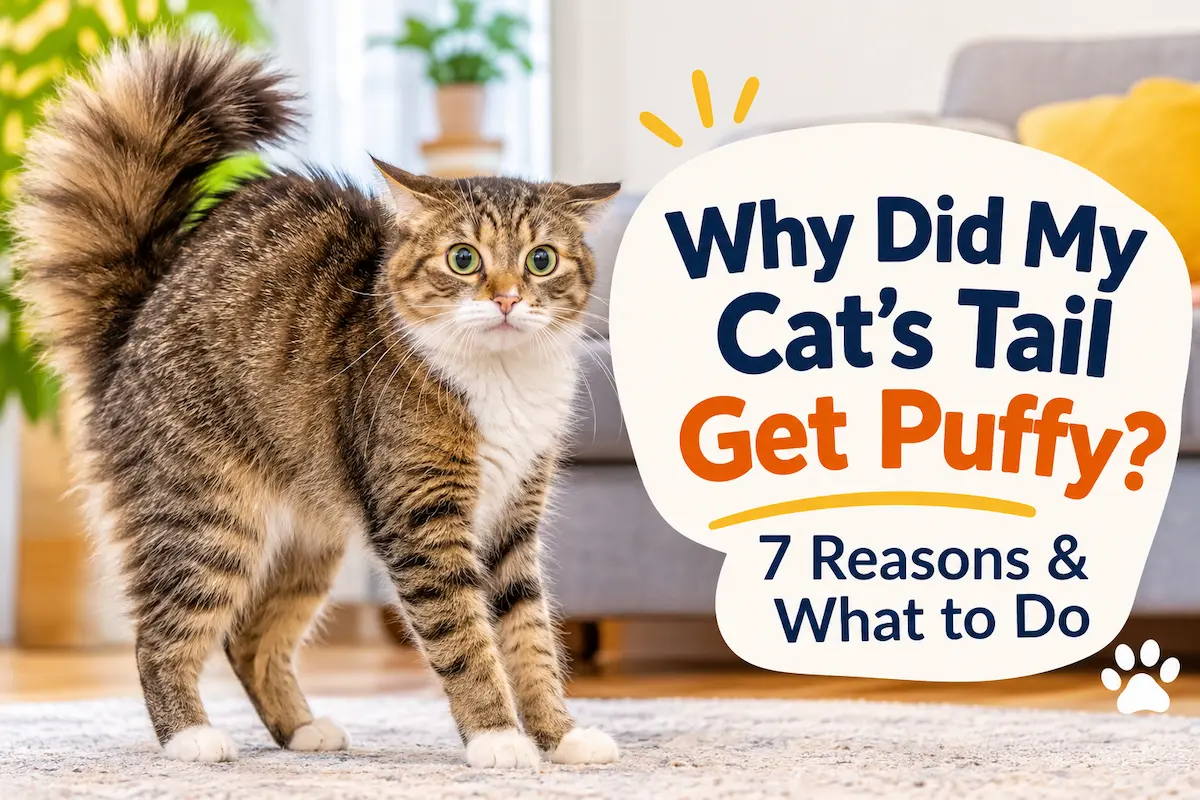
Why did my cat’s tail get puffy? A cat’s tail usually puffs up when fear, surprise, excitement, or stress triggers an automatic response that makes the fur stand on end. This reaction is called piloerection, and it can happen during play, when your cat feels threatened, or even when petting becomes overwhelming. Understanding your cat’s body language can help you identify the cause and know when to be concerned.
What Does a Puffy Cat Tail Mean?
A puffed-up tail is known as piloerection. Tiny muscles attached to the hair follicles contract, making the fur stand on end. The same reaction can make the hair along your cat’s back rise.
This happens when the sympathetic nervous system becomes activated during a strong emotional response. Fear is a common trigger, but excitement and other forms of heightened arousal can also cause it.
A cat with a puffed tail may look like a Halloween cat, especially when she arches her back. The tail alone does not tell you whether she is frightened, playful, or defensive.
Read Your Cat’s Body Language Along With Her Tail
Your cat’s ears, eyes, posture, and sounds help explain what the puffed-up tail means.
| What you notice | What it may mean |
| Puffy tail, arched back, flattened ears | Fear or feeling threatened |
| Puffy tail, wide eyes, crouching or hiding | Startled or frightened |
| Puffy tail, forward ears, playful jumping | Excitement during play |
| Puffy tail, stiff posture, hissing or growling | Defensive behavior |
| Puffy tail while being petted, twitching skin or tail | Possible overstimulation |
For example, a cat that puffs her tail after seeing an unfamiliar cat outside may be frightened or defensive. A kitten that puffs up while chasing a toy may simply be highly excited.
7 Reasons Your Cat’s Tail Got Puffy
1. Something Suddenly Scared Your Cat
A sudden noise or unexpected movement is a common reason a cat’s tail gets puffy. A dropped pan in the kitchen, a door slamming, or a visitor entering the room can trigger a startle response.
Your cat may raise her fur, arch her back, widen her eyes, or run for cover. Once she feels safe again, her body usually relaxes and the tail returns to its normal appearance.
2. Your Cat Feels Threatened by Another Animal
An unfamiliar cat outside the window, a visiting dog, or a new pet in the home can make your cat feel threatened.
She may puff up her tail, stare at the other animal, flatten her ears, or hiss. Give her a clear escape route instead of forcing an introduction. If she begins hissing, avoid approaching or picking her up.
3. Your Cat Is Excited During Play
Cats sometimes puff up their tails while chasing toys, jumping sideways, or racing around the house. Kittens may show this behavior during energetic play as they practice stalking and pouncing.
Look at the rest of the interaction. A cat that keeps chasing a toy and moves freely is showing a different pattern from one that freezes, hides, or hisses.
4. Your Cat Is Overstimulated While Being Petted
Why does your cat’s tail get puffy when you pet her? She may have reached her limit for physical contact.
Some cats enjoy a few strokes but become uncomfortable when petting continues, especially near the lower back or tail. You might notice a twitching tail, rippling skin, ears turning backward, or your cat suddenly looking toward your hand.
Stop petting and let her move away. Continuing to touch an irritated cat can lead to a nip or bite. Our guide on why cats bite their owners explains other reasons cats use their teeth during interactions.
5. Stress or Changes at Home Are Affecting Your Cat
Moving to a new home, bringing home another pet, having frequent visitors, or changing your cat’s routine can create stress.
A cat that feels unsettled may react strongly to ordinary household sounds or unfamiliar situations. Give her a quiet resting place, familiar bedding, and somewhere she can retreat without being disturbed.
Repeated sudden aggression or defensive reactions deserve attention, especially when they represent a clear change from her usual behavior. Read more about why a cat becomes aggressive all of a sudden.
6. Your Cat Has Pain or a Tail Injury
A painful tail is not the same as a puffed-up tail. An injury, bite wound, or infection can cause actual swelling, tenderness, or changes in how your cat holds her tail.
Watch for a visible wound, redness, bleeding, unusual bending, or sensitivity around the tail. Do not squeeze or repeatedly handle the area. Arrange a veterinary examination if you notice these signs.
7. Your Cat’s Behavior Is Changing Along With Other Symptoms
A puffed-up tail by itself does not mean your cat has been poisoned or developed a serious illness. However, sudden behavior changes accompanied by physical symptoms should not be ignored.
Tremors, excessive drooling, weakness, poor coordination, or seizures can signal a serious problem. One particular danger is permethrin, an insecticide found in some dog flea and tick products. It is highly toxic to cats.
Never apply a dog flea treatment to your cat. If she has been exposed to a permethrin-containing product, contact a veterinarian or emergency clinic immediately, even before symptoms develop. If she is already trembling or having seizures, seek emergency care.
Why Did My Cat’s Tail Get Puffy All of a Sudden?
When your cat’s tail suddenly becomes puffy, think about what happened immediately beforehand.
Common triggers include:
- A loud noise from another room or outside.
- An unfamiliar cat appearing near a window.
- A visitor or new pet entering the home.
- An unexpected touch while your cat was resting.
- A sudden movement or unfamiliar smell.
Cats hear and notice things that people easily miss. A reaction that seems to have no reason may have started with something you did not notice.
If your cat also begins hissing, growling, or acting defensively, give her space rather than trying to calm her with physical contact.
Why Does My Cat’s Tail Get Puffy When Playing?
A cat’s tail can puff up during energetic play because her excitement level rises. You may see it when she chases a feather wand, jumps sideways, or races from one room to another.
Kittens are especially entertaining when they combine a puffed tail with sideways hops and playful pounces. Let them play with suitable toys, but avoid encouraging them to attack your hands or feet.
If play turns into hissing, hiding, or defensive behavior, pause the activity and allow your cat to settle.
Why Does My Cat’s Tail Get Puffy When I Pet Her?
A puffy tail during petting can be a sign that your cat feels overstimulated or uncomfortable. Some cats tolerate only brief contact, while others dislike being touched near the base of the tail.
Stop petting when your cat stiffens, flicks her tail, turns her ears backward, or moves away. Never hold her in place to continue the interaction.
If this reaction is new or your cat reacts painfully whenever you touch her back or tail, ask your veterinarian to check for discomfort.
Why Does My Cat’s Tail Look Fluffier, Bigger, or Less Fluffy?
A naturally fluffy tail is different from one that suddenly puffs up. Long-haired breeds have fuller coats, and seasonal shedding can change how thick the tail looks.
If your cat’s tail has become less fluffy, check for hair loss, bald patches, broken fur, redness, or excessive licking. Fleas, skin irritation, overgrooming, and other coat problems can affect the fur. Read our article about why cats suddenly start shedding.
Also distinguish fluffy fur from actual swelling. A tail that looks enlarged because of a lump, wound, or painful area needs veterinary attention rather than a behavioral explanation.
What Should I Do When My Cat’s Tail Puffs Up?
Give your cat a little space and let her decide when she feels comfortable again.
- Find the trigger: Check for loud noises, unfamiliar animals, visitors, or sudden changes.
- Stop handling her: Do not pick her up or keep petting her while she is tense.
- Provide a quiet place: Let her retreat to a familiar room, hiding spot, or resting area.
- Keep other pets away: Avoid forcing an interaction while either animal is unsettled.
- Watch for other symptoms: Notice whether she returns to normal or continues showing unusual behavior.
Never punish a cat for puffing up her tail. It is an automatic physical response, not deliberate misbehavior.
When Should I Call the Vet?
A brief puffed-up tail after a startling noise or during play usually does not require veterinary treatment. The situation changes when you notice pain, injury, or other symptoms.
Arrange a regular veterinary appointment if your cat repeatedly reacts this way without an obvious trigger, develops a swollen tail, has hair loss or skin changes, or seems uncomfortable when moving or being touched.
Seek urgent veterinary care for collapse, seizures, severe tremors, breathing difficulty, or sudden weakness. Suspected exposure to dog flea medication containing permethrin also requires immediate veterinary advice.
A veterinarian may examine the tail and skin, check for wounds or pain, review recent behavior changes, and recommend further testing when the symptoms suggest an underlying problem.
FAQs
Why is my cat’s tail puffed up but still purring?
Purring does not always mean a cat is happy. Cats also purr when stressed, uncomfortable, or seeking reassurance. A puffed tail alongside purring can mean your cat is emotionally aroused or unsettled. Give her space and look at her posture, ears, and surroundings before deciding whether she wants attention.
Do cat tails puff up when they are excited?
Yes. Cats can puff up their tails during energetic play or intense excitement. Kittens may do this while chasing toys, jumping sideways, or pouncing. A playful cat usually continues moving and engaging with the toy, while a frightened cat may freeze, hide, hiss, or try to escape.
Why does my cat get a fat tail?
A tail that suddenly looks fat or fluffy may have raised fur caused by fear, surprise, or excitement. However, a tail that stays enlarged, develops a lump, or feels painful may be swollen rather than simply puffed up. A veterinarian should examine persistent swelling or discomfort.
Why is my cat’s tail swollen?
Actual tail swelling can result from an injury, bite wound, infection, or another medical problem. It is different from the temporary bottlebrush appearance caused by raised fur. Avoid squeezing the area or trying to treat it yourself. Have your veterinarian examine a swollen or painful tail.
Why is my cat’s tail puffy all of a sudden?
A sudden puffed-up tail usually follows a trigger such as a loud noise, unfamiliar animal, unexpected touch, or startling movement. Your cat may also arch her back, widen her eyes, or flatten her ears. Give her room to settle and check whether the behavior returns to normal.
What is the silent killer of cats?
Hypertrophic cardiomyopathy (HCM), a disease that thickens the heart muscle, is sometimes called a silent killer because affected cats may show few obvious signs before serious complications develop. A puffy tail is not a typical sign of HCM. Ask your veterinarian about heart screening when appropriate.
Conclusion
A cat’s tail usually gets puffy because of fear, surprise, excitement, or overstimulation. The surrounding situation and your cat’s body language help explain the reaction.
Give her space when she feels threatened, stop petting when she shows discomfort, and do not mistake actual swelling for raised fur. Contact your veterinarian when the change comes with pain, injury, or other concerning symptoms.
[…] Why Did My Cat’s Tail Get Puffy? What It Means and When to Worry […]
[…] Why Did My Cat’s Tail Get Puffy? What It Means and When to Worry […]