
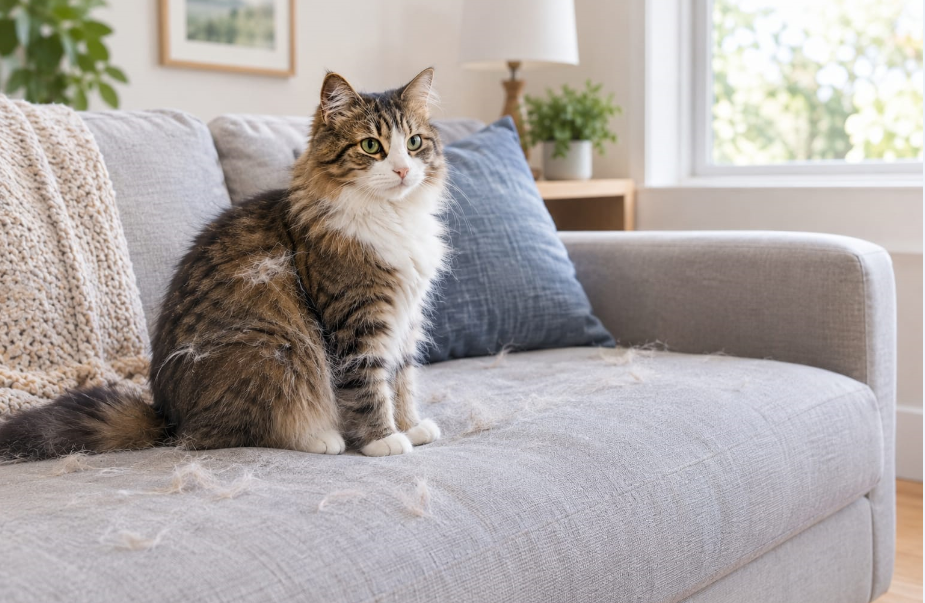
Finding cat hair on the couch is nothing unusual. Finding much more of it than you normally do, though, can make you stop and take a closer look.
Cats shed old hair as part of their normal coat cycle, and some periods are much hairier than others. The change can be especially noticeable during seasonal shedding or in a home with a long-haired cat. Indoor cats can also shed throughout the year because they live with fairly consistent temperatures and artificial light.
But a sudden increase in loose fur deserves a little attention. Sometimes the explanation is simple. Other times, the extra hair is happening alongside itching, stress, skin problems, or another health issue.
The good news is that you can learn quite a bit by looking at how your cat is shedding and what else has changed.
Is It Normal for a Cat to Suddenly Shed More?
Yes, it can be.
A cat’s coat is constantly replacing older hairs with new ones. During heavier shedding periods, you might suddenly notice fur collecting on furniture, clothing, bedding, or the floor. Outdoor cats often have more noticeable seasonal shedding, while indoor cats can shed smaller amounts throughout the year.
The amount also varies from one cat to another. A fluffy Maine Coon and a short-haired domestic cat are not going to leave the same amount of fur around the house.
Normal Shedding vs. Excessive Hair Loss
Normal shedding usually looks like more loose hair without obvious damage to the coat. Your cat’s fur should still look reasonably full, and you shouldn’t see clear bald areas.
Actual hair loss is different. You may notice thinning spots, patches where the skin is easier to see, broken hairs, or areas your cat keeps licking and scratching. Merck Veterinary Manual notes that shedding without bald patches or obvious symmetrical hair loss is more likely to be part of normal coat replacement.
So instead of counting every strand of fur, look at the coat itself. Does it still look healthy and even? Is the skin underneath calm and clear? Those details tell you much more.
Why Did My Cat Randomly Start Shedding?
A sudden change can have a very ordinary explanation, but it can also be connected to something happening with your cat’s skin, routine, diet, or general health.
Here are some of the more common possibilities.
1. Seasonal Changes
This is one of the first things to consider.
Cats commonly have heavier shedding periods as seasons change. Cats that spend time outdoors are particularly affected by changes in temperature and daylight. Indoor cats don’t always follow such a neat seasonal pattern, but they can still have periods when more fur comes loose.
You may notice this most when winter coats start thinning as warmer weather arrives. A similar change can happen as fall approaches.
If your cat otherwise seems comfortable and the coat remains full, seasonal shedding may be all that’s going on.
2. Stress or Anxiety
Cats are creatures of habit, so even a change that seems small to you can affect them.
Moving to a new home, bringing another pet into the house, having visitors, changing the furniture, traveling, or dealing with a noisy environment can all disrupt a cat’s routine. Stress can also affect grooming behavior and the condition of the coat.
Think about what happened shortly before you noticed the extra fur.
If your cat has also started hiding, acting unusually restless, grooming more than usual, or behaving differently around people or other pets, stress deserves consideration.
3. Fleas and Other Parasites
You don’t always see fleas running through a cat’s fur.
Some cats react strongly to flea bites, and even a small number of bites can trigger itching and skin irritation. Other external parasites can cause similar problems. Merck lists parasites among the causes of inflammatory skin disease and hair loss in cats.
Check around areas such as the neck, back, belly, and base of the tail. Look for scratching, irritated skin, tiny dark specks, scabs, or areas where the coat looks thinner.
If you suspect fleas or another parasite, use a cat-safe treatment recommended by your veterinarian rather than reaching for a random product.
4. Allergies
Allergies can affect a cat’s skin and coat too.
A cat may react to something in its environment or, in some cases, something associated with its diet. The resulting irritation can lead to scratching, licking, chewing at the fur, and eventually noticeable thinning.
Sometimes the extra shedding gets attention before the owner realizes that the cat has been uncomfortable.
Watch your cat for repeated scratching, excessive licking, skin redness, or changes in the coat. Allergic skin disease is one of the conditions veterinarians consider when a cat develops itching and abnormal hair loss.
5. Skin Infections
A skin infection can change the way your cat’s coat looks and feels.
Bacterial and fungal infections can cause inflammation and hair loss. Ringworm, for example, is a fungal infection that can produce areas of hair loss and skin changes.
Don’t assume that every patch of missing fur is ringworm, though. Several different conditions can look similar from the outside.
If you see bald areas, scaling, crusts, sores, redness, or persistent irritation, your veterinarian can examine the skin and determine what is actually happening.
6. Diet or Nutritional Problems
A cat’s coat reflects what is happening inside the body.
Cats need a properly balanced diet with appropriate nutrients to maintain healthy skin and hair. An inadequate diet can contribute to a dull or dry coat and excessive shedding.
This doesn’t mean that every shedding problem is caused by food. If your cat has been eating the same complete and balanced food for a long time and suddenly starts shedding more, there may be another explanation.
A recent diet change, poor appetite, weight change, or ongoing digestive problem is more useful information to note.
Don’t start supplements just because the coat looks different. Some cats need dietary changes, but that decision is better made with veterinary guidance.
7. Overgrooming
Cats spend a lot of time grooming themselves. That’s normal.
The problem starts when grooming becomes excessive.
A stressed or uncomfortable cat may repeatedly lick, chew, or pull at certain areas. Skin disease, parasites, allergies, pain, and stress can all be associated with excessive grooming and resulting hair loss.
Look at where the hair is disappearing. A cat that is repeatedly working on one particular area may leave a different pattern than a cat that is simply going through a normal shedding cycle.
You may not catch your cat doing it every time. Cats are experts at finding quiet moments for grooming.
8. Hormonal or Other Health Problems
Sometimes changes in the coat are part of a bigger health issue.
Hormonal disorders, metabolic problems, chronic illness, infections, and other conditions can affect the skin and hair. Hyperthyroidism is one example of a health problem that can affect a cat’s coat and overall condition.
This is where the rest of your cat’s behavior becomes important.
Is your cat eating normally? Has its weight changed? Is it drinking more? Is it less active than usual? Does the coat look greasy, dry, dull, or poorly groomed?
A change in shedding by itself doesn’t tell you which disease, if any, is involved. Those additional clues help your veterinarian decide what needs to be investigated.
9. Age and Grooming Changes
Your cat’s grooming habits can change as it gets older.
Older cats may not groom themselves as effectively as they once did. Arthritis, reduced mobility, obesity, or other health problems can make certain areas difficult to reach. VCA notes that health problems affecting mobility can contribute to changes in coat condition and grooming.
Instead of seeing only loose fur, you might notice mats, dandruff, a greasy coat, or areas that look untidy.
If an older cat suddenly looks less well-groomed, don’t assume it’s simply an age-related change. A veterinary check can help find out whether pain or another health issue is getting in the way.
10. Pregnancy or Other Life Changes
Pregnancy and other major life changes can affect a cat’s body, including its coat and grooming patterns.
Hormonal changes can alter hair growth and shedding, although not every pregnant cat will suddenly shed a noticeable amount.
If your female cat is unspayed and has recently been around a male cat, pregnancy is one possibility to keep in mind. Other major changes in routine or health can also affect the coat.
When the shedding is unusual for your cat, pay attention to the timing. Knowing what was happening in the weeks before the change can give your veterinarian useful information.
Sudden Shedding vs. Actual Hair Loss — What’s the Difference?
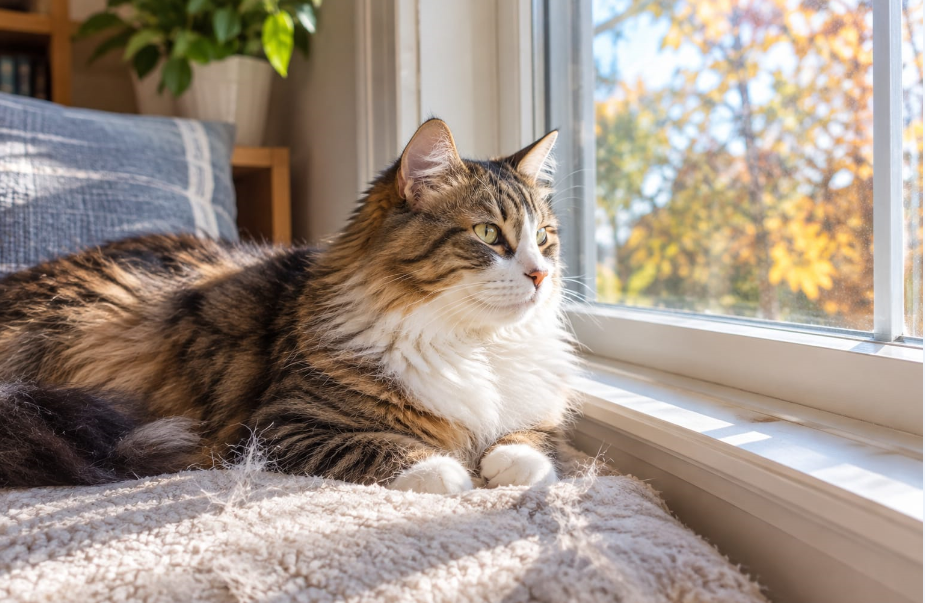
This distinction is easy to miss.
With ordinary shedding, you’re mostly seeing hair that has already reached the end of its growth cycle. Your cat may leave more fur around the house, but the coat itself remains fairly even.
Hair loss, or alopecia, means the coat is actually becoming thinner or missing in certain areas. Merck Veterinary Manual describes bald spots and obvious loss of the hair coat as signs that shedding may be abnormal.
Signs of Normal Shedding
You may notice:
- Loose fur on furniture, clothing, or bedding
- More hair coming out during brushing
- A heavier shedding period during seasonal changes
- A coat that still looks full and even
- Normal skin without obvious irritation
Signs of Actual Hair Loss
Pay closer attention if you notice:
- Bald or noticeably thin patches
- Broken or missing fur in specific areas
- Red, flaky, crusty, or irritated skin
- Repeated scratching or licking
- Your cat chewing at its fur
- A coat that suddenly looks greasy, dull, or poorly groomed
These signs don’t tell you the exact cause, but they do make a veterinary examination more worthwhile.
How to Tell What May Be Causing Your Cat’s Sudden Shedding ?
You don’t need to diagnose the problem yourself. A few observations can make the situation much easier to understand.
Ask What Changed Recently
Start with the timeline.
When did you first notice the extra fur?
Then think back over the previous few weeks. Has your cat’s food changed? Did you move furniture? Bring home another pet? Have work done in the house? Change flea prevention? Notice warmer weather? See your cat scratching more?
Even something that seems unrelated can be useful when you’re trying to understand a sudden change.
Check the Skin and Coat
Run your hands gently through the coat and look rather than pulling at the hair.
Check for mats, dandruff, redness, scabs, small bumps, bald spots, or areas that seem painful when touched. Look around the ears, neck, belly, back, and base of the tail.
Regular coat checks are useful because they can help you notice parasites, skin changes, tangles, or sensitive areas earlier.
You can also take a clear photo of any unusual area. If the problem changes over several days, having those pictures can help you explain the progression to your veterinarian.
How to Reduce Excessive Shedding at Home ?
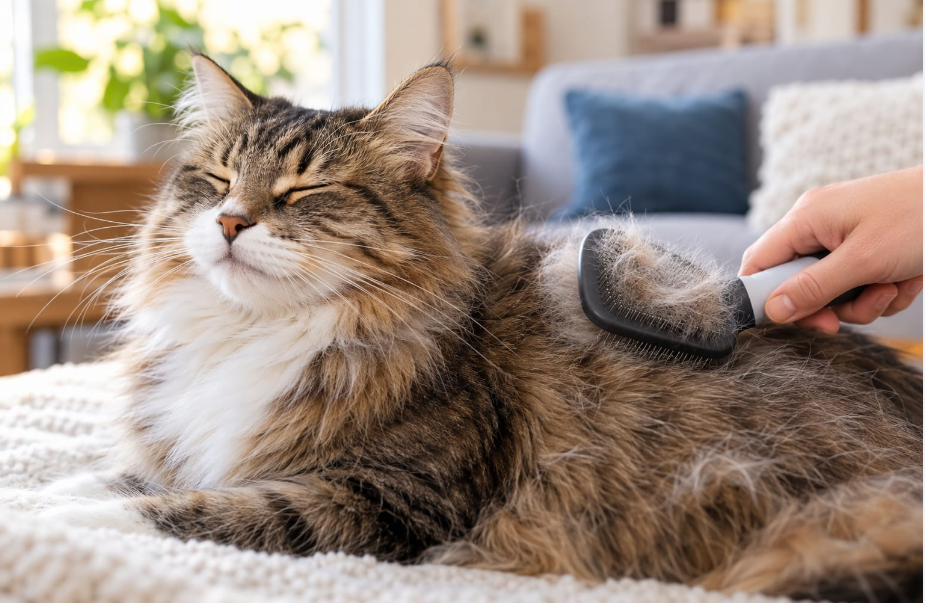
If your cat is otherwise healthy and the problem appears to be ordinary shedding, simple coat care can make a noticeable difference.
Brush Regularly
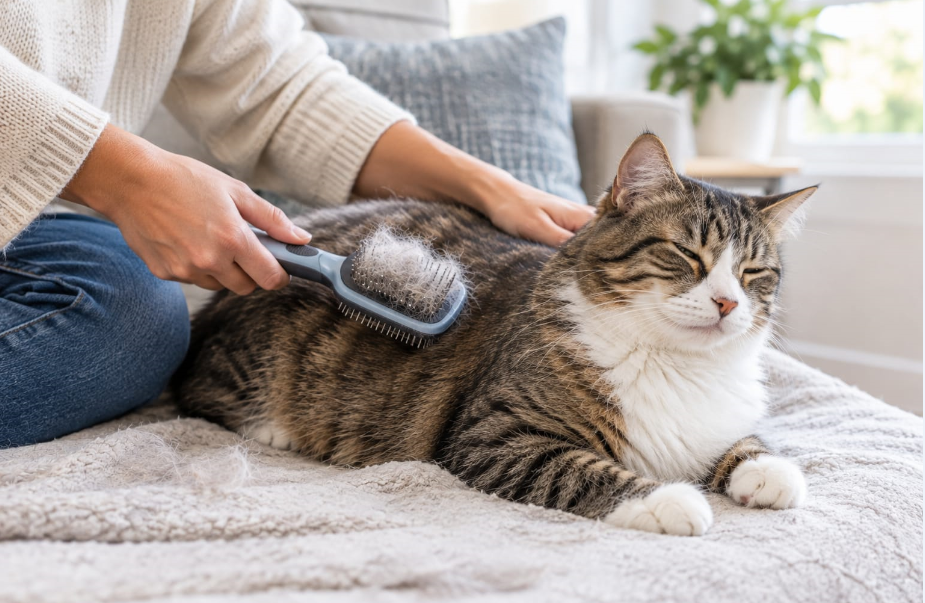
Brushing removes loose hair before it ends up on your sofa.
The right frequency depends on the coat. Long-haired cats often need more frequent brushing, while short-haired cats generally need less. VCA recommends regular brushing for cats because it removes loose hair and helps keep the coat free of tangles and debris.
Keep sessions gentle. If your cat hates the brush, start with a few minutes and build up slowly rather than forcing a long grooming session.
Feed a Complete, Balanced Diet
Good nutrition supports healthy skin and hair.
Use a complete and balanced cat food appropriate for your cat’s life stage and health needs. If the coat has changed along with weight loss, digestive problems, poor appetite, or another health concern, talk with your veterinarian before changing the diet.
Keep Flea Prevention Current
Regular parasite prevention can help protect the skin and coat.
Don’t use dog flea products on cats unless the product is specifically labeled as safe for cats. If you’re unsure which prevention is appropriate, ask your veterinarian.
Reduce Stress
Give your cat a predictable place to rest, eat, and use the litter box.
If something has recently changed at home, provide a quiet area where your cat can retreat. Keep daily routines as consistent as possible.
For some cats, a calmer environment is enough to help grooming and other behaviors settle back down.
Avoid Random Supplements or Treatments
More supplements do not automatically mean a healthier coat.
The same goes for medicated shampoos, flea products, or home remedies. If your cat has a real skin problem, treating the wrong condition can waste time or make the irritation worse.
If the coat change is significant or keeps getting worse, find the cause instead of simply trying to hide the symptom.
When Should You Take Your Cat to the Vet?
A little extra fur around the house isn’t usually an emergency.
The situation deserves more attention when the shedding comes with other changes. Contact your veterinarian if you notice:
- Bald or clearly thinning areas
- Persistent or worsening hair loss
- Severe scratching or licking
- Red, painful, crusty, or irritated skin
- Sores or open wounds
- Frequent biting or chewing at the fur
- Weight loss
- Changes in appetite or thirst
- Low energy or unusual behavior
- A coat that becomes greasy, dull, matted, or poorly groomed
Cats can hide signs of discomfort, so a noticeable change in the coat can sometimes be one of the first things an owner sees.
If your cat has sudden hair loss plus other symptoms, don’t wait for the shedding to become extreme before asking for advice.
What a Vet May Check for Sudden Shedding ?
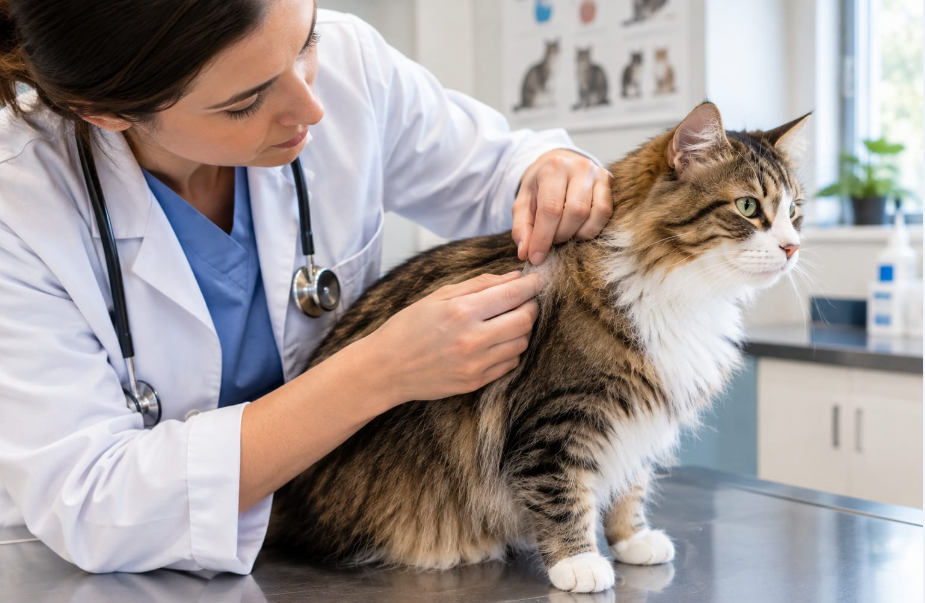
Your veterinarian will usually start by looking at the whole picture rather than treating the shedding itself.
That can include your cat’s medical history, diet, recent changes at home, grooming behavior, and when the shedding began. During the physical examination, the vet may inspect the coat and skin for parasites, inflammation, bald areas, scaling, or other abnormalities.
Depending on what they find, additional tests may be needed. Merck Veterinary Manual notes that these can include skin smears or cultures, flea combing, skin scrapings, blood or urine tests, and, in some cases, a skin biopsy.
The goal is not simply to stop the fur from falling out. It’s to find out why the coat changed in the first place.
FAQs
What is the 3-3-3 rule of cats?
The 3-3-3 rule is a general guideline used to describe how some newly adopted cats adjust to a new home. It refers roughly to the first 3 days, 3 weeks, and 3 months. It isn’t a strict rule, and every cat adjusts differently.
At what age do cats start shedding a lot?
Kittens gradually develop their adult coat during the first year, and shedding patterns become more noticeable as they mature. The amount varies by breed, coat type, environment, and individual cat.
Do cats shed more when sick?
They can. Illness can affect grooming, skin health, and the condition of the coat. A cat that is unwell may develop a dull, greasy, matted, or unusually messy coat, although shedding alone cannot tell you whether a cat is sick.
Can I reduce my cat’s shedding?
Regular brushing is one of the simplest ways to remove loose hair before it spreads around your home. A suitable diet and good general health also support the skin and coat. The amount of shedding you can reduce depends on why your cat is shedding in the first place.
Do cats ever quit shedding?
Most cats with hair continue to shed throughout their lives. Some periods are heavier than others, and indoor cats may shed small amounts year-round. Hairless breeds are the obvious exception.
Final Thoughts
If your cat randomly starts shedding more than usual, don’t panic at the first pile of fur.
Start by looking at the coat itself. If the fur is coming out but the coat still looks full and the skin looks healthy, seasonal or normal shedding may explain the change. If you see bald spots, irritated skin, excessive grooming, or changes in appetite, weight, or behavior, the situation deserves closer attention.
A few minutes spent checking your cat’s coat and thinking about recent changes can give you useful clues. And when something doesn’t look right, your veterinarian can help determine whether the extra shedding is simply part of your cat’s normal coat cycle or a sign of a problem that needs treatment.
[…] Moving to a new home, introducing another pet, or changing a familiar routine can stress some cats. Stress is more commonly associated with changes such as excessive grooming or hair loss than with isolated whisker shedding. […]
[…] Don’t change your cat’s diet drastically or start supplements just to restore a black coat. If you’re also noticing unusual hair loss, read our guide on why your cat may be shedding more than usual. […]
[…] The signs can resemble flea irritation, pain, or a neurological problem. A diagnosis of FHS requires a veterinary workup to rule out other explanations. If you also notice unexpected hair loss or excessive grooming, read our guide to why your cat may suddenly start shedding. […]