
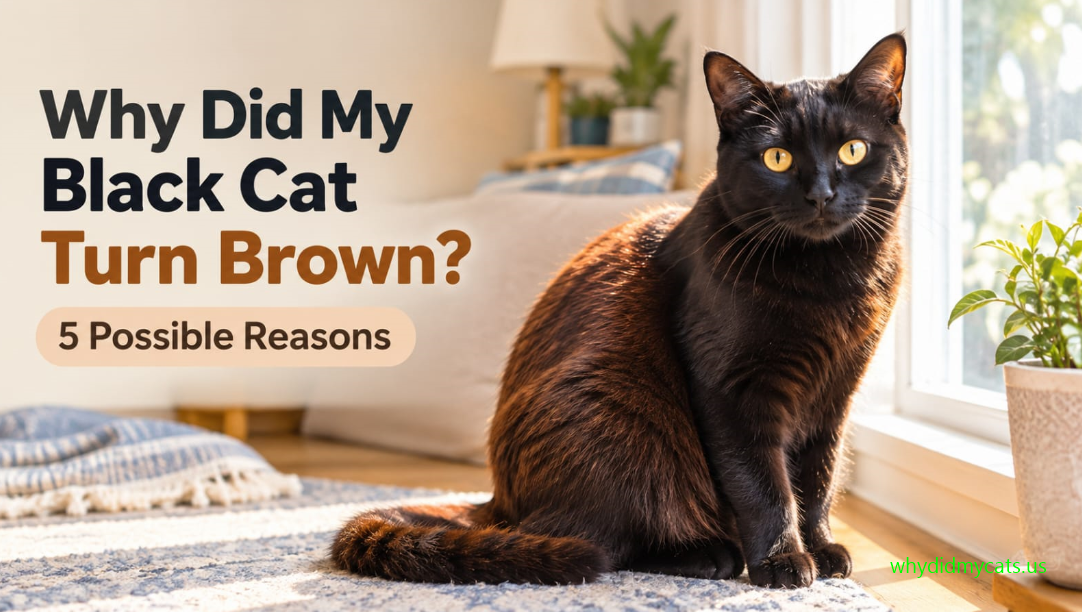
A black cat’s coat can develop a rusty, reddish-brown tint, especially along the back, sides, or tail. Sunlight is one common explanation, but genetics, natural coat changes, and nutrition can also affect how dark a cat’s fur looks.
The change does not automatically mean your cat is sick. The most useful clues are where the brown color appears, how quickly it developed, and whether your cat has other changes in its skin, coat, appetite, or behavior.
Why Is My Black Cat’s Fur Turning Brown?
Black fur gets its dark color from a pigment called eumelanin. When the coat looks brown instead of black, the change may relate to sunlight exposure, natural pigmentation, or other factors affecting the hair.
For example, an indoor cat that spends hours resting beside a sunny window might develop rusty-looking fur along its back. If the coat changes suddenly or looks patchy, however, sunlight may not explain everything.
5 Reasons Your Black Cat May Be Turning Brown
1. Sunlight Can Make Black Fur Look Rusty
Sunlight can gradually lighten a black cat’s coat, making it look brown or reddish. This is particularly noticeable in cats that spend time outdoors or regularly nap in sunny windows.
Compare your cat’s fur in natural daylight and indoor lighting. If the coat looks rusty mainly on areas exposed to the sun and your cat otherwise seems healthy, sunlight could explain the color difference.
2. Diet May Affect Your Cat’s Coat Pigmentation
A cat needs a complete, balanced diet to maintain healthy skin and fur. Tyrosine, an amino acid found in dietary protein, plays a role in producing dark pigment. Inadequate nutrition can affect coat quality and pigmentation.
Check whether your cat recently switched foods or eats a diet that may not meet feline nutritional requirements. Brown fur alone does not prove a nutritional deficiency, so don’t add tyrosine or other supplements without veterinary guidance.
3. Genetics Can Affect Your Cat’s Coat Color
Some black cats have subtle tabby markings or natural variations in their coat color. These patterns can become more noticeable under bright light or as the coat develops.
Look closely at the fur rather than judging the color from a distance. If you can see faint stripes or a pattern, your cat may have underlying tabby markings rather than a new health-related color change.
4. Kittens and Older Cats May Show Coat Changes
A kitten’s coat can look different as it matures, and changes in an older cat’s fur may become more noticeable over time. The exact appearance depends on the cat’s genetics and individual coat development.
Age alone, however, is not a reliable explanation for every color change. A sudden change in an adult cat’s coat deserves attention, particularly when it comes with thinning fur, skin irritation, or a change in general health.
5. An Underlying Health Problem May Affect the Coat
Health and nutritional problems can affect the condition and appearance of a cat’s coat. You might notice that the fur looks dull, breaks easily, or changes alongside hair loss or skin problems.
Watch for other changes, such as itching, sores, reduced appetite, or unusual tiredness. These signs matter more than brown coloring alone. A veterinarian can examine your cat and decide whether the problem involves nutrition, skin health, or another underlying condition.
Why Is My Black Cat Turning Brown and White?
Brown fur mixed with white hairs or patches can have a different explanation from an evenly rusty coat. Some cats naturally develop individual white hairs, while other coat patterns reflect genetics.
Check whether the white areas are actual patches of new fur or whether the coat is thinning and exposing lighter skin underneath. New patches accompanied by hair loss, redness, scabs, or itching deserve a veterinary examination.
Why Is My Black Cat Turning Reddish Brown?
A reddish-brown or rusty tint is often associated with sunlight-related coat fading. You might notice it most clearly along your cat’s back or tail after spending time outdoors or lounging in a sunny window.
Lighting can also make dark fur appear warmer in color. Compare recent photos taken under similar lighting before assuming the coat has changed significantly. If the reddish color appears alongside skin problems or unusual hair loss, arrange a veterinary check.
What Should You Do if Your Black Cat’s Fur Changes Color?
Start by checking whether the change is gradual and even or sudden and patchy.
- Compare old photos: Look for changes in the same areas of your cat’s body.
- Check the lighting: View the coat in natural daylight as well as indoors.
- Review the diet: Make sure your cat eats a complete, balanced food suitable for their life stage.
- Check the skin and coat: Look for bald patches, redness, scabs, or excessive itching.
- Observe overall health: Note any changes in eating, energy, or normal behavior.
Don’t change your cat’s diet drastically or start supplements just to restore a black coat. If you’re also noticing unusual hair loss, read our guide on why your cat may be shedding more than usual.
When Should You Contact a Veterinarian?
A gradual rusty tint without other symptoms usually isn’t an emergency. However, arrange a veterinary appointment if the color change is unexplained, keeps spreading, or occurs with hair loss, irritated skin, or a noticeably poor coat.
Contact your veterinarian promptly if your cat also stops eating, becomes unusually weak, or seems unwell. If your cat has reduced appetite, our guide on why your cat may have stopped eating explains why that change should not be ignored.
Your veterinarian may review your cat’s diet and medical history, examine the skin and fur, and recommend tests when the symptoms suggest an underlying problem.
FAQs
What is the average lifespan of a black cat?
Black cats do not have a separate lifespan simply because of their coat color. Many pet cats live around 12–18 years, although genetics, healthcare, nutrition, and lifestyle all affect longevity. Regular veterinary checkups, preventive care, and a safe living environment support a cat’s long-term health.
What do black cats protect you from?
There is no scientific evidence that black cats protect people from supernatural forces or bad luck. Those beliefs come from cultural traditions and folklore, which differ across societies. Like other cats, black cats can provide companionship and emotional comfort, but their coat color does not give them special protective powers.
Do all black cats turn brown in the sun?
No. Sunlight can make some black cats’ fur look rusty or reddish-brown, but the effect varies between cats. Genetics, coat characteristics, and sun exposure all influence how noticeable the change becomes. A new color change accompanied by hair loss or skin irritation should not automatically be blamed on sunlight.
Why did my cat turn brown?
Your black cat’s fur may look brown because of sunlight exposure, natural coat-color variation, genetics, or nutritional factors. Lighting can also make dark fur appear warmer in color. Check for other changes, including hair loss, skin irritation, or appetite changes, and consult your veterinarian if the cause is unclear or other symptoms develop.
What is the rarest color of cat?
There is no single rarest cat color across every breed, because coat-color genetics and breed standards differ. Colors such as cinnamon and lilac are uncommon in many cat populations but occur in certain breeds. Rarity depends on the breed and its genetic background, rather than on one universal ranking.
Conclusion
A black cat turning brown is often related to sunlight or natural coat-color variation, but nutrition and health can also affect the fur. Compare your cat’s coat over time and check for other symptoms. If the change is sudden, unexplained, or accompanied by skin problems or changes in appetite and energy, ask your veterinarian to investigate.