
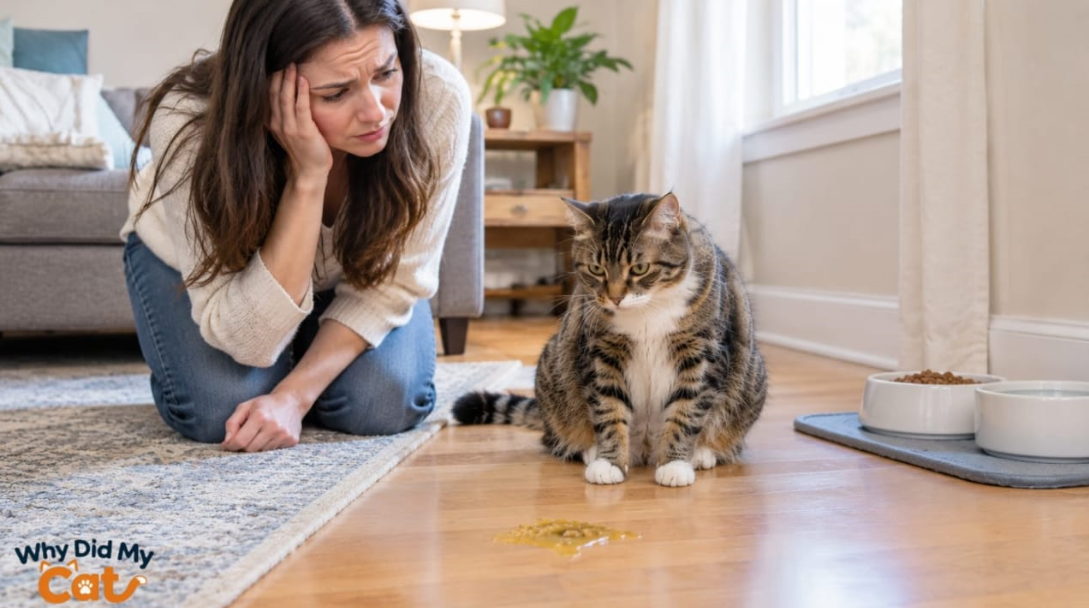
Yellow vomit in cats is usually bile, a digestive fluid made by the liver. It often shows up when a cat’s stomach has been empty for a while, but yellow vomiting also happens with hairballs, stomach irritation, diet problems, and certain health conditions.
One episode does not automatically mean something serious. What happened before the vomiting and how your cat behaves afterward matter just as much as the color of the vomit.
What Does Yellow Vomit Mean in Cats?
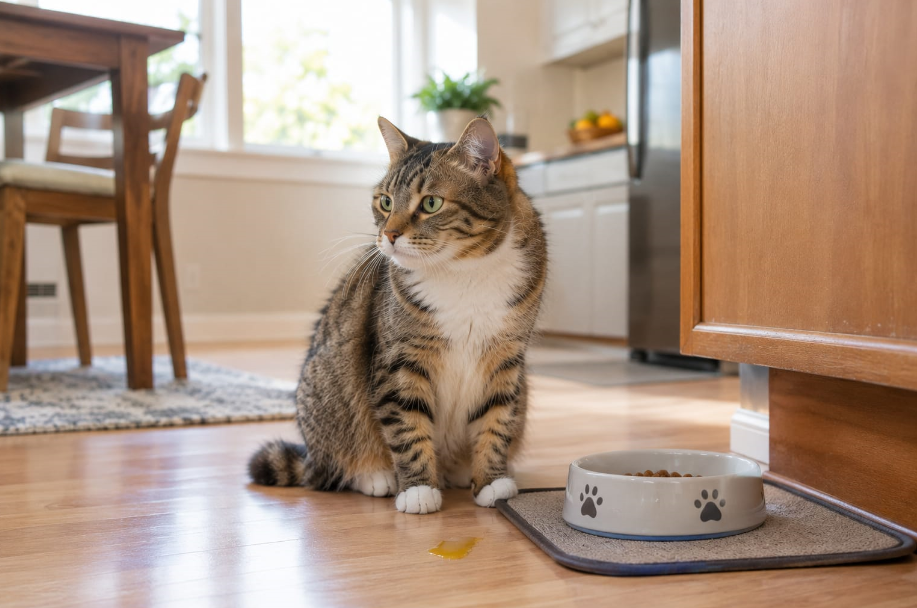
Bile is yellow to greenish-yellow fluid that helps with digestion. When the stomach is empty, bile can move into the stomach and irritate it. A cat may then vomit a small amount of yellow or yellowish-green liquid, sometimes with foam.
This is especially easy to notice when a cat skips a meal, eats less than usual, or goes a long stretch between meals. PetMD and veterinary hospitals both identify an empty stomach as a common explanation for yellow bile vomiting.
Still, the color alone cannot tell you why your cat vomited. A cat that is vomiting repeatedly, refusing food, acting weak, or showing pain needs a closer look.
Common Reasons Your Cat May Throw Up Yellow Liquid
An Empty Stomach
A long gap between meals is one of the simpler explanations. Some cats vomit yellow bile early in the morning after going all night without eating. Others do it after skipping dinner or eating much less than normal.
A consistent feeding routine and smaller, more frequent meals can help some cats that repeatedly vomit after long periods without food.
Hairballs or Stomach Irritation
Cats swallow loose fur while grooming. Most of it passes through the digestive tract, but accumulated hair can irritate the stomach and come back up mixed with bile.
A little fur in the vomit is different from repeated vomiting, frequent unproductive retching, or a cat that stops eating. Those signs deserve veterinary attention because a larger hairball or another digestive problem needs to be ruled out.
Food Changes or Something Your Cat Ate
A sudden switch in cat food, table scraps, spoiled food, plants, or another unusual item can upset the digestive tract. Curious cats can also chew on non-food objects around the house.
Think about what changed during the previous day or two. A new food, different treats, a dropped piece of food, or access to a plant can be useful information for your veterinarian.
An Underlying Health Problem
Yellow vomiting also occurs with conditions affecting the digestive system or other organs. Examples include gastritis, inflammatory bowel disease, pancreatitis, liver or gallbladder disease, kidney disease, diabetes, and intestinal obstruction.
These problems usually come with other changes rather than yellow vomit alone. Reduced appetite, weight loss, diarrhea, lethargy, abdominal pain, increased thirst or urination, and yellowing of the eyes or skin are more concerning signs.
What If My Cat Threw Up Yellow Liquid but Is Acting Normal?
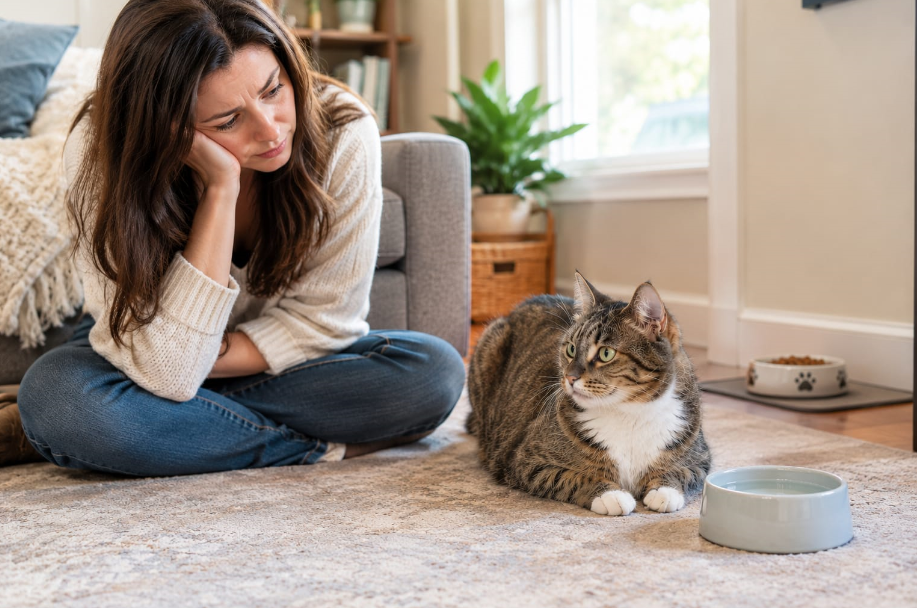
A cat that vomits yellow liquid once and then goes back to eating, drinking, playing, and behaving normally is less concerning than a cat that keeps vomiting or develops other symptoms.
For a one-time episode, keep an eye on your cat rather than assuming the color tells the whole story. Notice whether your cat eats the next meal, drinks normally, uses the litter box, and returns to normal activity.
VCA notes that some sudden vomiting episodes settle within about 24 hours, while ongoing vomiting or additional symptoms call for veterinary care.
What If My Cat Is Throwing Up Yellow Liquid and Not Eating?
Loss of appetite changes the situation. A cat that vomits yellow liquid and then refuses food should not simply be watched for several days.
The combination can happen with stomach or intestinal disease, pancreatitis, an obstruction, liver or kidney problems, and other conditions. Cats that continue refusing food can also develop serious nutritional problems, particularly when they are already ill. Contact your veterinarian for guidance, especially when vomiting continues or your cat seems tired, painful, or withdrawn.
Yellow Liquid With Hair, Foam, or Food: What Can It Mean?
The appearance of the vomit can add context, but it does not provide a diagnosis.
- Yellow liquid with hair: A hairball is one possible explanation, especially in a cat that grooms heavily.
- Yellow liquid with foam: Foam mixed with bile often appears when the stomach is relatively empty or irritated.
- Yellow liquid with food: A recent meal, dietary upset, or another digestive problem could be involved.
Take a photo of unusual vomit if you can. It gives your veterinarian something concrete to see if your cat needs an examination.
When Should You Call a Veterinarian?
Call your veterinarian when yellow vomiting keeps happening, your cat stops eating, or your cat no longer seems like itself.
Prompt veterinary care is especially important when vomiting is accompanied by:
- repeated vomiting or dry heaving
- blood in the vomit
- marked lethargy or weakness
- abdominal pain
- diarrhea
- dehydration
- refusal to eat
- trouble keeping water down
- suspected poisoning
- possible swallowing of string, plastic, toys, or another foreign object
Cornell Feline Health Center recommends veterinary evaluation for cats with frequent vomiting or vomiting accompanied by signs such as lethargy, weakness, decreased appetite, blood, changes in thirst or urination, or diarrhea. VCA also lists suspected toxins or foreign objects as reasons for immediate veterinary care.
If you know your cat swallowed something toxic, do not try to make the cat vomit unless a veterinarian or animal poison professional specifically tells you to do so. Some substances cause more damage when brought back up.
What Should You Do After Your Cat Throws Up Yellow Liquid?
After one mild vomiting episode, give your cat a quiet place and watch what happens next. Make fresh water available, but don’t force your cat to drink.
Once the vomiting has stopped, food is usually reintroduced carefully rather than giving a large meal. Veterinary guidance commonly favors small portions and easily digestible food during recovery. If your cat vomits again, refuses food, or develops other symptoms, stop treating it as a simple upset stomach and contact your veterinarian.
Do not give human stomach medicines, pain relievers, or other over-the-counter drugs unless your veterinarian has specifically approved them for your cat. Some medications that are safe for people can be dangerous to cats.
Frequently Asked Questions
What does yellow liquid vomit mean?
Yellow liquid vomit is usually bile, a digestive fluid produced by the liver. An empty or irritated stomach is a common reason it appears in vomit. Yellow vomit alone does not identify the exact cause, so repeated episodes or other symptoms deserve veterinary attention.
What can I do at home if my cat is vomiting yellow liquid?
For a single mild episode, keep your cat comfortable, provide access to water, and monitor eating, drinking, energy, and further vomiting. Once vomiting has stopped, small amounts of food can be offered. Repeated vomiting or other symptoms require veterinary guidance.
Should I feed my cat after vomiting bile?
Don’t immediately give a large meal. Once your cat has stopped vomiting and is interested in food, a small portion is a better starting point. Cats with repeated vomiting, medical conditions, or poor appetite need individualized feeding advice from a veterinarian.
What could be causing my cat to throw up yellow liquid and be dying?
Yellow vomit by itself does not mean your cat is dying. Serious illnesses such as an intestinal obstruction, severe pancreatitis, or certain liver and kidney problems can cause vomiting, but they usually involve other changes such as weakness, pain, loss of appetite, or repeated vomiting. Those signs need prompt veterinary care.
What is a silent killer for cats?
There is no single “silent killer” for every cat. Kidney disease is one condition that can progress with subtle signs before becoming advanced, particularly in older cats. Regular veterinary examinations help detect problems that are difficult to spot at home.
Conclusion
A single episode of yellow vomit does not always mean something is seriously wrong with your cat. An empty stomach, hairballs, food changes, or mild stomach irritation can all play a role. What matters most is what happens afterward.
If your cat keeps vomiting, refuses food or water, seems weak or painful, or develops other unusual symptoms, contact your veterinarian rather than waiting it out. Paying attention to these changes can help you recognize when yellow vomit is a minor episode and when your cat needs medical care.
[…] cat that stops eating and also develops vomiting, diarrhea, unusual tiredness, weight loss, drooling, difficulty chewing, trouble swallowing, […]
[…] Yellow liquid: Yellow vomit often contains bile. An empty stomach can be one explanation, but repeated vomiting needs attention. Read more in Why Did My Cat Throw Up Yellow Liquid? Causes & Help. […]
[…] more detail about these specific symptoms, read our guides to why a cat throws up yellow liquid and why a cat throws up white […]
[…] guide to why a cat throws up white liquid. If the vomit is yellow rather than clear, our article on why a cat throws up yellow liquid explains some possible […]