
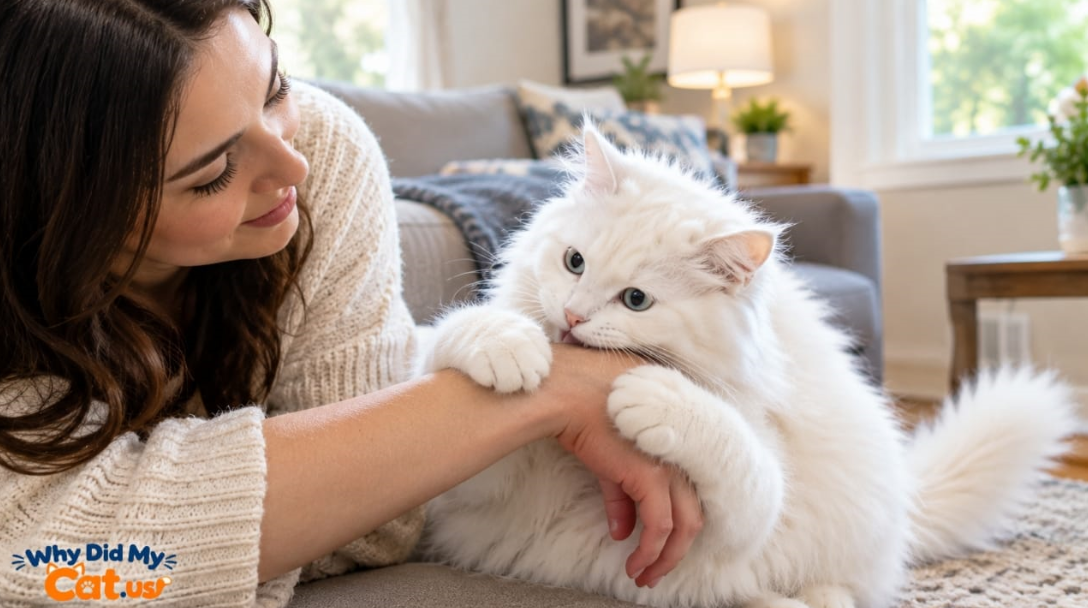
Your cat may be relaxing beside you and suddenly sink its teeth into your arm. It can happen during petting, cuddling, playtime, or while you’re sleeping. The reason usually depends on what your cat was doing just before the bite.
Cats bite arms because of play, hunting instincts, overstimulation, fear, or discomfort. Some bites are gentle nips, while others leave painful puncture wounds. Understanding the situation helps you respond appropriately and reduce the chance of it happening again.
Why Does My Cat Bite My Arm? 7 Possible Reasons
1. Your Cat Is Playing or Practicing Hunting
Cats instinctively stalk, chase, grab, and bite moving targets. Your arm may become part of the game when you move your hand beneath a blanket or encourage your cat to wrestle with your fingers.
A cat that wraps its front paws around your arm and kicks with its back legs is showing a hunting-style play behavior. Young cats are especially likely to do this, but adult cats can develop the same habit.
What to do: Use a wand toy or a long kicker toy instead of your hands. This lets your cat chase and grab something appropriate without treating your arm as a toy.
2. Your Cat Has Had Enough Petting
Your cat may enjoy being petted at first, then turn around and bite. This often happens when physical contact becomes overwhelming or your cat wants the interaction to stop.
Look for a flicking tail, ears turning backward, tense muscles, or skin twitching along the back. These signs can appear before a bite.
Keep petting sessions short and stop when your cat seems uncomfortable. Many cats prefer gentle strokes around the cheeks and head rather than repeated touching of the belly or lower back.

3. Your Cat Wants Attention
Some cats learn that biting gets an immediate response. Your cat might nip your arm while you’re working from home, watching television, or getting ready for bed because it wants you to interact with it.
Consider when the biting happens. Does your cat do it when playtime ends or when you’re busy and ignoring it?
Schedule regular play sessions and reward calm behavior. Avoid turning the bite into a wrestling game, even if your cat seems playful.
4. Your Cat Bites While Purring or Cuddling
Purring doesn’t always mean your cat wants to be touched continuously. A cat may enjoy sitting on your lap or curling up beside you but become uncomfortable when you keep petting it.
For example, your cat might purr while resting against your arm, then bite when you rub its belly. This doesn’t automatically mean your cat dislikes you. It may simply want the touching to stop.
Let your cat choose when to approach and move away. Enjoying your company and enjoying every kind of physical contact are two different things.
5. Your Cat Bites Your Arm and Then Licks It
A cat that licks your arm and then bites—or bites before licking—may be playing, grooming socially, or becoming overstimulated. The licking doesn’t necessarily mean the bite is affectionate.
Notice whether this happens during cuddling or after a long petting session. If your cat starts to tense up or flick its tail, stop touching it and give it space.
6. Your Cat Bites Your Arm While You Sleep
Moving hands beneath the covers can trigger your cat’s chasing and hunting instincts. Some cats also bite sleeping owners to get attention or start playing, particularly when they’re active at night.
Try playing with your cat before bedtime and keeping a consistent evening routine. If your cat attacks your arm under the covers, keep your hands still and redirect its attention to toys outside the bed rather than encouraging the game.
7. Your Cat Is Frightened, Stressed, or in Pain
A bite that seems to happen for no reason may be a reaction to fear, stress, or discomfort. A new pet, unfamiliar visitors, loud noises, or seeing another cat outside can leave a cat agitated.
Pain also matters. Dental problems, injuries, and joint discomfort can make a normally friendly cat bite when touched. A sudden change in behavior deserves more attention than a long-standing, predictable play habit.
Give your cat room to retreat. If biting starts unexpectedly, happens when you touch a particular area, or comes with changes in appetite or movement, arrange a veterinary examination.
Why Does My Cat Grab My Arm and Not Let Go?
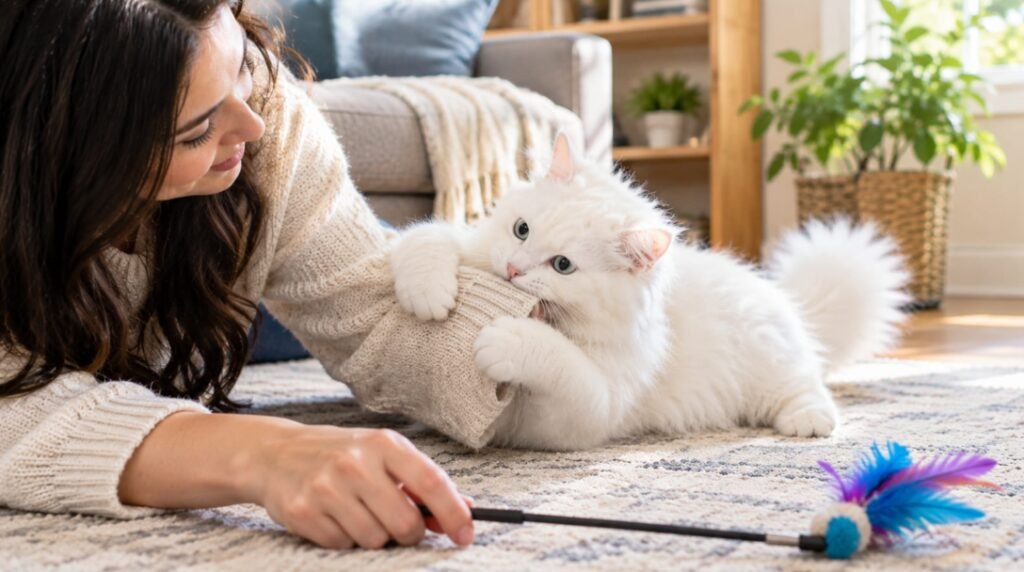
When a cat holds your arm with its front paws, bites, and kicks with its back legs, it may be acting out a hunting sequence. The grip can become stronger when your cat is highly excited.
Don’t yank your arm away or hit your cat. Sudden movements can intensify the struggle and increase the risk of injury. Stay as calm as possible, avoid forcing your hand deeper into the cat’s mouth, and use a toy or other safe barrier to create distance when possible.
If you cannot safely free your arm, get help rather than risking a more serious bite.
How to Stop Your Cat From Biting Your Arm
Start by identifying what happens just before the bite. A cat that bites during petting needs a different response from one that attacks moving arms during play.
- During play: Use wand toys, balls, or kicker toys. Never encourage your cat to wrestle with bare hands.
- During petting: Stop when your cat becomes tense or starts flicking its tail.
- For attention-seeking: Offer regular play and reward calm approaches instead of biting.
- For stress: Provide hiding places, quiet resting areas, and a predictable routine.
- For sudden behavior changes: Contact your veterinarian to check for pain or illness.
Avoid shouting, hitting, or forcibly restraining your cat. Punishment can increase fear and make biting harder to manage.
You can also read our guide on why your cat might nip you to learn more about biting and nipping behavior.
When Should You Worry About a Cat Bite?
A gentle nip that leaves the skin intact is different from a deep puncture wound. Cat teeth can create small holes that are easy to underestimate.
If your cat breaks your skin, wash the wound thoroughly with soap and running water and seek prompt medical advice, particularly for punctures to the hand, wrist, or arm. Get urgent medical care for deep wounds, uncontrolled bleeding, spreading redness, swelling, increasing pain, or fever.
For your cat, contact a veterinarian if biting begins suddenly, becomes more intense, or occurs alongside changes in appetite, movement, grooming, or normal behavior.
FAQs
Do cats feel guilty after biting?
Cats don’t experience guilt in the same human sense. After biting, a cat may hide, look away, or become quiet because it senses tension or feels frightened. Instead of assuming your cat knows it did something wrong, focus on what triggered the bite and how to prevent it.
What do cats think when they bite you?
The reason depends on the situation. During play, your cat may be responding to movement as if it were prey. During petting, it may be trying to end the contact. Fear, frustration, and pain can also trigger biting, so the behavior surrounding the bite matters.
Why does my cat grab me and gently bite me?
Gentle grabbing and biting often occur during play, excitement, or social interaction. Your cat may hold your arm with its paws and nibble as part of a hunting-style game. Redirect the behavior to a suitable toy rather than allowing your hands and arms to become play targets.
Do I need to worry if my cat bites me?
A bite that breaks the skin needs prompt attention because cat bites can become infected, even when the wound looks small. Wash the area thoroughly and seek medical advice, especially for bites to the hand or arm. Sudden or unexplained biting also warrants a veterinary check for your cat.
Do cats remember when they bite you?
Cats can learn from repeated experiences, but they don’t understand biting and its consequences in the same moral way humans do. Calm, consistent responses and appropriate toys help establish safer habits. Punishing your cat can create fear instead of teaching it what behavior you want.
Conclusion
Your cat may bite your arm because of play, overstimulation, attention-seeking, fear, or pain. Notice what happens before the bite, redirect play toward toys, and give your cat space when it wants contact to end. If the behavior changes suddenly or a bite breaks your skin, seek appropriate professional care.
[…] If your cat bites during play or when you move her, this related guide may also help: Why Did My Cat Bite My Arm? 7 Reasons and What to Do. […]