
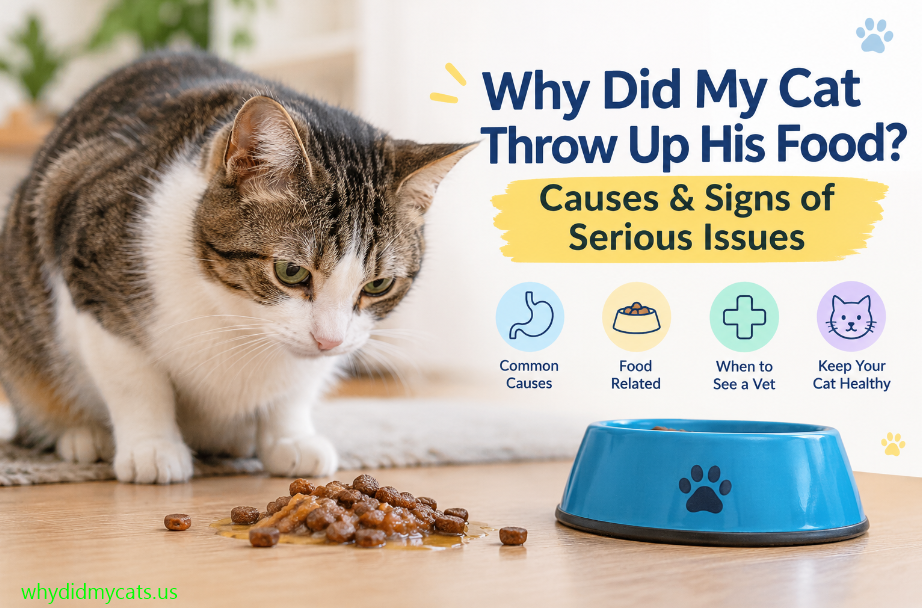
Why did my cat throw up his food? Eating too quickly, eating too much, sudden food changes, and digestive problems are common possibilities. Sometimes, food comes back up before it reaches the stomach properly, which is called regurgitation rather than vomiting.
The timing of the episode, the appearance of the food, and your cat’s behavior can offer useful clues. One isolated episode in an otherwise healthy cat may not be an emergency, but repeated vomiting should never be treated as normal.
Why Did My Cat Throw Up His Food?
Several factors can cause a cat to bring up food:
- Eating too quickly: Gulping food can cause it to come back up shortly after a meal.
- Eating too much: A large meal may upset your cat’s stomach.
- Sudden diet changes: Switching food too quickly can cause digestive upset.
- Food intolerance: Certain ingredients may contribute to recurring digestive symptoms.
- Hairballs: Swallowed fur can trigger retching and bring up food or fluid.
- Digestive or other medical problems: Parasites, gastrointestinal conditions, kidney disease, and intestinal blockages can cause vomiting.
The cause is not always obvious from the vomit alone. Pay attention to how soon it happens after eating and whether your cat has other symptoms.
Why Did My Cat Throw Up His Food Right After Eating?
When food comes back up within minutes of a meal, eating too quickly or regurgitation may be responsible.
Regurgitation usually happens with little effort. Undigested food may come out soon after eating, sometimes retaining the shape of kibble.
Vomiting involves more active effort. Your cat may crouch, retch, drool, or contract his abdominal muscles before bringing up food. The material may be partly digested or mixed with fluid.
If your cat eats too quickly, try offering smaller portions at a time or using a slow-feeder bowl. However, repeated episodes need veterinary attention because eating speed is not the only possible cause.
Why Did My Cat Throw Up His Food Whole?
Finding whole pieces of food in the vomit can be alarming, but it does not automatically mean your cat has a serious illness. Food may come back up before digestion has progressed, especially after fast eating or regurgitation.
Think about what happened before the episode. Did your cat gulp down a large meal? Did he retch, or did the food come out without much effort? These details can help your veterinarian understand what happened.
If your cat repeatedly brings up whole food, arrange a veterinary assessment instead of assuming a slow feeder will solve the problem.
Why Did My Cat Throw Up His Food Hours After Eating?
Vomiting hours after a meal can have several explanations, including stomach irritation, food-related problems, or an underlying digestive condition.
Notice whether the food looks partly digested and whether your cat has a reduced appetite, diarrhea, weight loss, or changes in thirst. The timing alone cannot identify the cause.
If vomiting happens repeatedly after meals, contact your veterinarian. Seek prompt care if your cat also seems weak, has abdominal pain, or cannot keep water down.
Why Did My Cat Throw Up His Food but Acting Normal?
A cat who vomits once and then returns to eating, playing, and behaving normally may have experienced a temporary upset. However, acting normally afterward does not rule out every medical problem.
Monitor your cat for further episodes and changes in appetite or behavior. If vomiting returns, becomes frequent, or occurs alongside other symptoms, contact your veterinarian.
Why Did My Cat Throw Up His Food Twice?
Two vomiting episodes deserve attention, particularly when they happen close together. Eating too quickly or stomach irritation could be responsible, but repeated vomiting can also occur with more serious conditions.
Contact your veterinarian for advice if your cat vomits twice within a short period. Seek urgent care if vomiting continues, your cat becomes weak or painful, cannot keep water down, or may have swallowed string, a foreign object, medication, or something toxic.
What Should You Do When Your Cat Throws Up Food?
If your cat vomits, take these practical steps:
- Check how your cat is acting. Look for weakness, pain, unusual hiding, or a loss of appetite.
- Keep fresh water available. Do not force your cat to drink.
- Review the meal. Consider portion size, eating speed, food freshness, and recent diet changes.
- Avoid sudden food changes. Make diet adjustments gradually, with veterinary guidance when needed.
- Record what happened. Note the time, appearance of the food, and number of episodes. A photo or video may help your veterinarian assess the problem.
Do not give human medication or home remedies without veterinary guidance. Avoid prolonged fasting, especially for kittens or cats with existing health conditions. If vomiting repeats, ask your veterinarian when to offer food again.
If your cat also refuses meals, read our guide on why your cat may stop eating.
When Is Cat Vomiting a Sign of a Serious Problem?
Occasional vomiting may happen after a cat eats too quickly, but repeated episodes should not be ignored. Arrange a veterinary visit if your cat vomits regularly, loses weight without explanation, eats less, develops diarrhea, drinks more water than usual, or shows changes in urination. Cats that vomit more than once a week should be evaluated rather than assumed to have a sensitive stomach.
Seek urgent veterinary care if your cat vomits repeatedly, cannot keep water down, has blood in the vomit, appears very weak or in pain, or may have swallowed a foreign object or toxic substance.
For more information about common causes, read our guide to why cats throw up.
Pay attention to changes in your cat’s appetite and behavior, even when the vomiting seems mild at first. Your veterinarian may ask about meal timing, diet, weight, stool, and other symptoms before recommending any tests.
FAQs
What do I do if my cat throws up undigested food?
Check whether your cat is acting normally and whether the episode involved retching or food simply coming back up. One episode after fast eating may not be serious, but repeated episodes need veterinary assessment. Note the timing, appearance of the food, and any other symptoms.
Should I feed my cat again if he throws up?
Do not immediately offer another full meal. Keep fresh water available and seek veterinary advice about when to feed your cat again, particularly if vomiting repeats. Avoid prolonged fasting unless your veterinarian specifically recommends it.
Is it bad if cats eat their throw up?
Eating a small amount of their own vomit is not automatically harmful, but it does not explain why they vomited. Clean it up so you can monitor further episodes and check whether the vomit contains anything unusual. Repeated vomiting still needs attention.
My cat throws up dry food but not wet food. What could be causing this?
Your cat may eat dry food more quickly or swallow larger mouthfuls, but this does not prove that dry food is the cause. Food texture, ingredients, portion size, and regurgitation may all be relevant. If the problem continues, discuss it with your veterinarian before repeatedly changing your cat’s diet.
What soothes a cat’s stomach after vomiting?
Give your cat a quiet place to rest and access to fresh water. Once vomiting stops, ask your veterinarian when to offer small portions of food and whether a specific diet is appropriate. Avoid milk, human medicines, and unapproved home remedies. If vomiting continues or your cat seems unwell, contact a veterinarian.
What is the silent killer of cats?
Chronic kidney disease is sometimes called a silent killer because early signs can be subtle. Other serious conditions can also develop without obvious symptoms at first. Vomiting food alone does not mean your cat has kidney disease; a veterinarian can recommend an examination and tests based on your cat’s age, symptoms, and medical history.
Conclusion
A cat throwing up food may have eaten too quickly, eaten too much, reacted to a food change, or regurgitated undigested food. Pay attention to when it happens, what the food looks like, and how your cat behaves afterward. If vomiting repeats or other symptoms appear, contact your veterinarian rather than assuming the cause is simply eating too fast.