

Why did my cat pee on the couch? Cats urinate on sofas for several reasons, including urinary discomfort, stress, litter-box problems, and a preference for soft surfaces. A couch also holds familiar household scents, which can make it an appealing place to return to after an accident.
The first step is to work out whether your cat is having trouble urinating, avoiding the litter box, or marking the furniture. Cleaning the couch matters, but finding the reason behind the behavior is what helps prevent another accident.
Why Did My Cat Pee on the Couch?
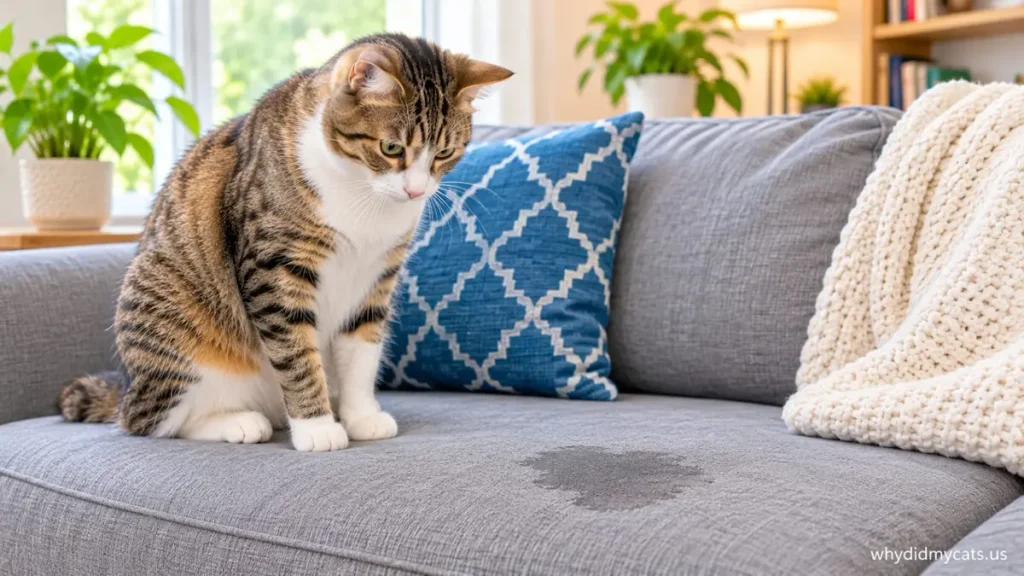
A cat that leaves a puddle on the couch is usually responding to a physical, environmental, or litter-box issue—not trying to punish you. Urinary discomfort can make normal bathroom habits difficult, while stress or an unpleasant litter box can lead a cat to choose another spot.
The couch may also feel comfortable because it is soft and carries familiar household smells. However, a new habit of urinating on furniture deserves attention, especially when your cat previously used the litter box reliably.
9 Reasons Your Cat May Be Peeing on the Couch
1. Urinary or Bladder Problems
Bladder inflammation, urinary stones, and other urinary tract conditions can make urination painful or urgent. Your cat may associate the litter box with discomfort and start choosing another surface.
Watch for frequent litter-box visits, small amounts of urine, blood, crying, or straining. A veterinary examination is important because these signs cannot be diagnosed by looking at the couch or the urine alone.
2. Stress or Anxiety
Cats are sensitive to changes in their surroundings. Moving to a new home, welcoming a baby, adding another pet, hosting visitors, or changing your daily routine can affect a cat’s bathroom habits.
For example, a cat that usually naps on the living-room couch may start urinating there after a new dog begins disturbing her near the litter box. The couch may feel like a familiar, secure place, but the underlying stress still needs attention.
3. Territorial Urine Marking
Cats sometimes use urine to communicate information about their territory. A new cat outside the window, tension between household pets, or changes in the home can trigger marking.
Spraying usually involves a small amount of urine directed at a vertical surface, with the cat standing and holding the tail upright. A larger puddle on the seat or cushion is more consistent with ordinary urination outside the litter box, although a veterinarian can help distinguish the behavior.
4. A Dirty or Uncomfortable Litter Box
Some cats refuse a litter box that is dirty, strongly scented, too small, or difficult to reach. A covered box may also feel uncomfortable to a cat that prefers an open space.
Check whether the box is scooped regularly, placed somewhere quiet, and easy for your cat to access. In a home with multiple cats, one cat may also block another from reaching the box.
5. Changes in Your Home or Routine
Cats notice changes that people may barely think about. Rearranged furniture, construction noise, a different work schedule, or a new feeding location can disrupt a familiar routine.
Try to keep feeding and litter-box arrangements consistent. Give your cat quiet resting places and separate access to food, water, scratching areas, and litter boxes.
6. The Couch Has Become a Preferred Surface
Some cats develop a preference for soft surfaces such as cushions, blankets, carpets, or clothing. A cat that dislikes the litter texture or box setup may choose the couch instead.
This preference can continue after the original problem has been addressed, particularly when urine odor remains in the upholstery. Cleaning the affected area and improving the litter-box setup are both important.
7. Conflict With Other Cats
In a multi-cat home, competition does not always look like fighting. One cat may stare at another near the litter box, block a hallway, or make the other cat feel unsafe using a shared resource.
Provide enough litter boxes in separate, accessible locations. A useful starting point is one box per cat, plus one extra, rather than placing every box side by side.
8. Age or Mobility Problems
Older cats and cats with joint pain may struggle to climb into a high-sided litter box or reach one located upstairs. A kitten may also have accidents while still learning where and when to use the box.
Make sure your cat can reach a clean, low-entry litter box without navigating stairs or obstacles. Sudden changes in bathroom habits still need a veterinary check, regardless of age.
9. Your Cat Is Returning to a Previously Soiled Spot
Even after you clean a couch, urine odor can remain deep in the cushion or upholstery. Cats have a much stronger sense of smell than people, so an area that smells clean to you may still attract your cat.
Use a suitable enzymatic pet-urine cleaner according to its label and the couch manufacturer’s care instructions. A regular fragrance spray may cover the smell without removing the urine residue.
Why Is My Cat Peeing on the Couch All of a Sudden?
A sudden change deserves more attention than an occasional accident from a kitten still learning. Urinary discomfort can develop quickly, and stress-related changes can follow a move, new pet, visitors, or a disrupted household routine.
Start by arranging a veterinary check to rule out a medical cause. Then review what changed recently: litter type, box location, cleaning schedule, household members, and interactions with other pets.
For a broader look at this behavior, see our guide to why your cat may have started peeing in the house.
Why Did My Cat Pee on the Couch in Front of Me?
Your cat is not necessarily being spiteful or trying to send you a message. Urinating in front of you can happen when the urge is sudden, the litter box feels unsafe, or a medical problem makes normal urination uncomfortable.
Stay calm and avoid shouting or punishing your cat. Punishment can increase fear and stress without fixing the reason for the accident. Make a note of what happened and share the details with your veterinarian.
Why Does My Cat Pee on the Couch at Night?
A cat that urinates on the couch overnight may have trouble reaching the litter box, dislike its location, or experience urinary urgency. In a home where doors are closed at night, make sure your cat still has access to a clean box.
Older cats with mobility problems may also struggle to reach a box in another room or on a different floor. If nighttime accidents are new or keep happening, arrange a veterinary examination rather than assuming your cat is simply choosing the couch.
Is Your Cat Peeing or Spraying on the Couch?
These behaviors are different, and recognizing the pattern helps you explain it to your veterinarian.
- Urinating: Your cat usually squats and leaves a larger puddle on a horizontal surface, such as a couch seat or cushion.
- Spraying: Your cat usually stands, raises or quivers the tail, and releases a smaller amount of urine, commonly onto a vertical surface.
A couch has both horizontal and vertical surfaces, so location alone does not settle the question. Observe your cat’s posture and the amount of urine, or record the behavior if you can do so without disturbing your cat.
How to Get Cat Pee Out of a Couch
Fresh urine is easier to treat than a stain that has soaked into the cushions. Act promptly, but check the upholstery care label before using any cleaning product.
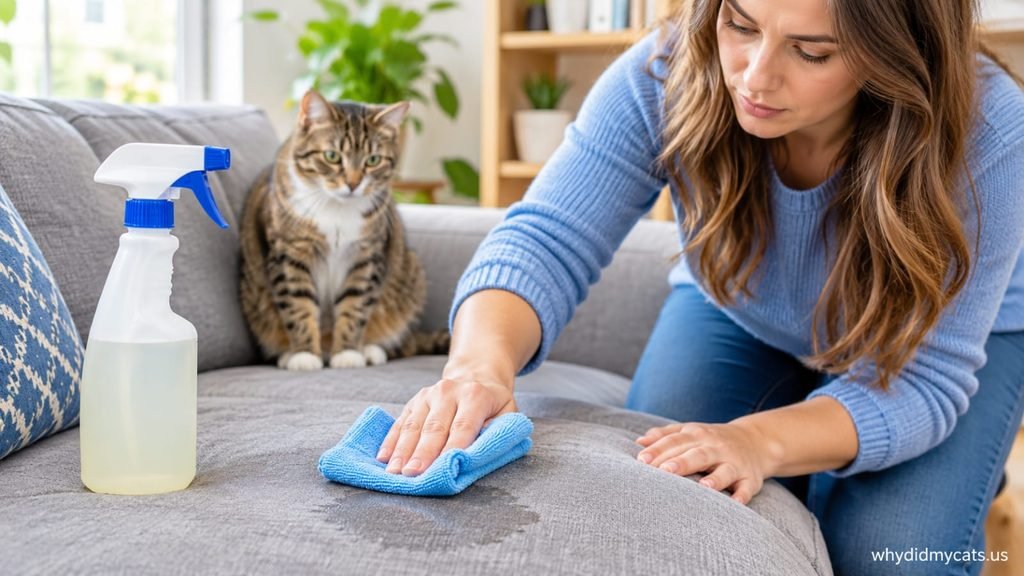
- Blot the urine: Use clean paper towels or an absorbent cloth to soak up as much liquid as possible. Press gently instead of rubbing.
- Check the fabric: Follow the couch manufacturer’s cleaning instructions. Test any cleaner on a hidden area first.
- Use an enzymatic cleaner: Choose a product labeled for cat urine and suitable for your upholstery. Follow the application and drying instructions carefully.
- Treat the cushion carefully: Urine can soak through the fabric into the cushion filling. Surface cleaning alone may not remove the odor.
- Let the area dry completely: Keep your cat away while the treated area dries, as directed by the product label.
Avoid ammonia-based cleaners, which can leave odors that resemble urine. Never mix cleaning products, and do not use a strong fragrance to hide the smell. If urine has soaked deeply into the cushion, professional upholstery cleaning or cushion replacement may be necessary.
How to Stop Your Cat From Peeing on the Couch
Cleaning the couch is only one part of the solution. You also need to make the litter box comfortable and address anything that makes your cat avoid it.
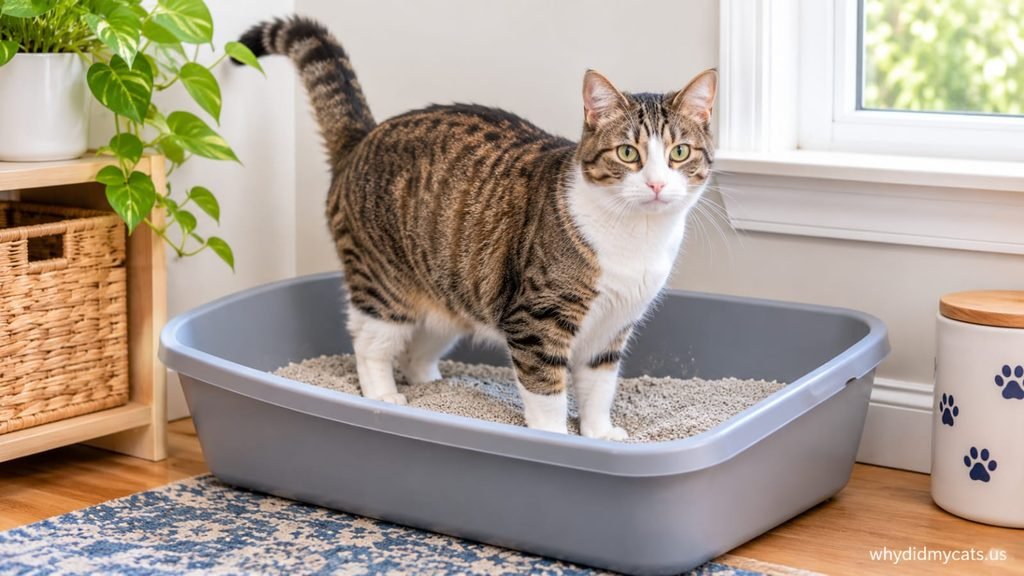
- Keep litter boxes clean: Scoop daily and wash the box regularly with a mild, unscented cleaner.
- Provide enough boxes: In a multi-cat home, start with one box per cat plus one extra. Place them in separate, quiet locations.
- Choose an accessible box: Make sure the box is large enough and has an entrance your cat can manage comfortably.
- Review the litter: If you recently changed brands or textures, consider whether your cat dislikes the new litter. Avoid making several changes at once.
- Reduce household stress: Give each cat separate access to resting areas, food, water, scratching posts, and hiding places.
- Protect the couch temporarily: Use a washable, waterproof furniture cover while you address the cause and remove lingering urine odor.
- Avoid punishment: Shouting, spraying water, or forcing your cat toward the mess can make the problem worse.
If your cat also urinates on other soft furniture, our article about why your cat may also pee on your bed explains another common version of this problem.
When Should You Take Your Cat to the Vet?
Book a veterinary appointment when your cat starts urinating outside the litter box, even when she seems comfortable and acts normally. Cats can hide signs of illness, and a normal appetite or playful mood does not rule out a urinary problem.
Seek prompt veterinary advice for blood in the urine, frequent attempts to urinate, crying, genital licking, or passing only small amounts.
Treat straining with little or no urine as an emergency. A urinary blockage is especially dangerous in male cats and needs immediate veterinary care. Do not wait to see whether it improves overnight.
Your veterinarian may ask about the amount and frequency of urine, litter-box habits, recent household changes, and other symptoms. Testing may include a physical examination and urinalysis; bloodwork or imaging may be recommended depending on the findings.
FAQs
What to do if your cat peed on your couch?
Blot fresh urine with paper towels, then use an enzymatic cleaner labeled for cat urine and suitable for your couch fabric. Follow the upholstery care instructions and let the area dry completely. Arrange a veterinary check to identify why your cat urinated outside the litter box.
How do I stop my cat peeing on the couch?
First, rule out a medical problem with your veterinarian. Keep litter boxes clean, accessible, and in quiet locations. Address stress between pets, remove urine odor with an appropriate enzymatic cleaner, and temporarily protect the couch with a washable cover. Never punish your cat for an accident.
Will cat pee smell ever go away?
Yes, cat urine odor can be removed, but ordinary household sprays may only mask it. An enzymatic cleaner designed for cat urine can help break down odor-causing residue. Urine that has soaked into cushion filling may need repeated treatment or professional cleaning.
What can I spray on my couch so my cat won’t pee on it?
Use an upholstery-safe enzymatic cleaner to remove existing urine odor, following the product label. Avoid essential oils, strong fragrances, and homemade chemical mixtures, which may irritate or harm cats. A furniture cover can protect the couch while you address the underlying cause.
What smells do cats hate to stop peeing?
Strong scents such as citrus or heavily perfumed products may discourage some cats, but they are not a reliable solution. Avoid essential oils and harsh chemical deterrents. Removing urine odor, improving litter-box access, and addressing medical or stress-related causes are safer ways to prevent repeat accidents.
My cat is peeing on the couch but acting normally. What could be causing this?
A cat can have urinary discomfort or another health problem without obvious changes in energy or appetite. Litter-box aversion, stress, and a preference for soft surfaces are other possibilities. Arrange a veterinary check rather than assuming normal behavior means there is no medical issue.
Conclusion
Why did my cat pee on the couch? The cause may involve urinary discomfort, stress, litter-box problems, or a preference for a familiar soft surface. Clean the upholstery with an appropriate enzymatic product, review your cat’s bathroom setup, and arrange a veterinary check for a new or repeated problem. If your cat strains but passes little or no urine, seek emergency care immediately.