

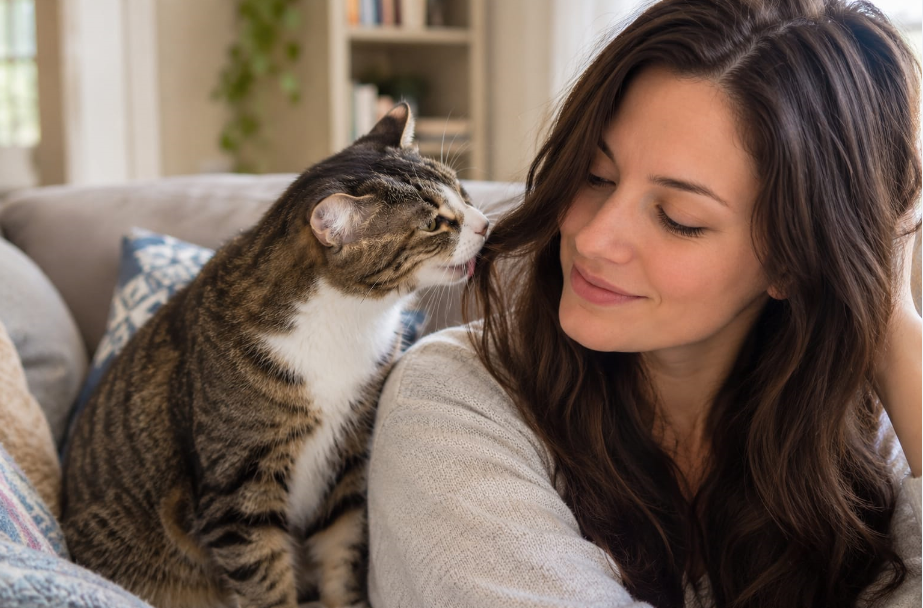
Your cat may climb onto your pillow, sniff your hair, give it a few licks, and then suddenly take a little bite. Strange as it seems, hair biting is usually connected to normal cat behavior rather than anger or an attempt to hurt you.
Some cats treat their owner’s hair like something to groom. Others are interested because it moves, smells different after a shower, or gets an interesting reaction from their human. The situation around the biting matters too, especially when it happens at bedtime or early in the morning.
The bigger distinction is whether your cat is simply nibbling your hair or actually chewing and swallowing it. Those are two different behaviors, and repeated hair eating deserves more attention.
Why Does My Cat Bite My Hair?
One common explanation is social grooming. Cats that live together often groom one another, particularly around the head and face. A cat that licks or gently nibbles your hair while sitting close to you may be including you in that social routine.
Your cat may also be interested in the way your hair moves. Loose hair, a ponytail swinging as you turn your head, or strands sticking out from under a blanket can become an easy target for a playful cat. Younger cats, in particular, may investigate with their mouths.
Then there are cats that have simply discovered that biting hair gets a response. You turn around, talk to them, move your head, or reach out to stop them. From your cat’s perspective, that is interaction.
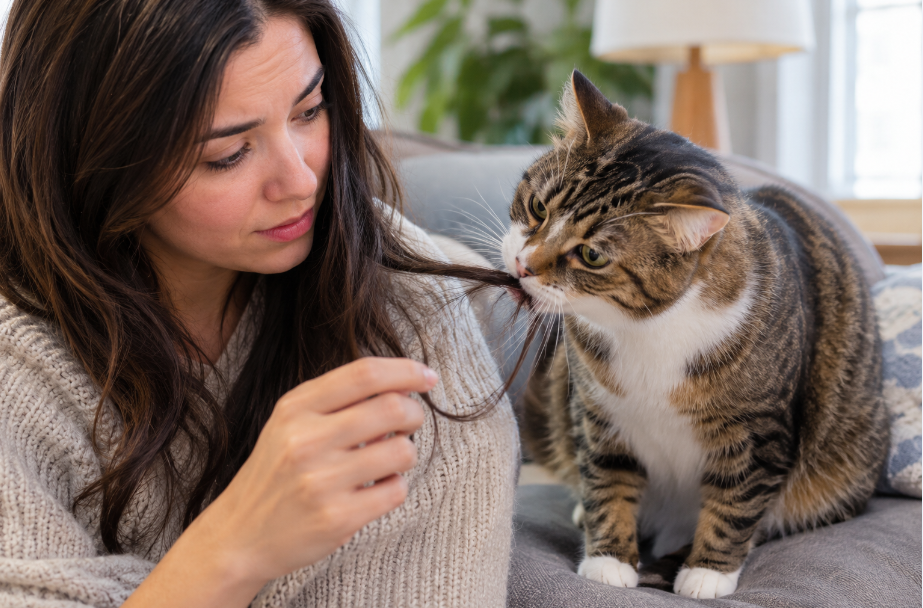
The details make the behavior easier to read. A relaxed cat that purrs and gives gentle little nibbles is doing something quite different from a cat that grabs your hair, bites hard, swats, and becomes tense.
Why Does My Cat Bite My Hair When I Sleep?
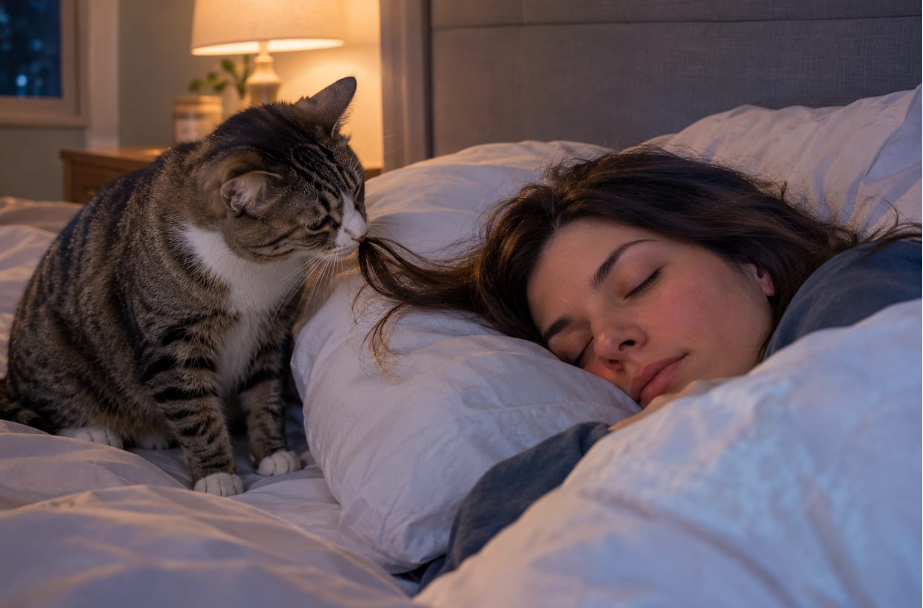
This is especially common because your hair is right there, moving against the pillow or blanket while you are mostly still.
Your cat may also have learned that nighttime hair biting wakes you up. If biting your hair reliably gets you to sit up, speak, pet the cat, or get out of bed, the behavior can become part of the morning routine.
For a cat that does this around 4 or 5 a.m., look at the rest of the routine too. Is the cat looking for food? Trying to play? Following you around once you’re awake? A cat that is bored overnight may also look for something interesting to do.
If you want the behavior to stop, avoid turning the bite into a big event. Quietly move your hair away and redirect your cat to an appropriate toy or another activity.
Why Does My Cat Bite My Head or Scalp?
Your head is simply an easy place for your cat to reach when you’re lying down together. If your cat sleeps near your pillow, your hair and scalp are right at nose level.
Gentle licking or nibbling around your hair can fit with grooming and bonding. A cat that bites the scalp harder, especially while its ears are back, tail is lashing, or body is tense, is giving you a different message. That pattern can fit with overstimulation or irritation rather than affection.
You do not need to let your cat continue just because the behavior started as grooming. Moving away and giving the cat some space is a better response than scolding or physically pushing the cat away.
Why Does My Cat Bite My Hair After I Shower?
Freshly washed hair smells and feels different from the hair your cat was used to a few minutes earlier.
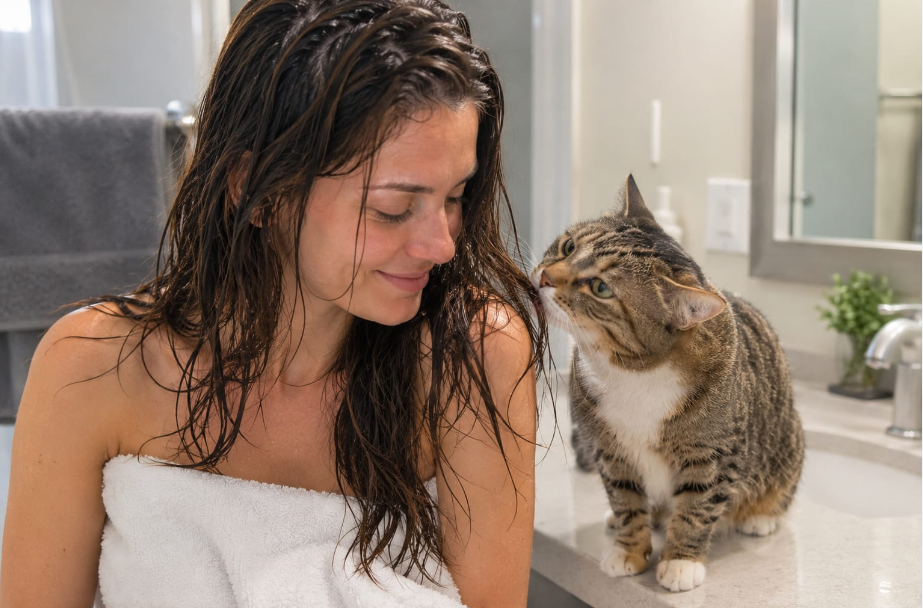
Shampoo, conditioner, water, and changes in the texture of your hair can all make it more interesting to investigate. Wet hair also hangs differently and may be easier for a curious cat to lick or nibble.
This is one situation where keeping your cat away from freshly treated hair makes sense. Some human hair and skin products contain ingredients that are not intended for cats to lick. You do not need to panic over a single lick, but preventing repeated contact is a sensible habit.
Why Does My Cat Bite My Hair When It’s Wet?
Wet hair has a different texture and smell, so your cat may investigate it more than dry hair.
You may notice your cat sniffing your head first, licking the wet strands, and then giving them a few small bites. That sequence fits curiosity or grooming behavior more than aggression.
If your cat only does this after showers and otherwise ignores your hair, there may not be much mystery behind it. Simply keep your hair out of reach until it dries if you do not want the behavior to continue.
Is Your Cat Biting or Actually Eating Your Hair?
A few gentle bites are not the same as repeatedly chewing and swallowing hair.
A cat that nibbles your hair and then moves on is usually dealing with a behavioral habit. But a cat that seeks out hair, chews it repeatedly, and swallows it is doing something different.
Cats can develop pica, a pattern of repeatedly chewing or eating non-food materials. Pica has behavioral and medical causes, and swallowed non-food material can sometimes cause gastrointestinal problems or an obstruction.
Human hair is also not something you should encourage your cat to eat. Cats already swallow their own loose fur during grooming, and excessive hair ingestion can contribute to hairball problems.
If your cat is actually swallowing your hair on a regular basis, talk with your veterinarian rather than assuming it is simply a quirky habit.
How Can You Tell Why Your Cat Is Biting Your Hair?
The behavior around the bite often tells you more than the bite itself.
| What you notice | What it may mean |
| Gentle nibbling while relaxed or purring | Grooming or social bonding |
| Chasing loose or moving strands | Play and hunting behavior |
| Biting when you are asleep | Attention, interaction, or a learned routine |
| Biting mainly after showers | Interest in changed smell or texture |
| Repeated chewing and swallowing | Possible pica or another issue worth discussing with a veterinarian |
| Hard biting with tense body language | Irritation, overstimulation, or stress |
You can also look at what happens immediately afterward. If your cat bites your hair and then settles beside you, grooming or comfort may be involved. If the bite starts a chase around the bed, play is probably part of the picture.
How to Stop Your Cat From Biting Your Hair
You do not have to punish your cat to change this behavior.
Start by making your hair less interesting. Move it away calmly, especially at bedtime, and avoid turning every bite into a long interaction. Then give your cat something appropriate to chase, bat, or play with.
For nighttime biting, a consistent evening routine can help. Interactive play before bed gives your cat a chance to use some energy, while keeping appropriate toys available gives them something else to investigate.
If your cat repeatedly chews hair or other non-food objects, do not rely on redirection alone. VCA recommends preventing access to inappropriate items and providing suitable outlets for play, exploration, and enrichment when chewing becomes excessive.
And skip the yelling. Punishment can increase anxiety and may make repetitive behaviors harder to manage.
When Should You Talk to a Veterinarian?
Hair biting by itself is not usually a reason for an emergency visit. The concern rises when it becomes repetitive, difficult to interrupt, or part of a wider change in your cat’s behavior.
Make a veterinary appointment if your cat:
- Regularly swallows hair or other non-food items
- Has started chewing unusual objects as well as hair
- Vomits repeatedly or has trouble passing stool
- Loses interest in food
- Becomes unusually tired or withdrawn
- Develops other sudden behavior changes
- Shows signs of pain or distress
Repeated chewing or ingestion of non-food materials can have behavioral causes, but veterinary evaluation is useful because medical problems can also contribute to compulsive chewing or pica.
Frequently Asked Questions
Why should you not stare a cat in the eyes?
A prolonged, direct stare can feel threatening to some cats, especially when combined with a tense posture or unfamiliar person. A relaxed blink and looking away are more comfortable forms of interaction. Your cat’s overall body language matters more than eye contact alone.
Do cats recognize humans as cats?
Cats do not literally mistake humans for other cats. They do, however, use some familiar social behaviors with people, including rubbing, grooming-like behavior, kneading, and close physical contact. A cat nibbling your hair can fit into that social relationship.
What do cats think when they bite you?
A bite does not have one universal meaning. Your cat could be playing, seeking attention, grooming, reacting to overstimulation, or communicating that they want space. The force of the bite and what your cat does immediately before and after it provide better context.
How to tell if a cat is imprinted on you?
Cats do not need to be “imprinted” on a person in the strict sense to form a strong bond. A cat that regularly chooses to stay near you, greets you, follows you, sleeps beside you, seeks affection, or relaxes around you is showing signs of a comfortable social attachment.
How far away can cats hear you calling?
Cats have highly sensitive hearing and can detect sounds from farther away than humans can, but there is no single distance that applies to every cat or situation. Walls, background noise, wind, and the pitch and volume of your voice all affect how well your cat hears you.
Conclusion
So, why did your cat bite your hair? In many homes, the answer is fairly ordinary: your cat may be grooming you, playing with something that moves, looking for attention, or enjoying a familiar bedtime interaction. Wet hair and freshly washed hair can also become more interesting because the texture and smell have changed.
The behavior deserves a closer look when your cat starts eating the hair rather than simply nibbling it, becomes unusually persistent, or develops other changes such as vomiting, poor appetite, or unusual behavior. Those situations are different from an occasional gentle bite and are worth discussing with a veterinarian. For a cat that only gives your hair a few bites before settling back down, you may simply have a very curious little roommate with an unusual grooming habit. But what does your cat do immediately before and after biting your hair? That small detail may tell you more about what your cat is actually trying to say.