
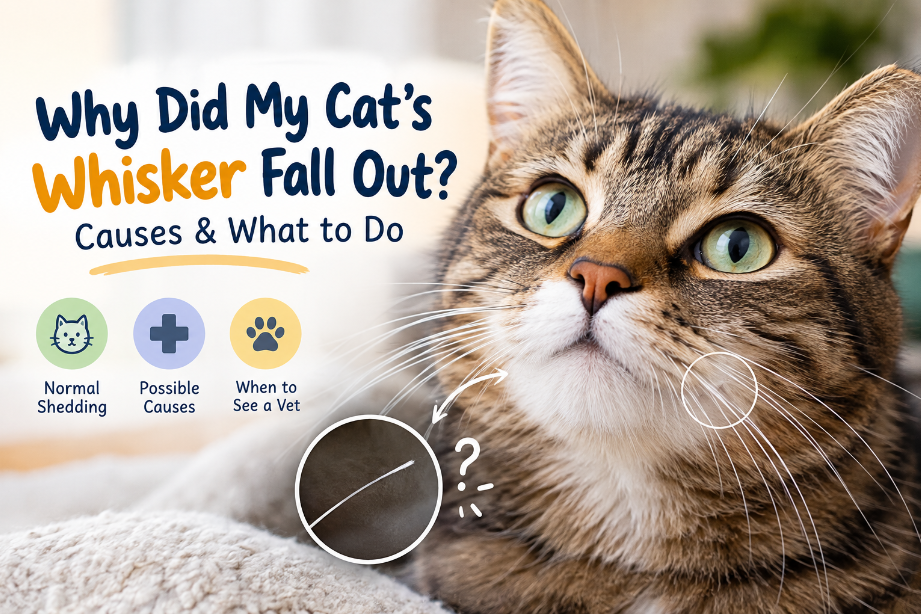
Finding one of your cat’s whiskers on the couch, carpet, or near the food bowl usually isn’t a reason to worry. Cats naturally shed individual whiskers as part of their growth cycle, just as they shed regular fur.
However, if your cat is losing several whiskers, developing bare patches around the muzzle, or showing irritated skin, the loss deserves closer attention. Skin conditions, infections, allergies, and physical injuries can affect whiskers and their follicles.
Here’s how to tell normal shedding from a problem that needs veterinary care.
Is It Normal for a Cat to Lose a Whisker?
Yes. Losing an occasional whisker is a normal part of a cat’s hair-growth cycle. A single fallen whisker, with healthy-looking skin and no changes in behavior, usually isn’t concerning.
Whiskers are specialized sensory hairs called vibrissae. They help cats detect nearby objects, sense air movements, and navigate their surroundings. Unlike ordinary fur, whiskers grow from deeply embedded follicles surrounded by sensitive nerve endings.
You don’t need to do anything when you find one naturally shed whisker. Just keep an eye out for repeated loss or changes around your cat’s face.
Do Cat Whiskers Grow Back?
Yes. A naturally shed or broken whisker usually grows back, provided its follicle hasn’t been seriously damaged. Regrowth takes time, and the exact timeline varies from cat to cat.
Don’t pull out a loose whisker or trim the remaining ones. Cats rely on these sensory hairs to move confidently through their environment.
Why Did My Cat’s Whisker Fall Out? 6 Possible Reasons
1. Natural Whisker Shedding
Cats don’t keep every whisker forever. Individual whiskers reach the end of their growth cycle and fall out, making room for new ones.
You might find one on your living room rug while your cat’s face looks completely normal. That’s generally expected. Cats shed whiskers individually rather than losing all of them at once.
2. Broken or Damaged Whiskers
A whisker doesn’t always fall out from the root. It can snap or become damaged through rough play, rubbing against objects, or an accidental injury.
Check whether the whisker looks unusually short or has a blunt, broken end. If your cat lives with other pets, rough interactions could explain damaged whiskers. Avoid pulling at the remaining whiskers to investigate.
3. Feline Acne or Skin Irritation
Feline acne commonly affects the chin and sometimes the surrounding area. You might notice black specks, small bumps, redness, or crusty skin beneath the mouth.
When inflammation affects the skin around whisker follicles, whiskers can become damaged or fall out. If you notice these changes, arrange a veterinary examination. Avoid squeezing bumps or applying human acne products.
4. Skin Infections or Allergies
Bacterial infections, fungal infections such as ringworm, and inflammatory skin conditions can affect the face and hair follicles. Allergies can also cause itching and irritation, leading to scratching or rubbing around the muzzle.
Look for accompanying signs such as scaly patches, redness, sores, or hair loss around the eyes and nose. Ringworm can spread to people and other pets, so seek veterinary advice rather than assuming a patch is harmless.
5. Scratches, Injury, or Rough Play
A scratch during play or a fight with another cat can damage whiskers and the surrounding skin. This is especially worth considering when the loss appears suddenly on one side of the face.
Check for tenderness, swelling, bleeding, or visible wounds without pressing on the affected area. Contact your veterinarian if the skin is injured, painful, or swollen.
6. Stress or Other Health Problems
Moving to a new home, introducing another pet, or changing a familiar routine can stress some cats. Stress is more commonly associated with changes such as excessive grooming or hair loss than with isolated whisker shedding.
Broader health or nutritional problems can also affect skin and coat condition. If whisker loss occurs alongside widespread hair loss, reduced appetite, or other behavior changes, your veterinarian can help determine whether an underlying problem is involved.
Why Are My Cat’s Whiskers Falling Out on One Side?
One-sided whisker loss deserves a closer look, especially when several whiskers disappear from the same area. Localized damage, scratching, skin irritation, or an injury could explain the pattern.
For example, a cat that has been roughhousing with another pet might have broken whiskers on one cheek. Redness, crusting, or bald patches around that area make a skin problem more concerning.
One-sided loss alone doesn’t establish a diagnosis. Arrange a veterinary appointment if it continues, spreads, or comes with visible skin changes.
What Should I Do If My Cat Loses a Whisker?
Start by looking at your cat’s face without pulling, bending, or manipulating the remaining whiskers.
- Check the skin: Look for redness, black spots, crusts, swelling, or bald patches.
- Consider recent changes: Think about rough play, possible scratches, new pets, or changes in grooming behavior.
- Keep care gentle: Don’t cut whiskers, pull loose ones, or apply human skin products.
- Monitor the pattern: An occasional fallen whisker is different from repeated loss in one area.
If your cat has chin irritation, consider using clean stainless steel or ceramic food and water bowls. However, changing bowls alone won’t treat every cause of feline acne or facial irritation.
When to Contact Your Veterinarian
Schedule a veterinary visit if your cat repeatedly loses whiskers, develops facial bald patches, scratches excessively, or has persistent redness, scabs, or sores.
Seek prompt veterinary care for deep wounds, significant facial swelling, severe pain, or eye involvement. If your cat also stops eating or seems seriously unwell, contact a veterinarian promptly rather than waiting for the whiskers to grow back.
Your vet may examine the skin and follicles, ask about diet and recent changes, and recommend skin tests or other diagnostics based on the findings.
FAQs
Are fallen cat whiskers good luck?
Some people consider finding a fallen cat whisker good luck, and keeping one as a small keepsake is a personal choice. There is no scientific evidence that a shed whisker brings good or bad luck. From a health perspective, an occasional naturally shed whisker is usually normal.
What does whisker stress look like?
Whisker stress, commonly called whisker fatigue, is a term used for possible discomfort from repeated contact around a cat’s sensitive whisker pads. Signs sometimes attributed to it include reluctance to eat from a deep bowl or repeatedly pulling food out. These behaviors have other possible causes, so persistent changes deserve veterinary advice.
Do cat whiskers grow back if they fall out?
Yes, cat whiskers usually grow back after natural shedding or minor breakage, as long as the follicles remain healthy. Regrowth isn’t immediate and can take weeks or longer. Avoid trimming or pulling whiskers, because cats use them to sense nearby objects and navigate their surroundings.
What is the lifespan of a cat whisker?
There isn’t one fixed lifespan for every cat whisker. Each whisker follows its own growth cycle, so individual whiskers naturally shed and regrow at different times. Finding an occasional whisker around your home is normal; repeated loss or damaged skin around the muzzle calls for closer attention.
Should I be worried if my cat loses a whisker?
Usually not, when it’s just one whisker and your cat’s skin and behavior remain normal. Several missing whiskers, recurring loss, facial sores, itching, or bald patches are more concerning. Contact your veterinarian if the loss continues or comes with other symptoms.
Conclusion
An occasional fallen whisker is usually part of normal shedding, and it generally grows back. Repeated whisker loss, broken whiskers with skin irritation, or bald patches around the face deserve more attention.
Leave your cat’s whiskers intact, keep an eye on any skin changes, and contact your veterinarian when the loss is unusual or accompanied by other symptoms.