
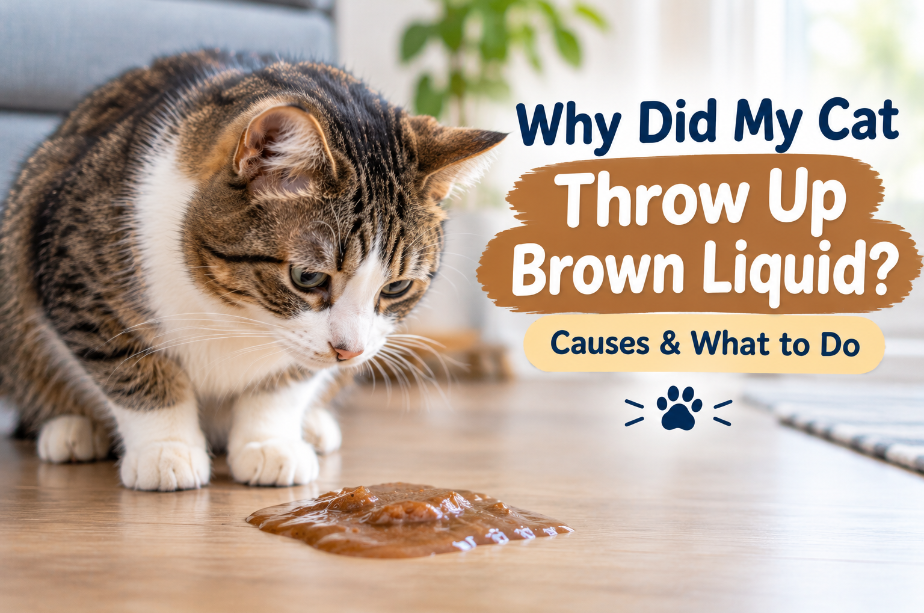
Finding brown liquid where your cat has vomited can be alarming, especially when you cannot tell whether it came from food or something more serious. Brown vomit can contain partially digested food, swallowed material, or blood from the digestive tract. Its color alone cannot confirm the cause.
The shade, texture, smell, how often your cat vomits, and how your cat behaves afterward all matter. Dark vomit that resembles coffee grounds is particularly concerning and needs urgent veterinary attention.
What Does Brown Vomit in Cats Look Like?
Brown cat vomit can range from light tan or muddy brown to very dark brown. It may be watery, thick, contain food particles, or have a strong odor.
Light brown vomit shortly after eating might contain partially digested food. Dark brown or black material that resembles wet coffee grounds can indicate digested blood in the upper digestive tract.
Brown vomit that smells like feces is also concerning because it can occur with serious digestive problems, including an intestinal blockage. Do not rely on color or smell alone to identify the cause.
Why Did My Cat Throw Up Brown Liquid? 6 Possible Causes
1. Partially Digested Food
Food mixed with stomach fluids can look brown after digestion. This is more plausible when your cat vomits soon after eating brown-colored wet food or kibble.
Eating too quickly, overeating, or a sudden change in diet can contribute to vomiting. However, repeated episodes should not automatically be blamed on food, even when your cat seems hungry afterward.
2. Eating Something Brown or Unusual
Cats sometimes chew houseplants, get into garbage, or swallow things they find around the home. The material they eat can affect the color of their vomit.
Check whether your cat had access to spoiled food, unfamiliar plants, household chemicals, string, or small objects. If you suspect toxin exposure or that your cat swallowed a foreign object, contact a veterinarian immediately. Do not induce vomiting or give home remedies unless instructed by a veterinary professional.
3. Stomach Irritation or Digestive Problems
Inflammation of the stomach or intestines can cause vomiting. Dietary intolerance, infections, and other gastrointestinal conditions are possible explanations.
You might also notice diarrhea, reduced appetite, abdominal discomfort, or changes in your cat’s usual behavior. A veterinarian can assess these symptoms and determine whether further testing is needed.
4. Hairballs and Repeated Vomiting
Cats swallow loose fur while grooming. Hairballs can trigger retching and vomiting, sometimes with food or brownish digestive material.
Occasional hairballs happen, but repeated vomiting should not be treated as routine grooming behavior. Frequent retching, an inability to bring anything up, or signs of discomfort warrant veterinary assessment.
5. Swallowing a Foreign Object
String, ribbon, hair ties, toy pieces, and other small objects can become lodged in a cat’s digestive tract. A blockage may cause repeated vomiting, loss of appetite, pain, or lethargy.
This problem can become life-threatening and requires prompt veterinary care. If string is hanging from your cat’s mouth or rear end, do not pull it.
6. Internal Bleeding or Another Serious Illness
Dark brown vomit that resembles coffee grounds can contain digested blood. Possible causes include stomach ulcers, injury, swallowed foreign objects, or other diseases affecting the digestive tract.
Other medical conditions, including some that affect the liver or kidneys, can also cause vomiting. The appearance of the vomit cannot identify which condition is responsible.
If the vomit looks like coffee grounds, contains blood, or is nearly black, seek urgent veterinary care rather than waiting to see whether it happens again.
Why Did My Cat Throw Up Light Brown Liquid?
Light brown vomit may contain partially digested food, particularly when a cat vomits after a meal. The color can also come from something the cat swallowed.
Think about what your cat ate recently and whether the vomiting happened once or repeatedly. Take a photo of the vomit if possible, since it may help your veterinarian assess its appearance.
Light brown color does not automatically mean the problem is harmless. Contact your vet if vomiting returns, your cat refuses food, or other symptoms develop.
Why Did My Cat Throw Up Dark Brown Liquid?
Dark brown vomit deserves particular attention because it can sometimes contain digested blood. Material that resembles coffee grounds is especially concerning.
Do not assume that dark vomit is simply old food or bile. Contact a veterinarian urgently, particularly if your cat also has pale gums, weakness, abdominal pain, or reduced appetite. Collapse, severe weakness, or breathing difficulty requires emergency veterinary care.
Why Does My Cat’s Vomit Smell Like Poop?
Brown vomit with a fecal odor can occur after a cat eats feces or other foul-smelling material. However, that smell can also accompany serious digestive problems, including an intestinal blockage.
Look for other signs such as repeated vomiting, a swollen or painful abdomen, loss of appetite, or difficulty passing stool. These symptoms need prompt veterinary assessment. You cannot rule out a blockage based on the smell or appearance of the vomit alone.
Why Did My Cat Throw Up Brown Liquid but Act Normal?
A cat that walks away, grooms itself, or asks for food after vomiting may appear perfectly fine. Normal behavior is reassuring, but it does not rule out a serious cause.
If the vomit is dark brown, black, or coffee-ground-like, seek urgent veterinary advice even if your cat seems normal. For a single episode of light brown vomit without other symptoms, contact your veterinarian for guidance and watch closely for any recurrence or behavior changes.
Why Is My Cat Throwing Up Brown Liquid and Not Eating?
Brown vomiting combined with refusing food is more concerning than an isolated episode. Nausea, pain, digestive illness, or an obstruction can make a cat stop eating.
Contact your veterinarian promptly, especially if your cat vomits again, hides, becomes weak, or drinks less than usual. Do not wait several days for appetite to return. Cats can develop serious complications when they go without food for too long.
What Should You Do if Your Cat Throws Up Brown Liquid?
Start by checking the appearance of the vomit and how your cat is behaving. If it is dark, resembles coffee grounds, contains blood, or accompanies severe symptoms, seek urgent veterinary care.
For any vomiting episode:
- Take a photo and note when it happened and how many times your cat vomited.
- Keep your cat away from plants, chemicals, garbage, string, and small objects.
- Offer access to fresh water, but do not force your cat to drink.
- Ask your veterinarian when to offer food, particularly if vomiting continues or your cat has an existing medical condition.
- Do not give human medication or attempt to induce vomiting.
If you suspect poisoning or a swallowed object, do not wait for additional symptoms before contacting a veterinarian.
When Should You Take Your Cat to the Vet?
Seek urgent veterinary care for dark brown or coffee-ground-like vomit, visible blood, repeated vomiting, or suspected toxin exposure or intestinal blockage.
Emergency signs include collapse, severe weakness, pale gums, difficulty breathing, or obvious abdominal pain. Do not wait for your cat to look visibly sick if the vomit suggests bleeding.
Blood in vomit can have several causes and needs veterinary assessment. Read our guide on why your cat might throw up blood to learn more about possible causes and warning signs.
How Can You Help Prevent Vomiting in Cats?
Keep your cat’s diet consistent and introduce new foods gradually. Store garbage securely, keep toxic plants and household chemicals out of reach, and put away string, ribbon, and small objects that could be swallowed.
Regular brushing can help reduce swallowed fur. If your cat vomits repeatedly, arrange a veterinary examination instead of relying on feeding changes or hairball remedies alone.
FAQs
Why is brown liquid coming out of my cat?
Brown liquid can contain partially digested food, swallowed material, or blood. Its appearance alone cannot confirm the cause. Dark brown vomit resembling coffee grounds is particularly concerning and needs urgent veterinary attention, even when your cat appears normal.
Should I be concerned if my cat throws up liquid?
One episode of vomiting does not always mean a serious illness, but the color and other symptoms matter. Repeated vomiting, blood, appetite loss, weakness, or difficulty keeping water down warrants veterinary attention. Dark brown or coffee-ground-like vomit needs urgent assessment.
What is the silent killer of cats?
There is no single disease known as the silent killer of all cats. Chronic kidney disease is one serious condition that can develop gradually, with subtle early signs. Regular veterinary checkups help identify health problems before symptoms become obvious.
What causes dark brown liquid vomit?
Dark brown vomit can contain digested food or swallowed material, but a coffee-ground appearance can indicate digested blood from the upper digestive tract. Because bleeding and other serious conditions are possible, contact a veterinarian urgently rather than trying to diagnose the cause at home.
What could be causing my cat to vomit brown liquid?
Possible causes include partially digested food, dietary problems, stomach irritation, hairballs, swallowed objects, and serious digestive disease. Blood can also make vomit appear dark brown. A veterinarian will consider the vomit’s appearance, frequency, your cat’s appetite, and other symptoms to determine the next steps.
Conclusion
Brown liquid vomit can come from food or digestive irritation, but it can also signal bleeding or an intestinal blockage. Dark brown or coffee-ground-like vomit needs urgent veterinary attention. Record what you see, monitor your cat’s behavior, and contact a veterinarian promptly when vomiting repeats or other symptoms appear.