
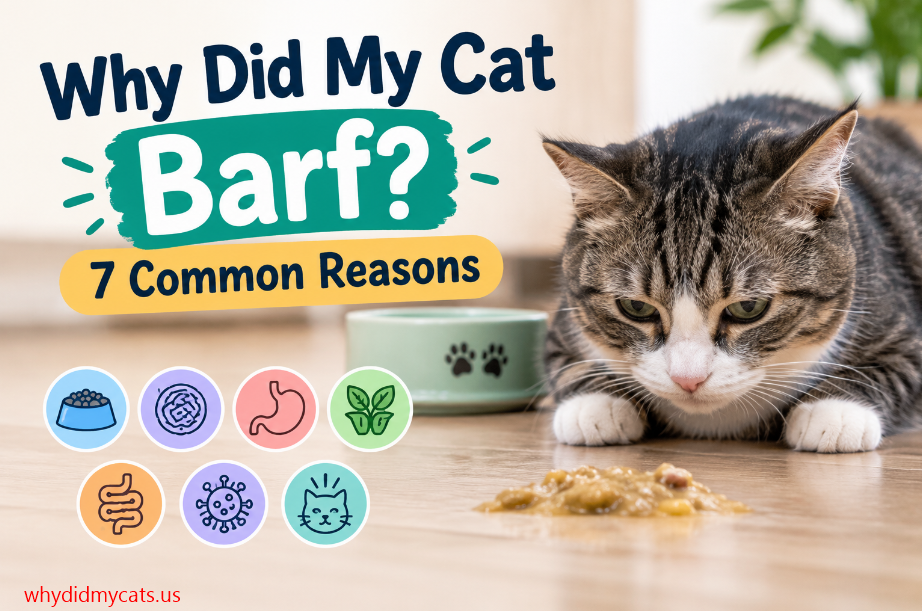
Finding vomit on the carpet or next to your cat’s food bowl is never pleasant. Cats sometimes throw up after eating too quickly or bringing up a hairball, but vomiting can also signal a digestive problem or another illness.
The reason matters, especially when your cat vomits repeatedly or starts acting differently. How often it happens, what comes up, and whether your cat is eating and behaving normally can help you decide what to do next.
Why Did My Cat Barf? 7 Common Reasons
1. Eating Too Quickly
Some cats gulp down their food, especially when they share a home with other pets or have learned to compete for meals. Food may come back up shortly after eating, sometimes looking almost unchanged.
Try offering smaller portions more frequently or using a slow-feeder bowl. If the episodes continue, contact your veterinarian rather than assuming fast eating is the only cause.
2. Hairballs
Cats swallow loose hair while grooming themselves. Most hair passes through the digestive tract, but some collects in the stomach and comes back up as a damp clump of hair.
An occasional hairball is common. Frequent hairballs or repeated retching deserve veterinary attention, particularly if your cat also has poor appetite, constipation, or changes in grooming.
3. Sudden Food Changes or Food Intolerance
Switching cat food too quickly, eating rich table scraps, or getting into another pet’s food can upset a cat’s stomach. Some cats also have difficulty tolerating particular ingredients.
Introduce new food gradually and avoid repeatedly changing diets to find a quick fix. Keep track of new treats and food changes, especially when vomiting begins soon afterward.
4. Eating Something They Shouldn’t
Cats may chew houseplants, swallow string, play with small objects, or eat spoiled food left on a counter. Some swallowed objects can block the digestive tract, while certain plants and household substances are toxic to cats.
If you suspect your cat swallowed string, a toy, medication, or a poisonous substance, contact a veterinarian immediately. Do not pull string from your cat’s mouth or rear end, and do not try to make your cat vomit at home.
5. Stomach or Intestinal Problems
Gastrointestinal inflammation, intestinal parasites, and other digestive conditions can cause vomiting. Your cat might also have diarrhea, abdominal discomfort, weight loss, or a reduced appetite.
A single episode does not automatically mean your cat has a serious disease. Repeated vomiting, however, needs veterinary assessment to identify the underlying cause.
6. Illness Affecting Other Parts of the Body
Vomiting is not always caused by a stomach problem. Kidney disease, liver disease, diabetes, pancreatitis, and an overactive thyroid can also cause vomiting, particularly when episodes recur.
Older cats and cats with existing medical conditions need extra attention when vomiting starts. A veterinarian can determine whether testing is needed.
7. Stress or Changes in Routine
Moving to a new home, introducing another pet, having visitors, or changing feeding routines can affect a cat’s behavior and sometimes its digestion. However, stress should not automatically be blamed for vomiting.
Keep your cat’s routine as steady as possible and provide a quiet place to eat and rest. If vomiting continues, arrange a veterinary checkup.
Why Did My Cat Barf After Eating?
The timing and appearance of the food can offer useful clues.
If your cat brings up undigested food shortly after a meal without obvious heaving, the episode might be regurgitation rather than vomiting. Regurgitation is usually more passive, while vomiting often involves retching and abdominal contractions.
Eating too quickly can contribute to either problem, but repeated episodes need investigation. Take a photo or short video if possible and show it to your veterinarian.
What Does Your Cat’s Vomit Look Like?
The appearance of vomit can help your veterinarian narrow down possible causes, but color alone cannot confirm a diagnosis.
- Yellow liquid: Yellow vomit often contains bile. An empty stomach can be one explanation, but repeated vomiting needs attention. Read more in Why Did My Cat Throw Up Yellow Liquid? Causes & Help.
- White liquid or foam: White foam can appear with stomach irritation or other digestive problems. It is not enough to identify the cause by itself. See Why Did My Cat Throw Up White Liquid? 6 Causes & What to Do.
- Blood or dark, coffee-ground-like material: Blood in vomit needs prompt veterinary attention. Contact a veterinarian immediately for guidance and read Why Did My Cat Throw Up Blood? Causes & Care.
What Should You Do After Your Cat Barfs?
If your adult cat vomits once but remains alert, comfortable, and interested in food and water, observe it closely. Make a note of when the episode happened, what your cat ate, and whether the vomiting happens again.
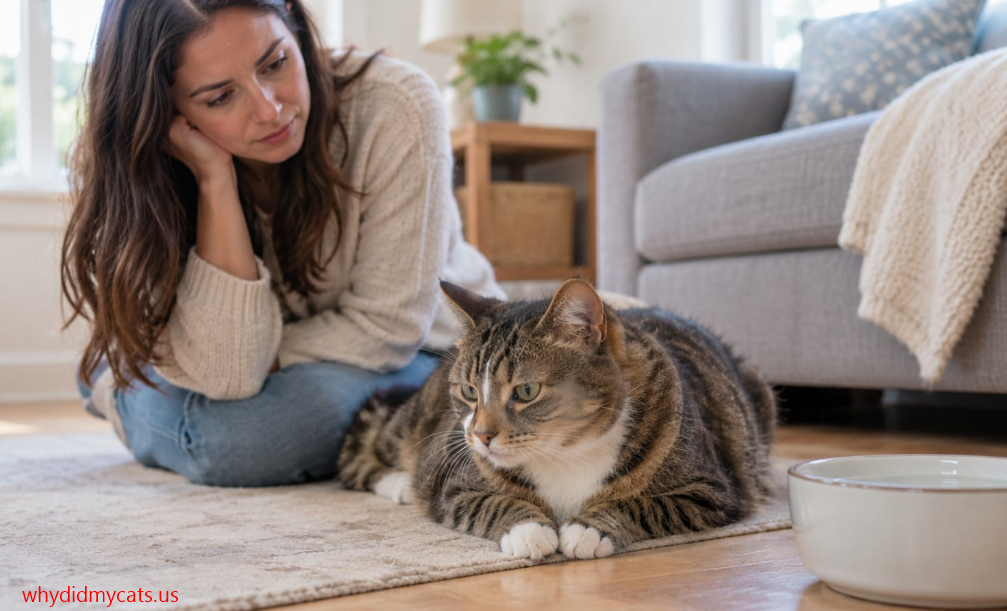
Keep fresh water available. Once your cat has settled, ask your veterinarian how and when to offer food, particularly if nausea continues. Do not force-feed your cat or withhold food for a prolonged period.
Avoid human medicines and home remedies unless a veterinarian specifically recommends them. Some medications that are safe for people are dangerous to cats.
When Should You Take Your Cat to the Vet?
Seek urgent veterinary care if your cat:
- Vomits repeatedly or cannot keep water down.
- Has blood in its vomit or vomits material that looks like coffee grounds.
- Becomes very weak, collapses, or has significant abdominal pain.
- May have swallowed a foreign object or a toxic substance.
- Vomits alongside severe diarrhea or other rapidly worsening symptoms.
Contact your veterinarian promptly if vomiting continues, happens frequently, or occurs with weight loss, reduced appetite, increased thirst, or changes in urination. Kittens, senior cats, and cats with existing health conditions may need earlier assessment.
A veterinarian may ask about your cat’s diet, medications, access to plants or small objects, and how often the vomiting occurs. Depending on the findings, tests may include bloodwork, a fecal examination, X-rays, or ultrasound.
How Can You Help Prevent Cat Vomiting?
You cannot prevent every episode, but a few practical habits can reduce some common triggers:
- Feed smaller meals if your cat tends to gulp food.
- Introduce new food gradually.
- Brush your cat regularly to reduce swallowed loose hair.
- Keep string, small toys, medications, and toxic plants out of reach.
- Maintain a consistent feeding routine and monitor appetite and litter-box habits.
Do not dismiss frequent vomiting as normal hairballs. A recurring pattern deserves a veterinary check, even when your cat seems fine between episodes.
Frequently Asked Questions
How to soothe a cat after throwing up?
Keep your cat in a quiet, comfortable place and leave fresh water available. Do not force food or give human medication. If vomiting repeats, your cat seems uncomfortable, or it cannot keep water down, contact a veterinarian. Ask your vet when to offer food again.
What is the silent killer in cats?
There is no single disease known as the silent killer in every cat. Kidney disease can progress with subtle signs, and urinary blockages can become life-threatening quickly. Vomiting accompanied by difficulty urinating, weakness, or other concerning changes requires prompt veterinary attention.
How do I know if my cat is okay after throwing up?
It is reassuring when an adult cat has vomited once and remains alert, walks normally, drinks, and shows interest in food. Still, monitor closely for another episode or changes in behavior. Repeated vomiting, blood, weakness, pain, or refusal to eat warrants veterinary advice.
Can cats throw up without being sick?
Yes. A cat may vomit after eating too quickly or bring up an occasional hairball without having a serious illness. However, repeated vomiting is not something to dismiss as normal. Frequency, other symptoms, and your cat’s medical history help determine whether an examination is needed.
Why did my cat vomit but acting normal?
A cat can seem normal after a single episode caused by eating too quickly or mild stomach upset. That does not prove the cause is harmless. Watch for recurrence and changes in appetite, energy, or litter-box habits, and contact your veterinarian if vomiting repeats or other symptoms appear.
Should I be worried if my cat is throwing up?
One isolated episode in an otherwise well adult cat may not be an emergency. Repeated vomiting, blood, inability to keep water down, weakness, abdominal pain, or suspected toxin exposure is more concerning. Contact your veterinarian promptly when these signs appear rather than waiting for the problem to pass.
Conclusion
If you are asking, “Why did my cat barf?”, start by noting when it happened, what the vomit looked like, and whether your cat is behaving normally. Eating too quickly and hairballs are possible explanations, but recurring vomiting can point to an underlying health problem. Seek veterinary guidance when episodes repeat or warning signs appear.