
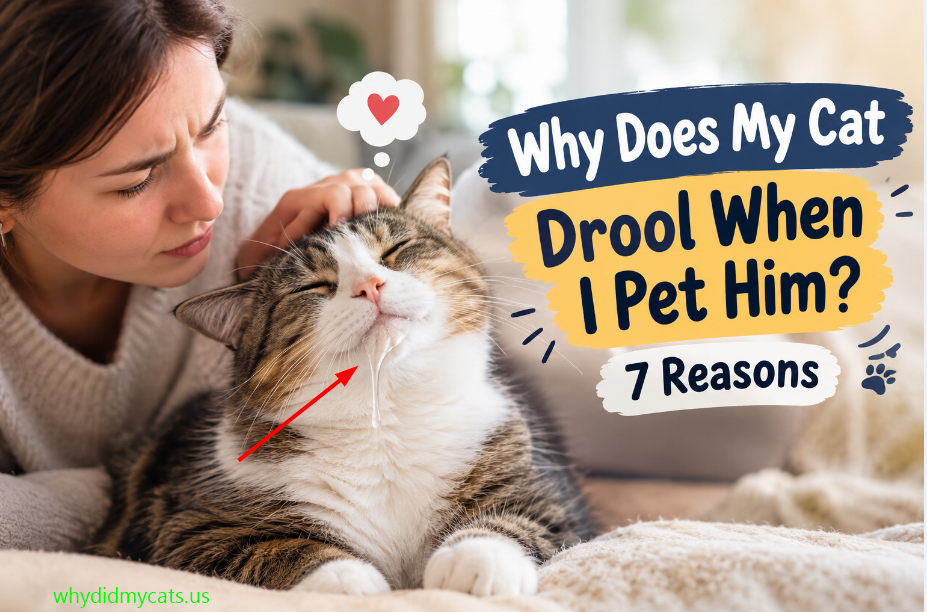
When you pet your cat and notice a little drool on your hand or shirt, it can be surprising. Some cats produce a small amount of saliva when they feel comfortable, especially while purring or kneading. Others drool because of mouth pain, nausea, or another health problem.
The difference comes down to the circumstances. A cat who relaxes during petting and otherwise eats, grooms, and behaves normally is less concerning than one who suddenly starts drooling heavily.
Why Does My Cat Drool When I Pet Him?
Your cat may drool during petting because he feels relaxed and comfortable. Some cats have this response when you scratch their cheeks, rub under their chin, or stroke their favorite spot. You may notice purring, kneading, half-closed eyes, or your cat leaning into your hand.
A small amount of drool that occurs only during these relaxed moments may be normal for that individual cat. However, drooling is not automatically a sign of happiness. New, persistent, or excessive saliva deserves attention, even when your cat seems calm.
7 Reasons Your Cat Drools When You Pet Him
1. Your Cat Feels Relaxed and Safe
Some cats drool when they settle into a comfortable interaction with someone they trust. Your cat might curl up beside you on the couch, close his eyes, and begin drooling as you gently stroke his head.
If he has always done this during affectionate moments and shows no other symptoms, it may simply be his normal response to relaxation.
2. Your Cat Purrs While You Pet Him
Purring and drooling sometimes occur together. A cat who purrs, kneads a blanket, and leans into your touch may be enjoying the interaction.
However, purring does not always mean a cat is happy. Cats also purr in stressful or uncomfortable situations, so consider his posture and behavior rather than relying on the sound alone.
3. You’re Petting Your Cat’s Favorite Spot
Some cats especially enjoy gentle scratches around the cheeks, under the chin, or behind the ears. Touching these areas may help your cat settle into a relaxed state, and a little drooling can accompany that response.
Let your cat guide the interaction. If he turns away, flattens his ears, or tries to leave, stop petting him rather than forcing more contact.
4. Your Cat Associates Petting With Comfort
A familiar petting routine can become part of your cat’s daily comfort. For example, your cat might climb into your lap while you work from home and start purring as soon as you stroke his back.
Cats develop individual preferences for touch and attention. If your cat has also become unusually affectionate or follows you around the house, read our guide on Why Did My Cat Become Affectionate? 7 Possible Reasons.
5. Your Kitten May Be Teething
Kittens can drool while their baby teeth are being replaced by adult teeth, although heavy drooling should not automatically be blamed on teething. You might also notice chewing on toys or mild gum discomfort.
Provide safe kitten toys and monitor eating behavior. If your kitten struggles to eat, has bleeding gums, or drools persistently, arrange a veterinary examination.
6. Your Cat May Have Dental or Mouth Pain
Dental disease, inflamed gums, mouth ulcers, a damaged tooth, or something stuck in the mouth can cause excessive saliva. Unlike relaxed drooling, mouth-related drooling may continue after petting stops.
Other signs include bad breath, dropping food, chewing on one side, pawing at the mouth, or refusing meals. Cats often hide oral pain, so contact your veterinarian if you notice these changes.
7. Your Cat May Have Nausea or Another Health Problem
Nausea can make a cat produce extra saliva. You might notice drooling along with lip licking, repeated swallowing, vomiting, or reduced appetite.
Certain medications, irritating substances, and toxic products can also cause drooling. If you suspect your cat has licked or swallowed something poisonous, contact an emergency veterinarian or animal poison-control service immediately. Do not try to make your cat vomit unless a veterinary professional instructs you to do so.
Why Does My Cat Drool When I Pet Him Sometimes?
Occasional drooling that happens only during cuddling may be your cat’s normal response to relaxation. For example, he might drool when you scratch his cheeks but remain completely dry while sleeping or playing.
Notice whether the pattern is consistent. Does the drooling stop when petting ends? Is your cat eating and grooming normally? Has the amount changed recently?
A new pattern is more important than one isolated episode. If your cat previously never drooled and suddenly starts doing so, schedule a veterinary check rather than assuming he is simply happy.
Why Does My Cat Drool When I Pet Him a Lot?
If your cat leaves noticeable wet patches on your clothes or produces much more saliva than usual, the amount deserves attention. Some cats naturally drool more during relaxation, but frequent or heavy drooling should not be dismissed as affection.
Avoid pressing around his mouth or forcing it open to inspect his teeth. Instead, note when the drooling happens, whether he eats normally, and whether you see vomiting, bad breath, or changes in behavior. Share those observations with your veterinarian.
How to Tell If Your Cat’s Drooling Is Normal or Concerning
| More reassuring signs | Signs that need attention |
| Small amounts during petting | Sudden or heavy drooling |
| Relaxed body and normal behavior | Hiding, unusual tiredness, or distress |
| Normal eating and grooming | Refusing food or pawing at the mouth |
| Drooling stops after cuddling | Drooling continues outside petting |
These signs are clues, not a diagnosis. A cat can have a health problem without showing obvious changes in behavior.
When Should You Take Your Cat to the Vet?
Arrange a veterinary appointment if drooling is new, persistent, unusually heavy, or accompanied by bad breath, appetite changes, mouth discomfort, or vomiting. Your veterinarian may examine your cat’s mouth and teeth and ask about eating, medications, recent behavior, and possible exposure to household chemicals or plants.
Seek urgent veterinary care if your cat has trouble breathing or swallowing, collapses, shows severe distress, or may have swallowed a toxic substance. Do not wait to see whether the drooling stops on its own.
Frequently Asked Questions
Does my cat think I’m his mom?
Your cat probably does not understand the relationship exactly as a human child does. However, cats can form strong attachments to their caregivers and may seek comfort, safety, food, and affection from them. Drooling during petting alone does not prove that your cat sees you as a parent.
Why does my cat drool when affectionate?
Some cats drool when they feel comfortable during cuddling or gentle petting. You might see this alongside purring, kneading, or relaxed body language. If the drooling is new, excessive, or accompanied by changes in eating or behavior, have your cat checked by a veterinarian.
Are cats happy when they drool?
They can be. A small amount of drooling during relaxed petting may accompany contentment in some cats. However, drooling also occurs with nausea, dental disease, stress, and other health problems. Consider the situation and your cat’s overall behavior instead of treating drooling as proof of happiness.
Why is my cat drooling on me while purring?
Your cat may be relaxed enough to drool while purring in your lap or leaning against you. If this is a familiar pattern and he otherwise behaves normally, it may be harmless. New or heavy drooling, especially with appetite loss or mouth discomfort, warrants veterinary attention.
Are cats aware they are purring?
Cats produce purrs as part of their own communication and behavior, but we cannot know exactly how consciously they experience the sound. Purring may occur during contentment, social interaction, stress, or discomfort. It is best to interpret purring alongside your cat’s posture and the situation.
Conclusion
If your cat drools a little while you pet him, relaxation may be the reason, especially when he purrs and behaves normally. But sudden, persistent, or excessive drooling is not something to ignore. Notice what happens before and after the drooling, and contact your veterinarian if the pattern changes or other symptoms appear.