
Finding vomit on the living room rug or next to your cat’s food bowl can be worrying. Cats throw up for several reasons, including eating too quickly, hairballs, sudden food changes, and digestive problems. Occasionally, vomiting points to a more serious health condition.
The timing, appearance of the vomit, and your cat’s behavior afterward can help you understand what happened. A single episode in an otherwise healthy adult cat is different from repeated vomiting or vomiting accompanied by weakness, pain, or loss of appetite.
Why Did My Cat Throw Up? 7 Common Reasons
1. Eating Too Fast or Too Much
Some cats gulp down their food, especially when they share a home with other pets or get excited at mealtime. Eating a large portion quickly can lead to vomiting or regurgitation shortly afterward.
If your cat regularly brings up food right after eating, try smaller, more frequent meals and consider a slow-feeder bowl. Feed cats separately when competition around food seems to encourage hurried eating.
2. Hairballs
Cats swallow loose fur while grooming themselves. Most of it passes through the digestive tract, but accumulated hair can form a hairball that your cat eventually brings up.
A hairball usually looks like a damp, elongated clump of fur mixed with digestive fluid. Regular brushing can reduce the amount of loose hair your cat swallows. Frequent hairballs or repeated vomiting deserve a veterinary check rather than being dismissed as normal grooming behavior.
3. Sudden Food Changes or Food Sensitivity
Switching from one cat food to another too quickly, introducing new treats, or eating rich table scraps can upset a cat’s stomach. Some cats also react poorly to particular food ingredients.
When changing foods, transition gradually over several days unless your veterinarian recommends otherwise. Keep track of new foods and treats, especially when vomiting begins soon after a dietary change.
4. Eating Something Unusual
Cats sometimes chew houseplants, eat food left on the counter, or swallow bits of string, plastic, and other household objects. These items can irritate the digestive tract, while some can cause a dangerous intestinal blockage.
Keep string, ribbons, small toys, medications, and unsafe plants out of reach. Lilies are especially dangerous to cats. If you suspect your cat swallowed a toxic substance or foreign object, contact a veterinarian immediately. Do not try to make your cat vomit at home.
5. Vomiting Clear Liquid or Water
Clear vomit may contain water, saliva, or stomach fluid. A cat that drinks a large amount quickly and throws it up immediately may be regurgitating rather than vomiting.
Repeatedly bringing up water is more concerning because your cat may become dehydrated or have an underlying problem. Contact your veterinarian if your cat cannot keep water down, especially when other symptoms appear.
6. Vomiting Foam or Bile
White foam often consists of saliva and stomach fluid. Yellow vomit can contain bile, a digestive fluid that may appear when the stomach is relatively empty. Neither color identifies the cause by itself.
For more detail, read our guide to Why Did My Cat Throw Up White Liquid? 6 Causes & What to Do and our article on Why Did My Cat Throw Up Yellow Liquid? Causes & Help.
Blood in vomit is a different concern and needs prompt veterinary attention. Our guide to Why Did My Cat Throw Up Blood? Causes & Care explains this symptom in more detail.
7. An Underlying Health Problem
Vomiting can also occur with intestinal parasites, infections, inflammatory bowel disease, pancreatitis, kidney disease, and other medical conditions. A blockage caused by a swallowed object is another serious possibility.
The pattern matters. A cat that vomits repeatedly, loses weight, drinks or urinates more than usual, or develops changes in appetite needs veterinary evaluation. Your veterinarian may ask about your cat’s diet, medications, stool, and vomiting frequency and may recommend bloodwork, stool testing, or imaging.
Why Did My Cat Throw Up Undigested Food?
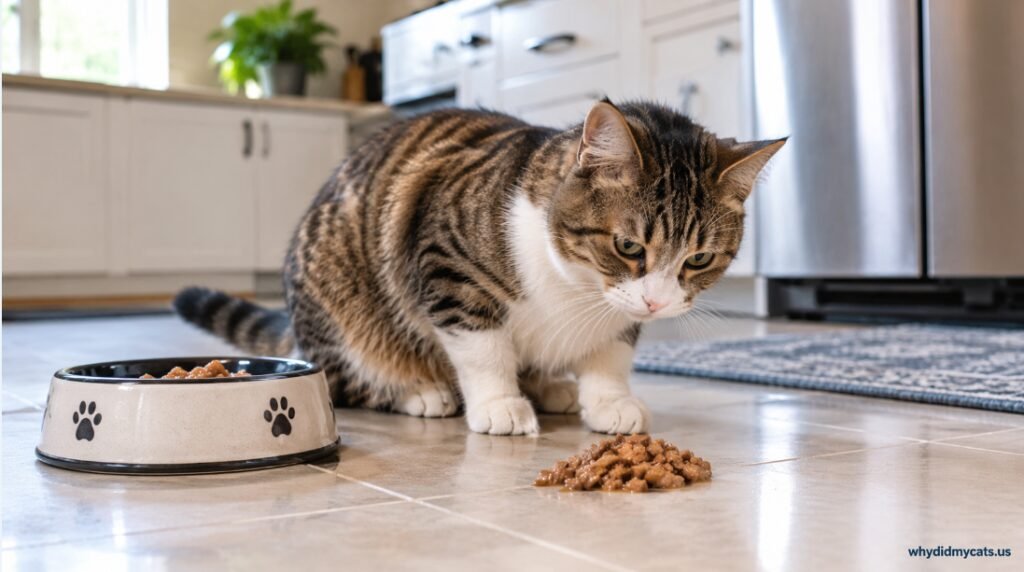
Undigested food appearing shortly after a meal often raises the question of whether your cat actually vomited or regurgitated.
Vomiting usually involves nausea, retching, and visible abdominal contractions. Regurgitation is more passive, with food coming back up with little effort, often soon after eating or drinking. The food may look relatively unchanged.
Eating too quickly is one possible explanation, but recurring episodes can also point to an esophageal or digestive problem. A short video of the episode, when safe to record, can help your veterinarian distinguish between the two.
What Does the Color of Cat Vomit Mean?
The color and contents offer clues, but they cannot confirm a diagnosis.
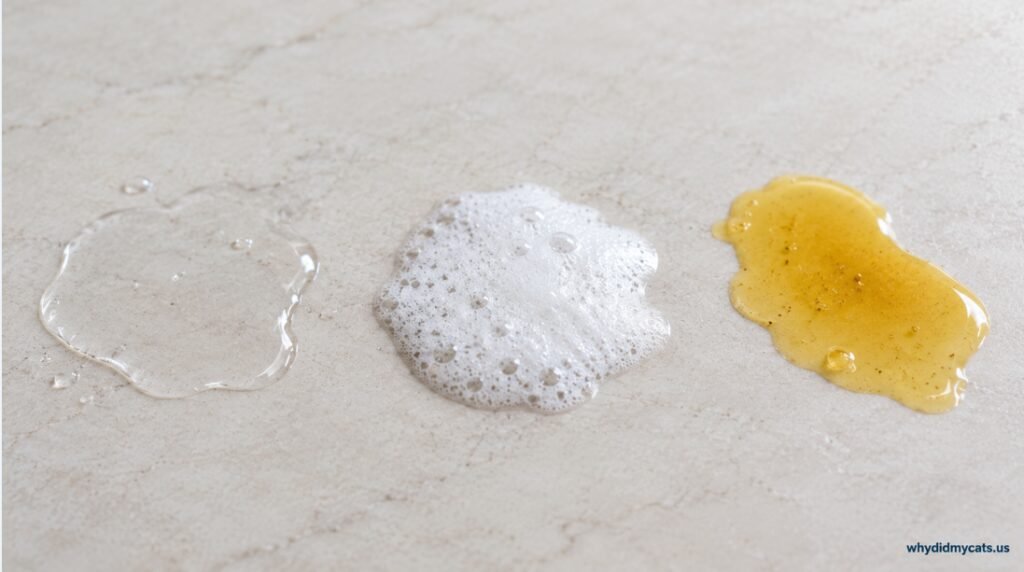
- Clear liquid: May contain water, saliva, or stomach fluid.
- White foam: Often consists of saliva and digestive fluid.
- Yellow liquid: May contain bile.
- Brown material: Can be food or other digestive contents, but dark, coffee-ground-like material can indicate digested blood.
- Red blood: Needs prompt veterinary attention.
A normal-looking color does not guarantee that your cat is healthy. Repeated vomiting, unusual behavior, or other symptoms matter just as much as appearance.
What Should You Do After Your Cat Throws Up?
Start by checking how your cat behaves after the episode. An adult cat that vomits once and then returns to normal eating, drinking, and activity may be monitored closely, provided there are no warning signs.

Keep these practical steps in mind:
- Note when the vomiting happened, how many times it occurred, and what the material looked like.
- Take a photo of the vomit if you can; it may help your veterinarian.
- Offer access to fresh water, but do not force your cat to drink.
- Avoid giving human medicines or home remedies.
- Do not force a meal or make your cat fast for an extended period without veterinary guidance.
- Contact your veterinarian if vomiting recurs or your cat’s appetite, energy, or bathroom habits change.
If your cat may have swallowed string, a toxic plant, medication, or another dangerous object, seek veterinary advice immediately—even if your cat still seems normal.
When Should You Worry About Cat Vomiting?
Seek urgent veterinary care if your cat has repeated or continuous vomiting, cannot keep water down, vomits blood or coffee-ground-like material, appears weak, has significant abdominal pain, or may have swallowed a toxin or foreign object. Difficulty breathing, collapse, or severe weakness requires emergency attention.
Contact your veterinarian promptly if vomiting happens more than once a week, continues, or occurs alongside weight loss, diarrhea, reduced appetite, or changes in thirst or urination. Kittens, senior cats, and cats with existing medical conditions may need attention sooner.
Your veterinarian will consider the frequency of vomiting, your cat’s age, diet, and other symptoms. Depending on the findings, the examination may include blood tests, a fecal test, X-rays, or ultrasound.
How Can You Help Prevent Your Cat From Throwing Up?
A few routine changes may reduce vomiting caused by eating habits or grooming:
- Feed smaller portions more frequently if your cat eats too quickly.
- Use a slow feeder when gulping food is a problem.
- Introduce new food gradually.
- Brush your cat regularly to remove loose fur.
- Keep household hazards and toxic plants out of reach.
- Arrange a veterinary check for recurring vomiting instead of relying on home remedies.
Prevention depends on the cause. Feeding adjustments may help some cats, but they will not resolve vomiting caused by an illness or intestinal blockage.
Frequently Asked Questions
When should I worry about a cat throwing up?
Worry when vomiting is repeated, continues, or occurs with weakness, appetite loss, diarrhea, abdominal pain, or dehydration. Blood, coffee-ground-like material, or suspected toxin or foreign-object ingestion needs prompt veterinary attention. Contact your veterinarian if your cat’s vomiting pattern changes or you are unsure how serious it is.
What to do after a cat throws up?
Check your cat’s behavior, note how often the vomiting occurs, and take a photo of the material if possible. Provide access to fresh water without forcing it, and avoid human medicines or unapproved home remedies. Contact a veterinarian if vomiting repeats, other symptoms develop, or poisoning or an obstruction is possible.
Why does my cat vomit but acting normal?
A cat may act normal after vomiting caused by eating too quickly, a hairball, or temporary stomach irritation. However, normal behavior does not rule out an underlying problem. Monitor closely after an isolated episode, and contact your veterinarian if vomiting recurs or your cat develops any other symptoms.
What does normal cat puke look like?
There is no single appearance that proves cat vomit is normal. A hairball may look like a damp clump of fur, while food or clear fluid may also appear. Repeated vomiting, blood, dark coffee-ground-like material, or vomiting accompanied by illness should not be treated as normal.
How do I know if my cat is okay after throwing up?
Your cat should return to its usual behavior, remain alert, eat and drink normally, and show no further vomiting or other symptoms. These signs are reassuring after one isolated episode but do not guarantee that nothing is wrong. Contact your veterinarian if you notice another episode or any change in your cat’s condition.
Conclusion
Cats throw up for many reasons, from eating too quickly and hairballs to digestive illness. What your cat brings up, how often it happens, and how your cat behaves afterward help guide the next step. Monitor isolated episodes carefully, but seek veterinary advice for recurring vomiting, warning signs, or suspected ingestion of something dangerous.
[…] and recommend tests based on the symptoms. If vomiting is part of the problem, our article on why your cat may throw up explains common causes. You can also read about why your cat may have diarrhea if you notice […]