
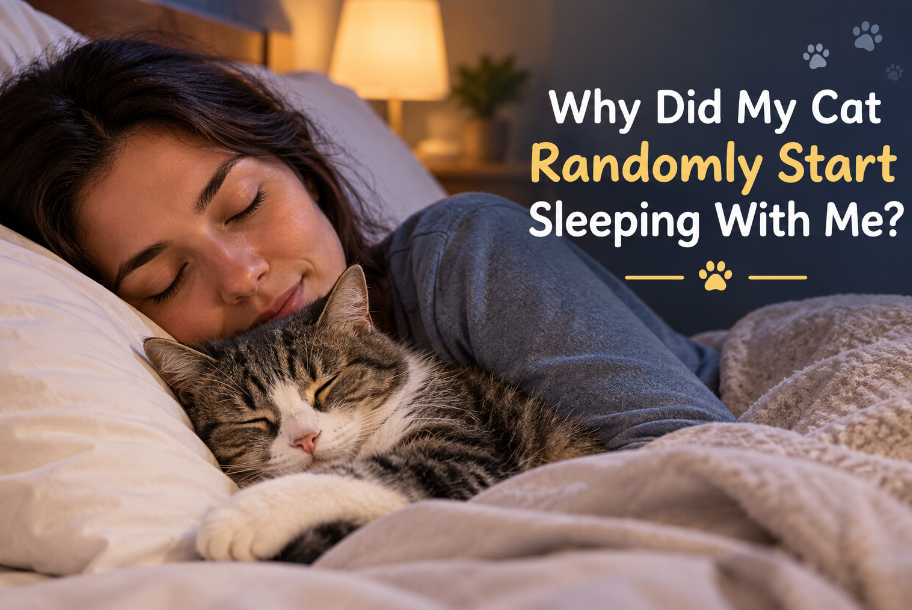
Why did my cat randomly start sleeping with me when it used to sleep somewhere else? This sudden change is usually related to comfort, warmth, trust, or a change in your cat’s routine. Your bed may have become the most appealing place for your cat to rest.
Still, a new sleeping habit deserves attention, especially when your cat has also become unusually clingy or shows changes in appetite, energy, or movement. Here are seven possible explanations and what you should do next.
1. Your Cat Feels Safe and Trusts You
Sleep leaves cats less alert to their surroundings, so a comfortable, familiar place matters. Your scent, the quiet of your bedroom, and your presence may make your bed feel secure.
A cat that settles beside you, relaxes its body, and falls asleep peacefully is likely comfortable in your company. Sleeping together can reflect a strong bond, although the behavior alone cannot tell you exactly how your cat feels.
2. Your Bed Is Warm and Comfortable
Your mattress, blankets, and body heat create an inviting sleeping spot. As temperatures drop or you start using heavier bedding, your cat may choose your bed over a cooler floor or an unheated room.
Notice where your cat settles. Curling up near your feet or under the edge of a blanket may simply be a practical way to stay warm while keeping some personal space.
3. Your Cat Has Become More Affectionate
Some cats grow more interested in physical closeness as their relationship with their owners develops. A cat that once preferred its own space might begin sleeping beside you, following you around the house, or asking for more petting.
If your cat has also started following you everywhere or demanding constant attention, read our guide on why your cat became so clingy. These additional behaviors can help you understand whether your cat’s need for company has changed more broadly.
4. Your Daily Routine Has Changed
Cats notice changes in household routines, even small ones. Perhaps you started working from home, changed your bedtime, moved into a new house, or returned from a trip. Your cat may now have more opportunities to spend time with you or may seek familiarity after a disruption.
A new pet, visiting family members, or a change in where your cat’s bed is located can also affect sleeping preferences. Give your cat a quiet, predictable place to rest and keep feeding and playtime reasonably consistent.
5. Your Cat Wants Attention or Companionship
Your cat may have discovered that bedtime is a peaceful opportunity to be near you. This is especially likely when you spend much of the day away at work and your cat is alone for several hours.
Some cats settle beside their owners after an evening play session or follow them into the bedroom as part of their nightly routine. Regular interactive play before bed and a comfortable sleeping area can help your cat settle without needing constant attention.
Cats also show affection in different ways. Our guide to why your cat became more affectionate explains other behaviors that may accompany a closer bond.
6. Your Cat Is Seeking Comfort During Stress
A change in sleeping habits can follow something unsettling, such as moving house, introducing another cat, having guests stay over, or changing the household schedule. Your presence may offer familiarity while your cat adjusts.
Look for other changes, too. Hiding more than usual, excessive meowing, reduced play, or changes in eating and litter-box habits deserve attention. Provide hiding places, familiar bedding, and easy access to food, water, and litter boxes. Avoid forcing your cat to cuddle or punishing it for seeking comfort.
7. A Health or Age-Related Change Could Be Involved
A sudden increase in closeness does not automatically mean your cat is sick. However, cats sometimes change their social behavior when they are uncomfortable, stressed, or unwell. Older cats may also seek more accessible resting places, particularly when jumping onto furniture becomes difficult.
Contact your veterinarian if the new habit comes with reduced appetite, unusual tiredness, weight loss, changes in grooming, difficulty jumping, or changes in urination or defecation. Your veterinarian may ask when the behavior began, review other symptoms, and perform a physical examination to check for pain or illness.
Seek urgent veterinary care for serious signs such as difficulty breathing, collapse, or inability to urinate.
How to Respond When Your Cat Suddenly Starts Sleeping With You
If your cat seems healthy and simply enjoys your company, there is usually no need to stop the behavior. Let your cat choose whether to sleep beside you, and provide a separate cozy bed nearby if you prefer more room.
Keep the bedroom comfortable and maintain a predictable bedtime routine. If the new habit disrupts your sleep, try an evening play session followed by your cat’s normal meal, then encourage your cat to use its own bed with treats or familiar bedding.
Avoid assuming that every change is a sign of affection or that every new habit signals illness. Consider your cat’s overall behavior, recent household changes, and physical condition together.
FAQs
Why did my cat randomly decide to sleep with me?
Your cat may have discovered that your bed is warmer, quieter, or more comfortable than its usual sleeping spot. Your familiar scent and presence can also provide security. Recent changes in your routine, the weather, or your household may have made sleeping beside you more appealing.
Why has my cat suddenly started sleeping on me?
Your body provides warmth, and close contact may help your cat feel comfortable and secure. Some cats also seek extra closeness after a household change. If this behavior is new and comes with appetite loss, unusual tiredness, or difficulty moving, arrange a veterinary check.
Do cats sleep with their favourite person?
Cats often choose to sleep near people they know and trust, but sleeping location does not prove that one person is their favorite. Warmth, familiarity, quiet surroundings, and routine also influence the choice. A cat may have a close bond with several people while choosing different sleeping spots.
How to tell if a cat is imprinted on you?
“Imprinted” is not a precise way to measure a cat’s bond with a person. Signs of a close relationship include voluntarily staying near you, greeting you, rubbing against you, relaxing in your presence, and seeking interaction. Sleeping with you may be one sign of comfort, but it is not proof on its own.
Do cats realize we aren’t cats?
Cats can distinguish humans from other cats through differences in scent, appearance, sound, and behavior. They may still use familiar social behaviors with people, such as rubbing, purring, kneading, and sleeping nearby. These actions are ways of interacting with a trusted companion, not evidence that cats mistake us for other cats.
Why do cats raise their butts when you pet them?
Raising the hindquarters when you stroke a cat near the base of its tail is a common response to touch. Many cats find this area pleasurable, and the posture can be part of their normal body language. Stop petting if your cat tenses, swishes its tail sharply, turns to bite, or tries to move away.
Conclusion
When your cat randomly starts sleeping with you, warmth, comfort, trust, and changes in routine are common explanations. Let your cat settle where it feels comfortable, and keep its sleeping environment peaceful. If the new behavior appears alongside other physical or behavioral changes, contact your veterinarian rather than assuming it is simply extra affection.