
Your cat’s meow might suddenly sound raspy, squeaky, deeper, or quieter than usual. Some cats even open their mouths to meow but produce little or no sound. A change like this can follow a lot of meowing, but it can also signal throat irritation, a respiratory infection, or another health problem.
The timing and your cat’s other symptoms matter. A cat who sounds hoarse after a noisy night is different from one whose voice changes alongside sneezing, reduced appetite, or trouble breathing.
Is It Normal for a Cat’s Meow to Change?
Yes, cats can vary their meows depending on what they want, their mood, and the situation. A cat might use a higher-pitched sound to ask for food and a longer, louder one to get attention.
A persistent change in the actual sound of your cat’s voice, however, deserves attention. If your cat’s usual meow becomes rough, weak, or disappears, don’t automatically assume it’s a harmless behavior change.
5 Reasons Your Cat’s Meow Sounds Different
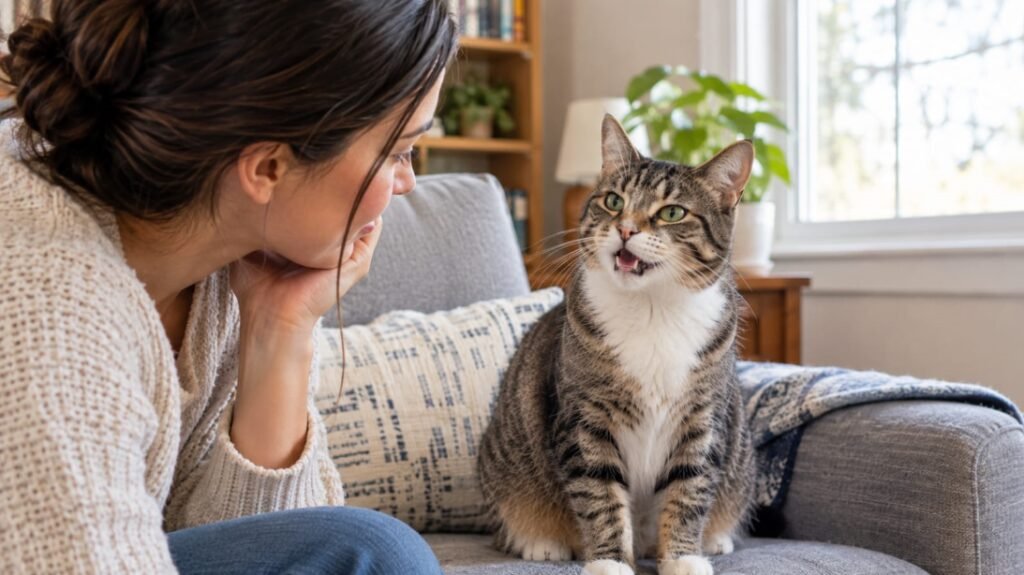
1. Upper respiratory infection or throat irritation
Respiratory infections can affect a cat’s throat and voice, making the meow sound hoarse or raspy. You might also notice sneezing, a runny nose, watery eyes, or less interest in food.
Inflammation of the voice box, known as laryngitis, can also change how your cat sounds. A veterinarian can assess the cause and decide whether treatment is needed.
2. Too much meowing
Has your cat spent hours calling at a closed bedroom door, vocalizing while you were away, or meowing repeatedly for food? Heavy vocal use can strain the voice and leave it temporarily rough.
Give your cat a calmer environment and make sure food, water, and other basic needs are met. Don’t deliberately provoke more meowing to test the voice. If the hoarseness continues or worsens, contact your veterinarian.
3. Stress or a change in routine
Moving to a new home, bringing in another pet, having visitors, or changing your work schedule can affect how much a cat vocalizes. For example, a cat left alone for longer than usual may start calling more frequently.
Stress-related meowing usually changes in frequency or timing rather than causing true hoarseness. Keep meals and playtime predictable, and give your cat a quiet place to retreat. A raspy voice should not be blamed on stress without considering medical causes.
4. Aging or an underlying health condition
Older cats sometimes become more vocal, particularly when they experience hearing or vision changes, confusion, discomfort, or other age-related health problems. Conditions such as an overactive thyroid or kidney disease can also contribute to unusual vocalizing.
Aging does not automatically explain a new voice change. If your senior cat has started meowing differently, especially at night or alongside changes in appetite, thirst, weight, or behavior, arrange a veterinary examination.
5. Recent surgery or an injury
If your cat’s voice changed after a procedure involving anesthesia, irritation from the breathing tube used during anesthesia is one possible explanation. An injury affecting the throat or neck can also alter vocal sounds.
Tell your veterinarian when the change began and whether your cat recently had surgery, experienced a fall, or suffered a possible injury. Don’t press or examine the throat yourself.
Why Did My Cat’s Meow Change Overnight?
A sudden change can happen after a long period of meowing, but it can also be the first noticeable sign of a respiratory infection or throat problem. Check whether your cat is sneezing, swallowing differently, eating less, or acting unusually tired.
Think about recent events, too: Did your cat spend the night yowling, have a veterinary procedure, or encounter something stressful? These details can help your veterinarian narrow down the cause. If the voice change is sudden and unexplained, contact your vet for advice rather than waiting several days to see what happens.
What Should You Do if Your Cat’s Voice Changes?
Start by noting when the change began and what it sounds like. A short video or audio recording can help your veterinarian compare the new meow with your cat’s usual voice.
At home, keep fresh water available, maintain a comfortable environment, and let your cat rest. Watch for changes in eating, drinking, energy, sneezing, or swallowing.
Do not give human cold medicine, pain relievers, or leftover pet medication unless your veterinarian specifically directs you to. These products can be dangerous for cats.

When Should You Contact a Veterinarian?
Contact your veterinarian promptly if your cat’s voice becomes persistently hoarse, weak, or unusually raspy, or if your cat loses its voice. Seek advice sooner when the change comes with sneezing, discharge from the eyes or nose, reduced appetite, difficulty swallowing, or unusual behavior.
Go to an emergency veterinarian immediately if your cat is struggling to breathe, breathing with its mouth open, collapsing, or has pale or blue gums. Breathing difficulty is an emergency, not a symptom to monitor at home.
During an examination, your veterinarian will ask when the voice changed and check your cat’s breathing, mouth, throat, and general health. Depending on the findings, blood tests or imaging may be needed to investigate the cause.
FAQs
Why does my old cat meow sound different?
An older cat’s meow can change alongside age-related changes, but a new raspy or weak voice should not be dismissed as aging. Hearing loss, discomfort, cognitive changes, and medical conditions can also affect vocal behavior. Arrange a veterinary check, particularly if your cat’s appetite, weight, sleep, or daily habits have changed.
Why is my cat’s meow messed up?
A rough, crackly, or weak meow can result from excessive vocalizing, throat inflammation, or an upper respiratory infection. Less commonly, an injury or another condition affecting the throat can change the voice. If the sound stays abnormal, disappears, or comes with other symptoms, contact your veterinarian.
What age do cats’ meows change?
There is no single age when every cat’s meow changes. Kittens naturally sound different from adults, and older cats may develop changes in vocal behavior as their health, hearing, or cognition changes. A sudden change at any age—especially a hoarse or raspy voice—should be assessed rather than assumed to be normal aging.
Why is my cat’s voice so raspy all of a sudden?
Sudden raspiness can follow repeated meowing or develop with throat irritation or a respiratory infection. Look for sneezing, nasal or eye discharge, reduced appetite, or changes in energy. If the raspy voice persists, contact your veterinarian promptly. If your cat is having difficulty breathing, seek emergency veterinary care immediately.
Should I be worried if my cat’s meow sounds different?
Not every variation in a meow signals illness, but a persistent change in voice deserves attention. A new raspy, weak, or missing meow is more concerning than a different sound your cat makes in a particular situation. Contact your vet if the change continues or other symptoms appear; breathing difficulty requires emergency care.
Conclusion
A cat’s meow can change because of heavy vocalizing, throat irritation, infection, aging, or another health issue. Notice when the change started and whether your cat has other symptoms. If the voice stays raspy or weak, contact your veterinarian; seek emergency care for any breathing difficulty.
[…] your cat’s voice has also changed, read Why Did My Cat’s Meow Change? for more information about changes in feline […]