
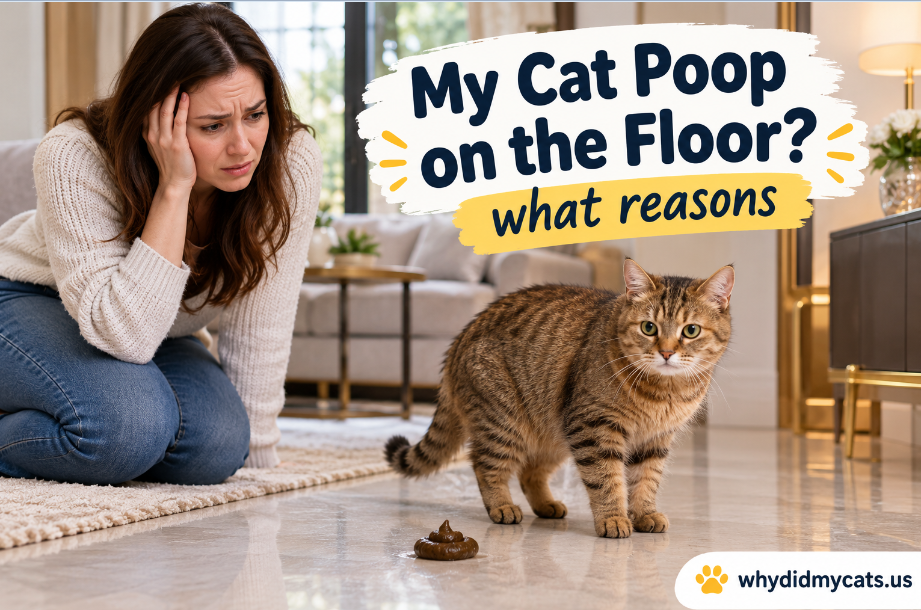
Finding poop on your floor instead of in the litter box can be frustrating, especially when your cat has used the box reliably for years. Cats usually do this because of a health problem, discomfort with the litter box, stress, or difficulty reaching it in time.
The first thing to check is whether this happened once or has become a pattern. Also notice whether your cat’s stool looks normal and whether eating, energy, or other bathroom habits have changed.
Why Did My Cat Poop on the Floor? 7 Common Reasons
1. Your Cat Has a Medical Problem
Constipation, diarrhea, intestinal inflammation, and other digestive problems can make pooping painful or urgent. Your cat might not reach the litter box in time or may begin avoiding it after experiencing discomfort there.
Look for hard, dry stool, loose poop, repeated trips to the box, straining, or changes in appetite. A new litter box accident deserves particular attention when your cat’s bathroom habits have suddenly changed.
2. The Litter Box Is Uncomfortable
A litter box that feels cramped, dirty, or difficult to enter can discourage your cat from using it. Covered boxes may also feel restrictive to some cats, while high sides can be troublesome for kittens and older cats with stiff joints.
Check the box size, cleanliness, and accessibility before assuming your cat is misbehaving. Our guide on why cats poop outside the litter box covers more litter box problems and practical ways to address them.
3. Your Cat Dislikes the Litter or Its Location
Cats can develop strong preferences for certain litter textures and bathroom locations. A recent switch to scented litter, moving the box beside a noisy washer, or placing it where another pet blocks access may cause your cat to choose the floor instead.
Try unscented litter and keep the box in a quiet, easy-to-reach area. In a home with multiple cats, provide separate litter stations so one cat cannot guard the only convenient box.
4. Stress or Changes at Home Are Affecting Your Cat
Changes in your cat’s behavior can sometimes happen alongside changes in its bathroom habits. For example, a cat that has become unusually clingy after a change at home may also be struggling with stress. Read our guide on why your cat became so clingy to learn more about changes in feline behavior.
Moving to a new house, bringing home a baby or pet, having frequent visitors, or changing your daily schedule can disrupt a cat’s routine. Some cats respond by avoiding the litter box, particularly when they feel unsafe or crowded.
Keep feeding and playtime predictable, give your cat a quiet place to retreat, and avoid forcing interactions. A sudden behavior change should not automatically be blamed on stress, though; medical causes need consideration too.
5. Your Cat Has Trouble Reaching the Box
Older cats and cats with arthritis, weakness, or mobility problems may struggle to climb into a tall litter box or walk across the house to reach it. A cat that has to navigate stairs may have trouble getting there quickly enough.
Place a low-entry box on the same floor where your cat spends most of its time. If your cat has recently become less active or seems uncomfortable walking, arrange a veterinary examination.
6. Your Cat Keeps Pooping in the Same Spot
When your cat repeatedly poops in one corner, beside a door, or on a particular patch of carpet, lingering odor or a learned preference for that location may be contributing.
Remove the waste promptly and clean the area with a pet-safe enzymatic cleaner suitable for that surface. Ordinary cleaners may leave odors that your cat can still detect. If the same spot is near clothing or laundry, our guide to why cats poop on clothes explains another form of inappropriate elimination.
7. Your Cat Has Developed a Negative Association With the Box
A painful bowel movement, a frightening noise, or being cornered by another pet near the litter box can make the area feel unsafe. Your cat may still enter the box occasionally but choose the floor when it expects another unpleasant experience.
Keep the route to the box clear and make sure your cat has a peaceful place to eliminate. Never punish your cat for an accident; punishment can increase fear without solving the underlying problem.
Why Is My Cat Pooping on the Floor With a Clean Litter Box?
A clean box does not guarantee that your cat likes its size, litter, location, or accessibility. Medical discomfort can also cause accidents even when the box is spotless.
Try changing one factor at a time, such as switching to unscented litter or offering a second box in a quieter location. If the behavior continues, ask your veterinarian to check for health problems rather than repeatedly changing litter products.
Why Did My Cat Poop on the Floor for the First Time?
A one-time accident can follow a sudden change in routine, an unusually urgent bowel movement, or a problem accessing the box. Check whether the stool was unusually hard or loose and whether anything at home changed recently.
If your cat otherwise seems normal and the accident does not recur, monitor its bathroom habits closely. Contact your veterinarian if it happens again or you notice straining, blood in the stool, vomiting, reduced appetite, or unusual tiredness.
How to Stop Your Cat From Pooping on the Floor
Start with these practical changes:
- Scoop daily: Keep the litter box clean and comfortable to use.
- Check the setup: Choose a roomy box in a quiet, accessible location.
- Offer a litter choice: Try unscented litter if your cat dislikes its current texture or smell.
- Reduce competition: In multi-cat homes, provide separate litter stations in different locations.
- Clean accidents thoroughly: Use a suitable enzymatic cleaner to remove lingering odor.
- Keep routines steady: Minimize sudden changes and provide safe resting and hiding places.
- Avoid punishment: Never yell at your cat or rub its nose in the mess. This can increase fear and make the problem harder to resolve.
When Should You Call a Vet?
Arrange a veterinary appointment if your cat repeatedly poops outside the box, especially if the change is new. Your vet may ask about stool consistency, frequency, diet, medications, and household changes, then perform a physical examination. Depending on the findings, stool testing, blood work, or imaging may be recommended.
Seek prompt veterinary care for repeated straining, painful bowel movements, blood in the stool, vomiting, marked lethargy, or loss of appetite. If your cat repeatedly strains without producing stool, contact a veterinarian promptly rather than waiting for the problem to resolve.
Also make sure your cat is actually trying to poop. Repeated straining with little or no urine can signal a urinary blockage, particularly in male cats, and requires emergency veterinary care.
Frequently Asked Questions
Do cats poop on the floor when stressed?
Yes, stress can cause cats to poop outside the litter box. Moving to a new home, a new pet, changes in routine, or conflict with another cat can make a cat feel anxious. Keep your cat’s routine consistent, provide a quiet litter box area, and watch for other behavior changes. If the problem continues, consult your veterinarian.
How do I stop my cat pooping on the floor?
Start by cleaning the litter box daily and making sure it is easy to reach. Try unscented litter, place the box in a quiet location, and clean accident spots with an enzymatic cleaner to remove lingering odors. If your cat suddenly starts pooping on the floor or has diarrhea, constipation, or difficulty passing stool, arrange a veterinary checkup.
Why did my cat wipe poop on the floor?
Your cat may have dragged or wiped its bottom across the floor because stool was stuck to its fur, the stool was soft, or the area around its anus was irritated. Long fur, diarrhea, and anal gland problems can also contribute. Gently check for stuck stool, but contact your vet if this keeps happening, your cat seems uncomfortable, or you notice swelling or blood.
Can you discipline a cat for pooping on the floor?
No. Punishing or scolding your cat is not recommended. Your cat is not doing this out of spite, and punishment can increase stress and make litter box problems worse. Instead, identify the cause, keep the litter box clean and accessible, and reward calm behavior around the box.
Why do cats suddenly start pooping on the floor?
A sudden change may be caused by constipation, diarrhea, pain, digestive problems, stress, or an issue with the litter box. Older cats may also have trouble reaching or climbing into the box. Because sudden changes in bathroom habits can signal a health problem, contact your veterinarian—especially if your cat strains, vomits, has blood in its stool, or seems unwell.
What to put on the floor so a cat won’t poop?
First, clean the spot thoroughly with an enzymatic pet cleaner to remove odors that may attract your cat back to the same area. Avoid using strong chemicals or substances that could harm your cat. You can temporarily block access to the spot or place a suitable object there, but the lasting solution is to address why your cat is avoiding the litter box.
Conclusion
When your cat poops on the floor, start by checking its health, litter box comfort, and recent changes at home. Make the bathroom area easy to access, clean accidents thoroughly, and avoid punishment. If accidents repeat or your cat shows signs of pain or illness, contact your veterinarian to identify the cause and choose the right treatment.
[…] your cat continues pooping outside the box, review our guide on why your cat may poop on the floor. If the stool is loose or watery, our article about why your cat may have diarrhea may also help […]