
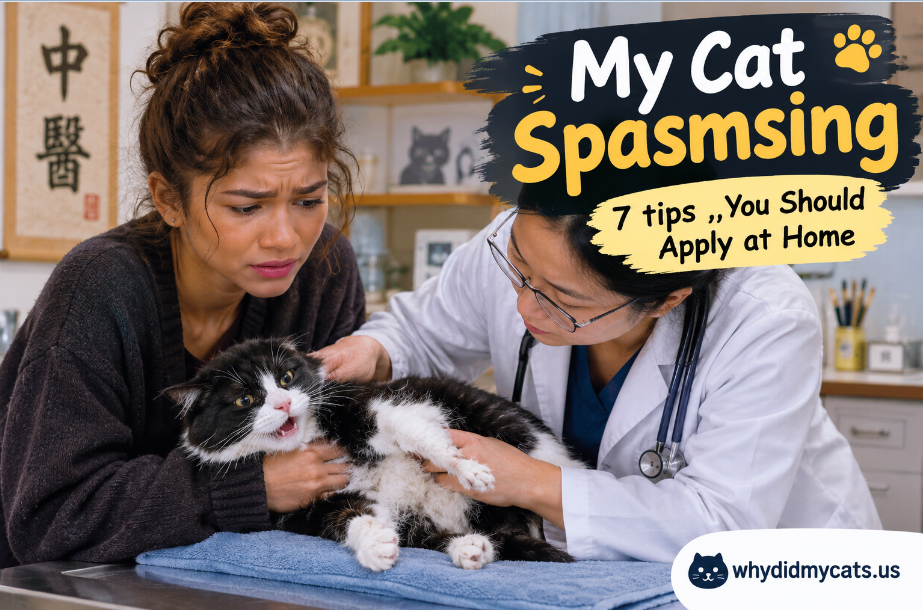
Watching your cat’s muscles jerk, back ripple, or body shake can be worrying. The reason depends on what the movement looks like and what your cat does before and afterward. Brief twitches during sleep are often normal, but repeated spasms while awake can point to pain, skin irritation, a neurological problem, or another medical condition.
If your cat suddenly develops severe shaking, collapses, struggles to breathe, or has seizure-like movements, seek urgent veterinary care rather than waiting to see whether it happens again.
Why Did My Cat Have Spasms? 7 Possible Causes
1. Feline Hyperesthesia Syndrome
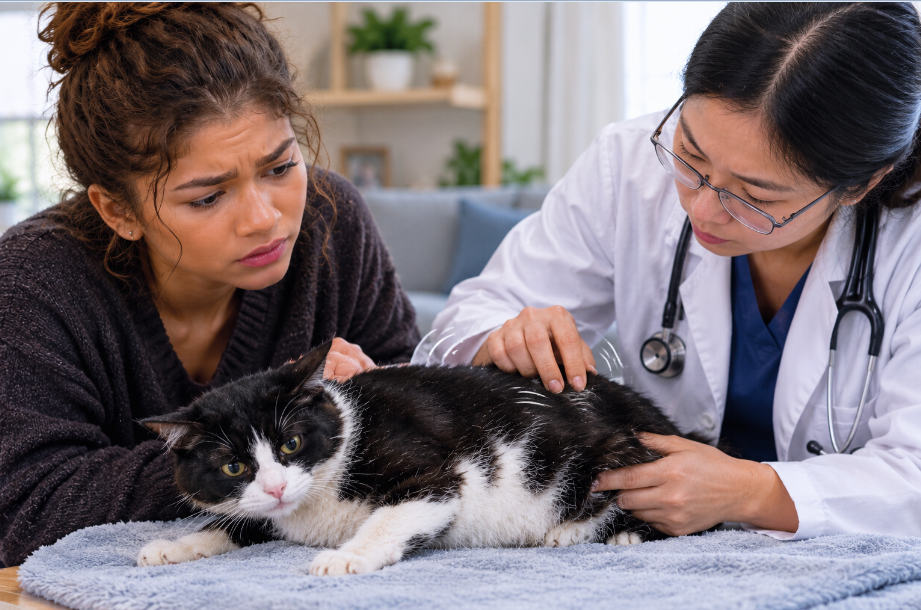
Feline hyperesthesia syndrome (FHS), sometimes called twitchy cat syndrome, causes episodes of unusual skin sensitivity and behavior. You might see the skin along your cat’s lower back ripple, the tail whip around, or your cat suddenly lick, bite, or chase its own tail.
Some cats react strongly when touched near the back or base of the tail. These signs do not automatically mean your cat has FHS. A veterinarian must rule out skin disease, pain, and neurological conditions before making that diagnosis.
2. Normal Twitching During Sleep
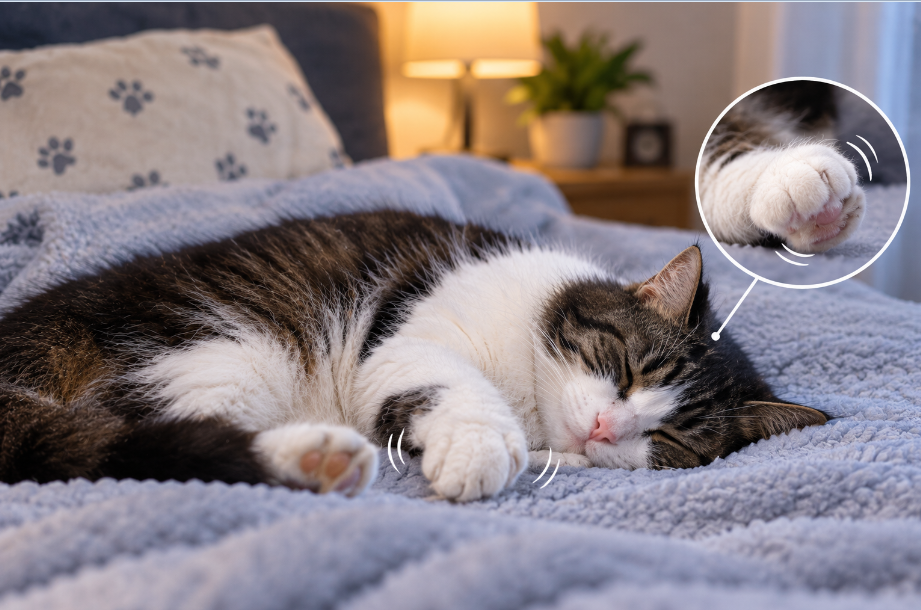
A cat stretched out on the couch might twitch its paws, whiskers, ears, or tail while sleeping. Brief, gentle movements during sleep are usually part of normal sleep activity.
The situation deserves closer attention when the movements are forceful, prolonged, happen while your cat is fully awake, or come with unusual breathing or difficulty waking. Record an episode if you can do so safely, and show the video to your veterinarian.
3. Pain, Injury, or Back Problems
Muscle spasms can accompany pain or an injury. A cat that jumped from a high shelf, slipped on a hard floor, or landed awkwardly might develop muscle discomfort or react when moving its back.
Watch for reluctance to jump, a hunched posture, hiding, limping, or sudden sensitivity to being picked up. Do not press or massage the painful area to test it. A veterinary examination is the safest way to identify the problem.
4. Fleas, Allergies, or Skin Irritation
Sometimes, what looks like a muscle spasm is actually a reaction to itching. Fleas, mites, allergies, or irritated skin can make a cat twitch its back, lick repeatedly, or scratch around the tail.
Indoor cats can still get fleas. Check for excessive grooming, scabs, redness, and hair loss, but remember that some skin problems are difficult to see beneath the coat. If the irritation keeps returning, your vet can check for parasites and other skin conditions.
5. Stress, Fear, or Anxiety
A new pet, visitors, construction noise, or a change in household routine can make some cats restless or more reactive. Stress may contribute to trembling or unusual behavior, but it should not automatically be blamed for repeated muscle spasms.
Give your cat a quiet retreat, keep meals and playtime predictable, and avoid repeatedly touching an area that triggers a reaction. If the spasms continue, arrange a veterinary assessment rather than assuming anxiety is the cause.
6. Neurological Problems or Seizures
Tremors, muscle spasms, and seizures are not the same thing, although they can look similar to an owner. A seizure may involve stiffening, uncontrolled jerking, loss of awareness, drooling, or unusual behavior afterward.
Not every seizure looks dramatic, and an owner cannot reliably determine the cause by appearance alone. New or repeated episodes need prompt veterinary assessment. If a seizure lasts more than a few minutes, another begins before your cat recovers, or your cat has trouble breathing, seek emergency veterinary care immediately.
7. Toxins or Other Medical Conditions
Tremors and spasms can also occur with poisoning, abnormal blood sugar or electrolyte levels, certain infections, and other medical problems. Exposure to some human medications, household chemicals, or incorrectly used flea products can be dangerous for cats.
If you suspect your cat has contacted or swallowed something toxic, contact an emergency veterinarian or animal poison-control service immediately. Do not wait for additional symptoms or try to make your cat vomit unless a veterinary professional specifically instructs you to.
What Does Feline Hyperesthesia Look Like?
Feline hyperesthesia can cause short episodes of skin rippling, sudden running or jumping, tail chasing, excessive grooming, and sensitivity around the lower back. Some cats vocalize or bite at their sides or tail during an episode.
The signs can resemble flea irritation, pain, or a neurological problem. A diagnosis of FHS requires a veterinary workup to rule out other explanations. If you also notice unexpected hair loss or excessive grooming, read our guide to why your cat may suddenly start shedding.
Why Is My Cat Having Back or Muscle Spasms?
The location and timing of the movement provide useful information for your veterinarian. Rippling skin across the lower back, for example, is different from a deep muscle tremor affecting several legs.
Note whether the movement starts after you pet your cat, happens during sleep, or appears alongside limping, itching, or unusual behavior. Do not repeatedly touch the area to reproduce the spasm. A short video, along with details about when the episode began, can help your veterinarian assess what is happening.
How Can You Tell Spasms From a Seizure?
A small twitch in one paw during sleep is different from a full-body episode with stiffness, uncontrolled movements, or reduced awareness. However, not all seizures involve dramatic whole-body shaking, and some tremors occur while a cat remains conscious.
Keep your cat away from stairs and hard objects during an episode. Do not restrain the body or put your fingers near the mouth. Time the episode and record a video from a safe distance if possible. If the event is prolonged, repeats without full recovery, or affects breathing, seek emergency care.
What Should You Do When Your Cat Has Spasms?
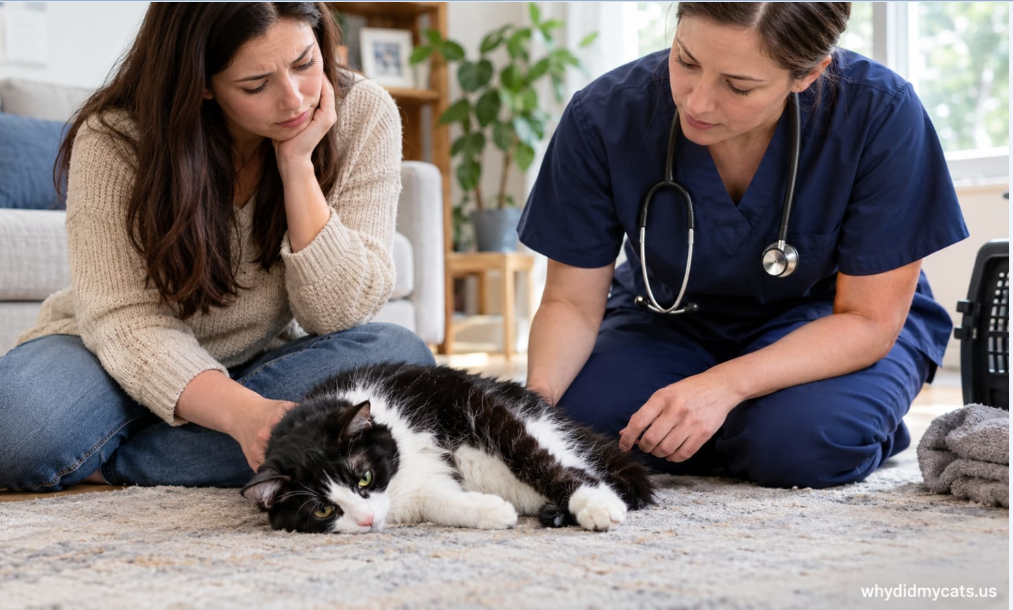
Start by keeping your cat safe and observing what happens. Move nearby objects out of the way, but do not force your cat to move or hold down its limbs.
Record these details for the veterinarian:
- When the spasms started and how long they lasted.
- Whether your cat was asleep or awake.
- Which body parts moved and whether your cat responded to you.
- Any recent injury, medication, flea treatment, or possible toxin exposure.
- Changes in appetite, walking, grooming, or behavior.
Avoid human painkillers, unprescribed supplements, and home remedies. If the spasms are new, recurrent, or unexplained, contact your veterinarian promptly.
When Are Cat Spasms an Emergency?
Seek emergency veterinary care for ongoing or repeated seizure-like episodes, collapse, difficulty breathing, sudden inability to walk, or suspected poisoning. A seizure lasting around five minutes is a life-threatening emergency; do not wait that long if your cat is struggling to breathe or deteriorating.
If your cat has a brief episode and seems normal afterward, contact your veterinarian for guidance, particularly when this is the first occurrence. A normal appearance between episodes does not rule out an underlying problem.
How Do Vets Diagnose and Treat Cat Spasms?
Your veterinarian will ask about the movements, their duration, your cat’s medical history, and any recent changes at home. The examination may include checks of the skin, muscles, pain response, coordination, and nervous system.
Depending on the findings, blood tests or additional neurological or skin investigations may be needed. Treatment depends on the underlying cause. Skin irritation, pain, metabolic problems, seizures, and feline hyperesthesia require different approaches, so do not give medication without veterinary guidance.
FAQs
What is the silent killer of cats?
There is no single condition known as the silent killer of cats. Heart disease, kidney disease, and other illnesses can progress with few obvious early signs. Regular veterinary checkups help identify health problems before they become severe. Difficulty breathing, collapse, or sudden severe weakness requires urgent veterinary attention.
What are four signs your cat is suffering?
Four possible signs are hiding more than usual, reduced appetite, changes in walking or jumping, and unusual aggression or sensitivity to touch. Cats often conceal discomfort, so even subtle changes in routine matter. Sudden severe pain, breathing difficulty, or collapse needs urgent veterinary assessment.
What does a cat spasm look like?
A cat spasm may appear as repeated muscle jerks, trembling, skin rippling across the back, or sudden movements of the legs or tail. Brief paw twitches during sleep can be normal, but persistent movements, episodes while awake, or movements accompanied by loss of awareness need veterinary attention.
What are the first signs of heart failure in cats?
Early signs can be subtle, including faster breathing at rest, increased breathing effort, reduced activity, or weakness. Some cats show few warning signs until the condition becomes serious. Open-mouth breathing, struggling to breathe, or collapse is an emergency. Muscle spasms alone are not a reliable sign of heart failure.
At what age do cats get heart failure?
Heart failure can affect cats of different ages, depending on the underlying heart condition. Some heart diseases develop in younger cats, while others are diagnosed later in life. Age alone cannot rule out a heart problem, and a veterinarian may recommend examination or heart testing when symptoms raise concern.
Can cats have heart attacks?
Cats can develop serious heart conditions, but the sudden heart attacks commonly described in humans are not the usual presentation of feline heart disease. Cats with heart problems may develop breathing difficulty, collapse, or sudden weakness. These signs require emergency veterinary care rather than waiting for them to pass.
Conclusion
Cat spasms can come from normal sleep movements, skin irritation, pain, feline hyperesthesia, seizures, or other medical problems. The timing, appearance, and accompanying symptoms help your veterinarian narrow down the cause. Keep your cat safe, record an episode when possible, and seek prompt or emergency care when symptoms are severe, repeated, or accompanied by breathing difficulty or collapse.