
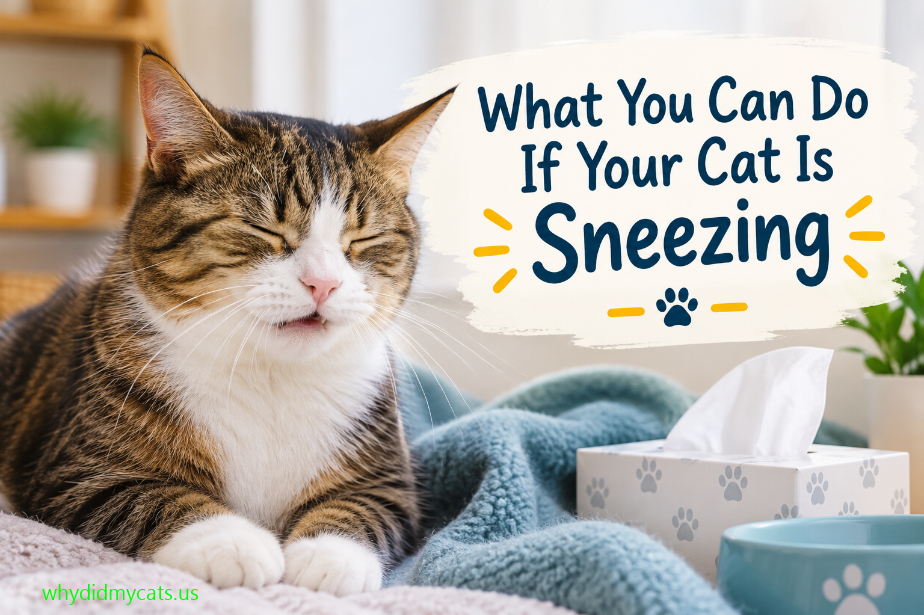
Why did my cat start sneezing a lot? Common causes include dusty cat litter, strong household scents, nasal irritation, and upper respiratory infections. An occasional sneeze is usually harmless, but repeated sneezing deserves attention—especially when your cat also has watery eyes, nasal discharge, or a change in appetite.
Why Did My Cat Suddenly Start Sneezing a Lot?
Sudden sneezing often begins when something irritates the nasal passages. Dusty litter, smoke, perfume, aerosol sprays, and cleaning products are common household triggers. If your cat sneezes after you pour fresh litter or spray an air freshener, remove the suspected irritant and see whether the sneezing settles.
An upper respiratory infection is another common explanation. Cats with these infections may sneeze repeatedly, develop a runny nose or watery eyes, sound congested, or become less interested in food. A new cat in the household or recent boarding can also matter because some respiratory infections spread between cats.
If the sneezing keeps returning or has no obvious trigger, arrange a veterinary examination rather than assuming it is an allergy.
7 Reasons Your Cat May Be Sneezing So Much
1. Dusty cat litter
Some clay litters release fine dust when poured or scratched. Try a low-dust, unscented litter and clean the litter area regularly. Avoid switching to a heavily perfumed product to cover odors; fragrance can irritate the nose too.
2. Perfume, smoke, or cleaning products
Cigarette smoke, scented candles, air fresheners, aerosol sprays, and strong cleaning fumes can irritate a cat’s sensitive nasal passages. Ventilate the room and keep your cat away from freshly cleaned surfaces until the product label says the area is safe for pets.
3. An upper respiratory infection
Feline herpesvirus and feline calicivirus are common causes of upper respiratory illness. Sneezing may occur alongside nasal discharge, watery eyes, congestion, reduced appetite, or low energy. Kittens, older cats, and cats with other health problems deserve particular attention.
4. Allergies or environmental irritation
Pollen, dust, and other airborne particles may irritate a cat’s nose. However, repeated sneezing is not enough to confirm an allergy. Cats can have infections and other nasal conditions that look similar, so persistent symptoms need a proper assessment.
5. Something stuck in the nose
A small piece of plant material or another foreign object can trigger sudden, intense sneezing. Repeated sneezing that starts abruptly, especially with pawing at the face or discharge from one nostril, warrants a prompt vet visit. Don’t try to remove anything deep inside your cat’s nose.
6. Dental disease
Problems involving the upper teeth or tooth roots can sometimes affect nearby nasal tissues. Sneezing paired with bad breath, trouble chewing, drooling, or facial discomfort calls for a dental and oral examination.
7. A chronic nasal condition
Sneezing that lasts for weeks or repeatedly returns can be linked to chronic inflammation or, less commonly, a fungal infection, nasal polyp, or tumor. These are not the first explanation for every sneeze, but ongoing symptoms deserve investigation—particularly when discharge is bloody or one-sided.
Why Is My Cat Sneezing a Lot and Eyes Watering?
Sneezing with watery eyes commonly occurs during an upper respiratory infection. The eyes may look irritated, and your cat may have a runny nose or congestion as well. Environmental irritation can also cause watery eyes, so the combination alone does not identify the cause.
Clear discharge with normal energy and appetite is less concerning than thick yellow or green discharge, painful or swollen eyes, marked tiredness, or refusing food. Contact your veterinarian if the symptoms persist, worsen, or appear with other signs of illness. Eye pain, squinting, or a cloudy-looking eye should be assessed promptly.
How to Help a Sneezing Cat at Home
For a cat that is otherwise comfortable and breathing normally, start with simple steps:
- Remove scented sprays, smoke, and other suspected irritants.
- Use low-dust, unscented litter and keep the litter area clean.
- Gently wipe discharge from the outside of the nose or around the eyes with a clean, damp, soft cloth.
- Keep fresh water available and offer your cat its usual food.
- Monitor appetite, energy, breathing, and whether the sneezing is becoming more frequent.
If you suspect an environmental trigger, note when the sneezing happens and what your cat was exposed to. That information can help your veterinarian. For more context about possible allergy-related symptoms, see our guide to why cat allergies can go away.
Do not give human cold medicine, decongestants, leftover antibiotics, or essential oils as a remedy. Some products that are safe for people can be dangerous to cats, and treatment depends on the cause.
When Should You Take a Sneezing Cat to the Vet?
Arrange a veterinary appointment when repeated sneezing lasts more than a few days, keeps coming back, or comes with nasal discharge, worsening eye symptoms, facial discomfort, or a noticeable change in behavior. Bloody discharge, discharge mainly from one nostril, or a reduced appetite also deserves prompt attention.
If your cat stops eating, contact your veterinarian promptly. Congestion can make food harder to smell, but appetite loss can also signal a more significant illness. Our guide to why cats stop eating explains why that change should not be ignored.
Seek emergency veterinary care if your cat is struggling to breathe, breathing with its mouth open, has blue or gray gums, or collapses. Do not wait to see whether these signs improve at home.
Your veterinarian may examine your cat’s nose, eyes, mouth, and teeth and ask about vaccination status, contact with other cats, and when symptoms began. Depending on the findings, testing or imaging may be needed to investigate infection, dental disease, a foreign object, or another nasal problem.
Can You Prevent Your Cat From Sneezing So Much?
You cannot prevent every sneeze, but you can reduce common triggers. Choose unscented litter, limit smoke and aerosol exposure, keep indoor spaces clean, and avoid using strong fragrances around your cat. Keep vaccinations up to date and separate a cat with suspected respiratory illness from other cats until you receive veterinary advice.
Also, notice changes beyond sneezing. A new nasal sound or a changed meow alongside respiratory symptoms is worth mentioning to your veterinarian. Our article on why a cat’s meow changes covers other possible reasons for a voice change.
FAQs
Do cat colds go away on their own?
Mild upper respiratory infections sometimes improve with supportive care, but not every case is harmless. Symptoms can worsen, and some cats need veterinary treatment. Contact your veterinarian if sneezing persists, discharge develops, your cat becomes lethargic, or appetite drops. Breathing difficulty requires emergency care.
How many sneezes is too much for a cat?
There is no single sneeze count that reliably separates normal from abnormal. One or two sneezes after a dusty activity may settle quickly. Repeated bouts, sneezing that continues over several days, or sneezing with eye or nasal discharge deserves a closer look and possibly a veterinary appointment.
Why is my cat sneezing even though they haven’t been sick?
A cat can start sneezing because of dusty litter, smoke, fragrance, pollen, or another nasal irritant without showing other signs of illness. A foreign object or a developing respiratory problem is also possible. Remove likely irritants and contact your vet if the sneezing continues or worsens.
What sickness makes cats sneeze?
Upper respiratory infections caused by viruses such as feline herpesvirus and calicivirus are common causes. Other possibilities include bacterial infections, chronic nasal inflammation, fungal disease, and dental problems affecting the nasal area. A veterinarian uses your cat’s symptoms and examination findings to decide whether testing or treatment is needed.
Why did my cat sneeze all of a sudden?
A sudden bout can follow exposure to dust, perfume, smoke, cleaning fumes, or dusty litter. Sudden, repeated sneezing can also happen when something irritates or becomes lodged in the nose. If your cat keeps sneezing, paws at its face, develops discharge, or seems unwell, contact a veterinarian.
What do I give my cat if it’s sneezing?
Do not give your cat human cold medicine, decongestants, or leftover antibiotics unless a veterinarian specifically directs you to use a medication. At home, reduce dust and strong scents, provide water, and gently clean external discharge. Ask your vet for advice if symptoms persist or other signs appear.
Conclusion
A cat that starts sneezing a lot may be reacting to dusty litter or a household irritant, but an upper respiratory infection and other nasal or dental problems are also possible. Reduce likely irritants, monitor your cat’s appetite and breathing, and contact your veterinarian when sneezing persists, worsens, or comes with other symptoms. Breathing difficulty is an emergency.